From £34,7457

Korean firm adds a lower-slung electric hatch to its SUV-rich EV line-up

When it comes to what many probably still consider the electric car’s defining limitation – range – the state of the art isn’t developing quite as you might expect.

The car industry has, over the decades, tended to enhance the performance of its cars by starting at the higher end before moving to more accessible strata. This leads us to expect that more lavish and expensive EVs will hit bigger numbers for electric range first, then, with the smaller, cheaper ones following along. It seems natural enough. Natural, that is - but not necessarily correct.

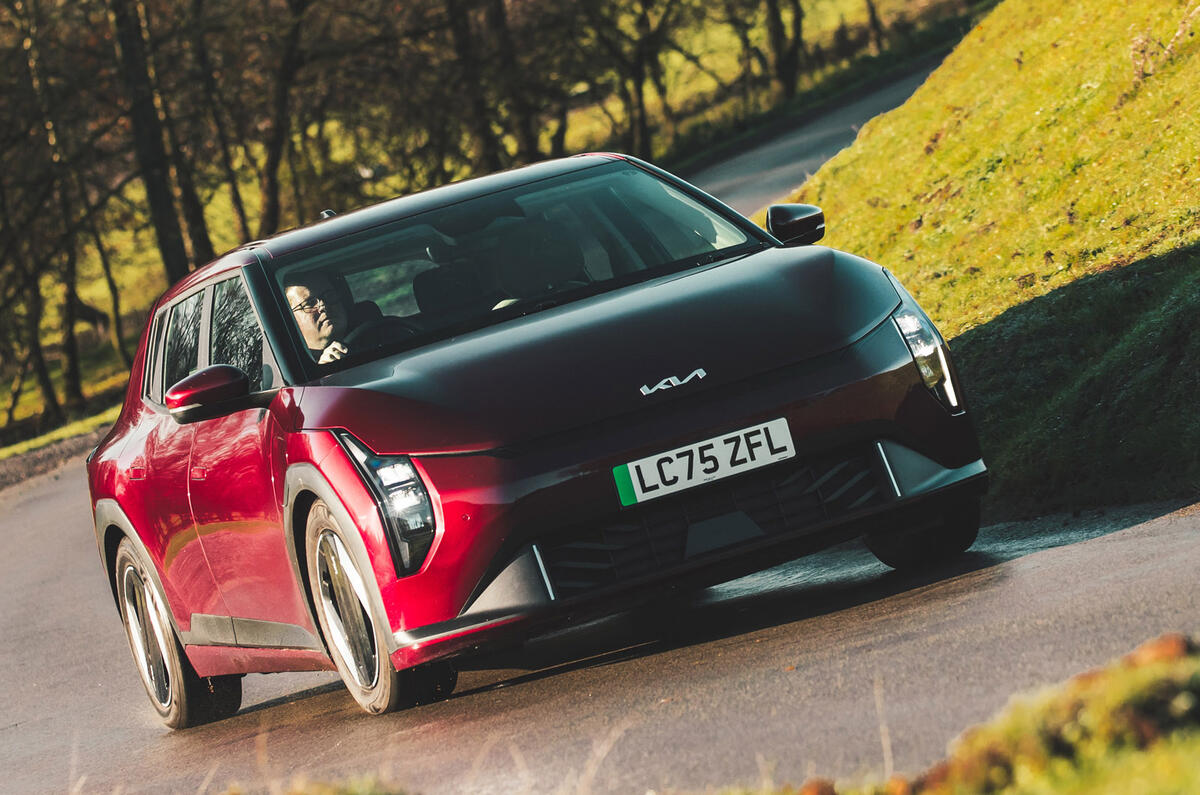
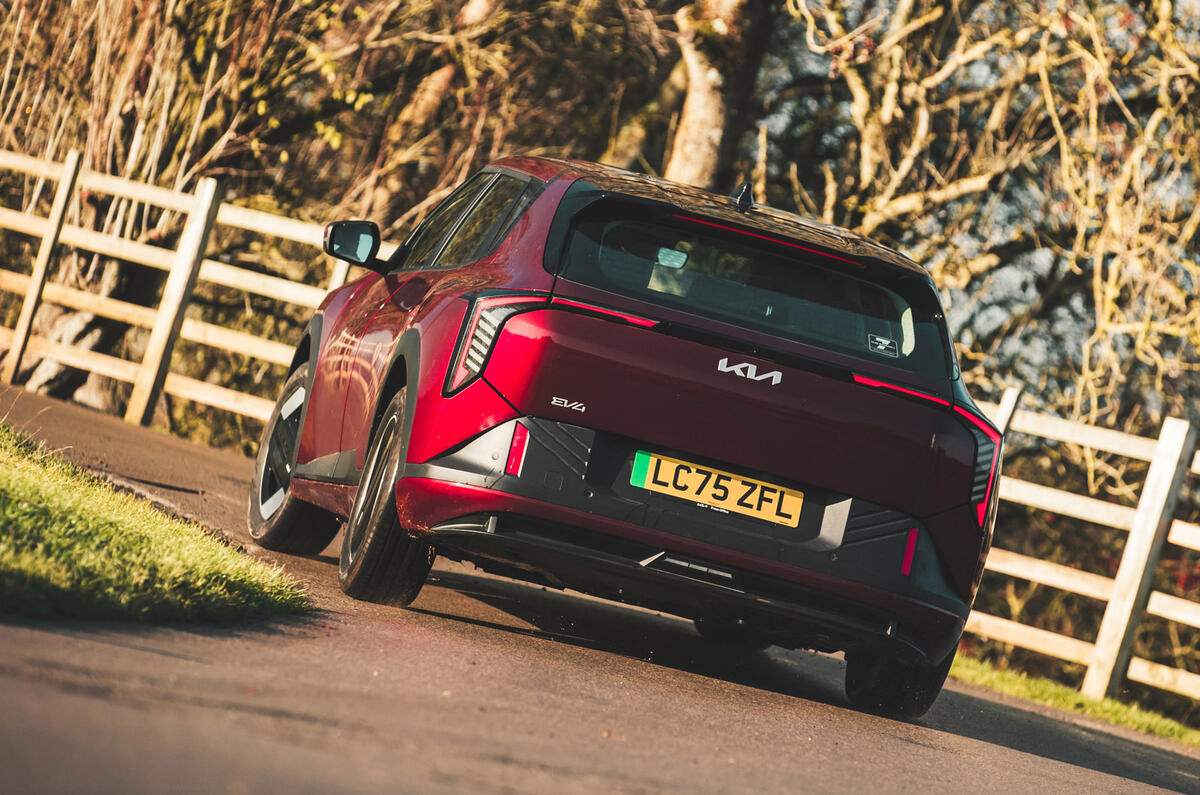
This test's subject, the Kia EV4, has recently become the Korean brand’s first European-made EV. It’s a mid-sized hatchback tuned and developed on European roads, in contrast to every other Kia EV made to date, which have all had at least some SUV design DNA. 

But this is also the first Kia EV with a claimed electric range that exceeds 380 miles. The entry-trim Air hatchback, with the bigger of two battery packs, is the longest-legged of all, which is the version that most of this test will concern itself with.

Advertisement

DESIGN & STYLING

8
KIA EV4 review 2026 002

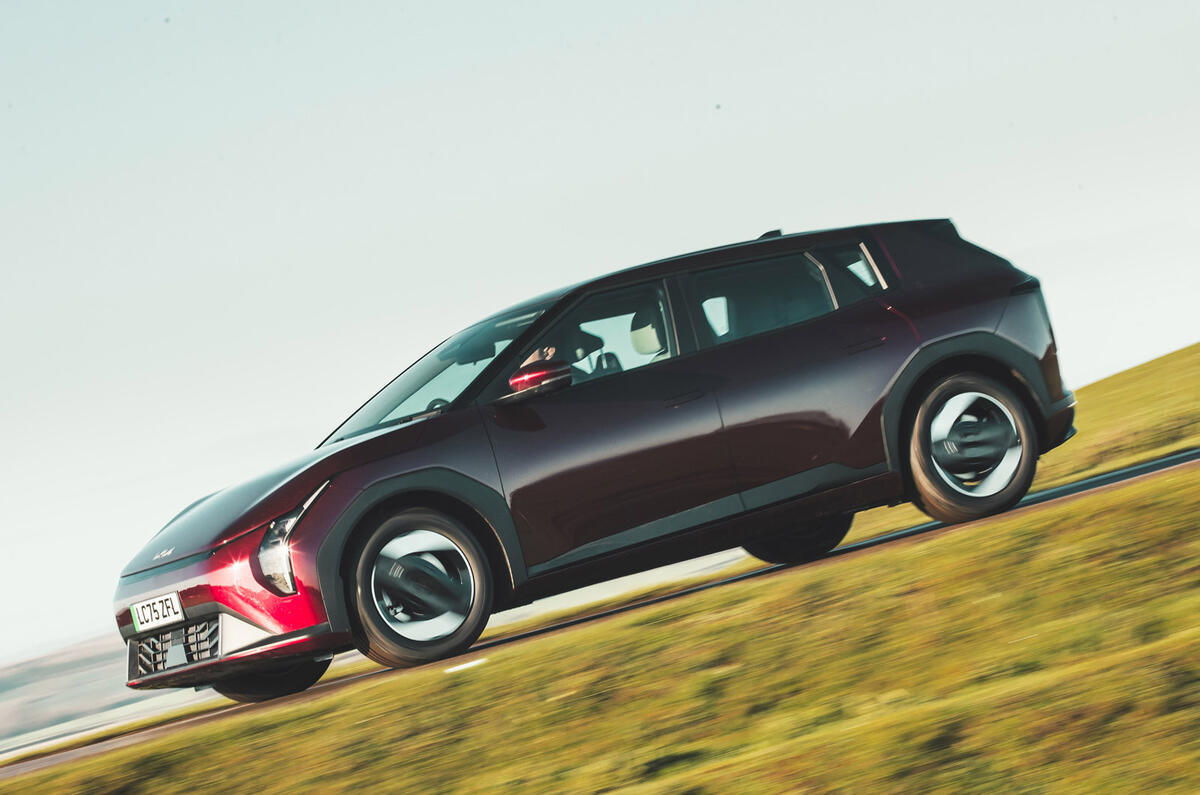
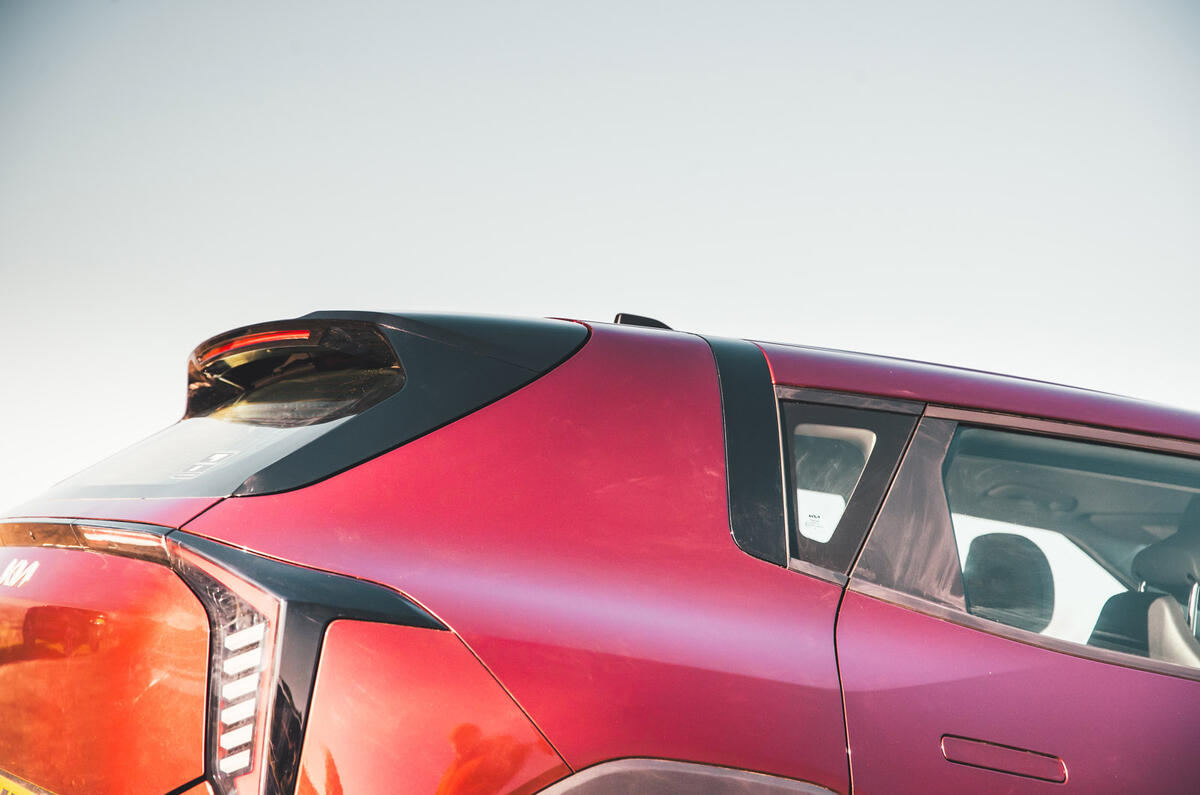
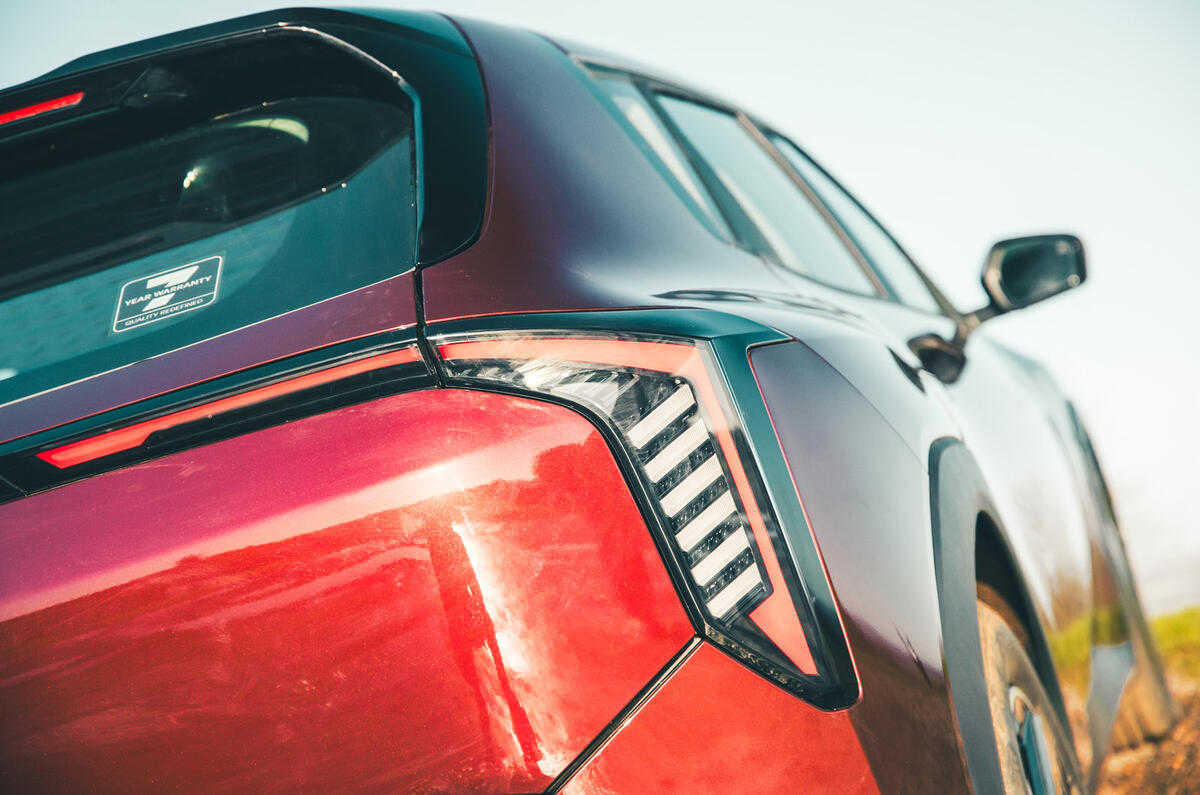
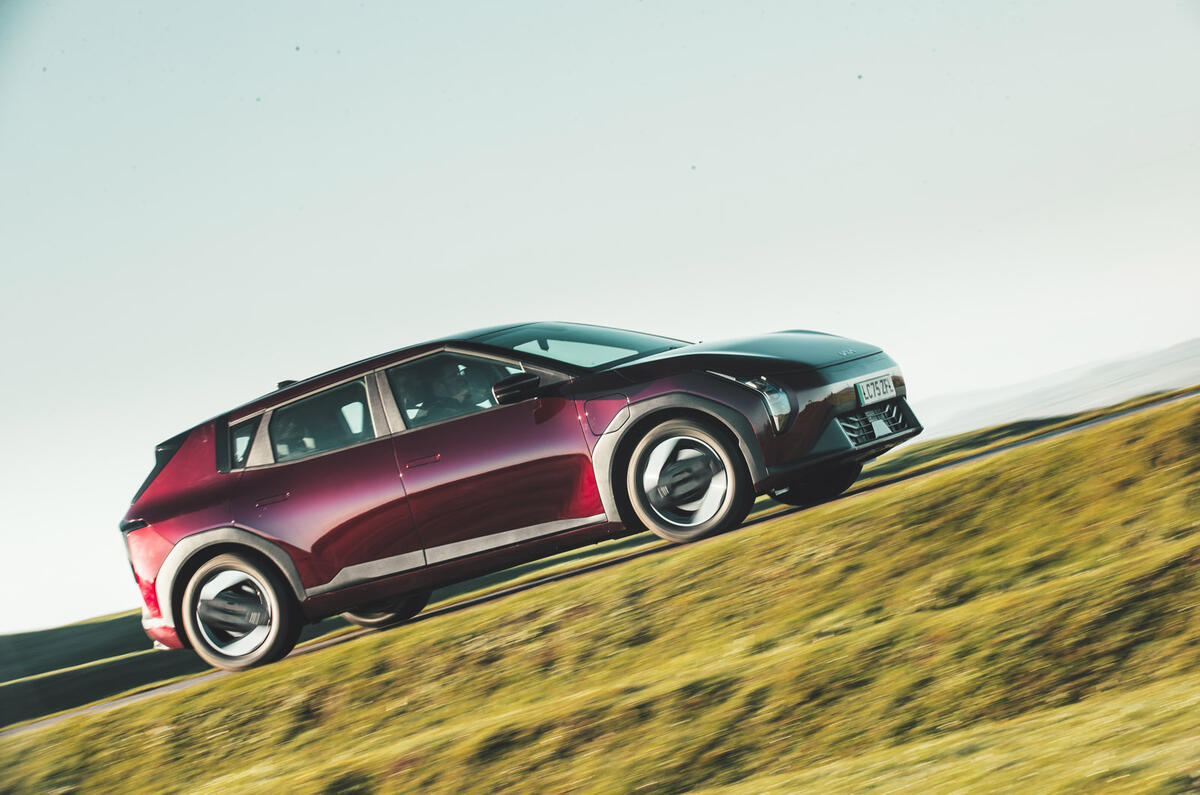
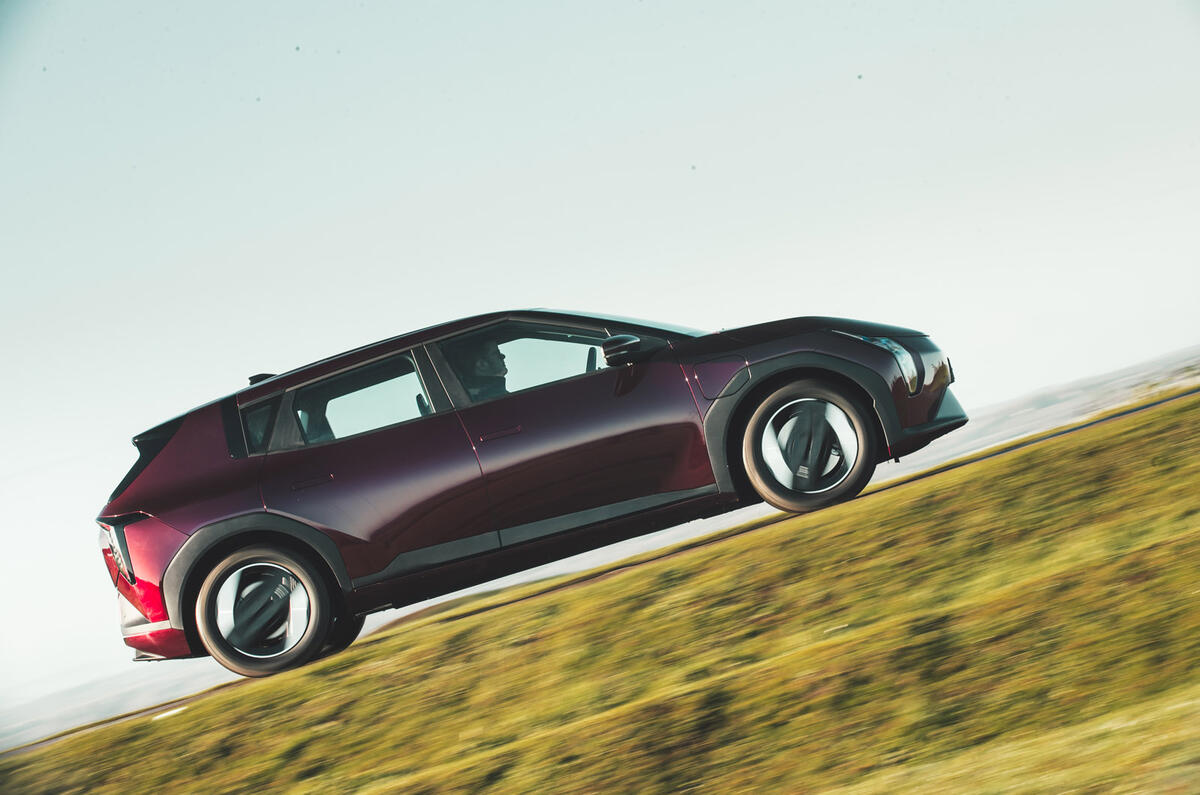
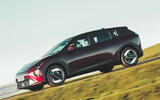
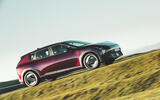
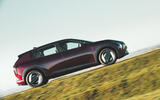
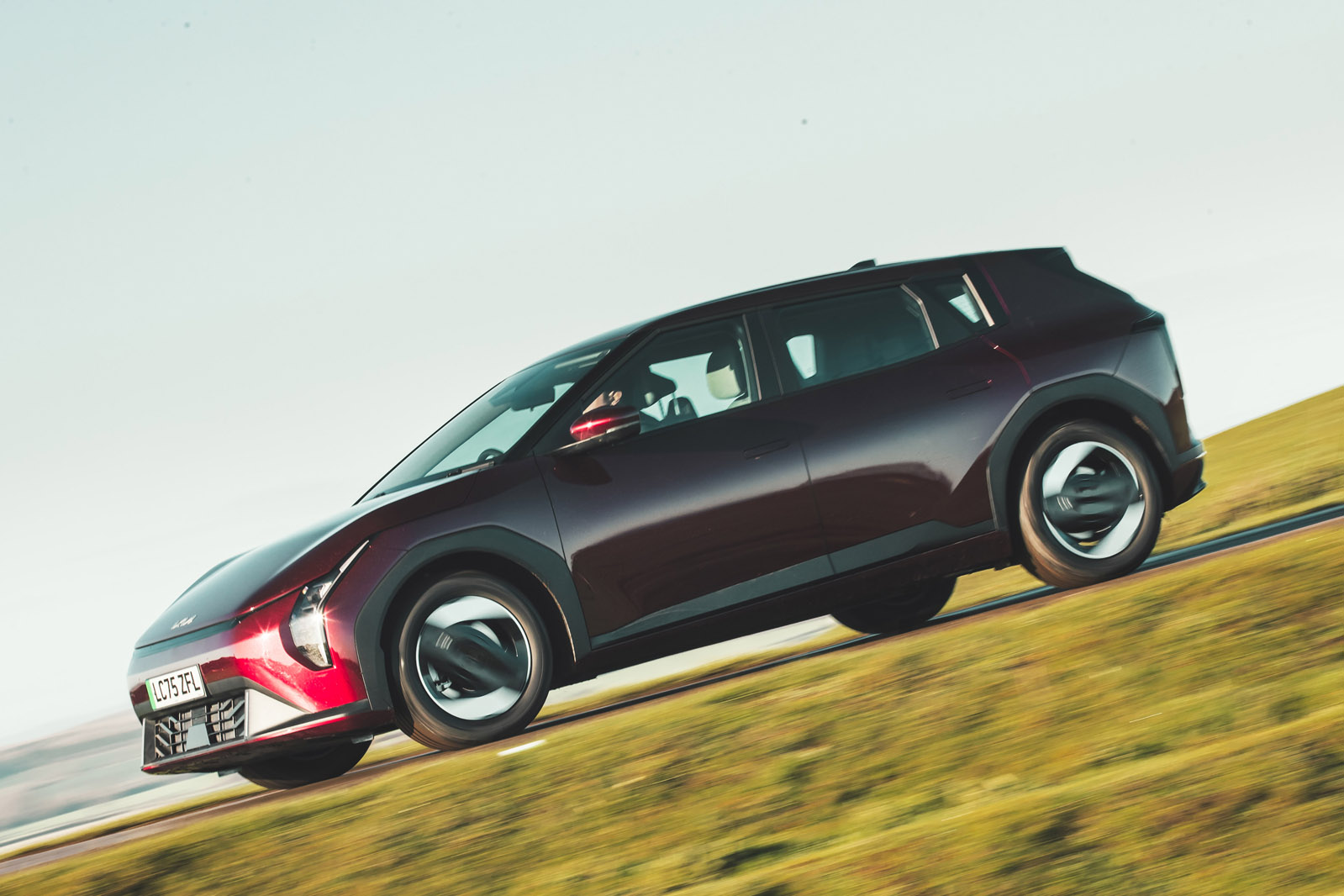
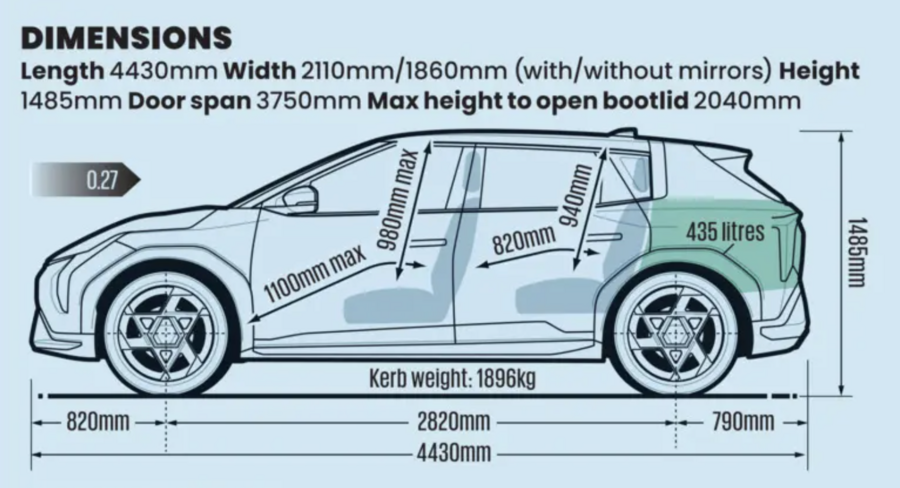
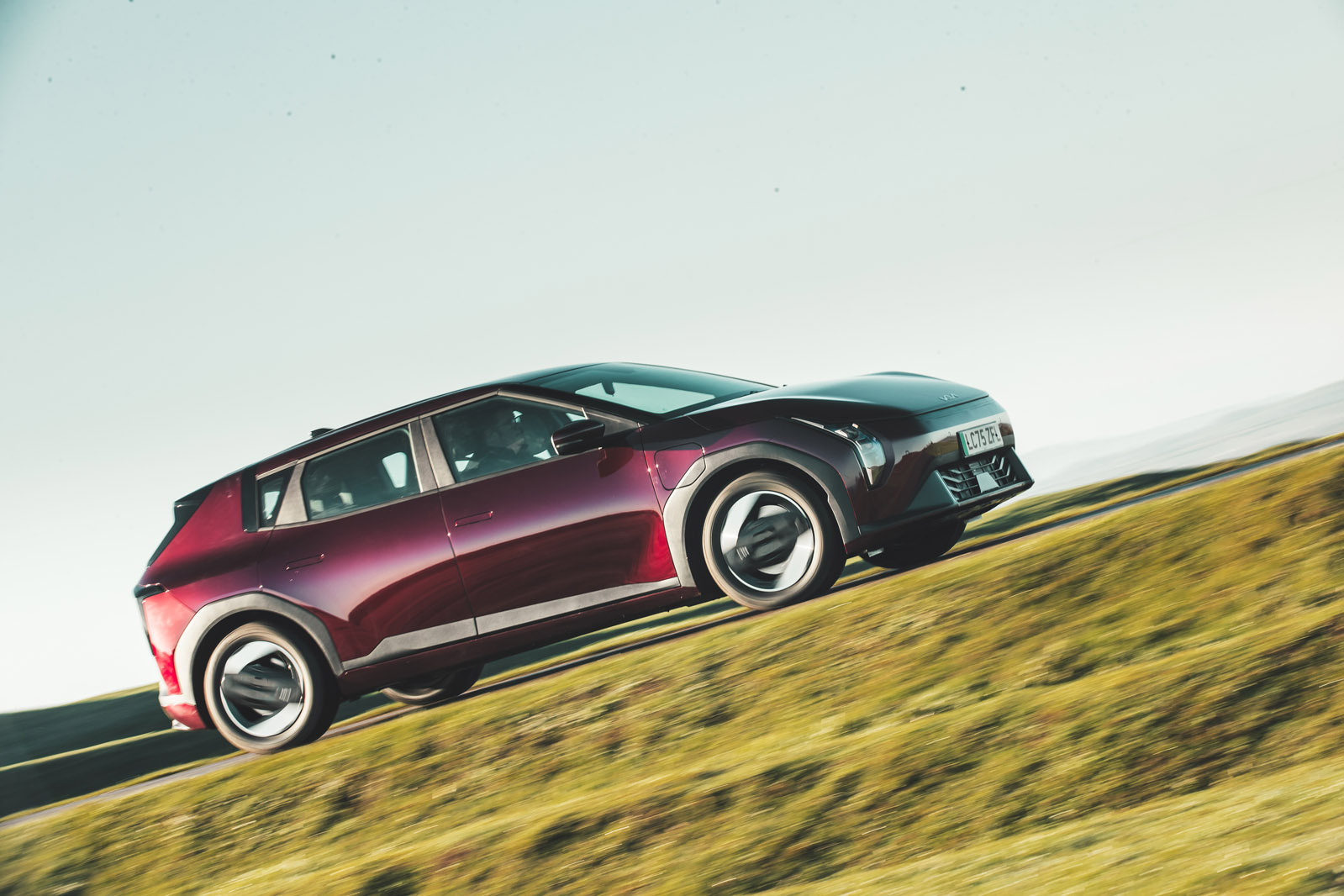
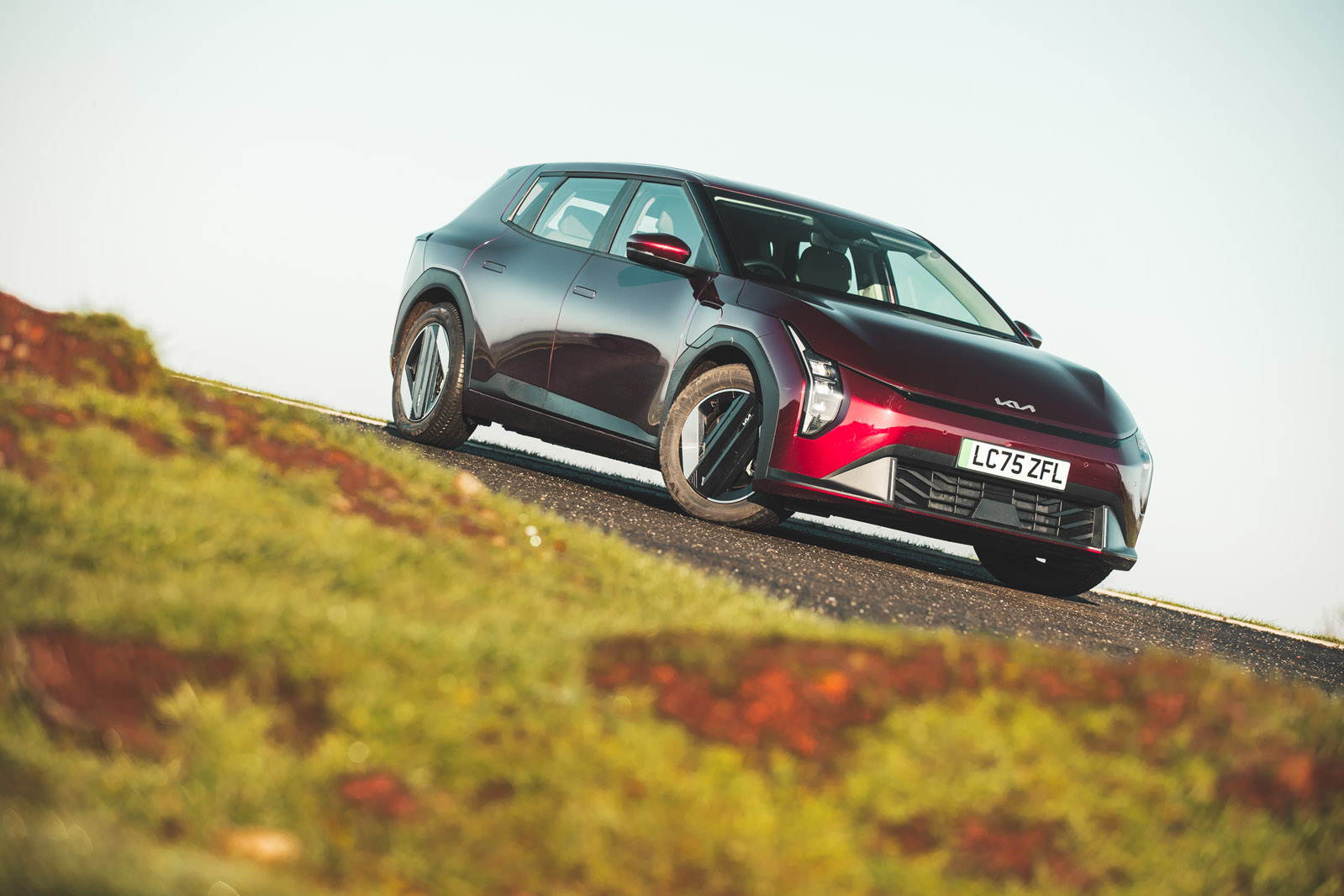
The EV4 is founded on the cheaper, 400V, front-wheel-drive version of the firm’s E-GMP platform but it has a significantly lower roofline than even the related Kia EV3 (1485mm versus 1570mm).

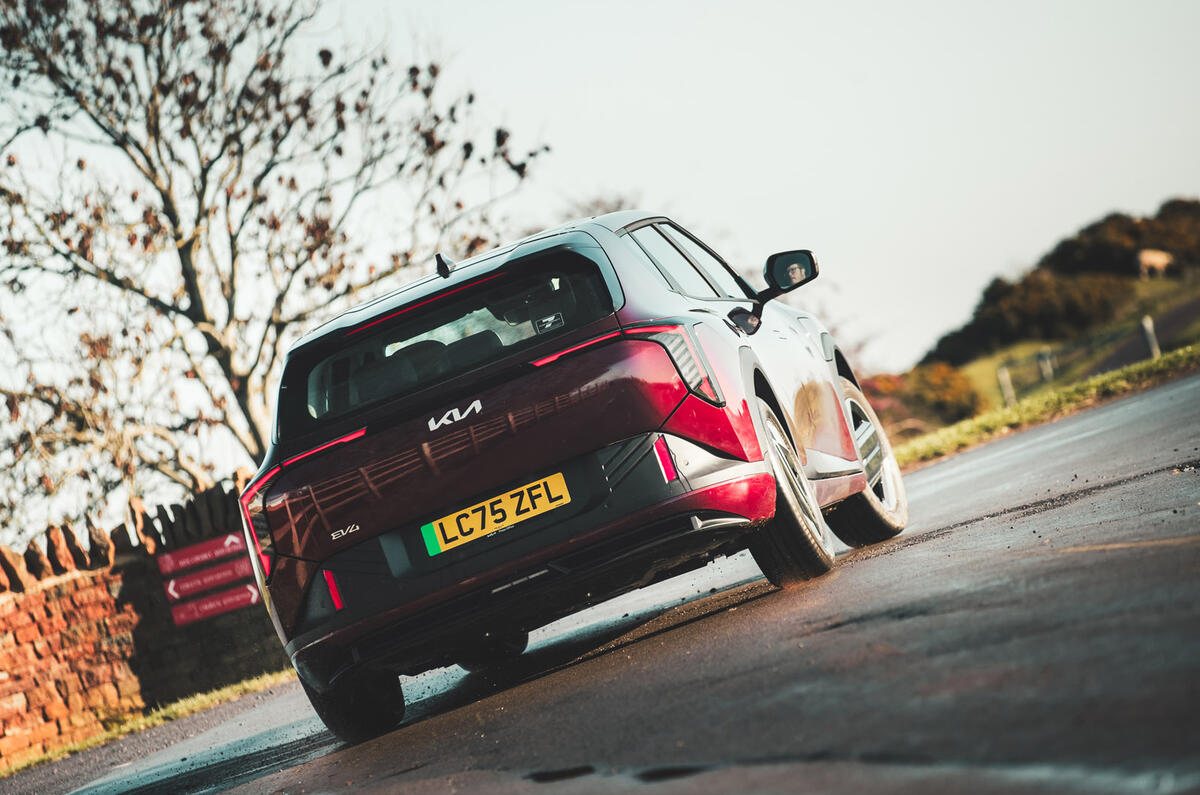
One look tells you that this clearly isn’t Kia making some all-electric homage to the classic European-market five-door hatchback, though. At 4430mm from nose to tail, the EV4 is long by hatchback class standards, and its wheelbase is a whopping 200mm greater than the current Volkswagen Golf’s.

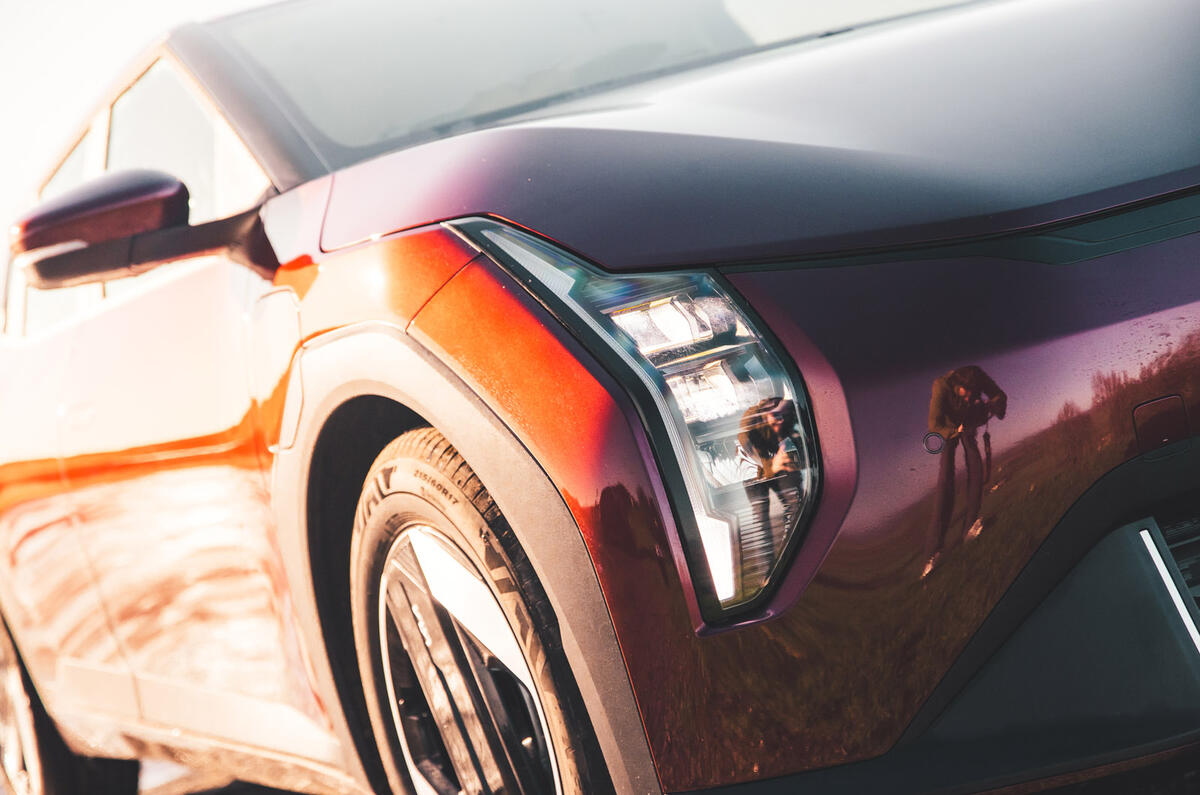
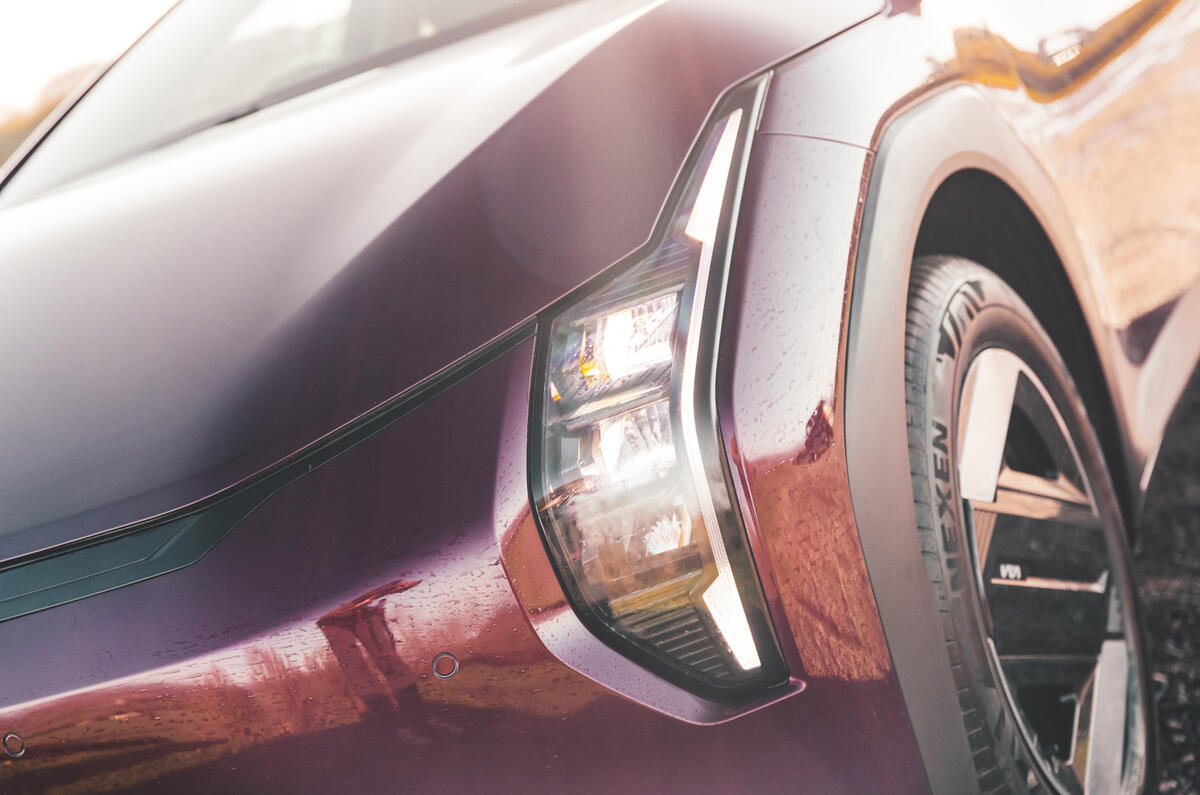
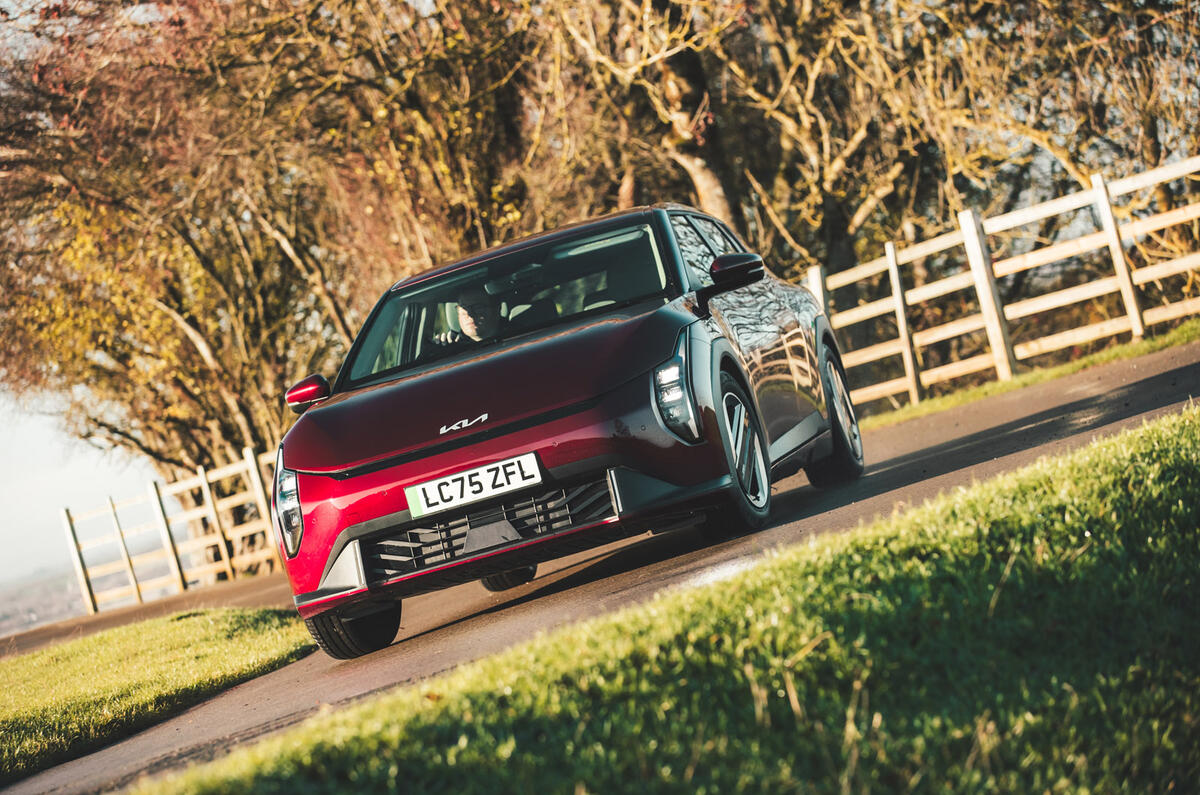
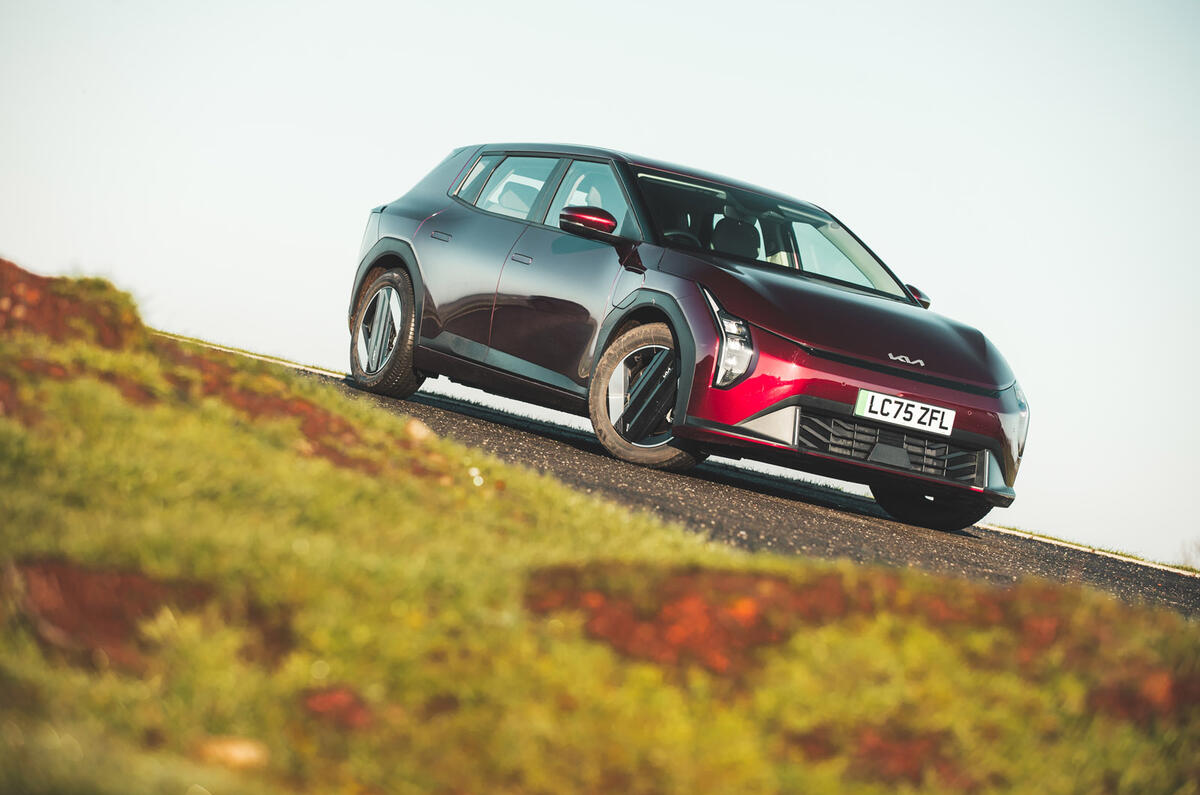
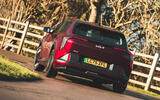
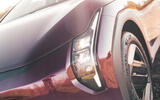
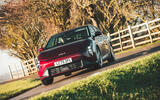
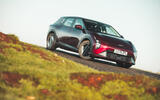
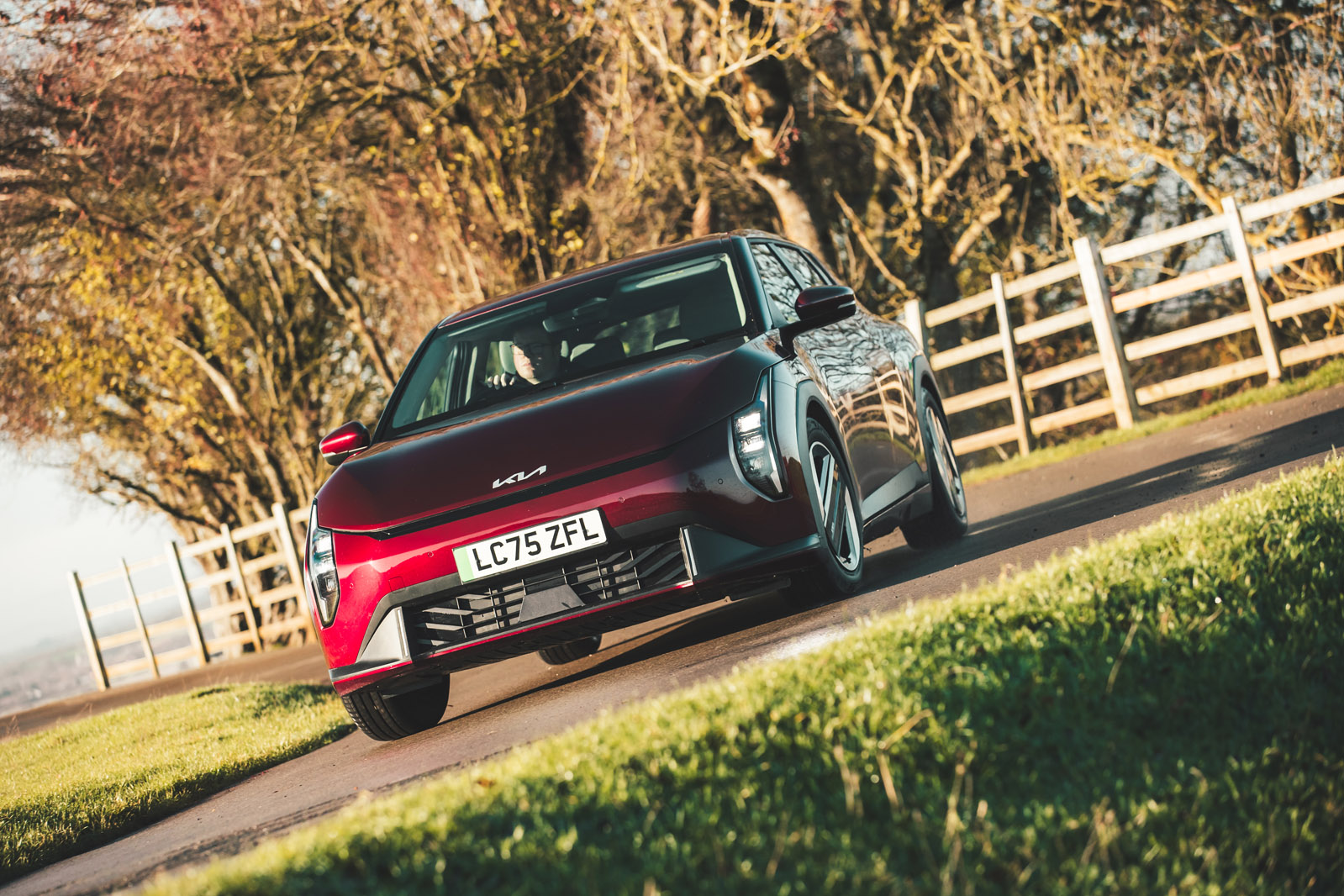
That droop-snoot ‘tiger nose’ design makes the EV4 look like a closer relation to the sporty EV6 than the blockier EV3, EV5 and EV9 SUVs. The slightly freakish, reptilian stare that results is strangely likeable.

Its styling – progressive and bold, rather than respectful or retro – challenges compact five-door norms rather than reinforcing them. And there is certainly a radical streak here that you warm to over time, and plenty of unorthodox charm.

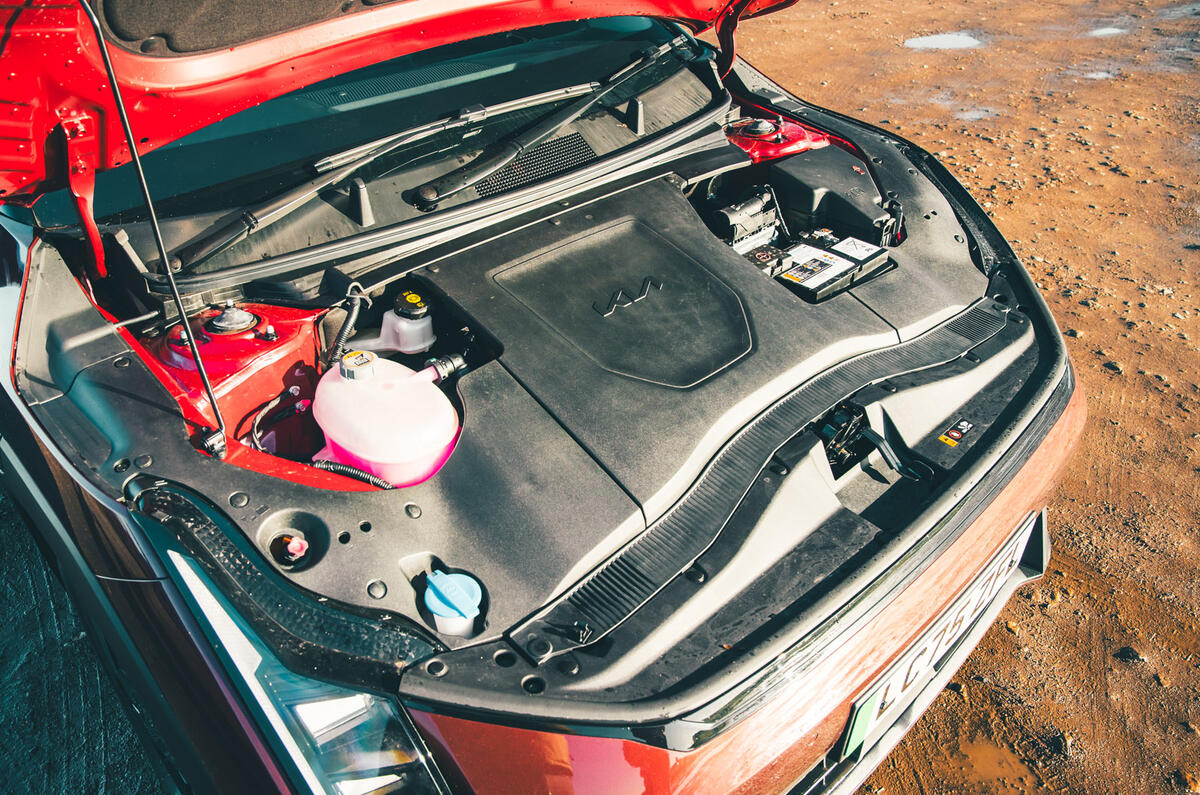
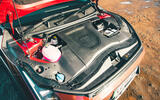
Kia offers the car with a choice of two battery packs and a three-tier range of trim derivatives. All versions are front-wheel drive, with a single permanent magnet synchronous motor providing 201bhp and 209lb ft of torque – plenty by class standards.

The bottom-rung Air model can be had with either a 58.3kWh or 81.4kWh drive battery (though Kia continues to decline to confirm if it’s nominal or usable battery capacity it accounts for), both using cells of a nickel-manganese-cobalt chemistry. Mid-spec GT-Line 

and high-tier GT-Line S models are both fitted with the bigger battery pack as standard. Meanwhile, if you’re shopping at that mid- or high-tier level, you can choose an EV4 with a longer and more aerodynamic ʻfastback’ four-door saloon bodystyle as an alternative to the hatchback. In addition to the predictable practicality compromises that entails, doing so also means you get a car that’s made in Korea rather than Slovakia.

Suspension on both bodystyles is all-independent, via coil springs as well as the Hyundai Motor Group’s SFD3 frequency-responsive dampers and hydraulic bump-stops that also appear on the EV3.


INTERIOR

8
KIA EV4 review 2026 010

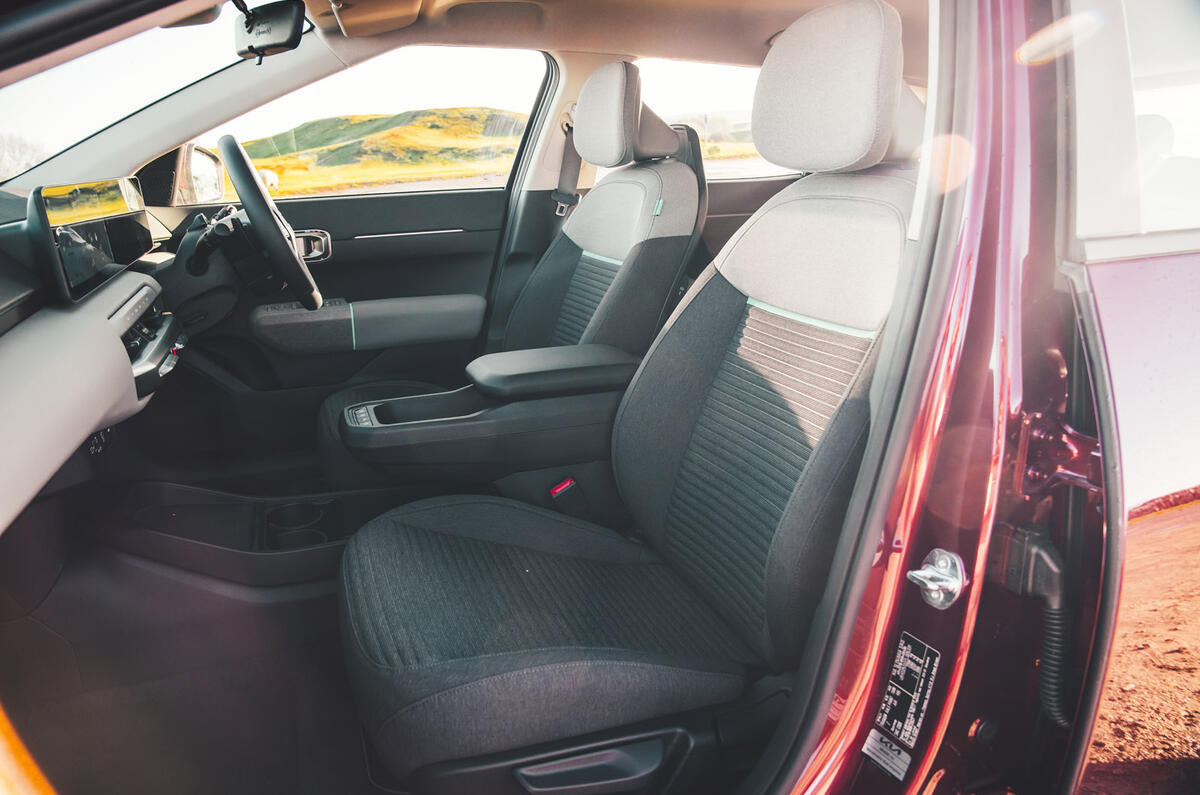
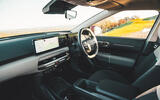
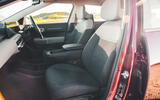
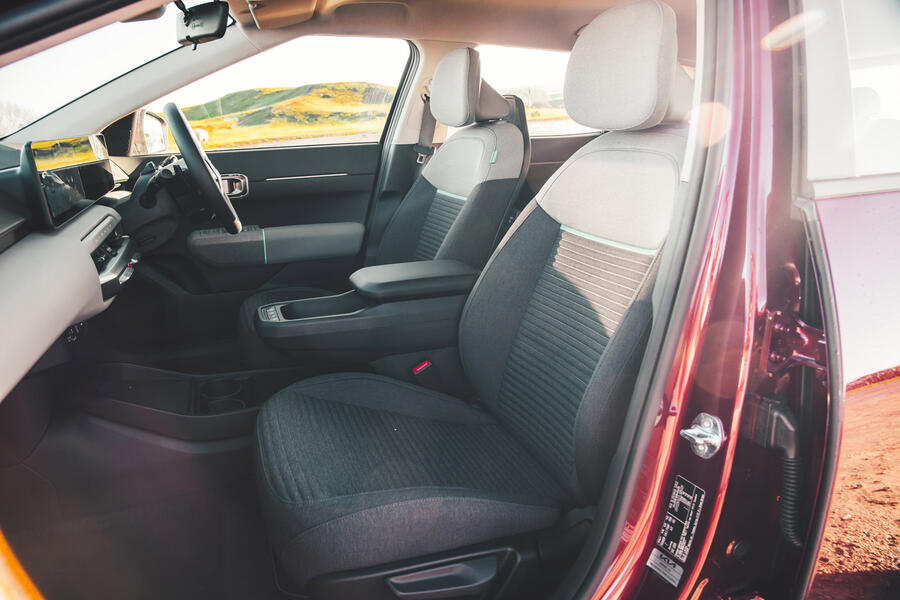
The EV's driver’s seat is comfortable and supportive, and materially interesting enough even in the cloth trim of Air specification. But the first disappointment is that it doesn’t feel particularly low. When you’re sat in it, you’re still aware of the presence of the battery pack displacing your backside upwards by three or four inches.

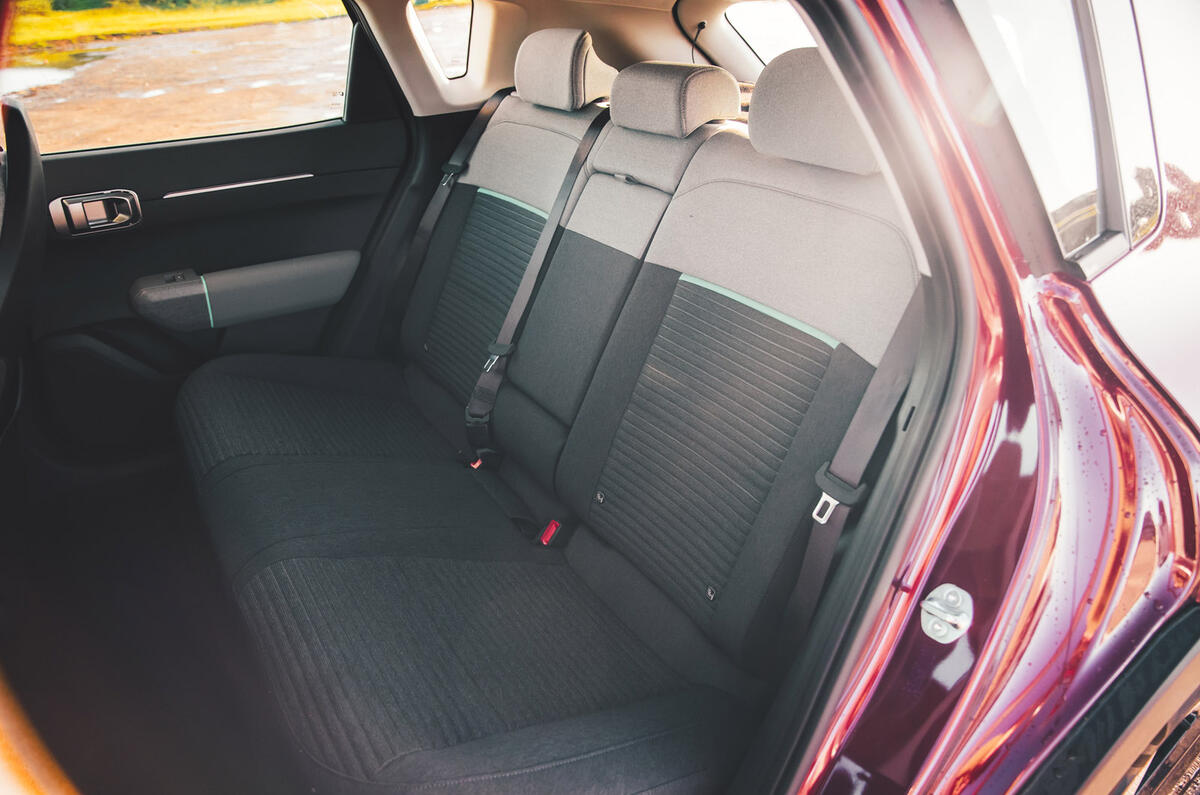
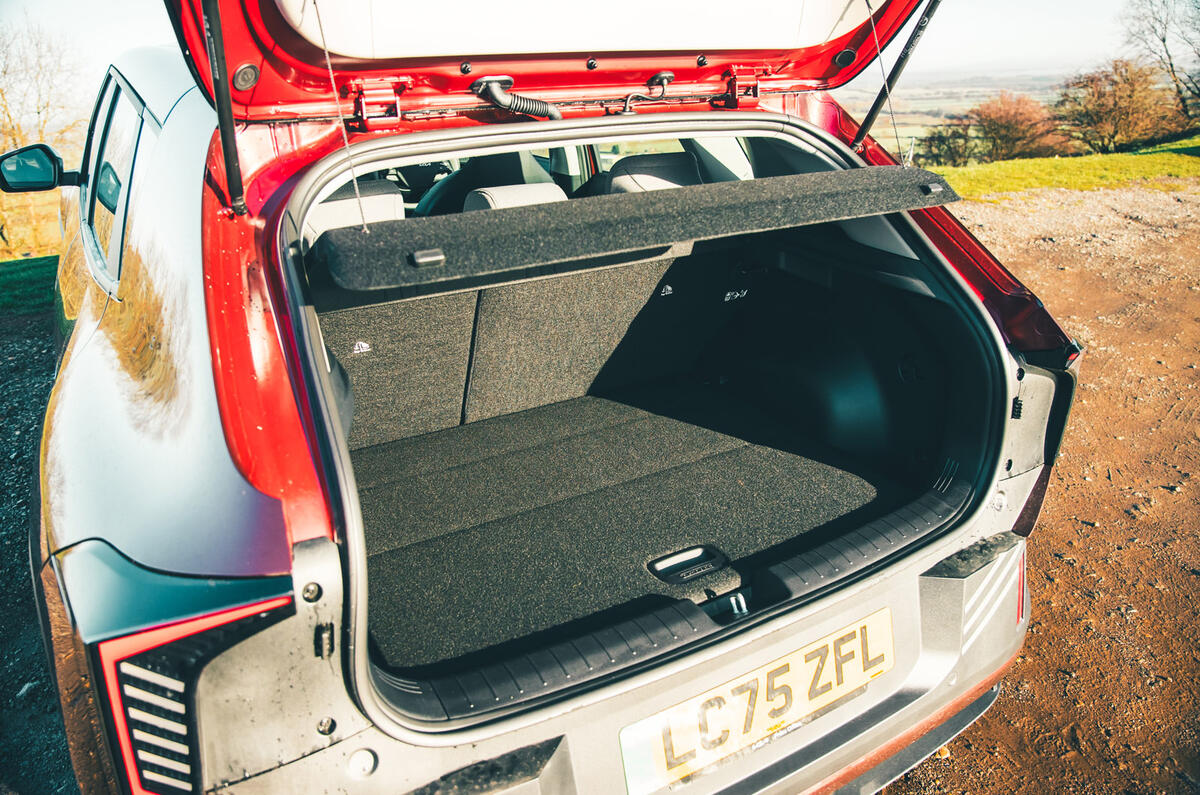
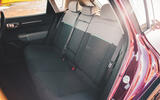
It’s not a deal-breaker, though. Even sitting as you do, you find plenty of room at the controls and, even if you’re long-legged, a typical setting for the driver’s seat leaves generous space for adults in the row behind. Our tape measure confirmed big advantages for the EV4 compared with a Renault Megane E-Tech and Cupra Born on second-row leg and head room, as well as more loading width and length in the boot than either rival. The whole package feels more Octavia- or Civic-adjacent than Golf- or Astra-sized; fairly generous and family-appropriate.

Although the EV4’s interior looks nice, I think Kia has gone too far with the leatherette in upper-tier models. Whereas the EV3 has more fabric, the EV4 is almost Chinese in how much fake cow there is. Thankfully Air models aren't so bad.

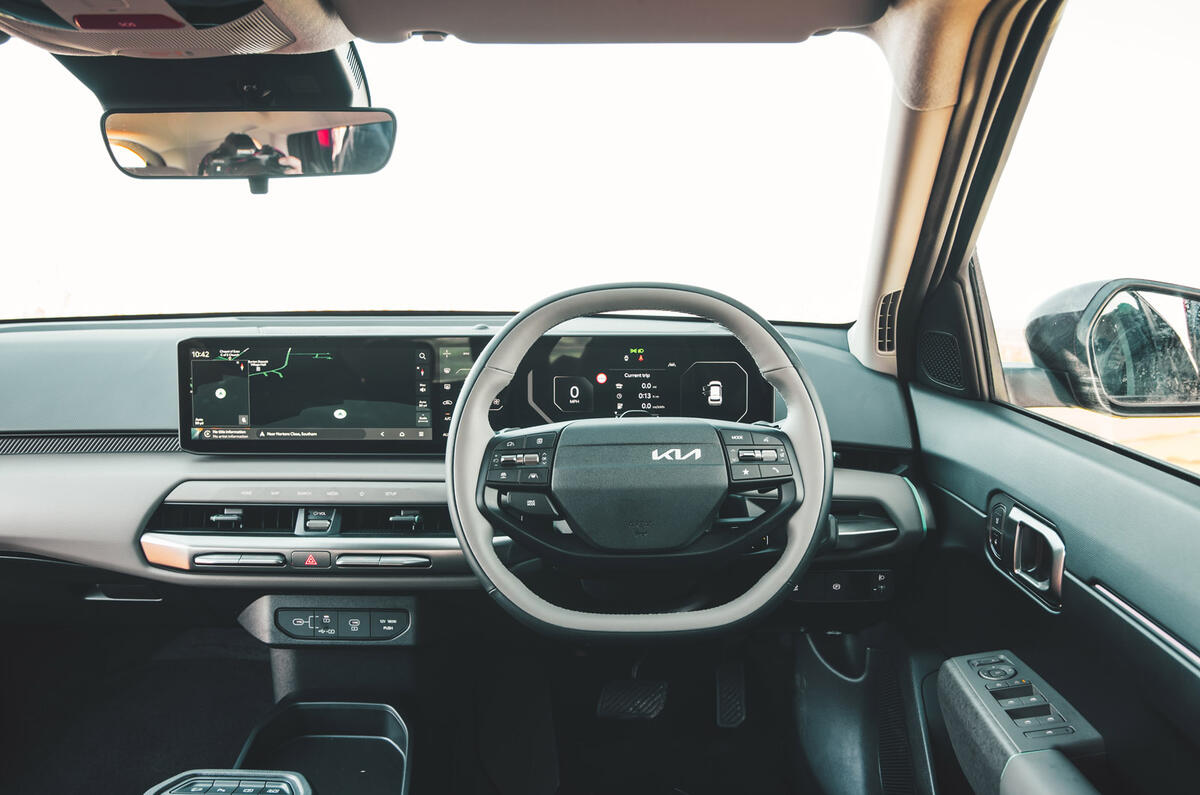
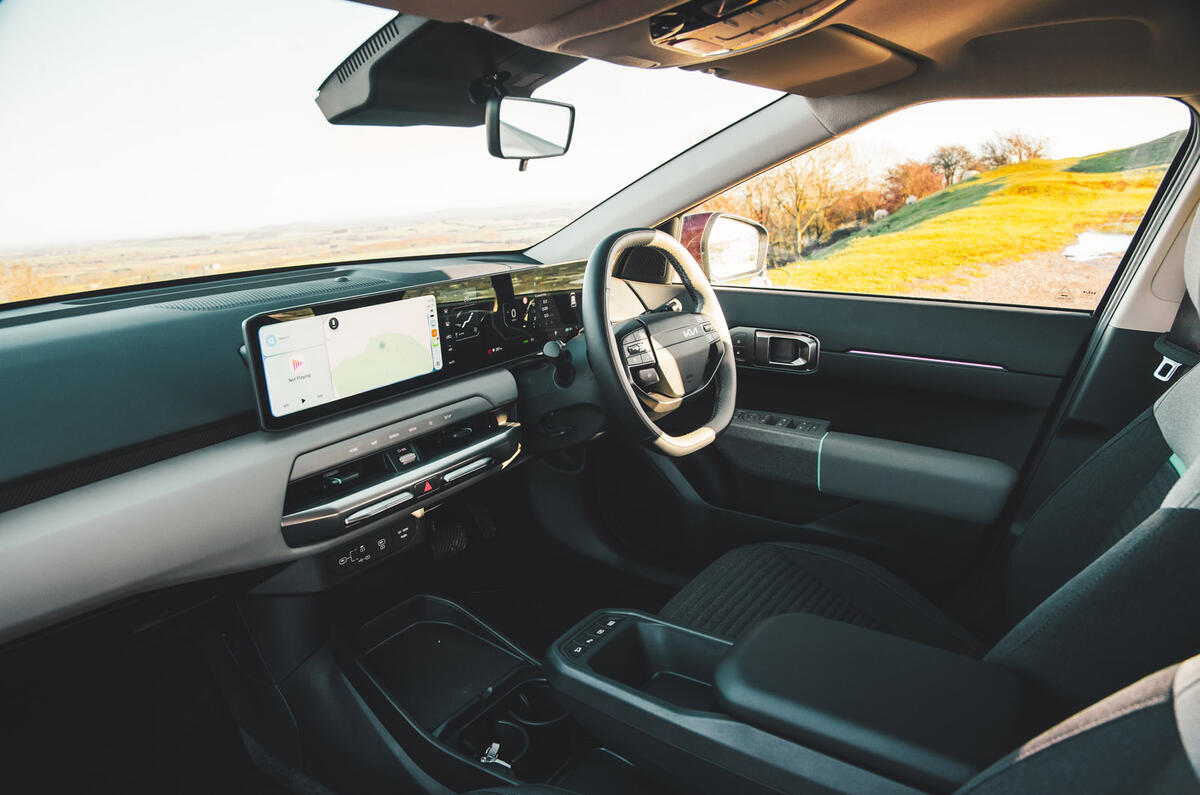
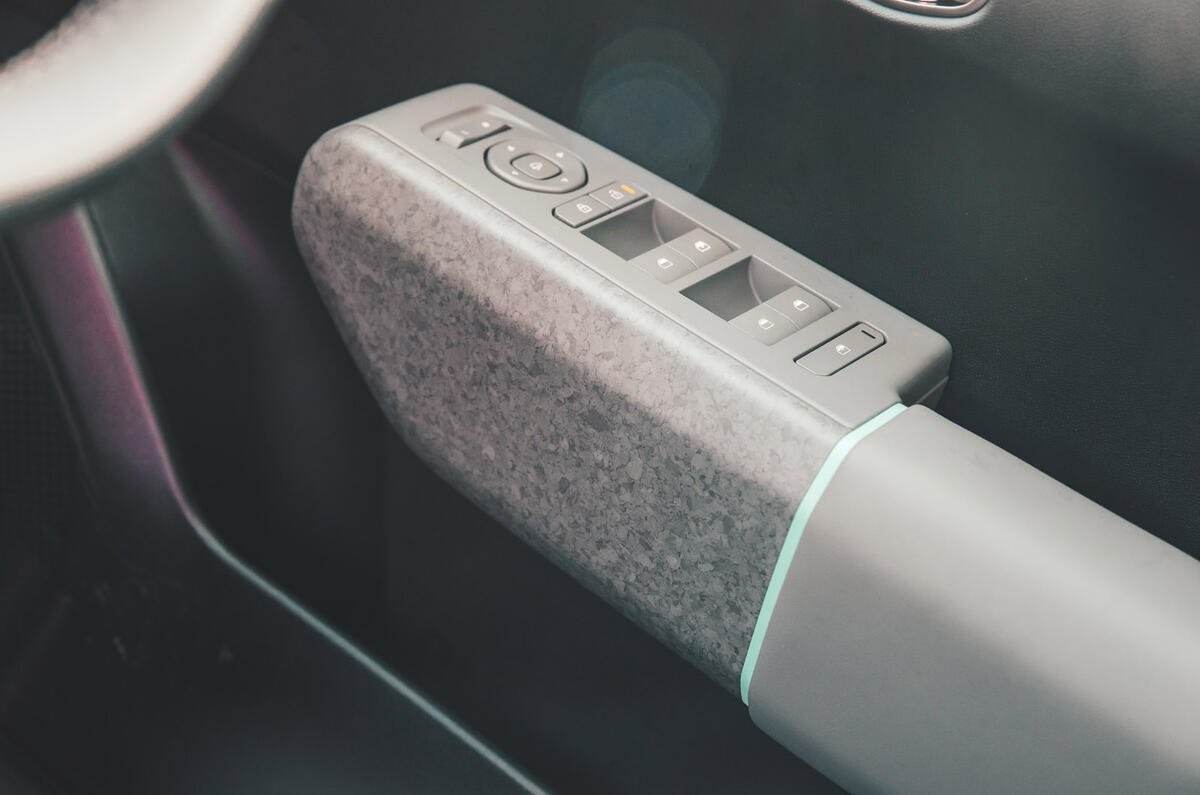
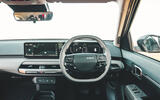
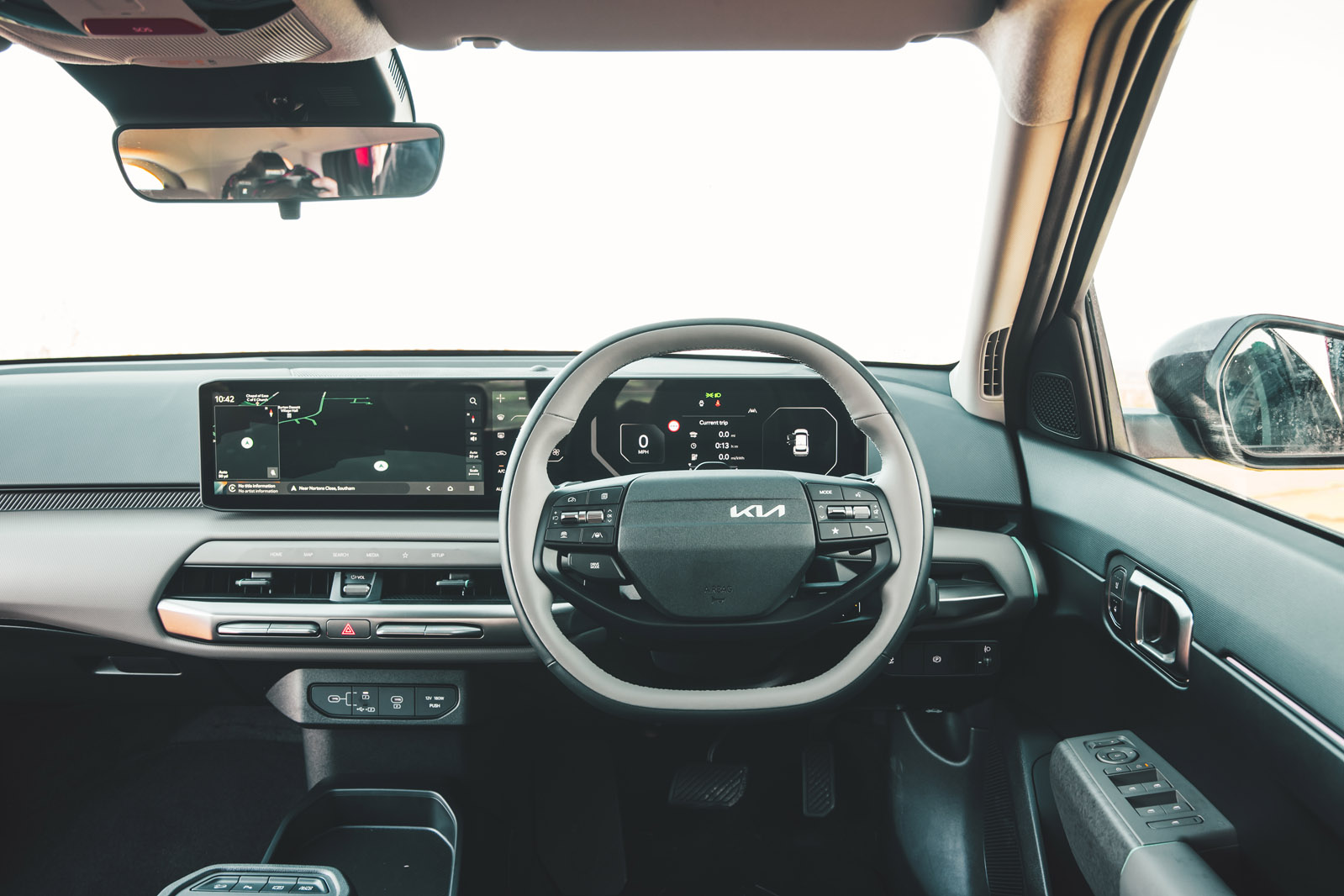
For material quality and fit and finish, the EV4 sets a high standard. The driving environment is smartly presented, with materials and switches that both look and feel solid and hefty rather than in any way plain or cheap; even in entry-level Air models. The brushed aluminium – ahem, plastic – and fabric or faux leather trim on the dashboard is attractive enough, and the ratio of soft to scratchy plastic is appropriate for the class. The cabin's not short of storage space either, even if items do rattle around in the unlined plastic cubby bins.

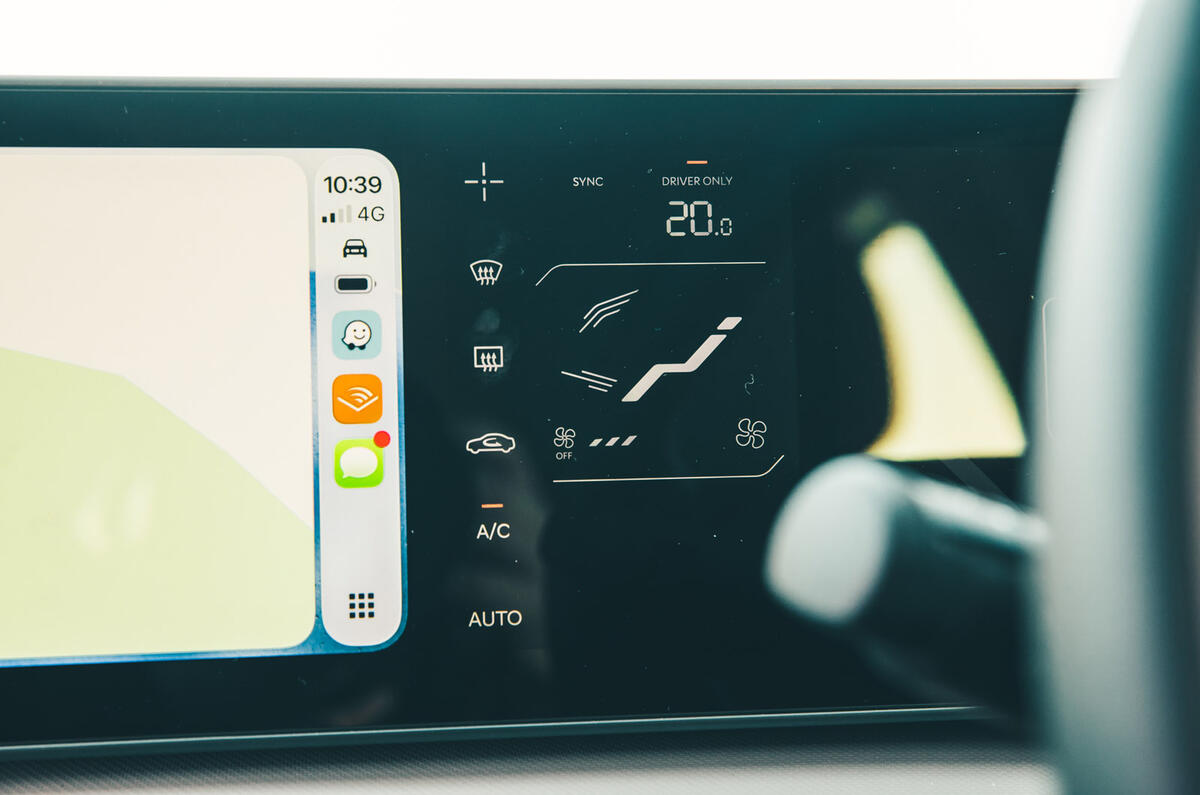
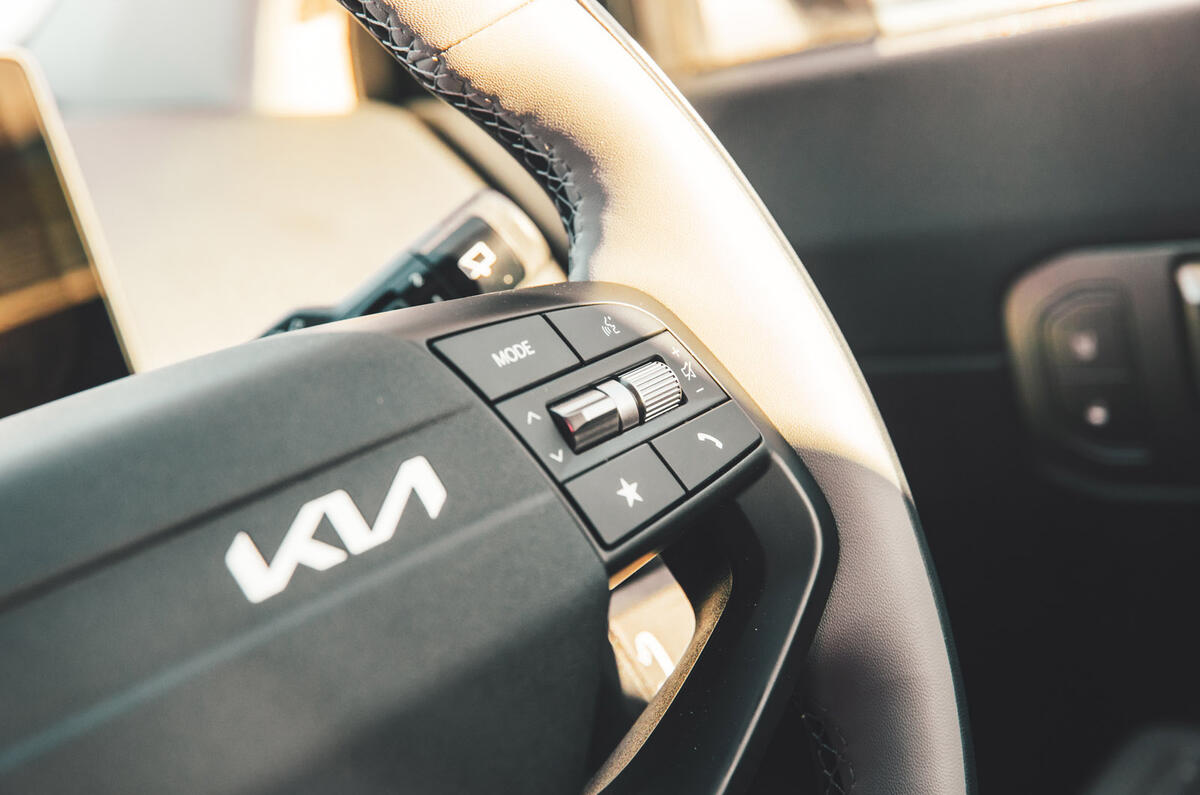
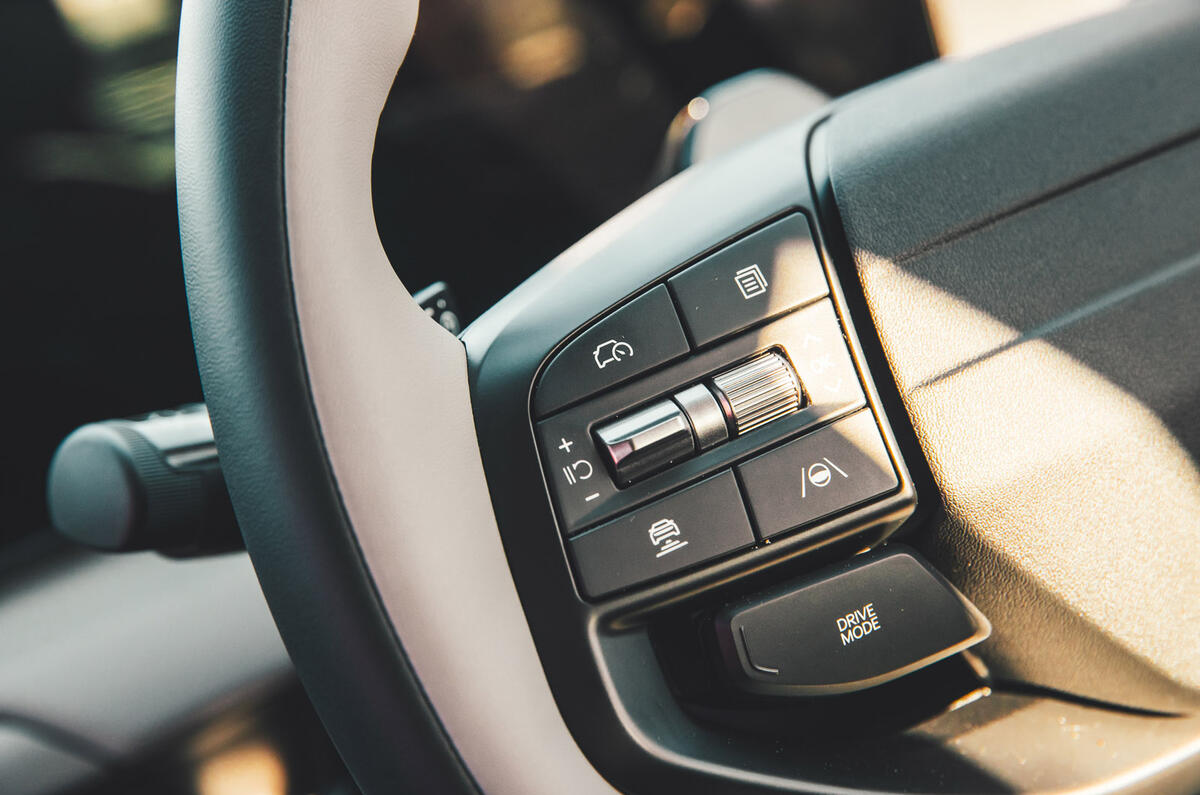
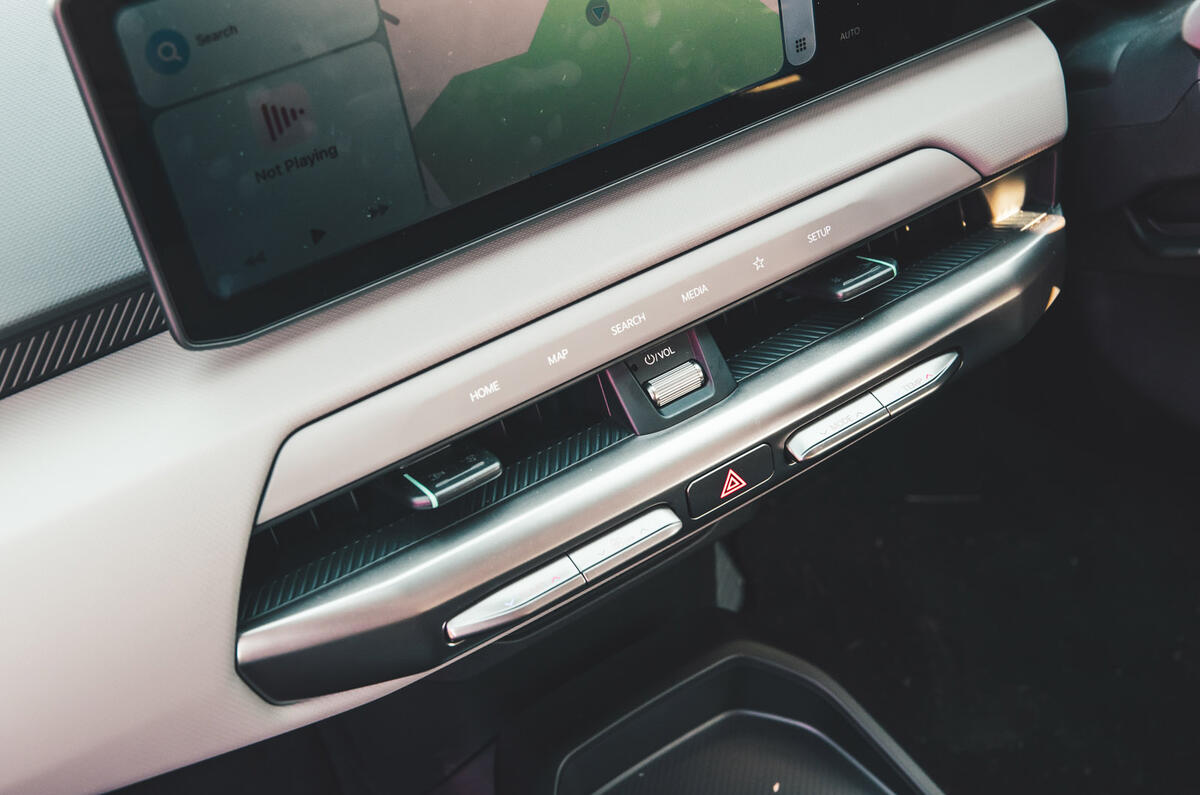
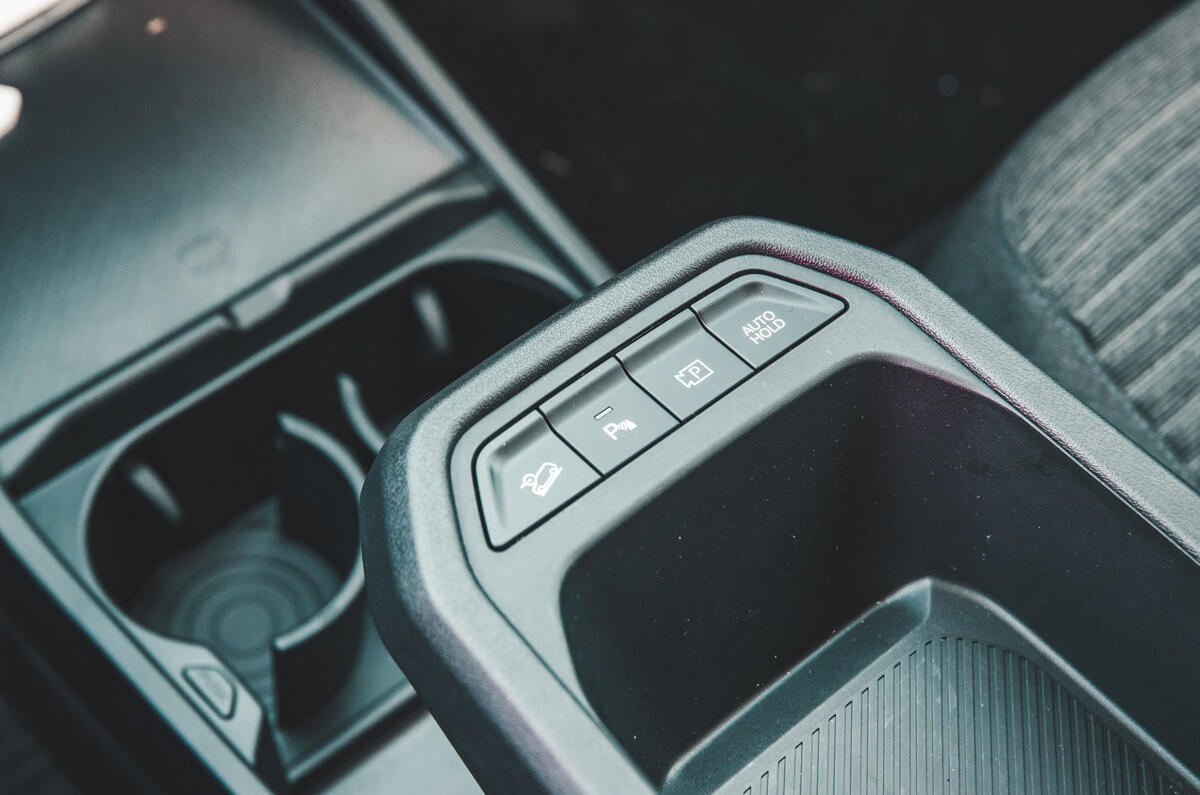
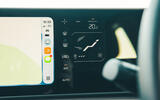
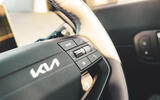
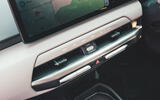
Although Kia’s familiar side-by-side instrument and multimedia displays sits atop the dashboard, some adjacent physical controls (heating and ventilation, audio volume control, infotainment menu shortcuts) are retained. Working in tandem with a generous number of similar controls on the steering spokes and door consoles, they make top-level usability of the car easy without constant reliance on the touchscreen system.

Being capacitive ʻkeys’ rather than proper buttons, the main infotainment shortcut controls are a little too easy to brush accidentally with a passing hand, but otherwise the system is about as easy to use while driving as any without a separate physical cursor controller. 

It also mirrors your smartphone well, making passing back and forth to the native software easy; and Kia’s star-marked driver-configurable shortcut buttons, on the steering wheel and nav bar, improve quick-fire usability no end.

ENGINES & PERFORMANCE

7
KIA EV4 review 2026 023

Kia has become one of the most practised makers of electric cars and the EV4 feels like it benefits from all of the firm’s experience. The paddle shifters behind the steering wheel let you select a totally unchecked coasting mode; a one-pedal-style driving mode that brings the car to a stop automatically, without use of the brake pedal; and any of four strengths of regen in between, one of which is an auto-regen mode. So you really can drive this car any which way you prefer.

If you choose to drive it quickly, there’s an assertive turn of speed on offer. The car doesn’t feel enticingly fast, though. An output of 201bhp might seem like plenty but it’s deployed rather progressively. Slap the accelerator against the carpet as hard as you like: as the dampened rate of climb of the car’s digital power meter reveals, the EV4 will always jog off the line at a governed, mature, gradual rate so as not to disturb traction under those driven front wheels.

It can be easy to forget which way to twist the column-mounted drive selector for forward/reverse. Nudging it up/down or fore/aft might have been more intuitive.

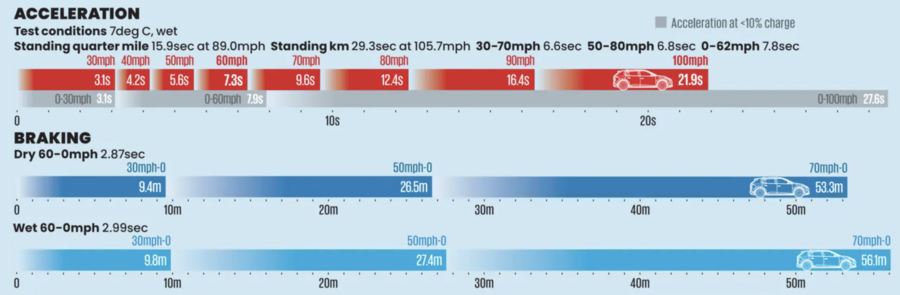
Perhaps because of that careful getaway, the EV4 proved just under half a second slower to 60mph from rest than the Renault Megane E-Tech we tested in 2022, although it surrendered yet more ground to the Renault from 50-80mph. One way or another, the EV4’s powertrain, decently vigorous as it is, makes outright athleticism seem a more secondary concern than drivability and ease of use, and it doesn’t make an especially energetic impression.

RIDE & HANDLING

5
KIA EV4 review 2026 024

Could this be where Kia’s decision to design a lower-riding hatchback pays off? The reality is at best only a qualified success.

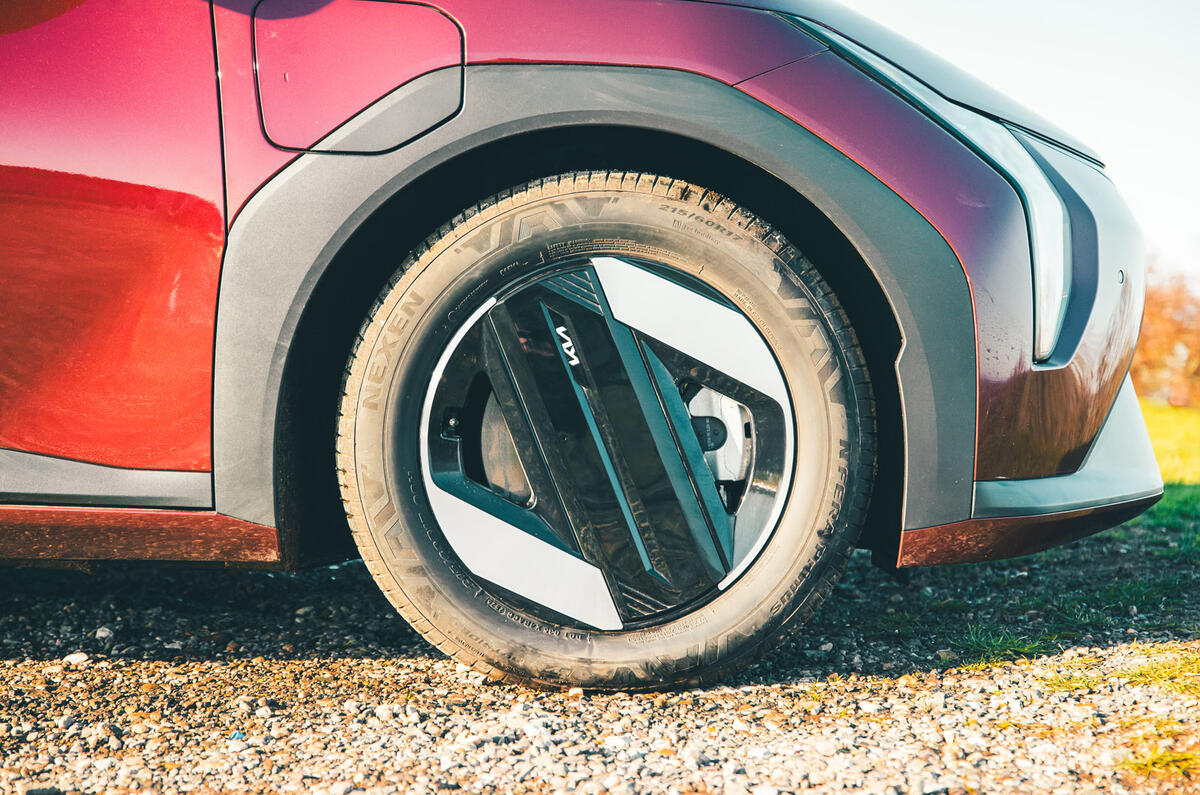
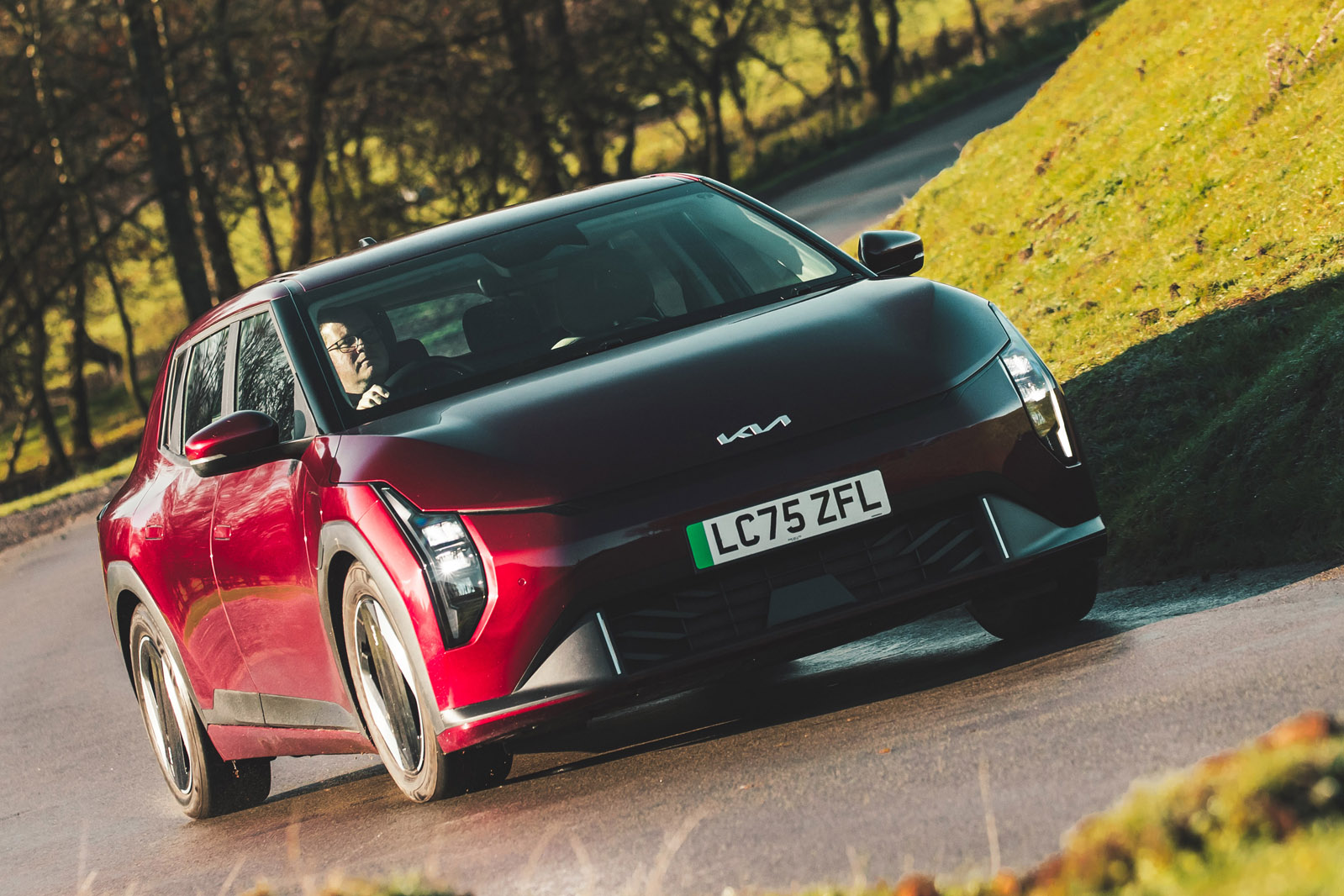
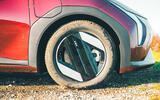
The EV4 is heavy for a fairly compact EV (nearly 1.9 tonnes claimed; Renault Megane E-Tech 60kWh, 1.64 tonnes; Cupra Born 79kWh, 1.84 tonnes) and it has a long wheelbase that, like its kerb weight, dampens its agility. So while it resists body roll better than an equivalent compact SUV might, it doesn’t handle in a particularly keen or incisive fashion, though there is an assurance and precision about the way it changes direction, even on the modestly sized 17in wheels and Air trim’s Nexen tyres.

Kia says most will go for mid-tier GT Line trim; but they’ll be missing a trick. The 17in wheels of the Air model make a decisive difference to both efficiency and ride comfort. I’d have a big battery on an entry-grade car.

A decently tight turning circle makes the car wieldy enough in tight spots and gives it a semblance of nippiness around town. But there’s no energetic turn-in to speak of, nothing tactile or inviting about the slightly dull and monotone steering feel, and when you get out of town, you’re not rewarded should you go looking for some fun factor.

That’s because the EV4’s vertical body control is surprisingly soft, and its damping at times unsettlingly ineffective. It’s conceivable that Kia’s aim, like Citroën’s of late, is to use hydraulic suspension bushings to permit softer springing and a better-isolated ride. If so, it has not been particularly well achieved: the EV4’s ride isolation is average at best, even on 17in wheels.

But its body control on country roads is downright poor. The car pitches and heaves noticeably at quicker B-road speeds – enough to prompt passengers to ask what’s wrong with it, and to undermine any chance the driver might have in taking much entertainment from it on an averagely testing road.
Assisted Driving - 4 stars

Kia gets credit in simple ways with its ADAS systems - because its speeding buzzer can be deactivated with one long press of the audio volume knob on the steering wheel, and its lane departure warning system similarly via a specific control on the opposite spoke. The driver monitoring system is the really persistent one that still does its best to annoy you, however, because it is particularly quick to intrude; although, if you configure the car’s shortcut controls just so, you can deactivate even that within a couple of prods of your finger.

Adaptive cruise control is standard even on entry-grade cars. If you want remote smart parking assist (with which the car can reverse itself into and out of marked bays, even after you’ve exited it), you’ll need GT-Line S trim.

MPG & RUNNING COSTS

7
KIA EV4 review 2026 001

Standards for value among volume-selling EVs are changing by the week as new entrants and existing players either miss out on or qualify for the UK government’s Electric Car Grant. Kia hasn’t met the necessary Science Based Targets initiative criteria to qualify for the higher rate, so the EV4 gets only £1500 off. That leaves it looking slightly expensive compared with some, starting at £33,245, with equivalent versions of the Renault Megane E-Tech and Peugeot e-308 now around the £31k mark. 

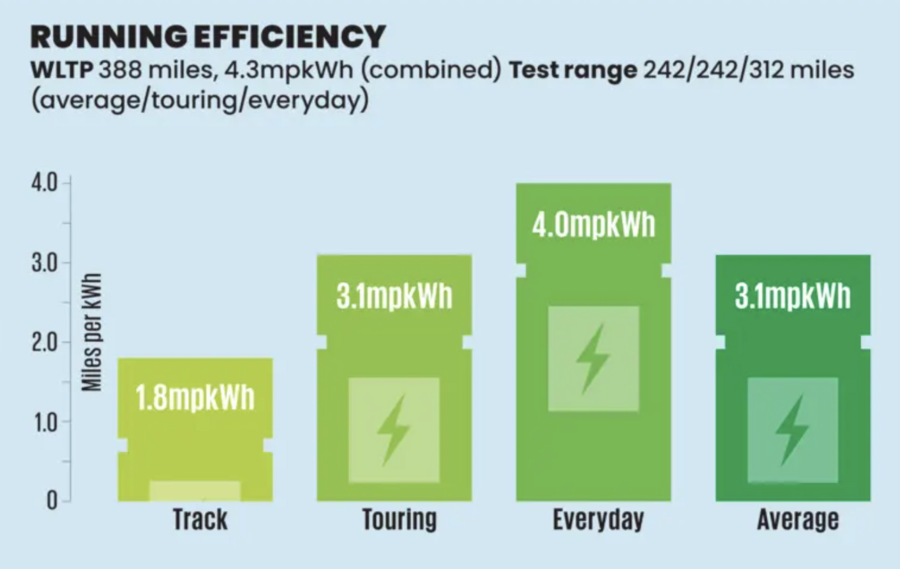
However, it hits back with great warranty and breakdown coverage, and strong real-world range and efficiency. Assuming its usable battery capacity is 78kWh, we documented 242 miles of motorway touring range and 312 miles at 20-50mph urban speeds. Compared with Kia’s WLTP claims, that may look a little disappointing, but it’s good enough to earn the EV4 a place among the class’s longer-legged options based on our test results.

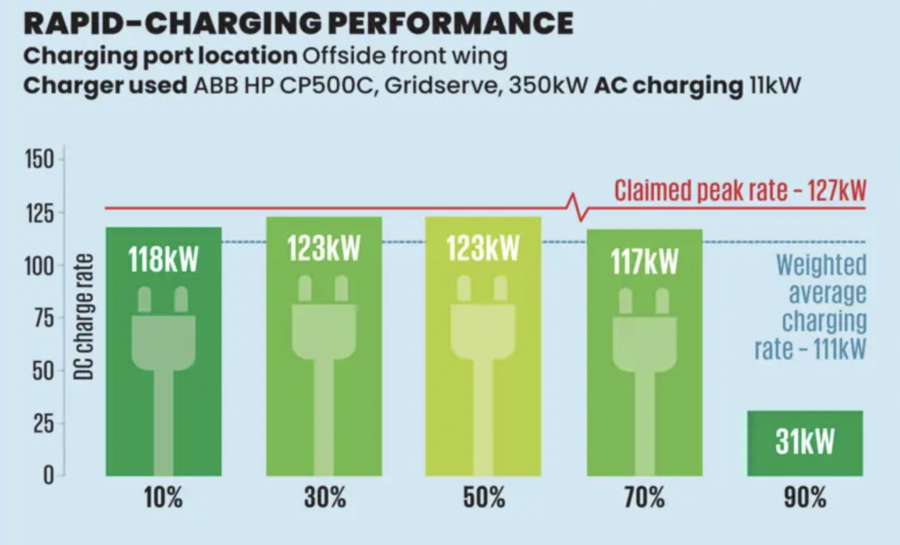
A DC rapid charging peak rate of 129kW looks a bit weedy; and, on test, our Air-spec test car hit a weighted average of 111kW - respectable enough, but nothing to single out for praise in itself.


VERDICT

7
KIA EV4 review 2026 027

If one car maker has the potential to meet the need for affordable, zesty, engaging family cars that Ford of Europe’s retreat has left, it is probably Kia. The very existence of the EV4 – a European-style, European-made, five-door hatch cast as the antidote to our SUV-obsessed malaise – suggests there is a will to seize this opportunity. Yet Kia still seems incapable of fully stepping into the breach.

The EV4, so well realised in many ways yet so ordinary in others, shows how near the company has come – and how far away it remains. It's spacious, alternative, and quite expertly executed in some ways; but that it isn’t that bit sweeter to drive is acutely regrettable.

Illya Verpraet

Illya Verpraet Road Tester Autocar
Title: Road Tester

As a road tester, Illya drives everything from superminis to supercars, and writes reviews and comparison tests, while also managing the magazine’s Drives section. Much of his time is spent wrangling the data logger and wielding the tape measure to gather the data for Autocar’s in-depth instrumented road tests.

He loves cars that are fun and usable on the road – whether piston-powered or electric – or just cars that are very fit for purpose. When not in test cars, he drives an R53-generation Mini Cooper S or a 1990 BMW 325i Touring.

Matt Saunders

Matt Saunders Autocar
Title: Road test editor

As Autocar’s chief car tester and reviewer, it’s Matt’s job to ensure the quality, objectivity, relevance and rigour of the entirety of Autocar’s reviews output, as well contributing a great many detailed road tests, group tests and drive reviews himself.

Matt has been an Autocar staffer since the autumn of 2003, and has been lucky enough to work alongside some of the magazine’s best-known writers and contributors over that time. He served as staff writer, features editor, assistant editor and digital editor, before joining the road test desk in 2011.

Since then he’s driven, measured, lap-timed, figured, and reported on cars as varied as the Bugatti Veyron, Rolls-Royce PhantomTesla RoadsterAriel Hipercar, Tata Nano, McLaren SennaRenault Twizy and Toyota Mirai. Among his wider personal highlights of the job have been covering Sebastien Loeb’s record-breaking run at Pikes Peak in 2013; doing 190mph on derestricted German autobahn in a Brabus Rocket; and driving McLaren’s legendary ‘XP5’ F1 prototype. His own car is a trusty Mazda CX-5.

Mark Tisshaw

mark-tisshaw-autocar
Title: Editor

Mark is a journalist with more than a decade of top-level experience in the automotive industry. He first joined Autocar in 2009, having previously worked in local newspapers. He has held several roles at Autocar, including news editor, deputy editor, digital editor and his current position of editor, one he has held since 2017.

From this position he oversees all of Autocar’s content across the print magazine, autocar.co.uk website, social media, video, and podcast channels, as well as our recent launch, Autocar Business. Mark regularly interviews the very top global executives in the automotive industry, telling their stories and holding them to account, meeting them at shows and events around the world.

Mark is a Car of the Year juror, a prestigious annual award that Autocar is one of the main sponsors of. He has made media appearances on the likes of the BBC, and contributed to titles including What Car?Move Electric and Pistonheads, and has written a column for The Sun.