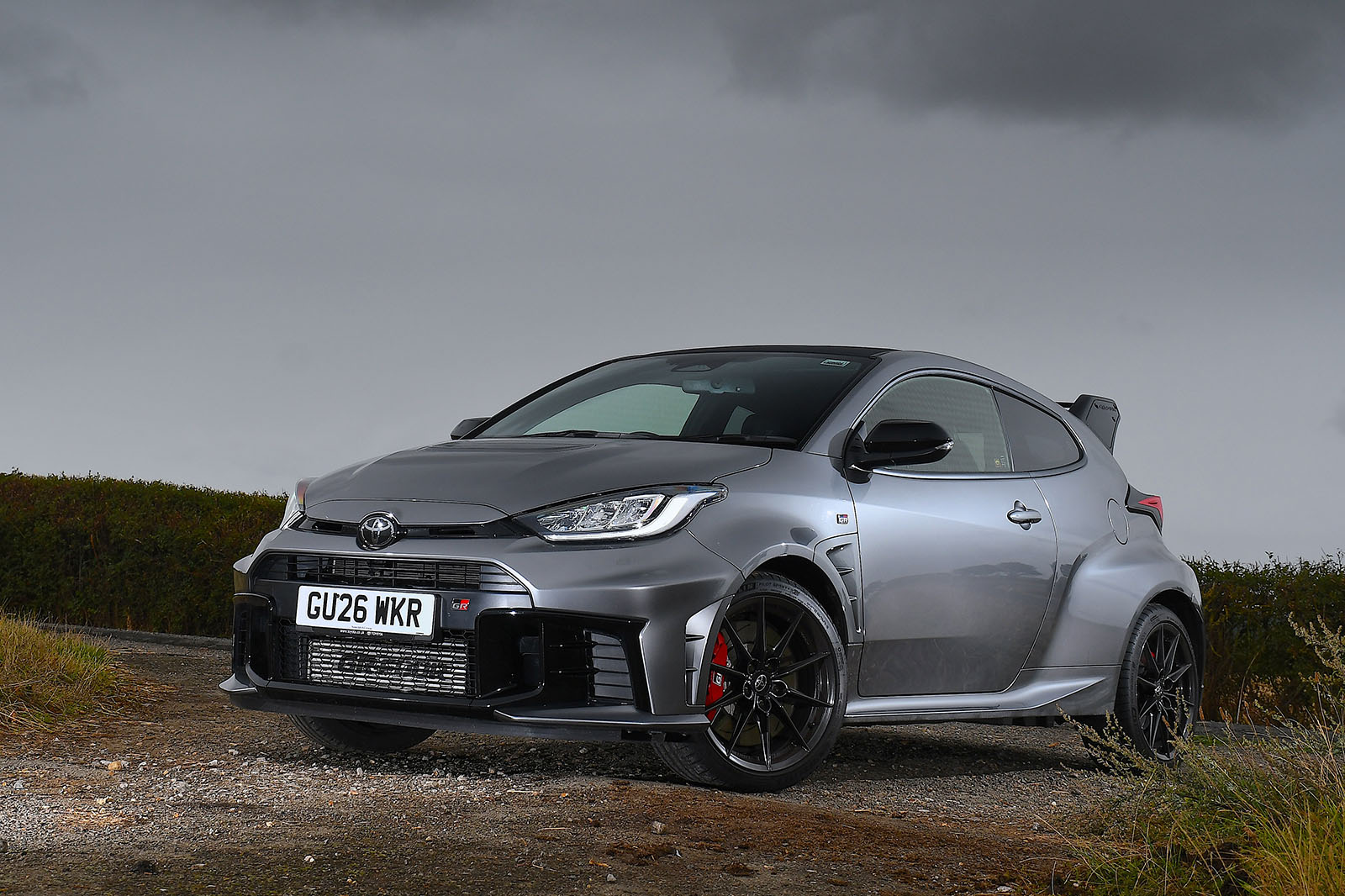
From £23,9957

Madcap Yaris continues to evade the emissions noose. Is it still great?

Find Toyota GR Yaris tested: Still great to drive, but that price... deals
New car deals
From £23,995
Nearly-new car deals
From £18,290
Other Services
Sell your car
84% get more money with

The history of the Toyota GR Yaris in the UK car market makes an interesting case study in how extremes of supply and demand can affect the development of a modern performance car.

Much anticipated as the first proper Toyota performance car the firm had developed on its own in some 20 years, the GR Yaris arrived on UK roads in 2020. A rare kind of four-wheel-drive, rally-cult, homologation type once popular but not seen from almost any brand in decades, it inspired a glowing reception from reviewers and owners alike – and, pretty soon, a waiting list of more than two years.

A tempting entry-level price of just under £30,000 was, no doubt, key. Toyota knew it had to sell 25,000 examples of the car to satisfy homologation requirements for its Yaris World Rally Championship car. But it also knew that, in a European performance car market rapidly shrinking in the face of tightening emissions rules, registering too many of them, in Europe or the UK, would ultimately cost it. 

And so, with interest the firm described as ʻoverwhelming’, Toyota withdrew the car from sale in the UK in 2022, shortly thereafter managing availability in short releases and special editions.

It was probably inevitable, in those circumstances, that the car wouldn’t – couldn’t – remain so affordable. Sure enough, it hasn’t. The GR Yaris re-emerged after its big 2024 revision as a car starting at £44,000, with the end-of-run Ogier and Rovanperä special-edition versions of the pre-facelift model pushing the envelope all the way to a scarcely believable £60,000.

Advertisement
Back to top

So where is it today? And, after so much repositioning and upgrading, does it still represent such a unique and compelling proposition as it did six years ago?


DESIGN & STYLING

8
Toyota Yaris GR FOUR review 2026 024

The GR Yaris has been through no shortage of mechanical updates over its lifespan so far. We have seen manual and paddle-shift  automatic versions; road- and circuit-intended rolling chassis specifications; and a pretty extensive facelift  in 2024 that reappraised the chassis integrity, axle hardware and seating position. Now, however, the car’s model range has been simplified, informed by the choices made by the vast majority of customers.

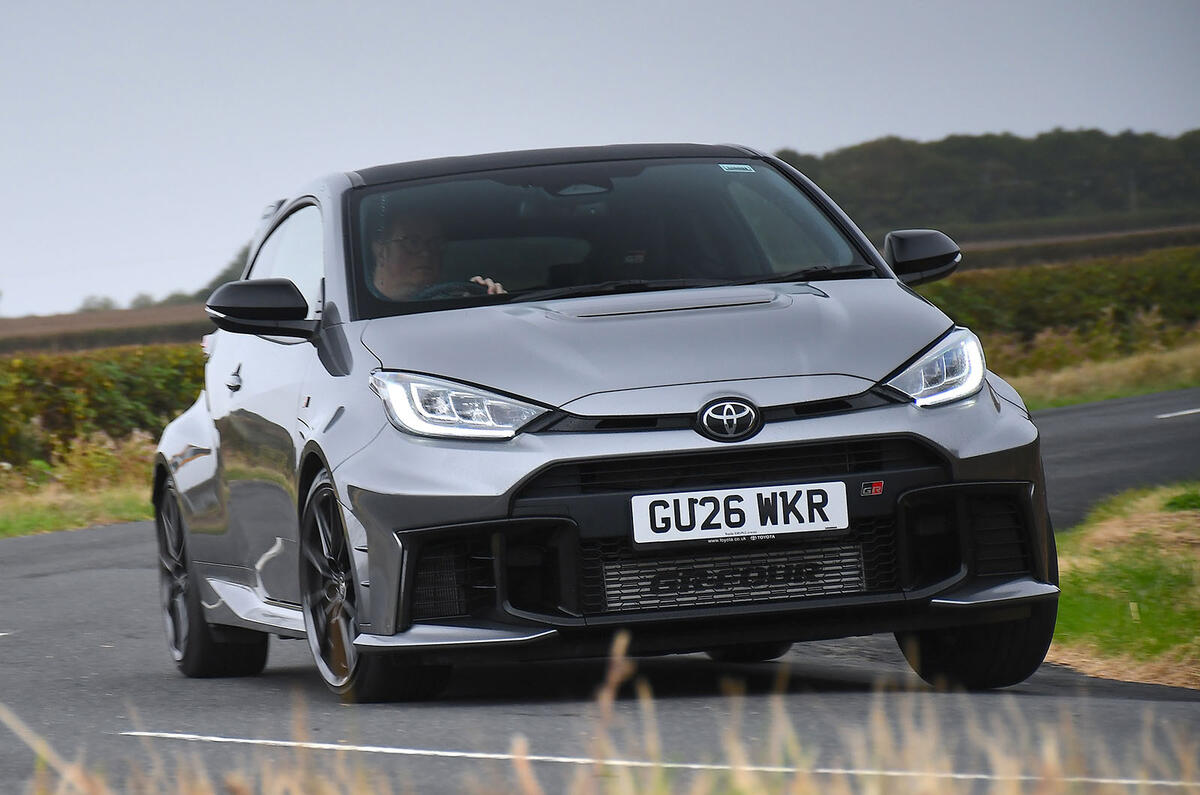
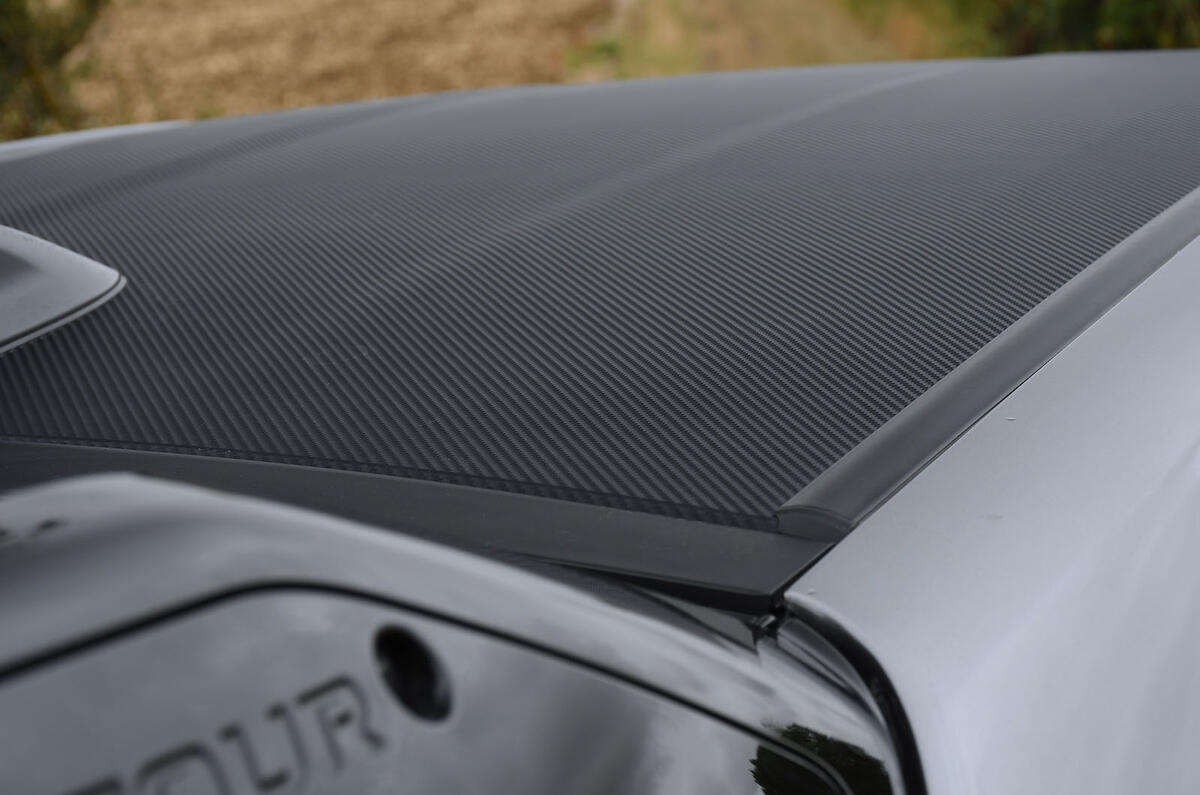
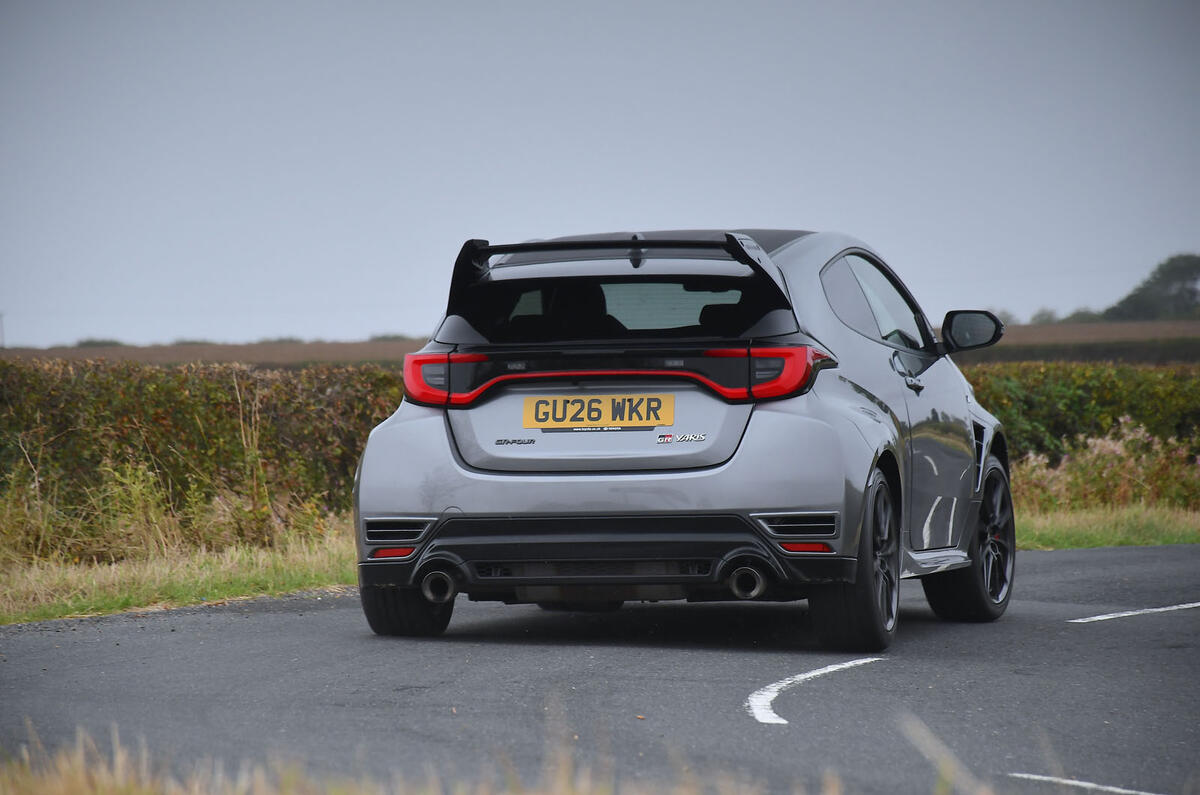
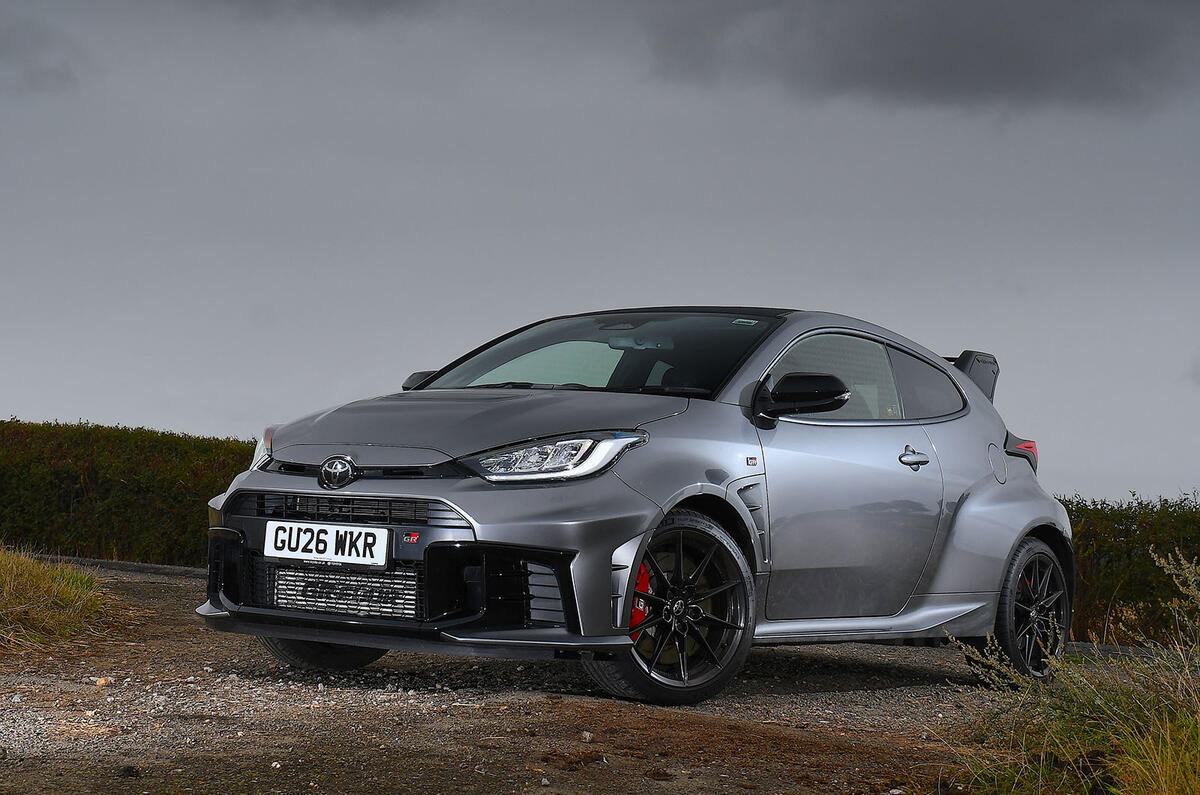
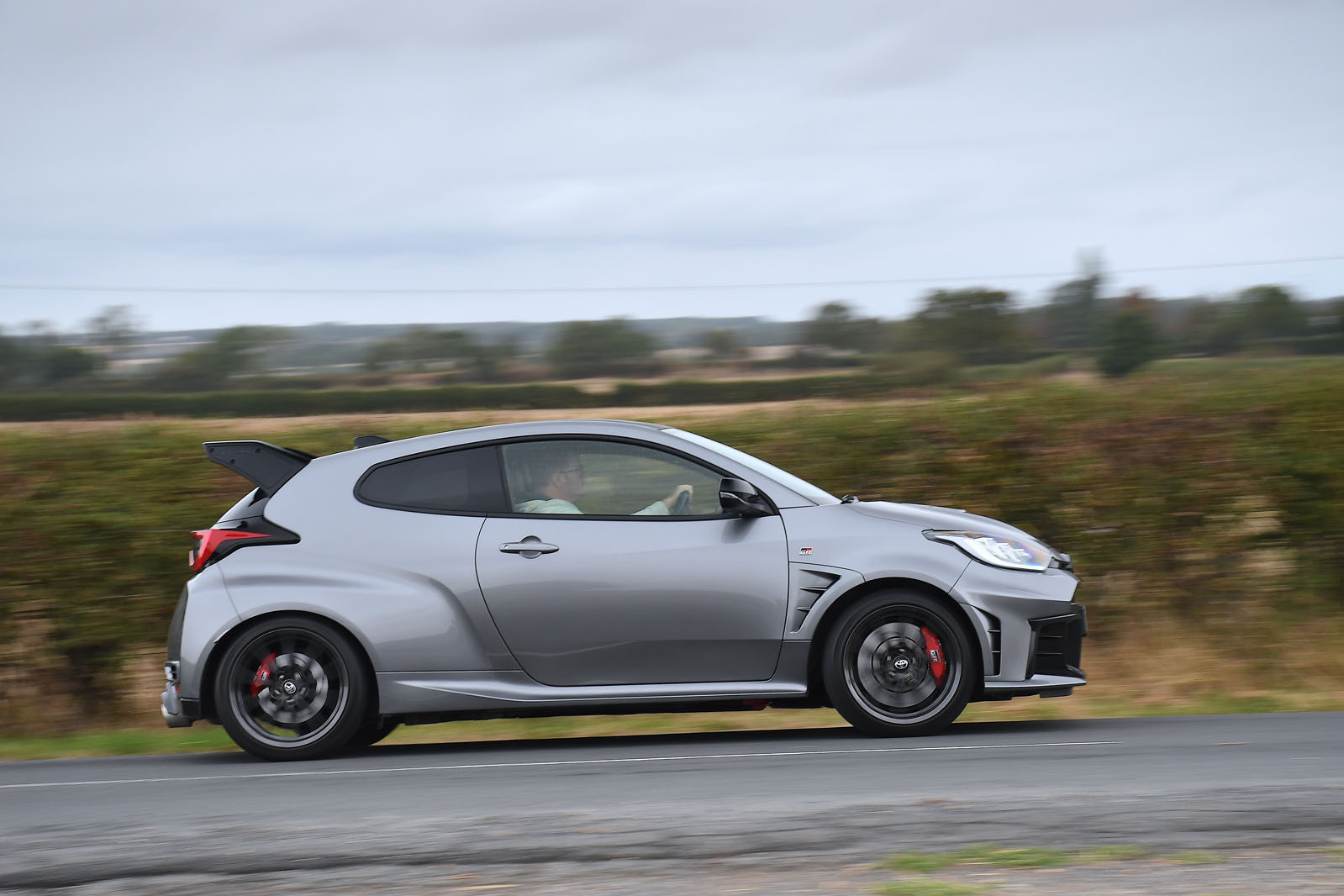
Today’s GR Yaris, like the original, has a bespoke unitary chassis (it remains the only three-door Yaris on the books); a special lightweight body made of steel, aluminium and carbonfibre composite; and all-independent suspension adapted and upgraded from a mix of Yaris- and Corolla-typical, TNGA-B and TNGA-C platform parts.

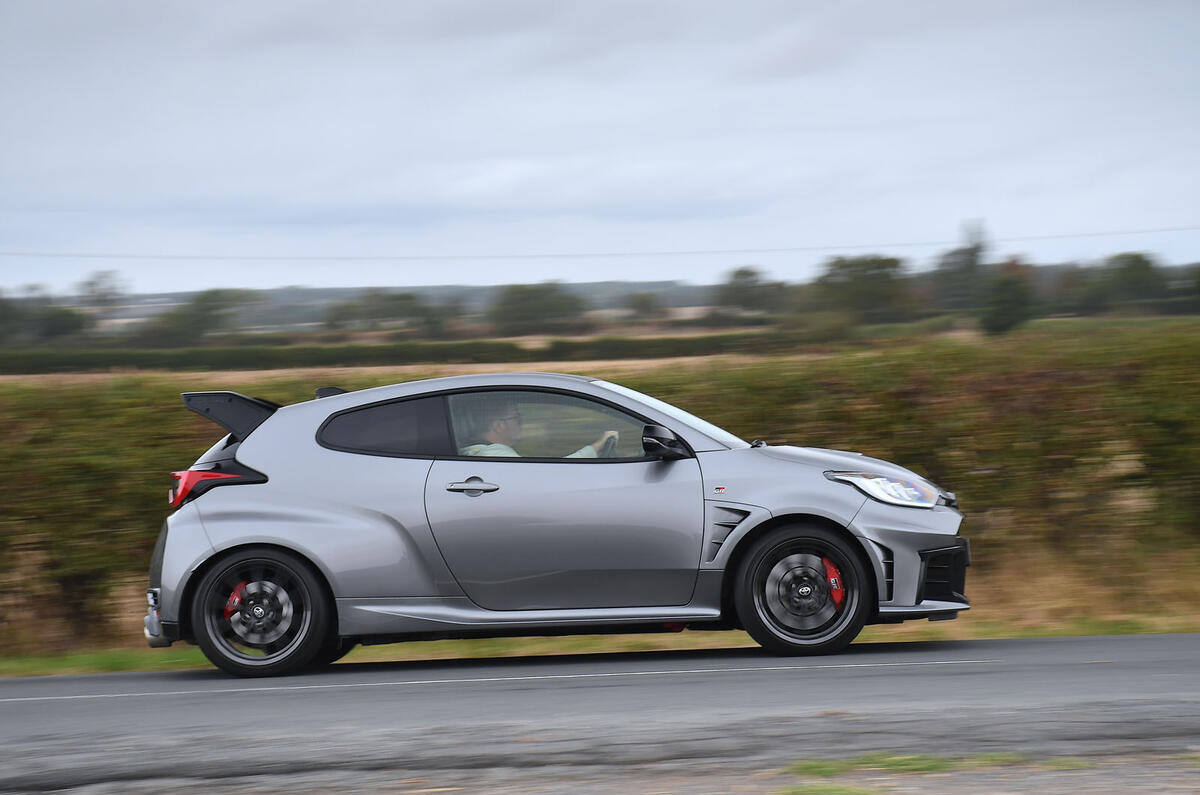
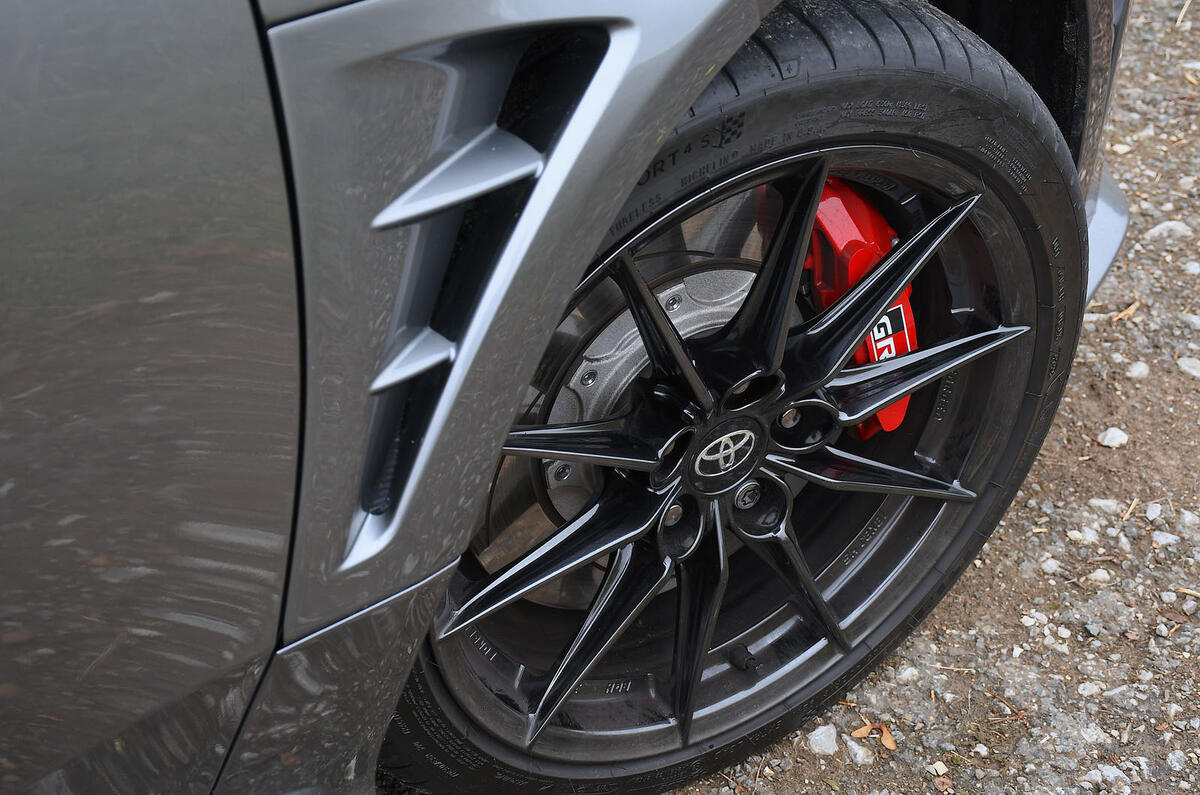
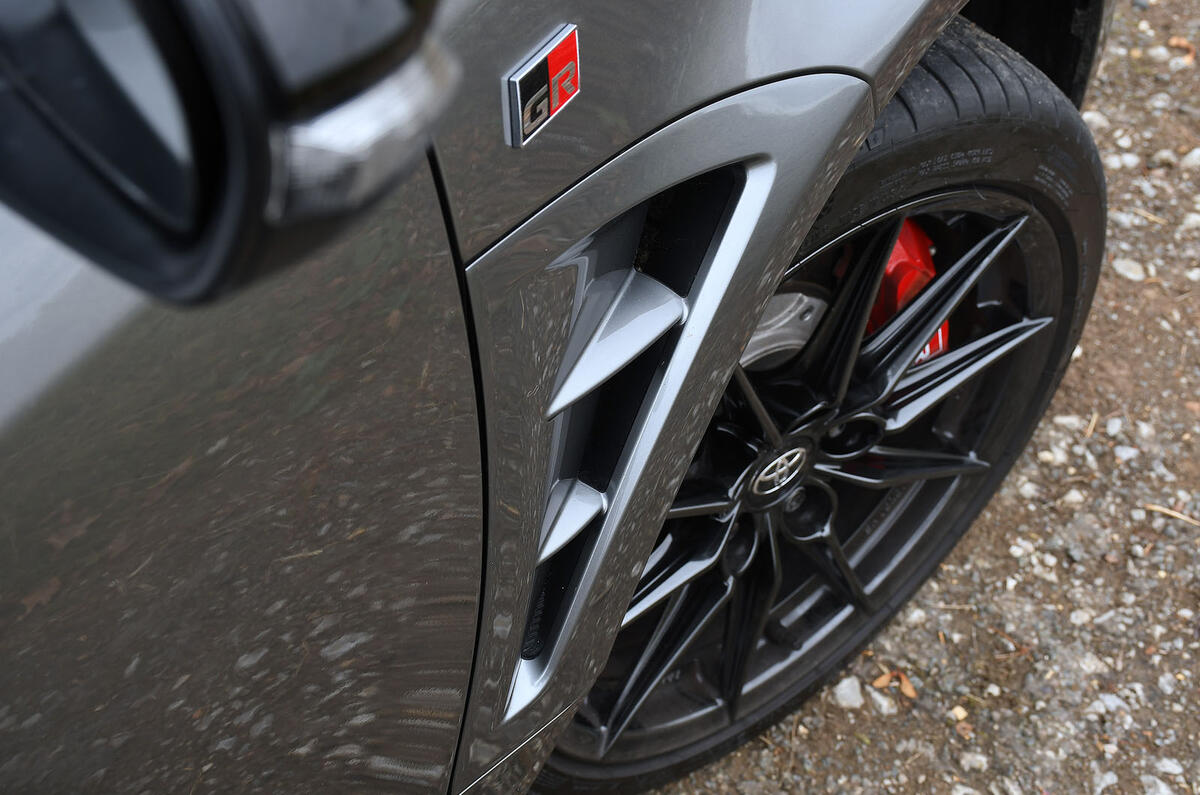
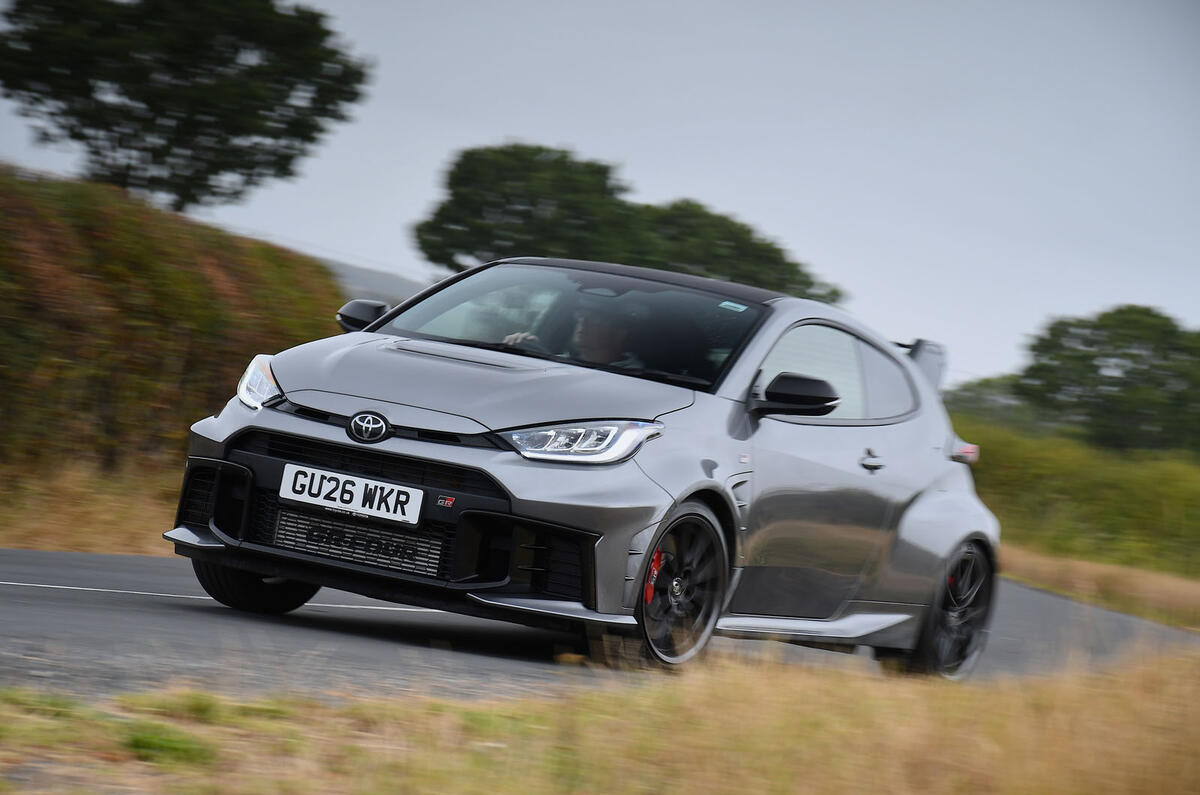
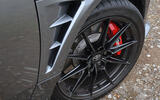
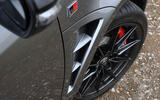
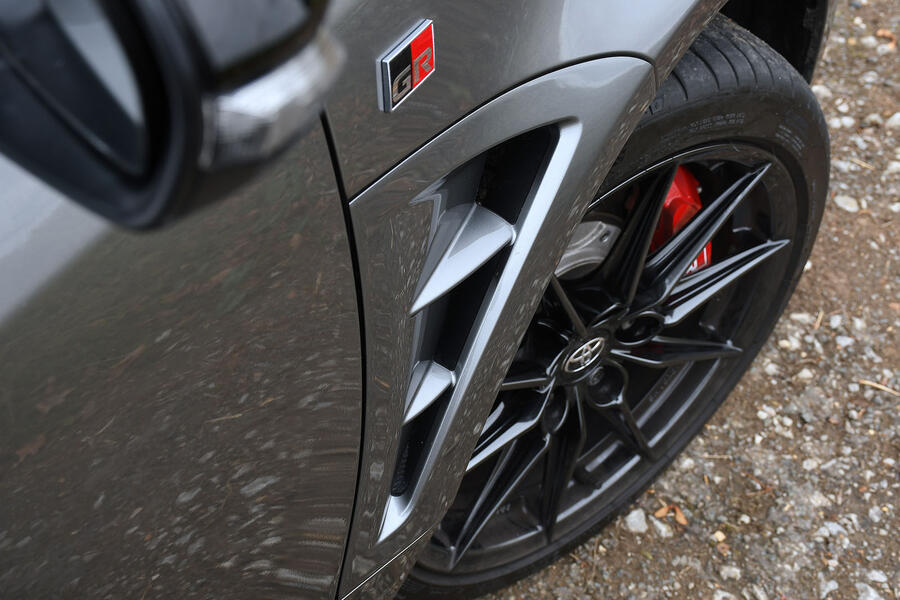
The vents aft of the front wheels, unique to the Aero Performance model, suck air pressure out of the front arches, cut turbulence and, according to Toyota, combine with the revised front suspension mounts of the 2024 car to boost steering feel.

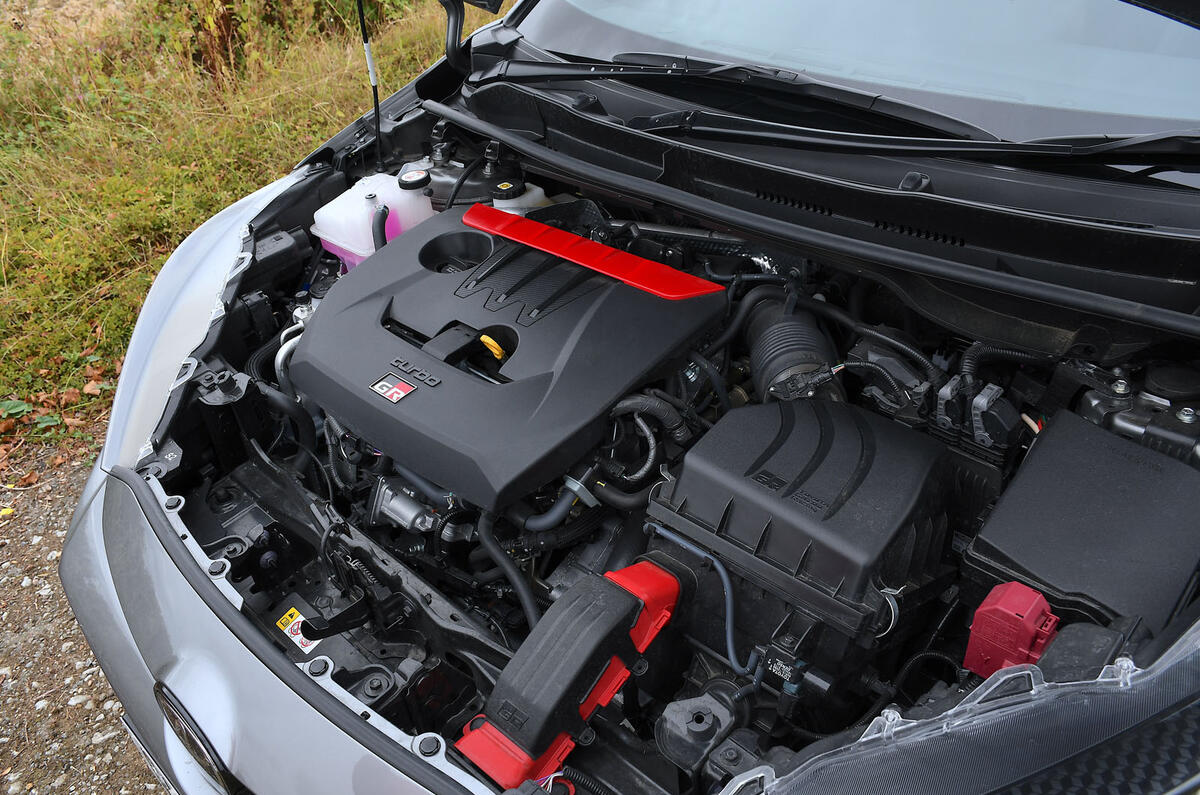
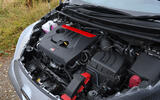
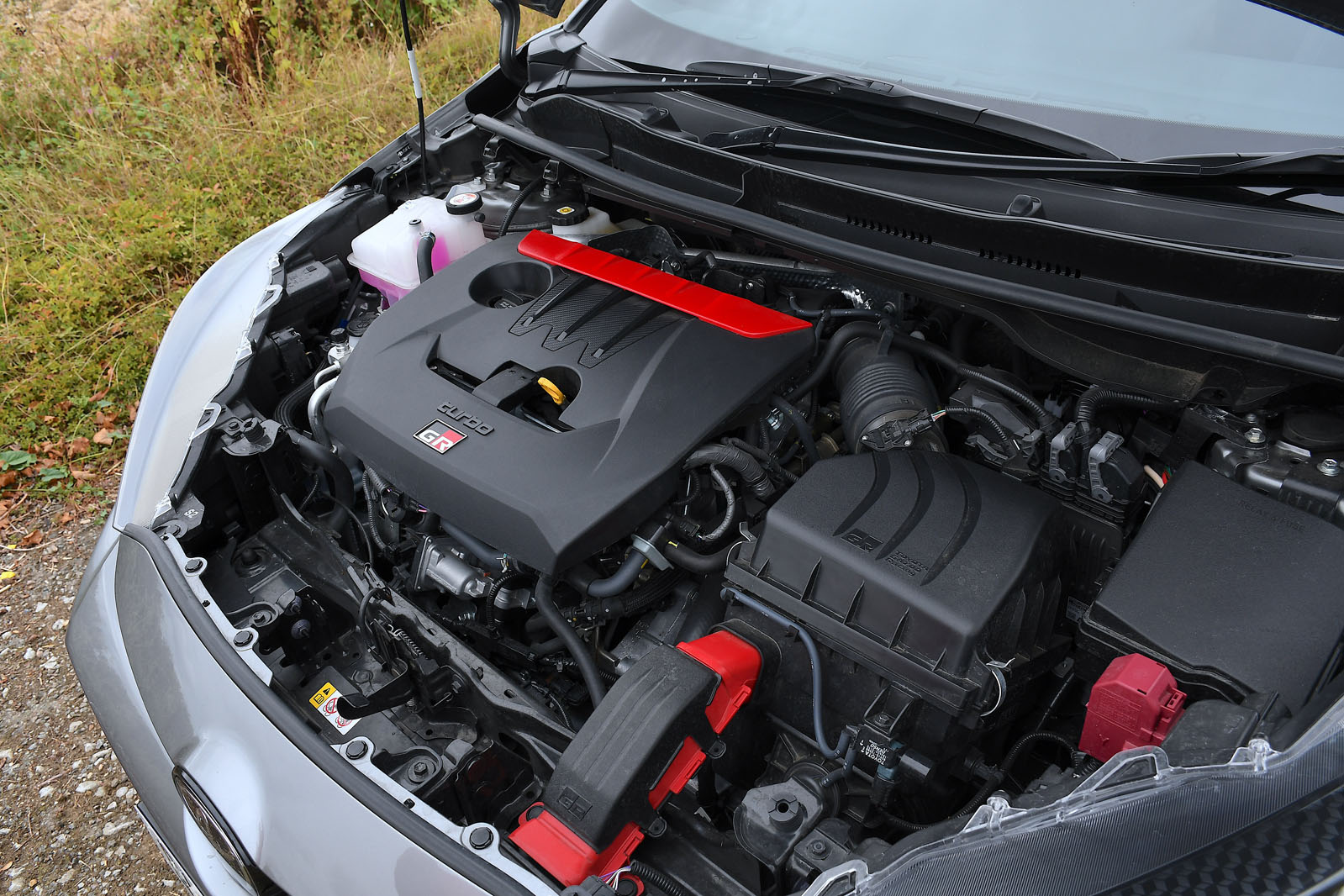
The car’s 1.6-litre three-cylinder turbo engine sits transversely under the bonnet and drives all four wheels through a proprietary clutch-based four-wheel drive system and, farther downstream, a Torsen torque-biasing differential per axle. While the car was introduced with peaks of 258bhp and 266lb ft , revisions to the engine’s valvetrain, fuel injectors, pistons and cooling package increased outputs to 276bhp and 288lb ft in 2024. At the same time, the clutch was upgraded, the 4WD system was recalibrated, and the axles and suspension were reconfigured and retuned.

While Toyota’s Circuit Pack was originally a £3500 option in 2020, it became standard-fit for the 2024 GR Yaris. It includes forged 18in alloy wheels, those Torsen mechanical diffs, and stiffer suspension springs and dampers, plus a stiffer front anti-roll bar than the base car uses. Toyota’s factory-fit Circuit Pack suspension spring rates, meanwhile, increased by as much as one-third in proportional terms (more at the front axle than the rear) as part of that 2024 facelift. The chassis was also made more rigid, and its front suspension mountings stiffened for better front-wheel camber control under load.

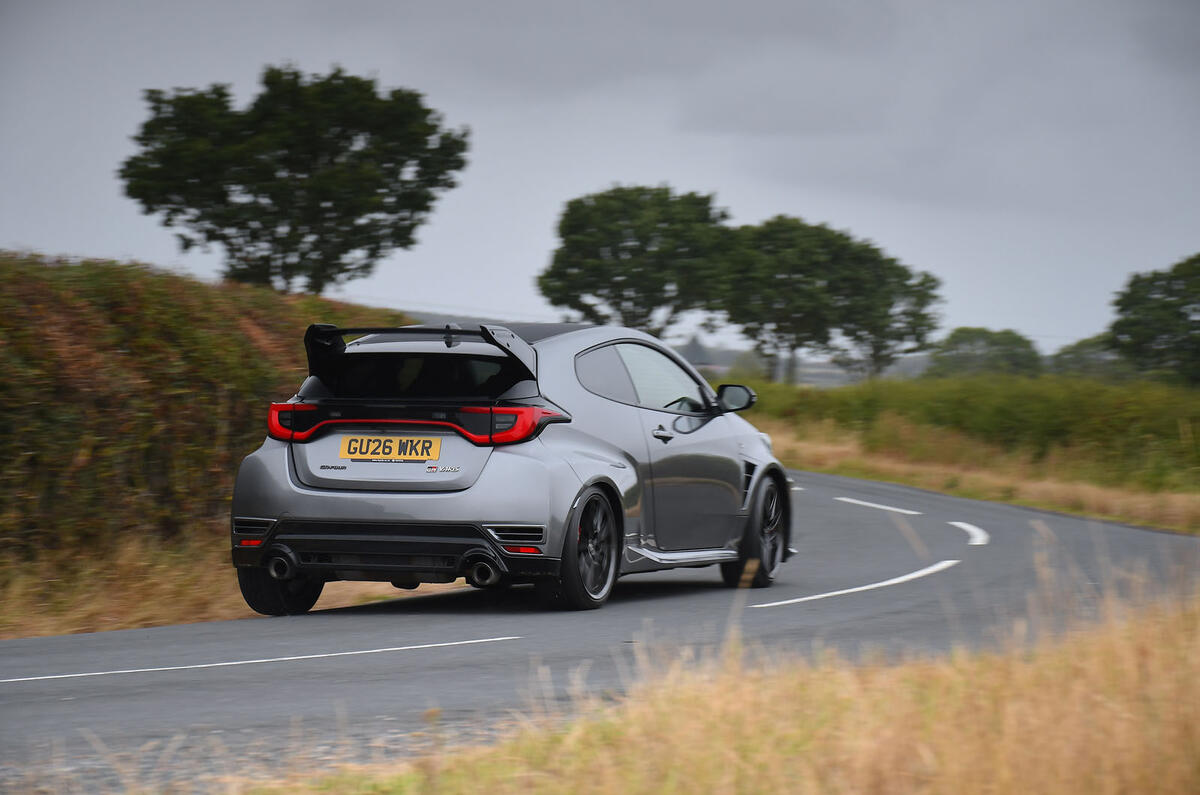
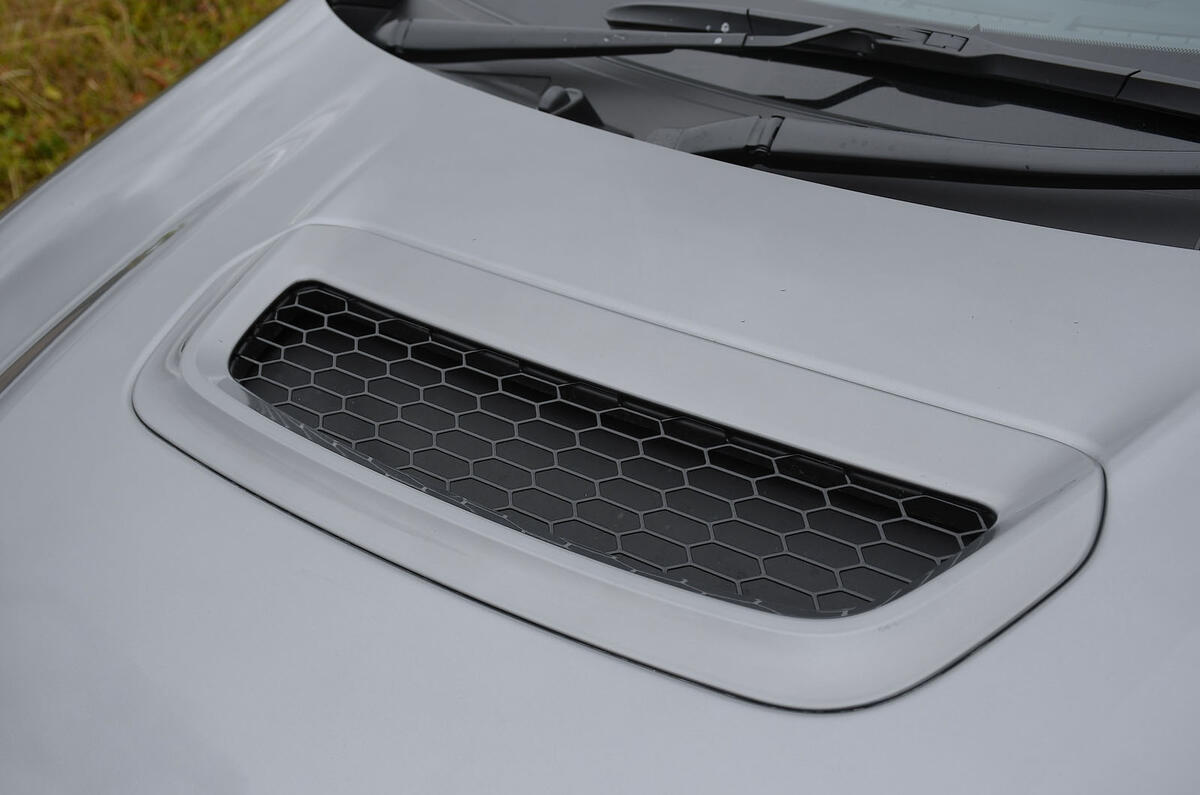
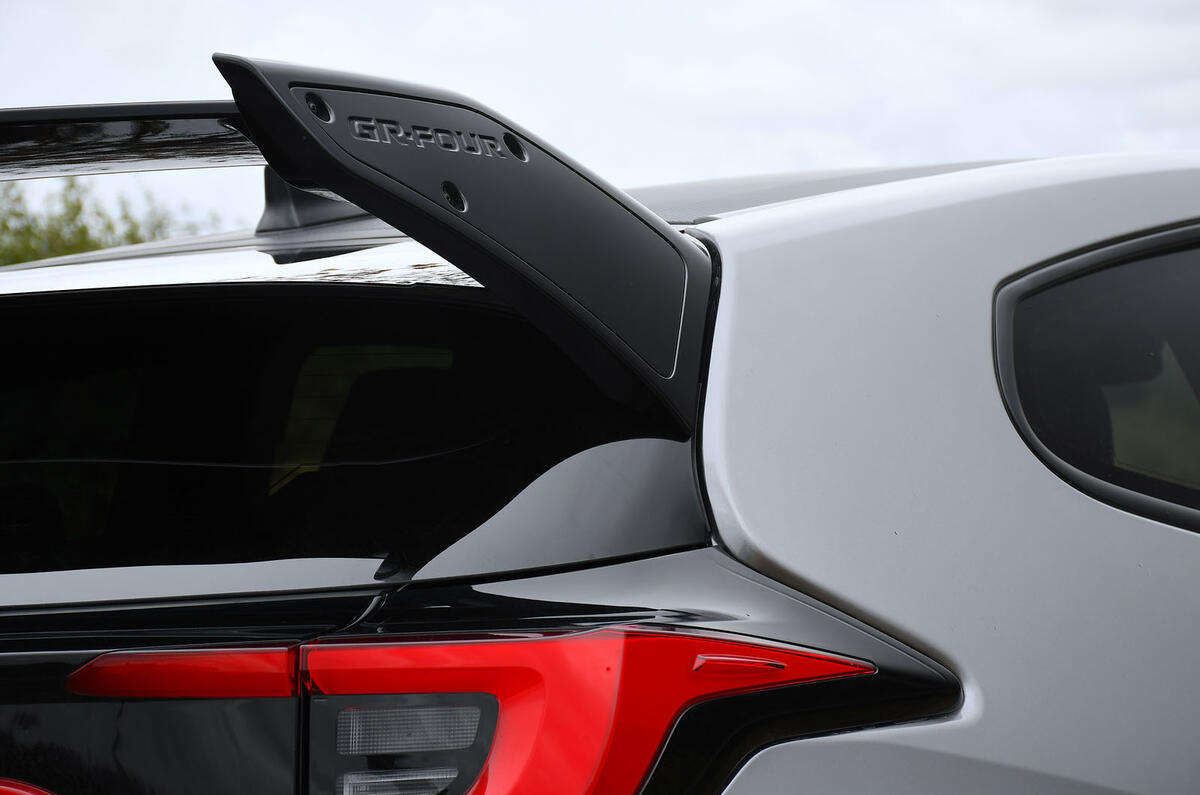
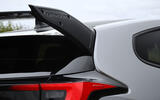
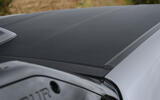
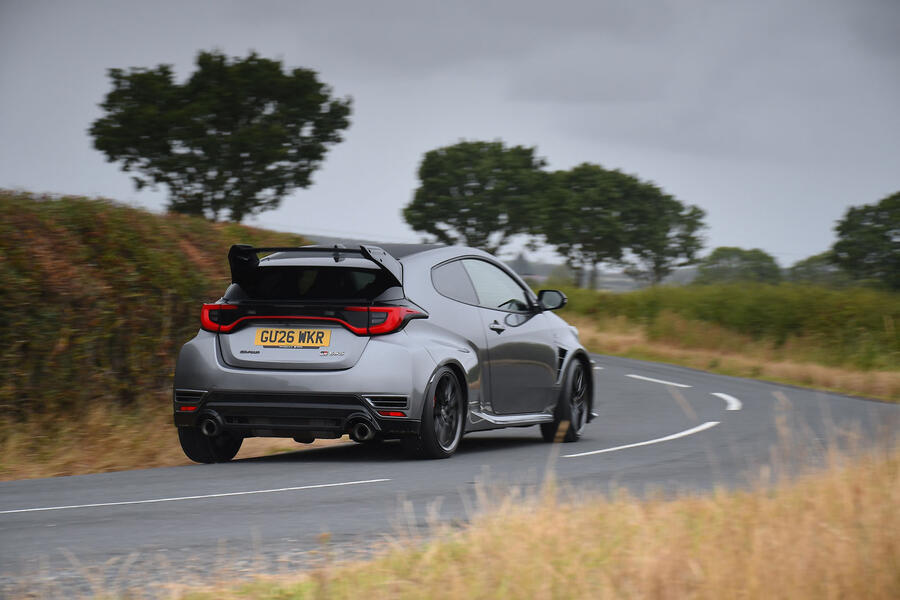
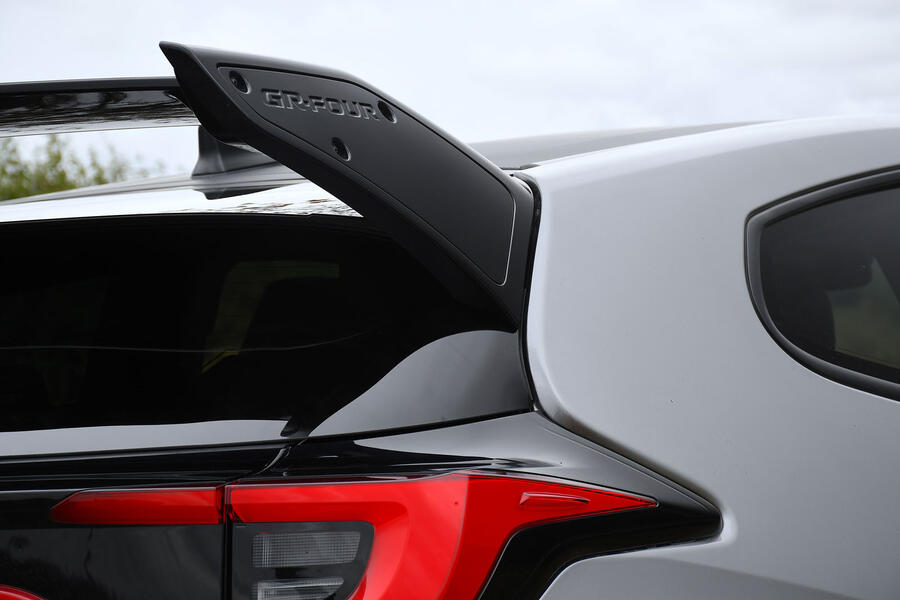
The Aero Performance version we’re testing here was introduced in 2026 and has various aerodynamic additions, most notably a bonnet vent to evacuate hot air from the engine bay, and an adjustable rear wing to boost high-speed handling and braking stability.

INTERIOR

7
Toyota Yaris GR FOUR review 2026 031

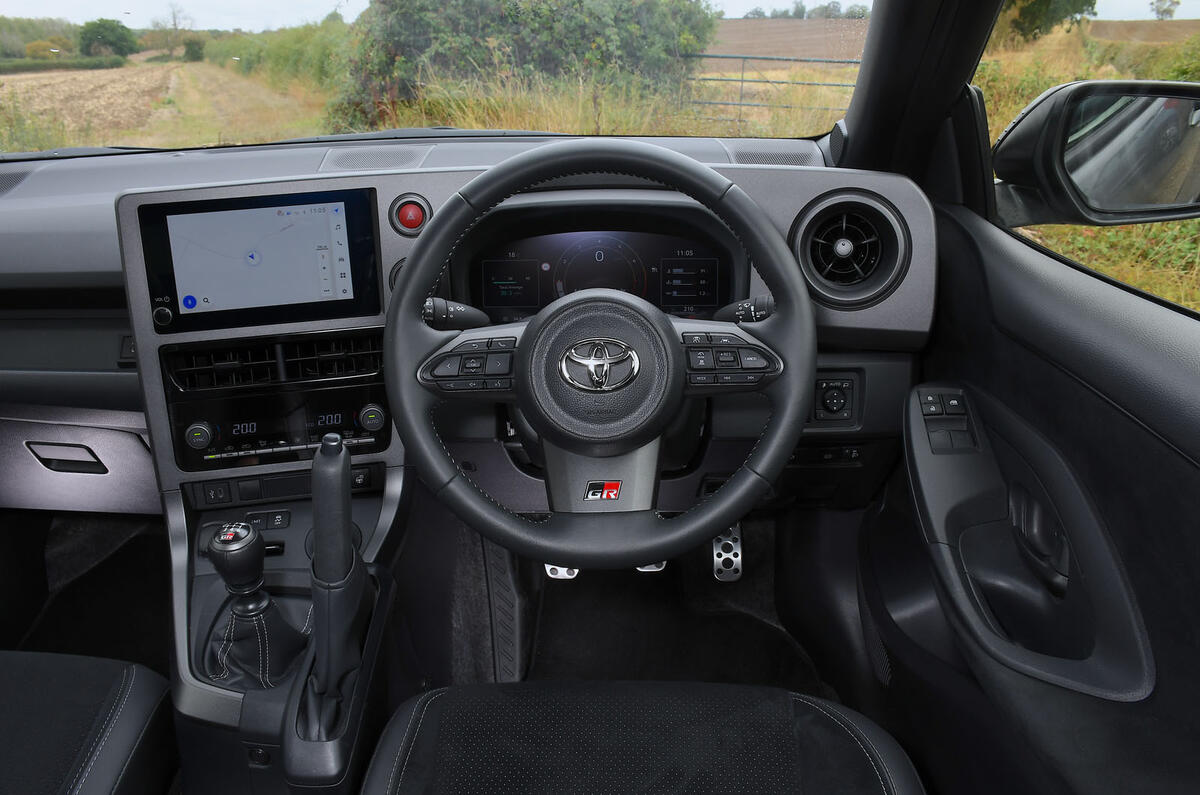
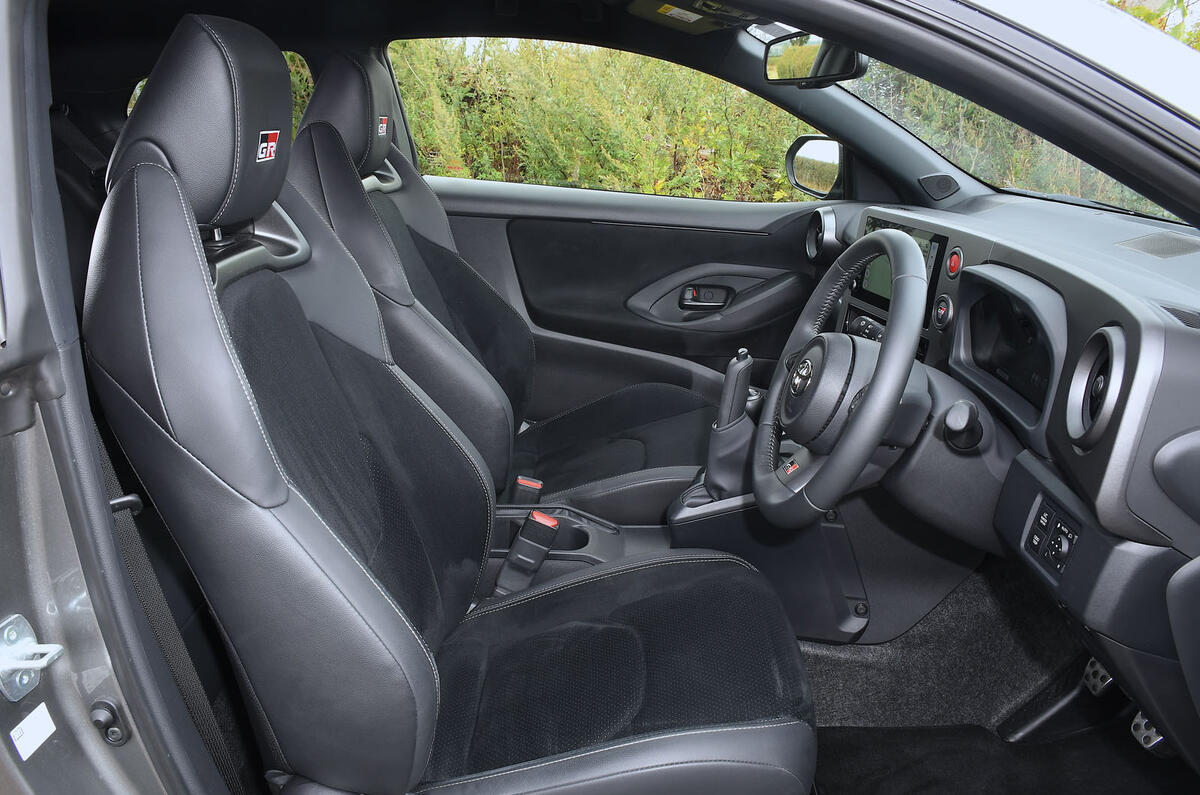
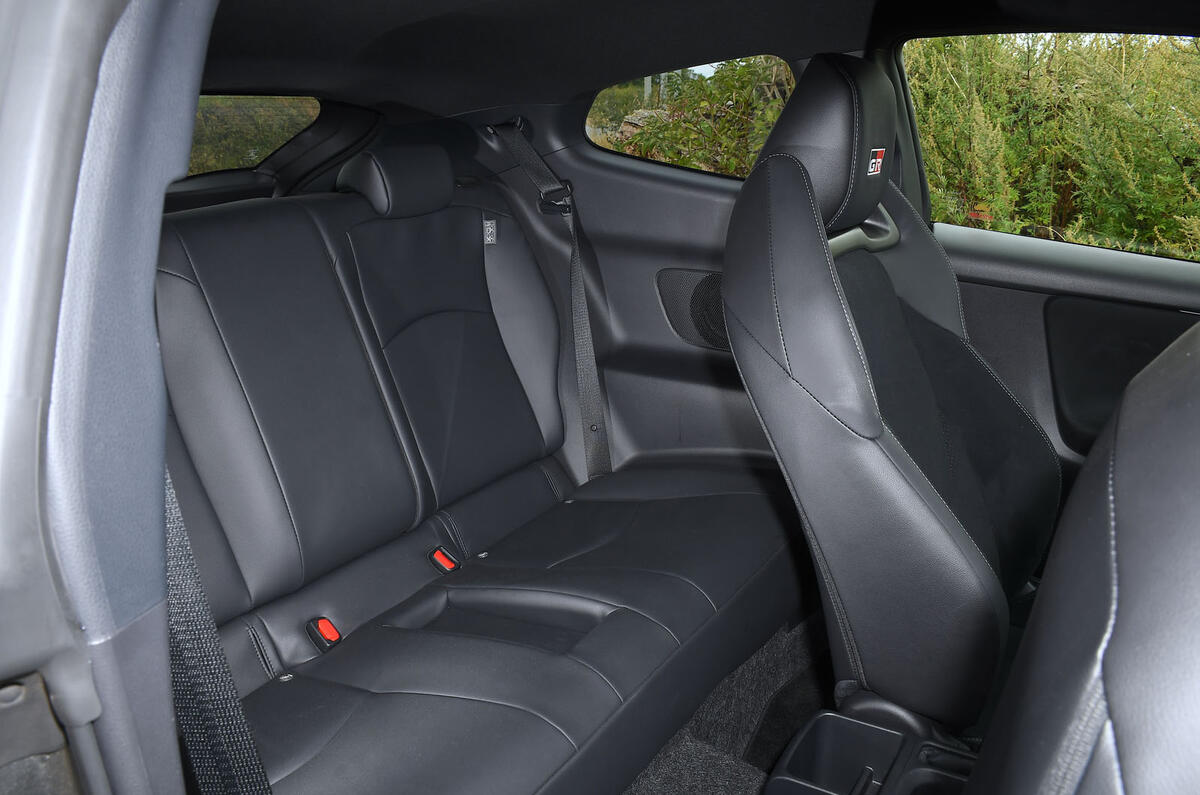
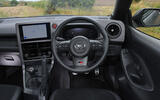
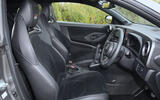
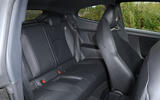
Toyota made several meaningful changes to the GR Yaris’s four-seater cockpit in 2024, all done very carefully and judiciously – and all subtle enough to escape your attention if you don’t look closely.

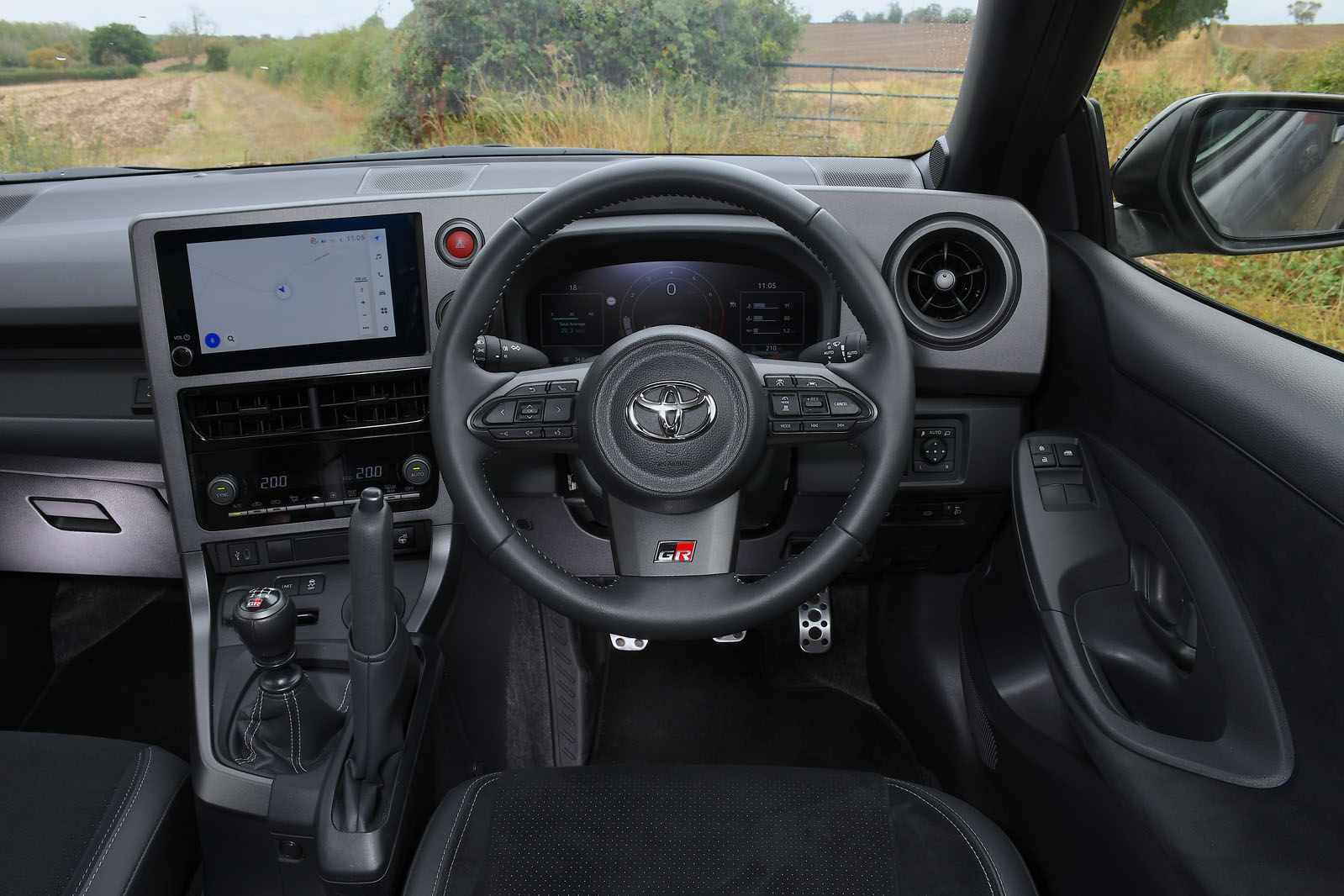
The biggest one was lowering the front seats by 25mm. The car’s old driving position did feel a little high and made it hard for taller drivers to find a comfortable position while wearing a racing helmet. The new version is better on both scores.

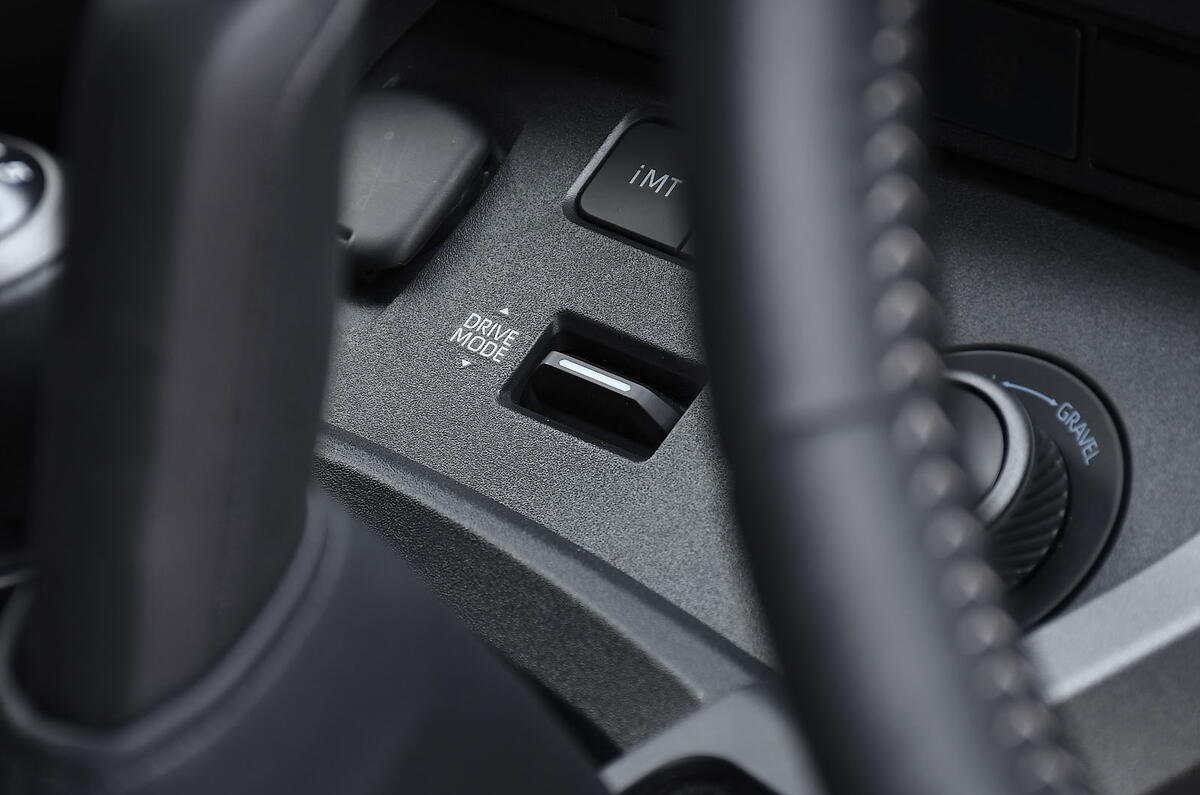
The pedals are a bit too far apart for easy heel-and-toe shifts via the manual ’box, although Toyota’s iMT systems can do the rev-matching on downshifts for you.

In redesigning the upper fascia (lowering its upper edge in particular) and raising the rear-view mirror slightly, Toyota has also improved forward visibility. In the pre-facelift car it was almost as if you had to crane your neck to get full use of the windscreen at roundabouts and junctions, such was the combined effect of the high-set central multimedia display, low-set rearview mirror, and fairly shallow windscreen. Now, it’s notably better. The way the car’s plunging roofline and lowish rear window continue to cut down on rearwards visibility, for taller drivers especially, remains an issue, however.

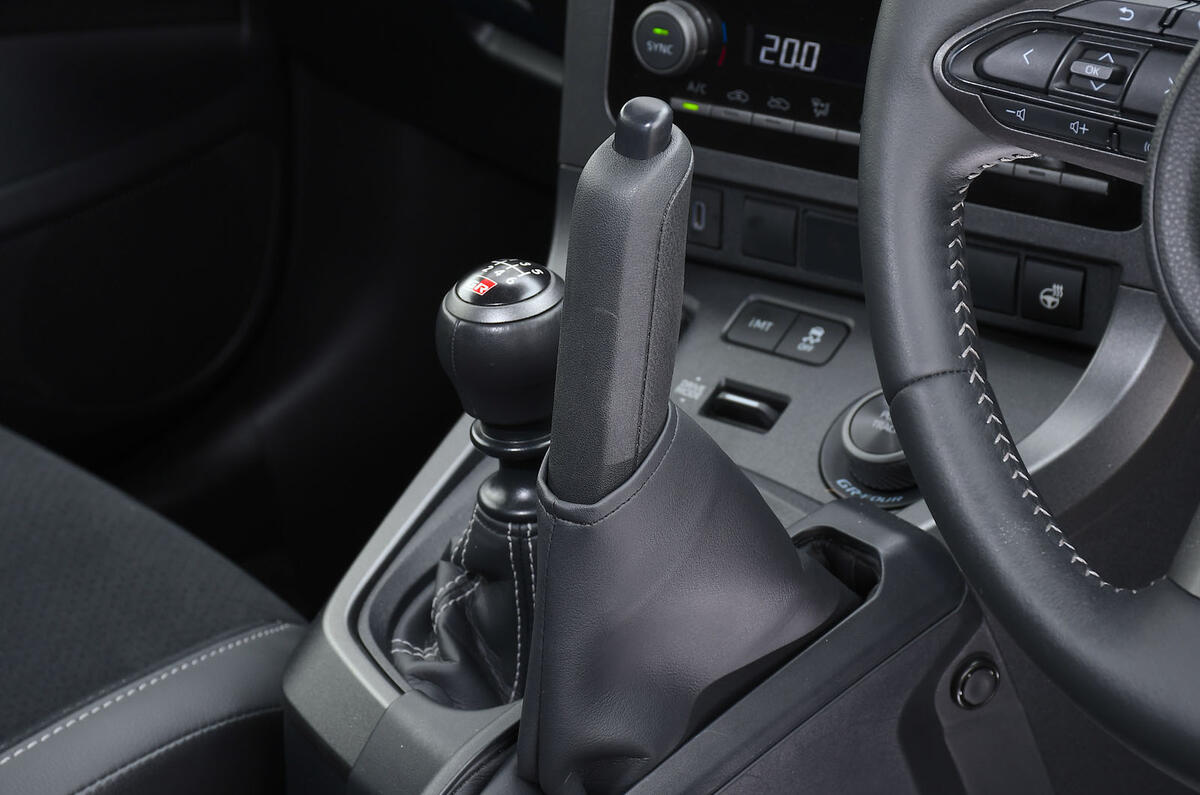
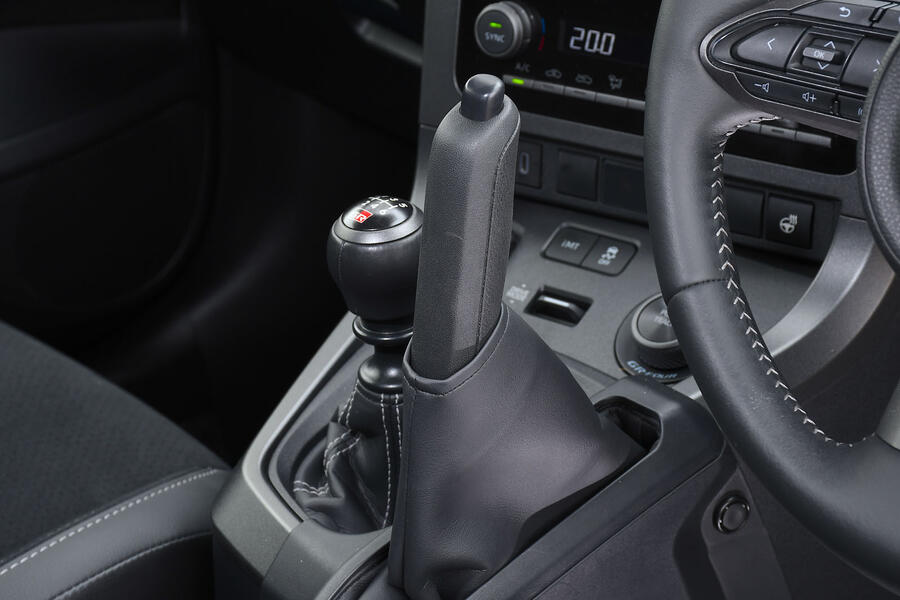
The car’s major controls are mostly as they were, the exception being the manual handbrake that, in the Aero Performance version, moves from its old berth between the front seats to a new home nestled between the steering wheel and manual gearlever, just next to the driver’s left knee.

This new location and more vertical orientation are clearly intended to ram home the GR Yaris’s rally homologation status – and it’s certainly both a change of pace and likeable affirmation of agenda for the car, in a market that barely bothers with manual handbrakes of any kind. One usability drawback, however, is that if you’re particularly long-legged, the new location might cause you to trap your knee against the steering wheel when pulling the handbrake on.

ENGINES & PERFORMANCE

8
Toyota Yaris GR FOUR review 2026 041

The GR Yaris drove mostly like a boosty, turbo-era hot hatch throwback before Toyota’s 2024 powertrain revisions. Much to its credit it still does, and it’s slightly quicker in 2026 than it used to be in 2020 – provided you keep your foot in for long enough.

There’s plenty of frothing, forthcoming combustive character about the Aero Performance. Enough real-world pace to feel potent and urgent well beyond a hot supermini’s natural place in the food chain, too. That remains one of the car’s primary sources of appeal, in fact: that it’s so much faster –  and feistier – than you expected a Toyota Yaris could ever be.

There’s just enough latency to the 1.6-litre turbo triple’s power delivery to make it feel – and sound – angry and theatrical. Plant the pedal and there’s a background-layer hiss and flutter of turbo actuation, and a surging, gathering build-up of torque when there’s less than 3000rpm on the tacho.

The spiky-smooth combustion signature of that three-pot, along with much crisper throttle response and linear torque production, comes on song thereafter in the rev range, however – and the revised engine’s appetite for work above 5000rpm is noticeably improved. While tougher emissions rules seem to have strangled some hot hatch rivals, Toyota is to be congratulated on having made this one more of a free-revving proposition than it used to be.

There are two ways to launch the car from rest, both no more complicated than by coordinating the balls of your feet. You can dial up plenty of revs, and then simply blend/slip the clutch out, if you want the more sympathetic option; or else just sidestep the clutch pedal if not.

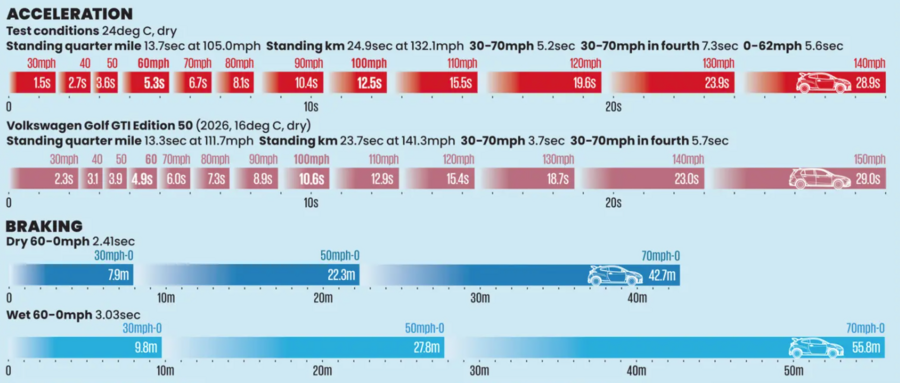
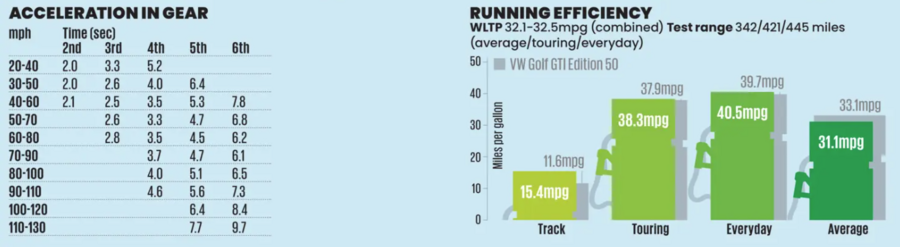
The latter approach is about two-tenths of a second quicker from rest, to both 30mph and 60mph, than the former, the GR Yaris needing 5.3sec to hit 60mph, 5.2sec to get from 30-70mph and 13.7sec for the standing quarter mile. This compares with the 5.2sec, 5.0sec and 13.8sec equivalents we logged of the pre-facelift car back in 2020 (that GR Yaris was tested in slightly greasy test conditions, interestingly, which would seem to suit the driveline peculiarly well).

Those figures might come as a slight disappointment to someone spending £50,000 in 2026, who otherwise could have spent £35,000 in 2020. The unique nature and diminutive size of the Yaris probably makes comparisons with other £50,000 hot hatchbacks less damning, as much as the VW Golf R, Audi S3 Quattro and Mercedes-AMG A35 are all sub-5.0sec 0-62mph prospects (which, in order to justify its price, this Toyota arguably ought to be now too).

RIDE & HANDLING

7
Toyota Yaris GR FOUR review 2026 043

The GR Yaris may not quite be the wilfully agile, pint-sized track-day aggressor you’re expecting. Instead it has a dynamic character that varies from puppyishly playful and keen to surprisingly serious, stable and purposeful, depending on where and how you’re driving it. This is a more complex driver’s car to unwrap and decode than you might take it for, in other words, but it’s no less fascinating, entertaining or involving for being so.

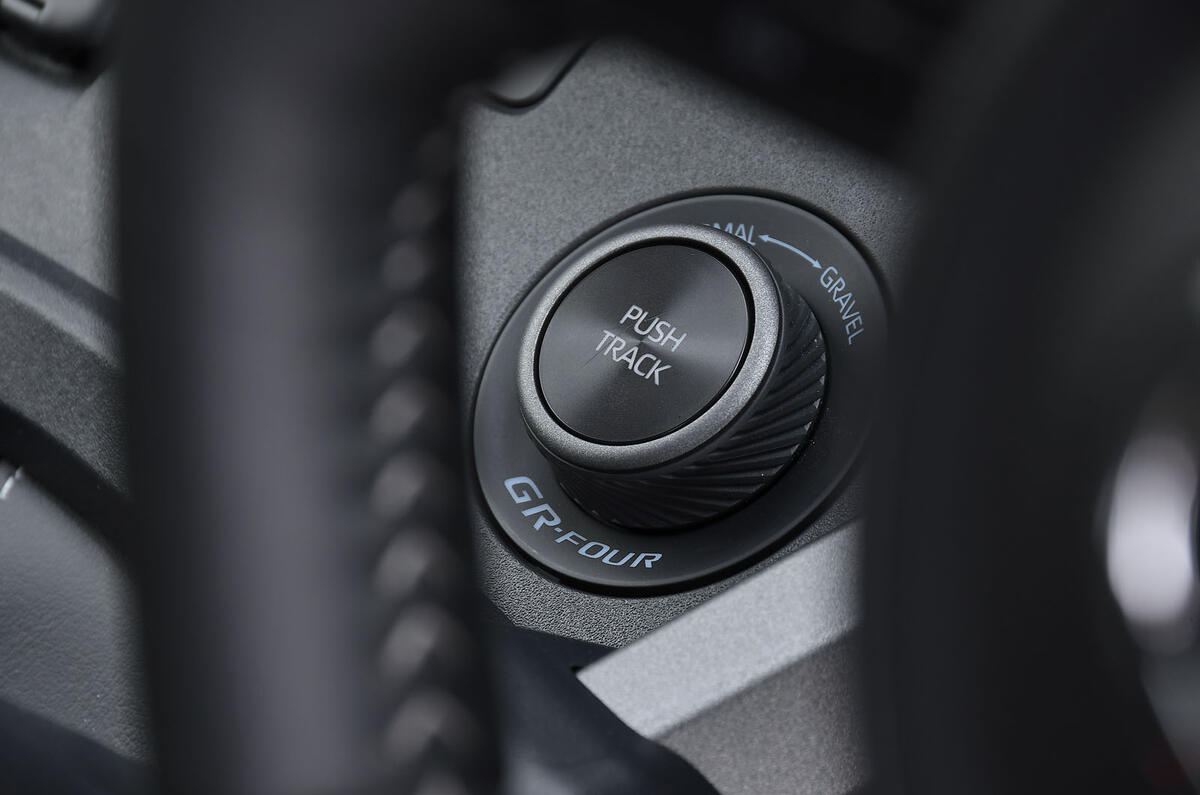
The Torsen biasing diffs don’t work like modern, electronically controlled, clutch-based locking diffs. While the car can put up to 70% of engine power to the rear wheels by default (depending on drive mode; and more still in transient bursts), those drive forces are split laterally across the axles a little less aggressively than they might be in a BMW M car or a modern Ferrari supercar. Slightly less proactively and more passively, too, in direct reply to relative wheel speed.

If Toyota really wanted the vertical handbrake to be used like a WRC car’s hydraulic one, it should have included an isolator cap for the ratchet mechanism. Without that, you’re less likely to tug on it just for fun, for fear that a slip of your thumb stops it from returning to ‘off’ when you let go.

The upshot is that the GR Yaris doesn’t quite vector torque like some modern driver’s cars. It doesn’t drive itself into positive cornering attitudes, or pivot around you under power, and typically prefers mid-corner traction and stability to on-throttle handling adjustability at the limit of grip.

It takes a cornering line keenly enough, and sticks to it under power, but it handles more like 

a ’90s or noughties-era fast four-wheel-drive car than the more modern, actively torque-vectored ones of the past decade or so. Because it’s so small, it really responds to being thrown into corners keenly on a trailing throttle, rotating particularly quickly and keenly in slippery conditions. But thereafter it’s more interested in putting its power down and carrying speed than in dancing around on an apex.
That might make it a less enticing track car in some ways than certain rivals (see Track Notes, below), but it certainly makes it well-suited to road driving: albeit road driving done with plenty of speed.

The driveline delivers superb sure-footedness, and just a little bit of drive-related handling impetus, as you wring that engine out in the shorter intermediate gears through longer corners, and feel the outside wheels keeping you unshakably on line.

Toyota’s latest suspension settings make for a slightly tetchy, brusque, over-damped-feeling low-speed ride, which only begins to smooth out at fairly serious cross-country speeds, though. Earlier GR Yarises felt more dynamically versatile and better-suited to tackling a mix of UK roads at pace. This one has the slightly grabby vertical body control, thumpy secondary ride, tetchy damping and animated, unfiltered steering of, say, a Renault Clio Cup.

But the GR Yaris’s chassis does come into its own when the car is given its head – which, with performance of this order, isn’t such an unconscionable prospect as it might be with other modern driver’s cars, when its body control is unflappable, and traction and stability are both very good indeed.

Track notes - 4 stars

Toyota’s dynamic development of the GR Yaris would seem to have diverted it from its original brief a little, as an any-weather, any-surface, Tarmac-or-gravel performance car, and towards sharper dedicated track handling. Whether you consider that good or bad will depend on your particular tastes, but also on how you prefer to use your own car.

Admitting that developmental direction of travel as if it were a statement of fact, however, you would have to recognise the effectiveness of the adjustment. The GR Yaris certainly handles on track like a faster, grippier and more capable performance car than it did when it first appeared.

It still feels higher-sided and loftier in its roll axis than most natural track cars, and so it leans on its outside wheels fairly hard when cornering. It has good ultimate roll control and corning support, however – preventing those outside wheels from getting overwhelmed when the car is laterally loaded, keeping grip levels fairly evenly balanced and allowing you to charge hard into braking areas, carry lots of apex speed and pour on the power early without fear that the car will run wide.

If you prefer having fun to going fast for its own sake, the GR Yaris is quite hard to cajole to positive cornering attitudes during dry running, with its Torsen diffs working hard to keep the wheels in line. In the wet, however, the chassis is quick to yaw, and fairly easy to drive straight again, though it doesn’t like to sit in longer, settled drifts with opposite lock applied.

MPG & RUNNING COSTS

5
Toyota Yaris GR FOUR review 2026 023

The GR Yaris has had more comebacks from the dead, these past few years, than most Marvel superheroes. And if that makes it a true immortal among combustion-powered hot hatchbacks, and one of the last of its breed by default, Toyota clearly doesn’t mind charging for the associated cachet.
As things stand, the car’s 2026 UK price list has the manual, Circuit Pack base car at a snip under £49,000 and the new Aero Performance version at just over £52,000. Those are huge figures for what is a hot supermini, let’s not forget, when more powerful four-wheel-drive alternatives from the VW Golf class are, in fact, cheaper.

Even if those prices are a reflection of limited supply and consistently high established demand, they are eye-watering. The new Ogier 9x World Champion Edition and Morizo RR specials (announced to succeed the other Ogier and Rovanperä limited editions of 2024) have been priced from £66k, if you can believe it - although they will be very rare, with only 100 examples of each coming  to Europe, never mind the UK.

Toyota confirmed that it has a “limited product allocation” for the regular-series GR Yaris in 2027, and directs interested buyers to their closest dealer for an indication of availability. Clearly, this car will live for a while longer yet before departing the stage in the same way that so many of its competitors have.


VERDICT

7
Toyota Yaris GR FOUR review 2026 044

From five road test stars five and a half years ago to 3.5 today… How can so much have changed?

The honest answer is because Toyota no longer needs this car, and it can’t afford to be hamstrung by it. The homologation job for the WRC team was completed years ago. As a low-volume titbit, it will continue making some profit for the mother ship, without getting close to previous sales figures.

While the GR Yaris is enormously likeable, a Golf R offers a lot more for a lot less money. This car deserves better than to be made vulnerable by its price.

It’s still dramatic and charismatic; exciting and different; fast and capable way beyond its supermini class roots. But, having been an affordable and alternative hot hatch, the GR Yaris is now expensive enough to flirt with irrelevance.

While we don’t especially like its new track-first dynamic agenda, the GR Yaris itself remains an enormously likeable car - but it now has a price tag that weighs it down like an albatross.


Matt Saunders

Matt Saunders Autocar
Title: Road test editor

As Autocar’s chief car tester and reviewer, it’s Matt’s job to ensure the quality, objectivity, relevance and rigour of the entirety of Autocar’s reviews output, as well contributing a great many detailed road tests, group tests and drive reviews himself.

Matt has been an Autocar staffer since the autumn of 2003, and has been lucky enough to work alongside some of the magazine’s best-known writers and contributors over that time. He served as staff writer, features editor, assistant editor and digital editor, before joining the road test desk in 2011.

Since then he’s driven, measured, lap-timed, figured, and reported on cars as varied as the Bugatti Veyron, Rolls-Royce Phantom, Tesla Roadster, Ariel Hipercar, Tata Nano, McLaren Senna, Renault Twizy and Toyota Mirai. Among his wider personal highlights of the job have been covering Sebastien Loeb’s record-breaking run at Pikes Peak in 2013; doing 190mph on derestricted German autobahn in a Brabus Rocket; and driving McLaren’s legendary ‘XP5’ F1 prototype. His own car is a trusty Mazda CX-5.