From £89,5008

Swedes deliver on six-year-old promise to take on the Porsche Taycan

Find Polestar 5 road test: Great but too late deals
New car deals
From £89,500
Nearly-new car deals
Other Services
Sell your car
84% get more money with

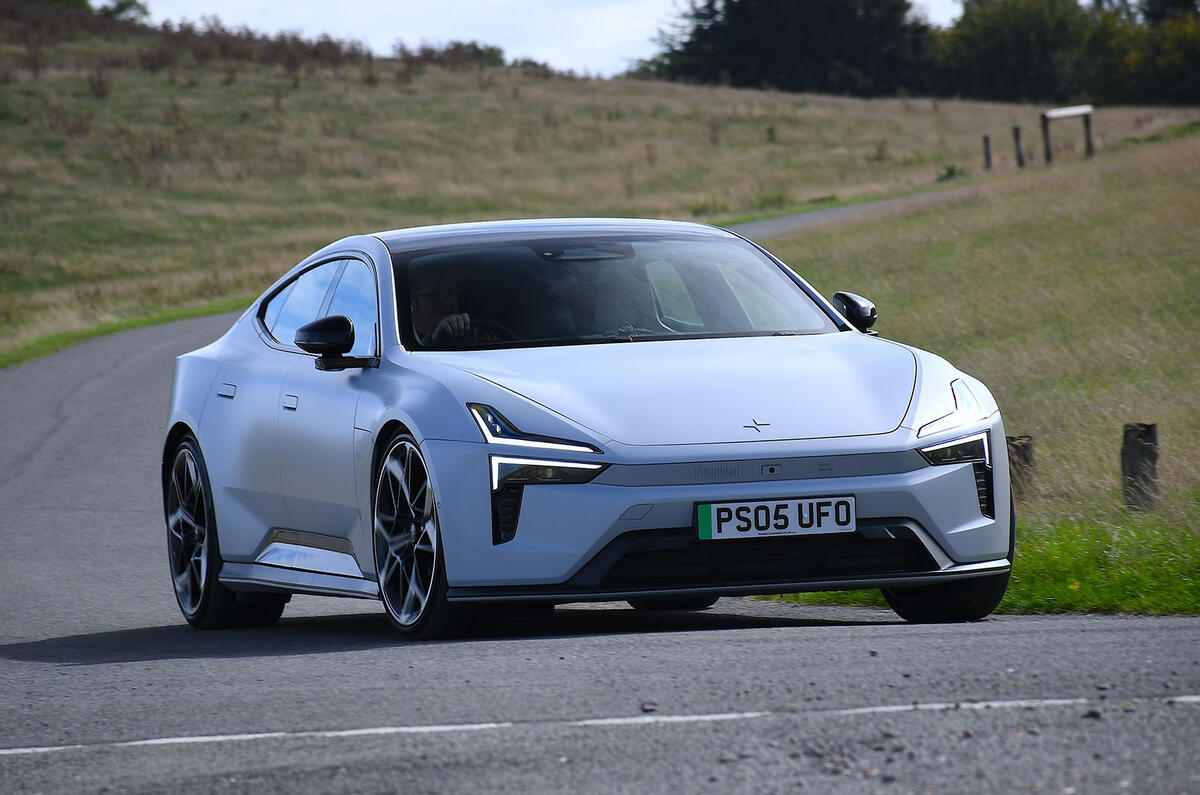
The mainly British-engineered Polestar 5 brings with it a tangible sense of fulfilment that has been rather a long time coming.

This five-metre-long electric pseudo-saloon will serve almost like a punctuation mark at the end of what we may look back on, in years to come, as the first era in the history of this still-emerging and maturing, fascinating and alternative, Chinese-controlled but Sweden-based car company.

Back in 2020, the year after Polestar introduced its first proper, volume-selling model (the 2 electric liftback), it showed the Precept, a memorable concept previewing a dual-motor, four-door GT flagship.

Very quickly then boss Thomas Ingenlath committed to a production version. Some six years (including a significant shareholding restructuring and a new CEO) later and, rather against the odds, that production version has arrived.

With UK deliveries of the 5 set to begin this month and in advance of the car’s national press launch, Polestar loaned us a range-topping Performance Launch Edition, and we took it to the regular home of the Autocar road test, Horiba MIRA proving ground in Warwickshire –  which also happens to be where much of the car’s engineering work was done – to find out just what kind of flagship Polestar has produced.

Advertisement

DESIGN & STYLING

8
Polestar 5 review 2026 002

The 5 is so called because it’s the fifth new model that Polestar has introduced since its 2017 creation. Unlike the four before it, however, this car has a platform designed and engineered entirely in house, rather than taken from Volvo or Geely.

An all-aluminium unitary chassis made up principally of bonded extrusions not unlike those you might see in the monocoque tub of a sports car, the Polestar Premium Architecture is what gives the 5 the fresh start in life that EVs built on shared platforms don’t enjoy.

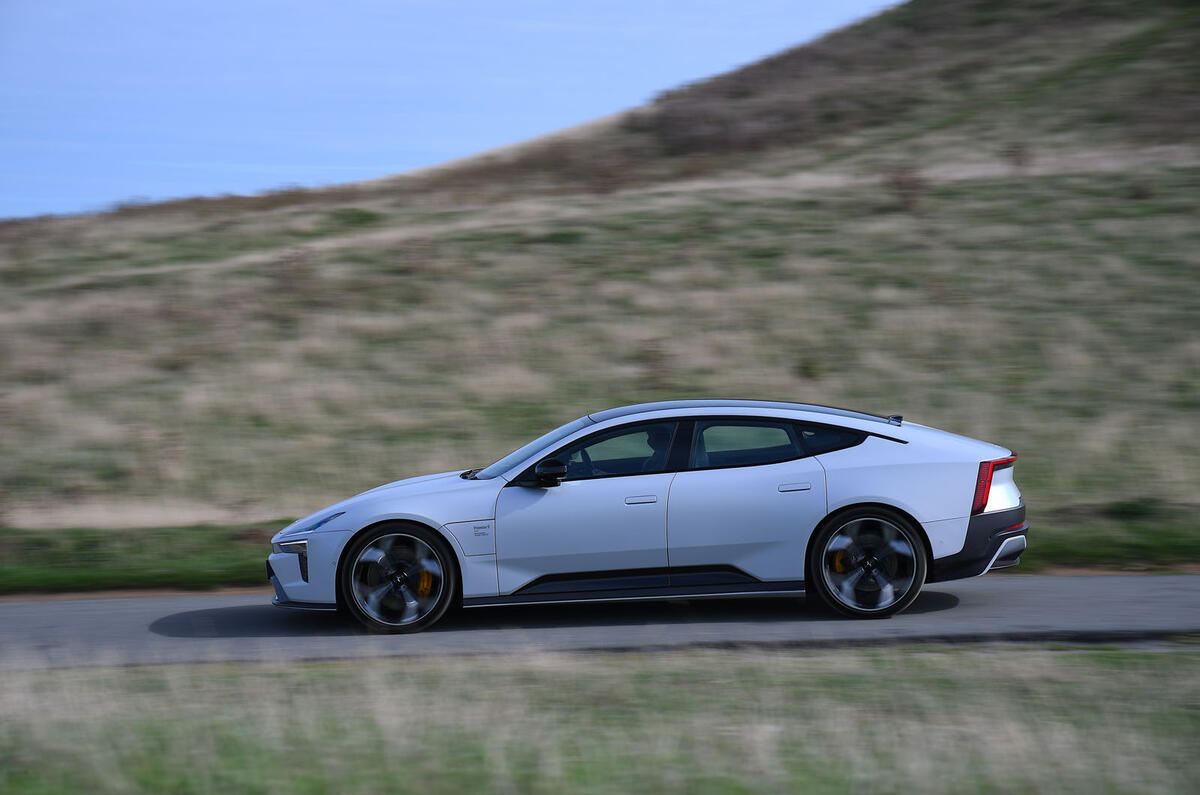
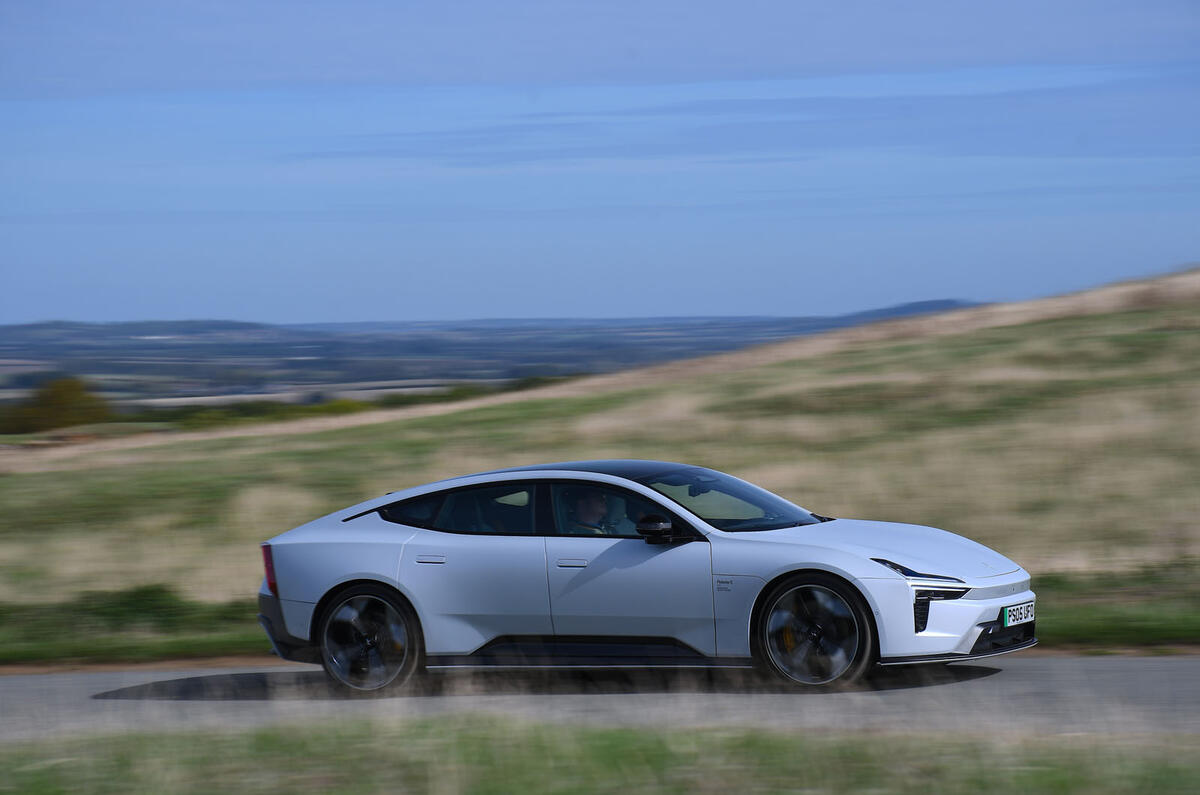
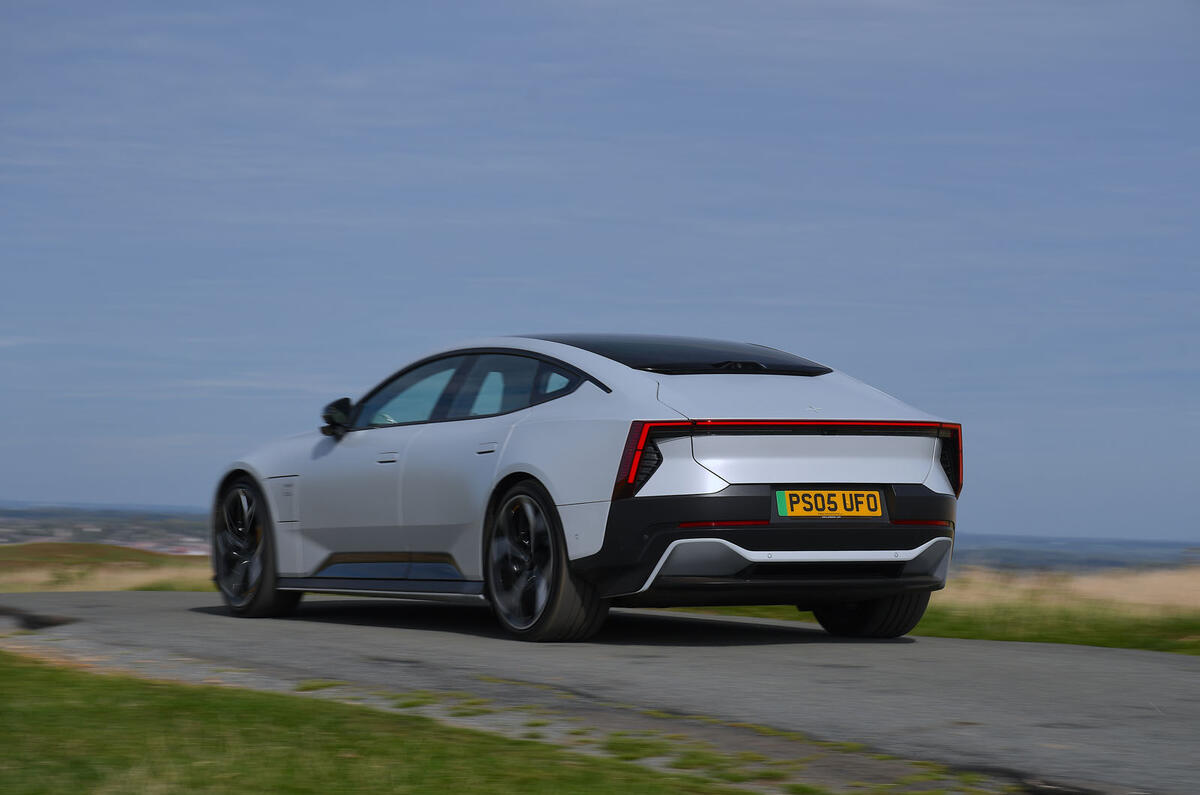
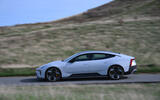
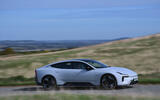
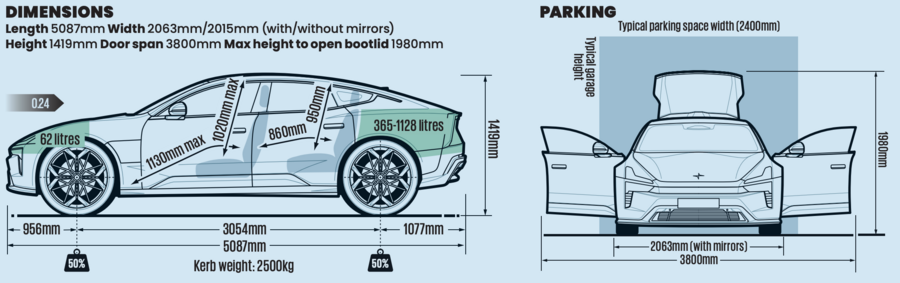
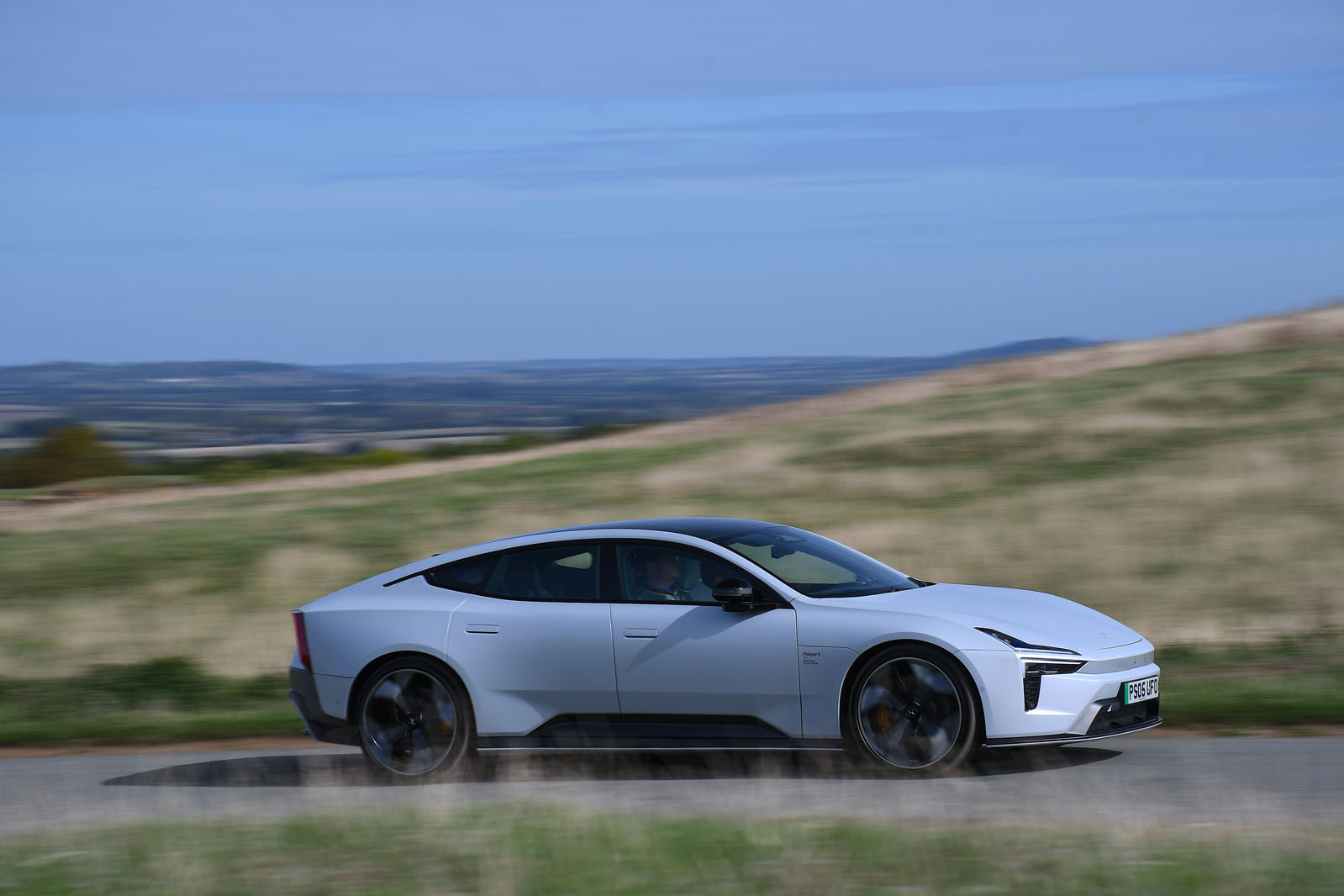
At 1419mm, the 5’s roofline is almost 100mm lower than that of the BMW i5, although the Porsche Taycan and the forthcoming Jaguar Type 01 both duck under 1400mm.

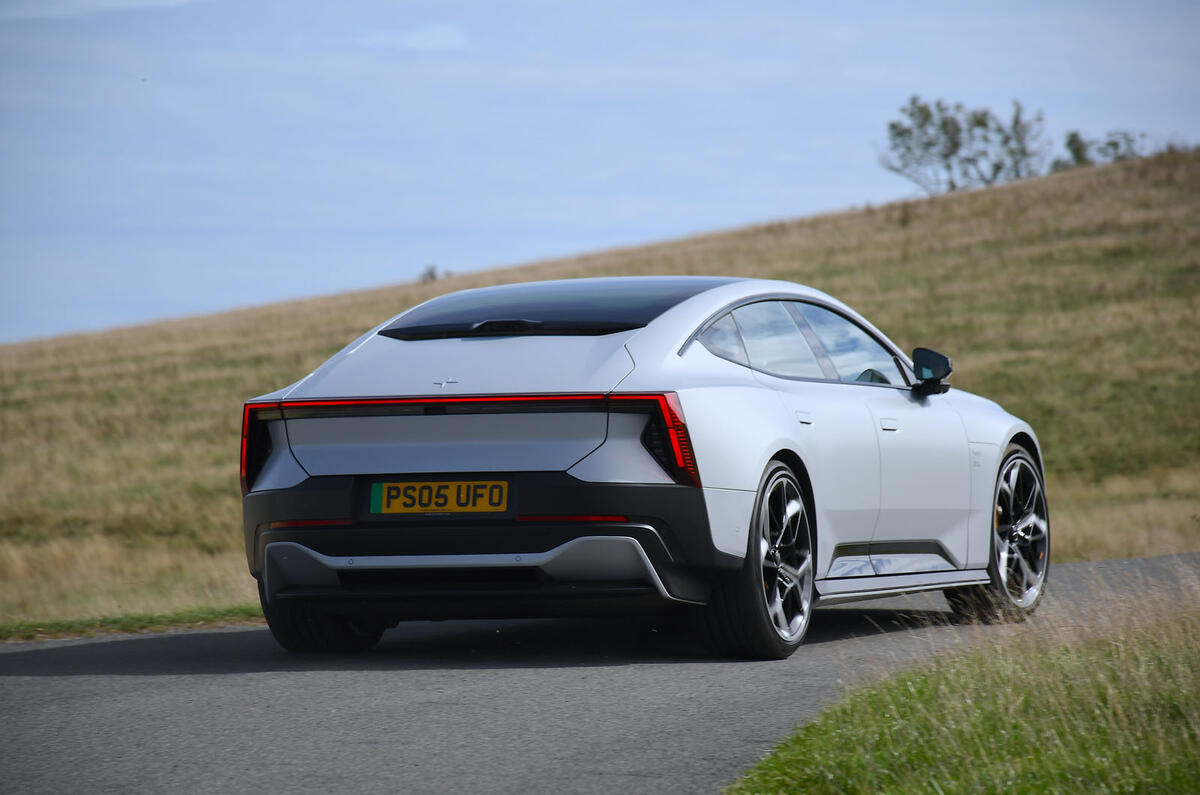
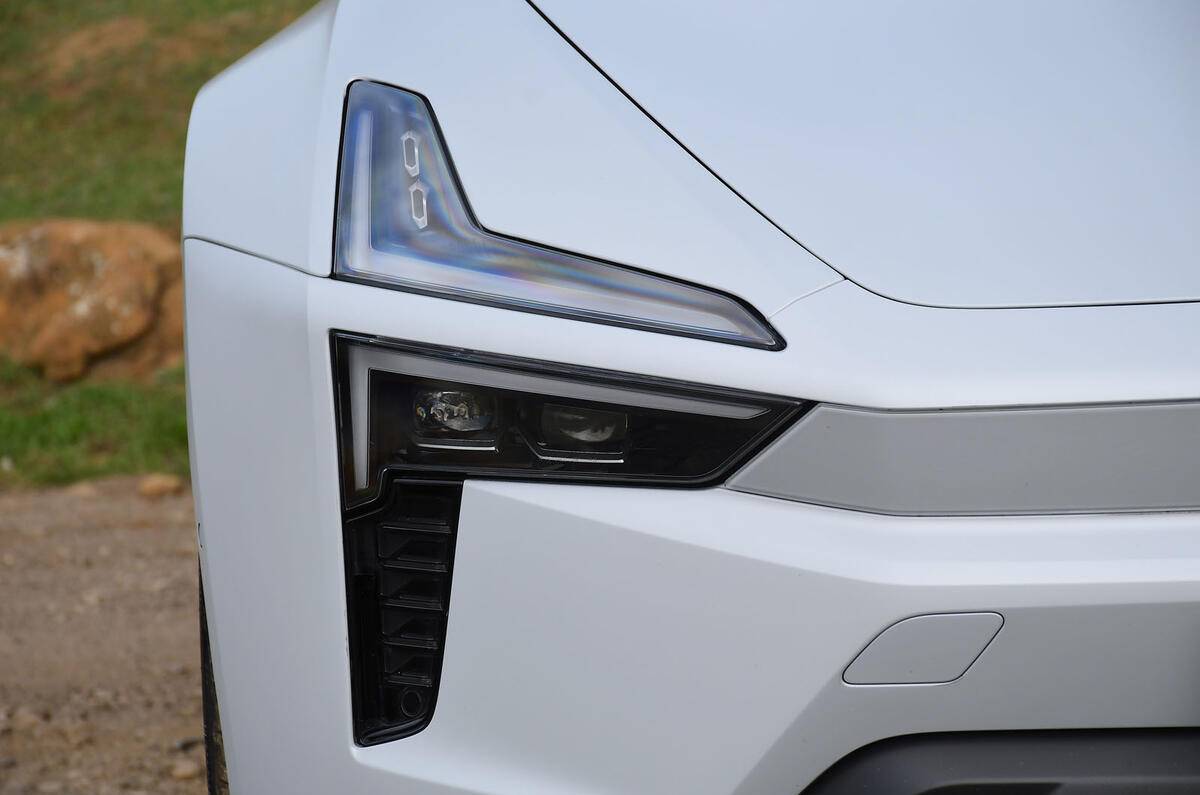
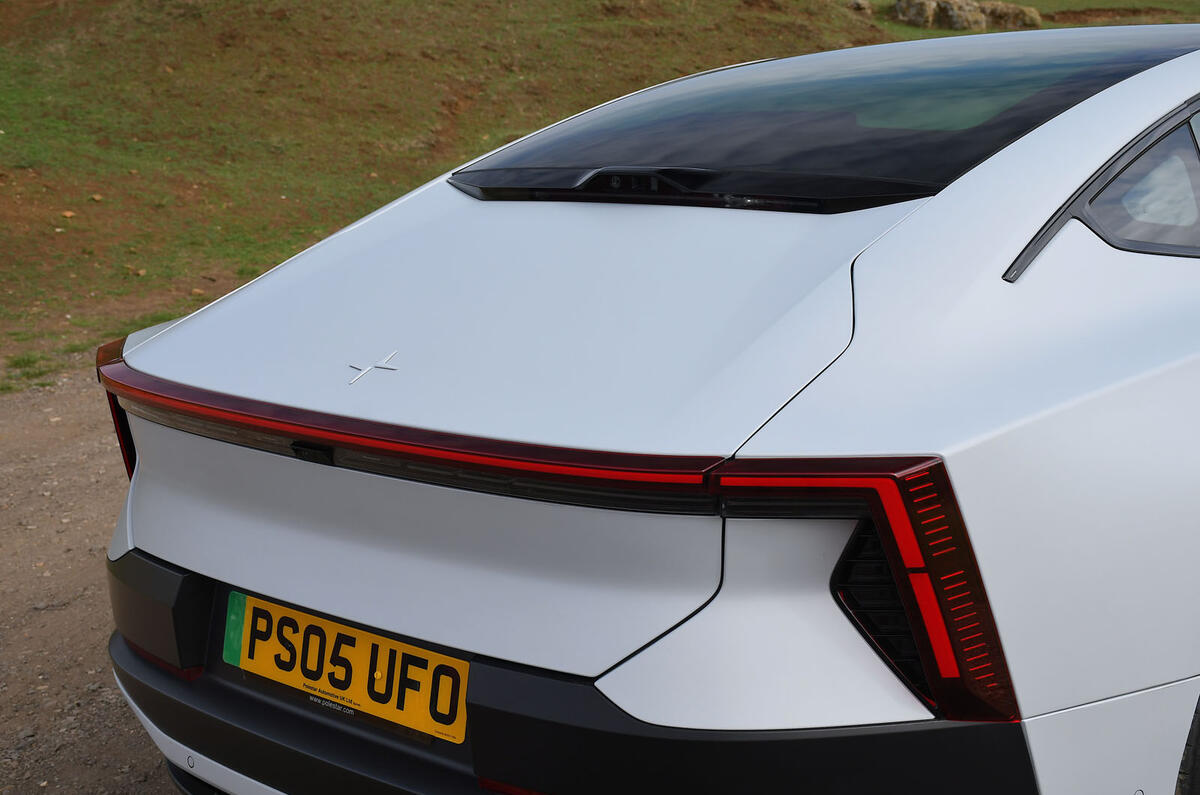
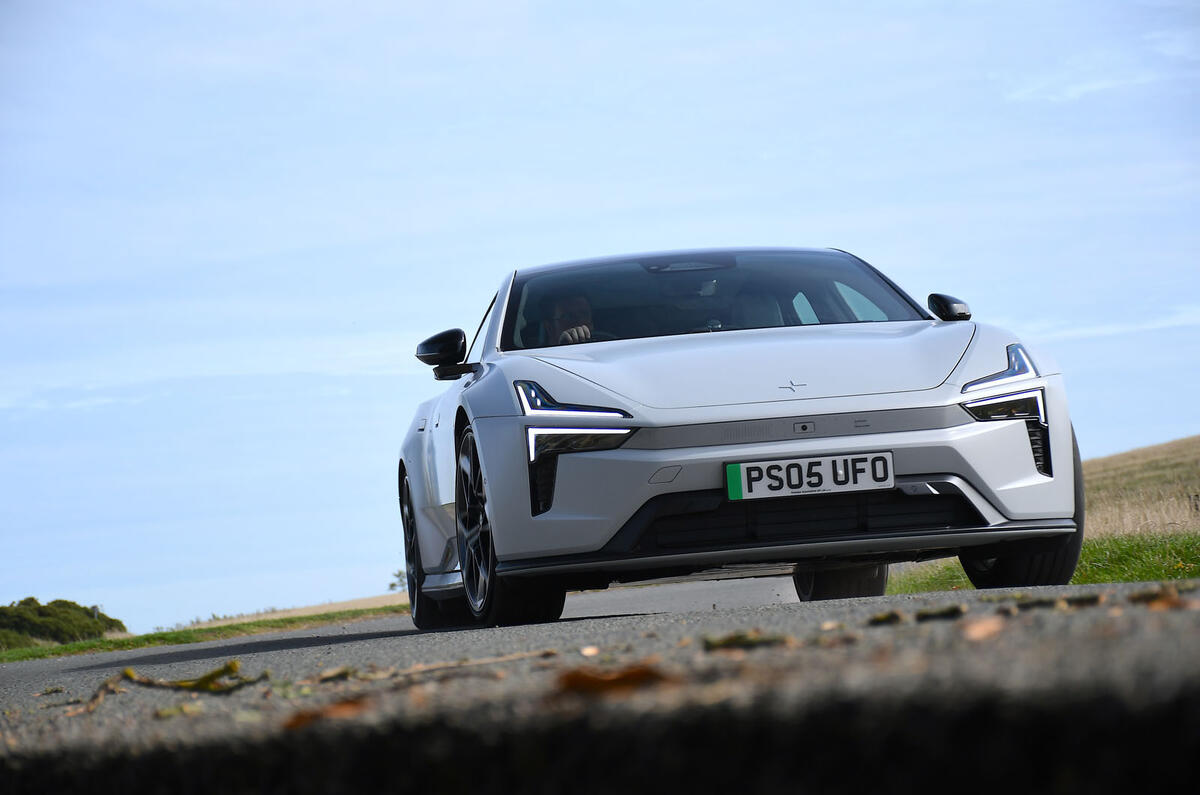
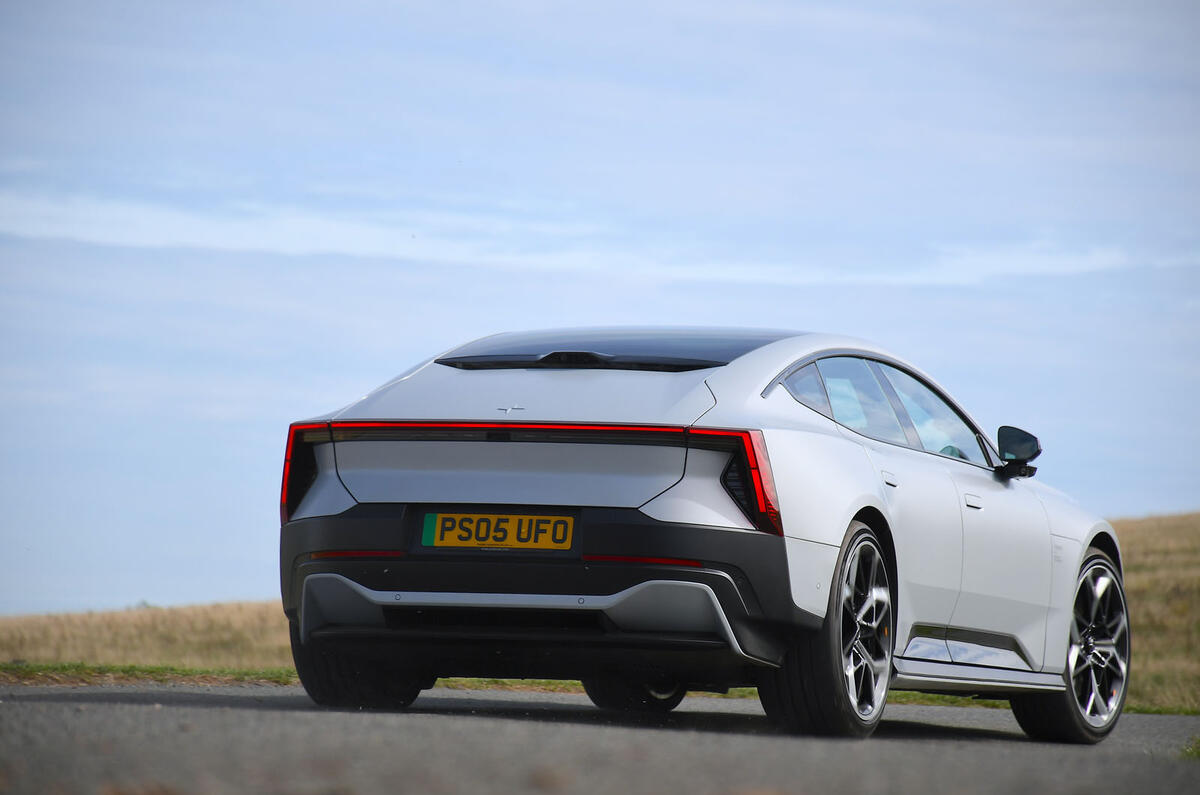
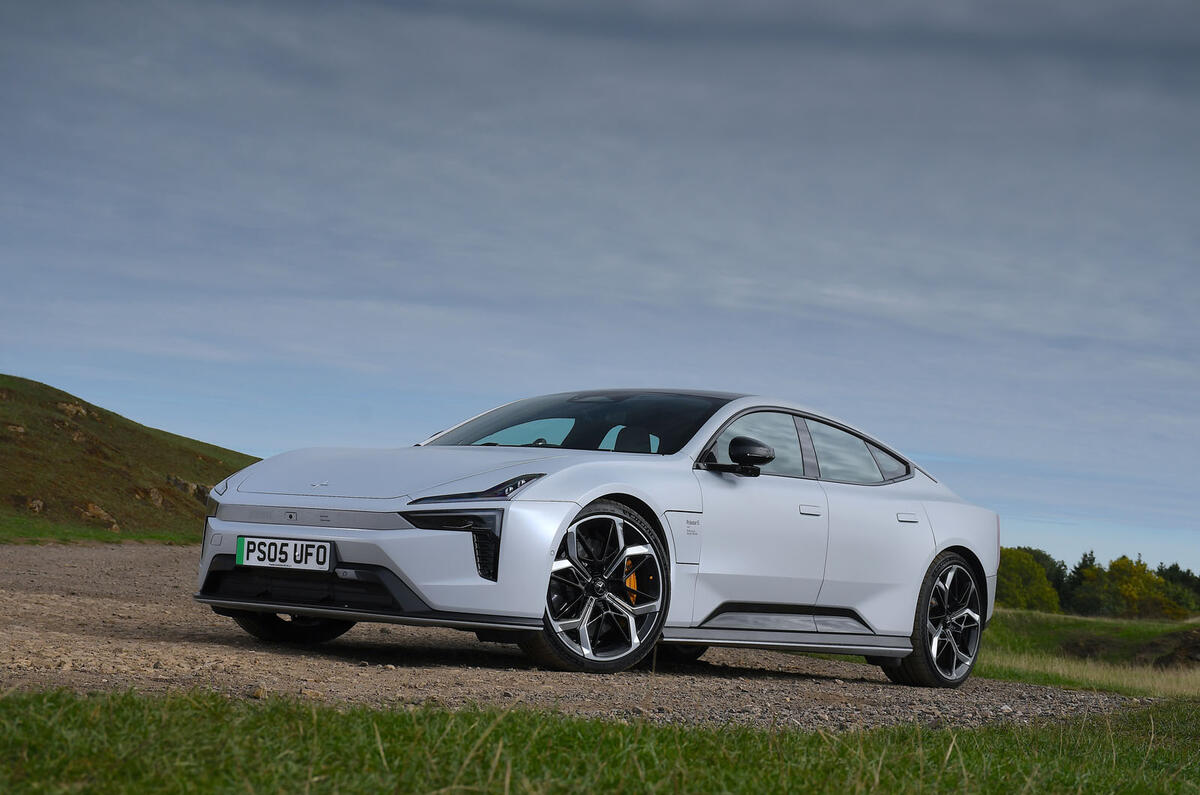
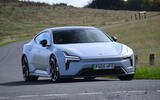
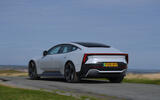
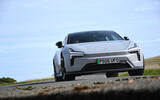
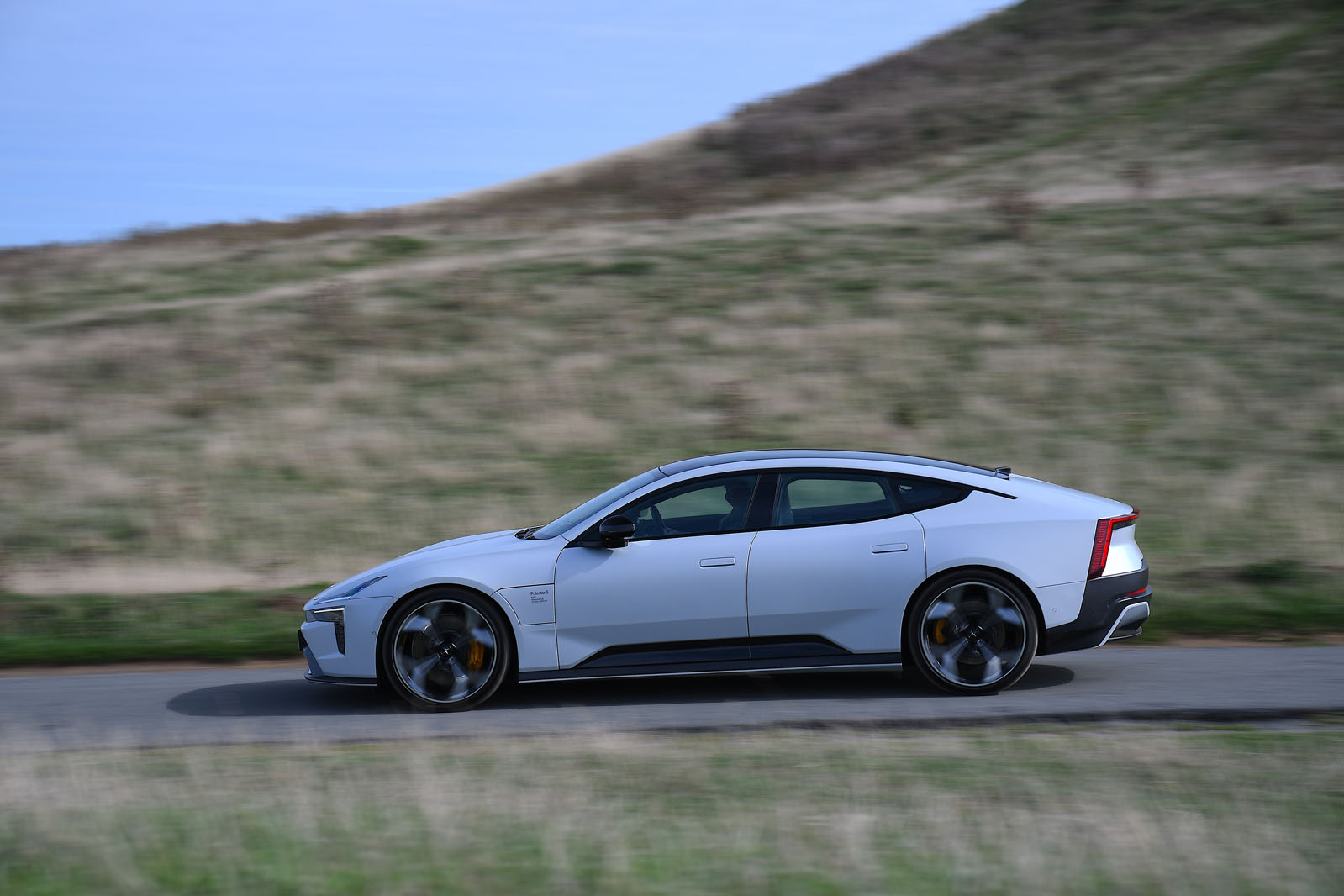
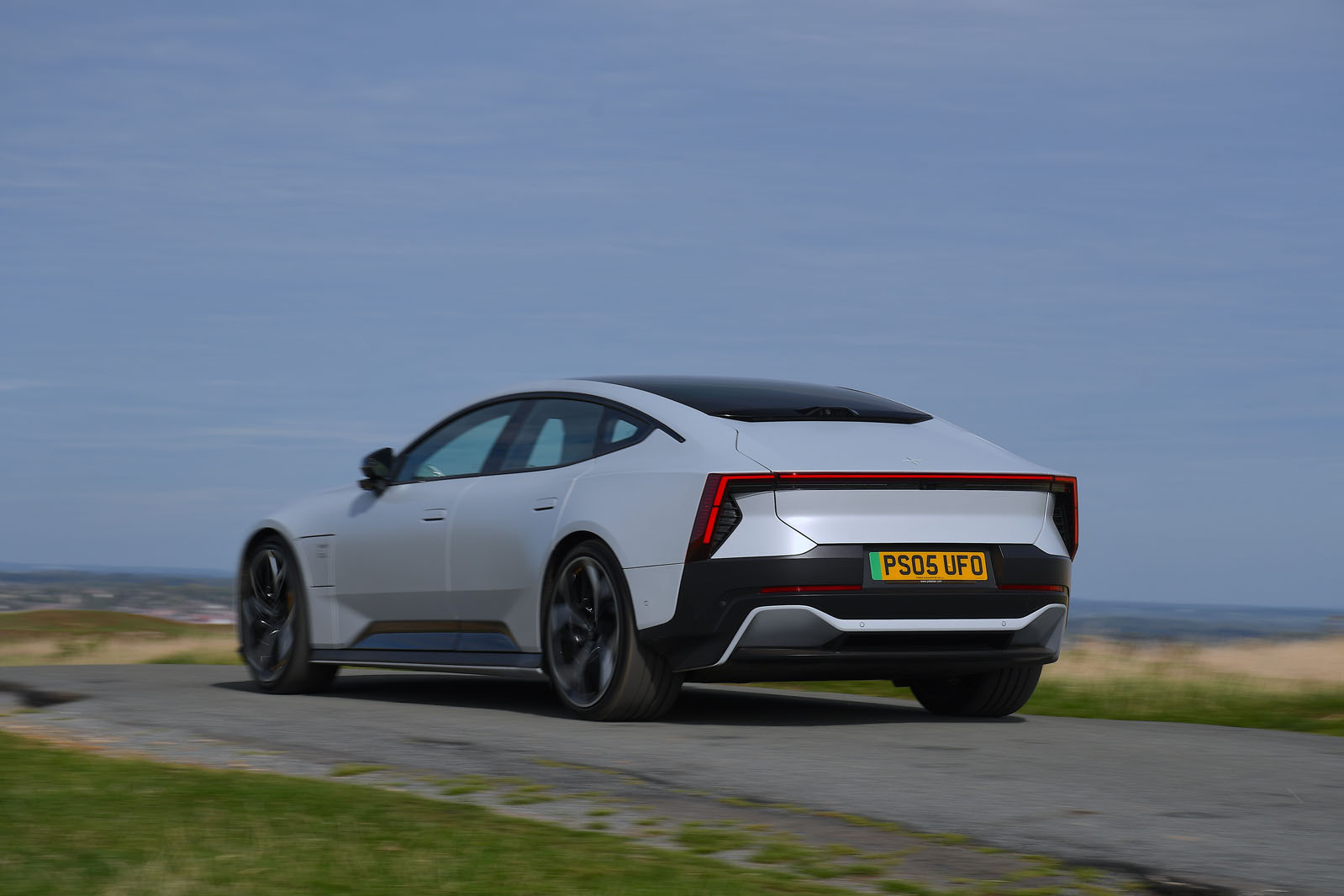
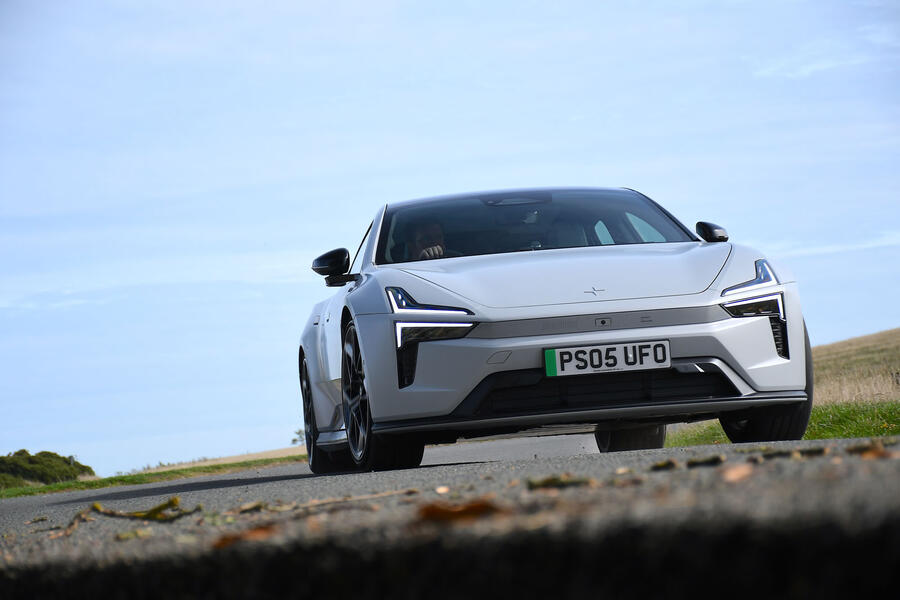
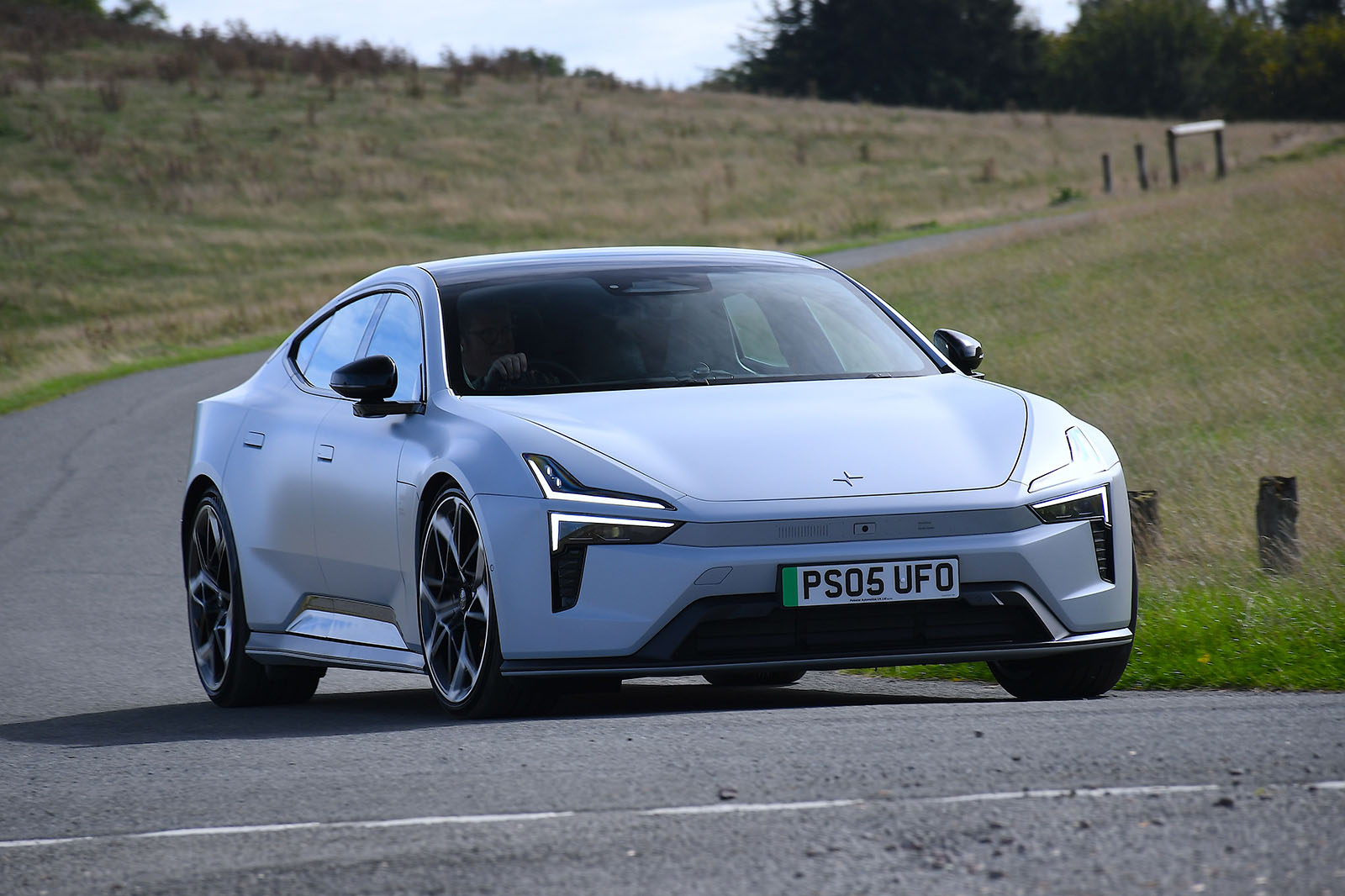
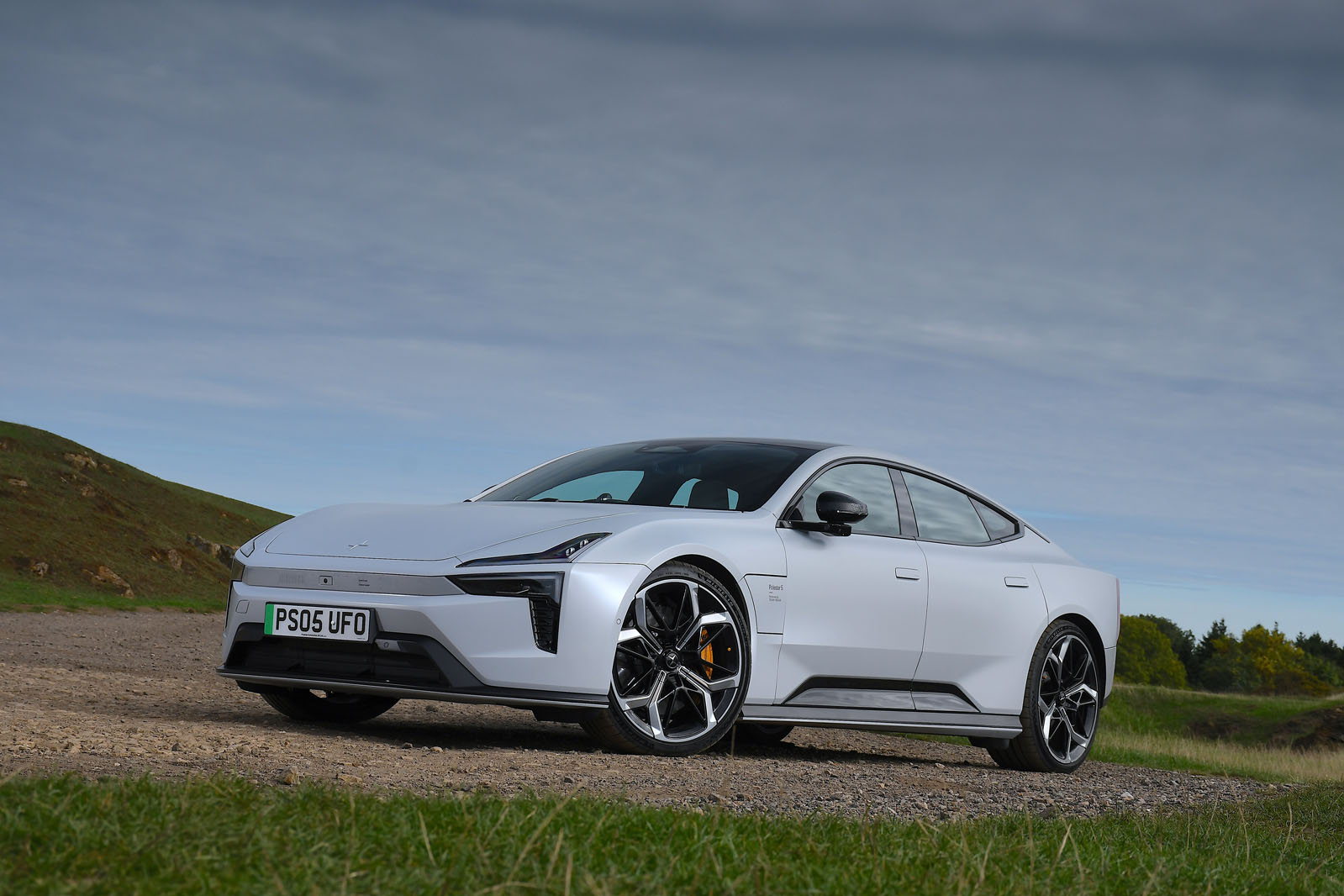
In design terms, the 5 is a very close match indeed for the Precept, from its low, purposeful, shark-like nose to its enclosed, window-free tail, and via its low bonnet and rooflines especially.

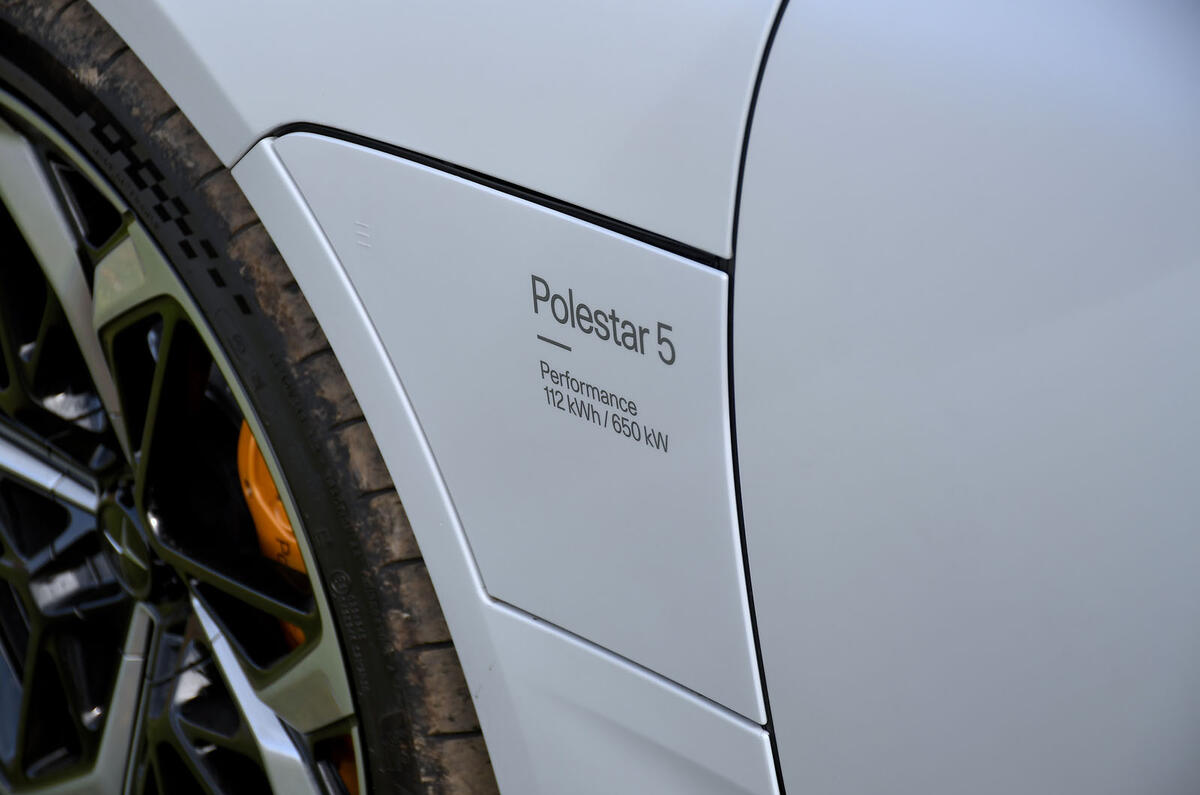
Polestar fits a slimline nickel-mangenese-cobalt battery pack with 106kWh of usable capacity and, as in some rivals, ‘foot garage’-style battery cutouts facilitating low seating positions. The car has an 800V electrical architecture so supports rapid charging at up to 350kW. It has a WLTP lab-test range of 421 miles in the case of the cheaper-of-two available versions.

Those versions are the Dual Motor and Performance, which both use a proprietary permanent-magnet motor at the rear axle and an off-the-shelf one (from ZF) at the front. The Dual Motor version deploys 738bhp from those motors, the Performance 871bhp – almost precisely as much power as the Porsche Taycan Turbo has.

The Performance we tested weighed exactly 2500kg on the scales, with a perfect 50:50 front-to-rear weight distribution. That’s impressive in the latter respect but less so, given the construction, in the former (Porsche Taycan Turbo S, 2024: 2356kg as tested, Lotus Emeya S, 2025: 2478kg).

The 5 uses steel coil suspension springs over double wishbones at the front and multiple links at the rear; conventional passive anti- roll bars; and conventional front-axle steering. The entry-level Dual Motor model gets passive dampers with hydraulic rebound stops from BWI, while the Performance gets Magneride adaptive dampers from the same supplier.

There’s also no mechanical torque vectoring built into the ‘PX2’ rear motor and so no associated mass penalty there, either. Wheel slip control is handled via the traction control system and the brakes. The rear motor does have a disconnect clutch, though, to enable cruising solely via the front motor to boost efficiency.

INTERIOR

7
Polestar 5 review 2026 010

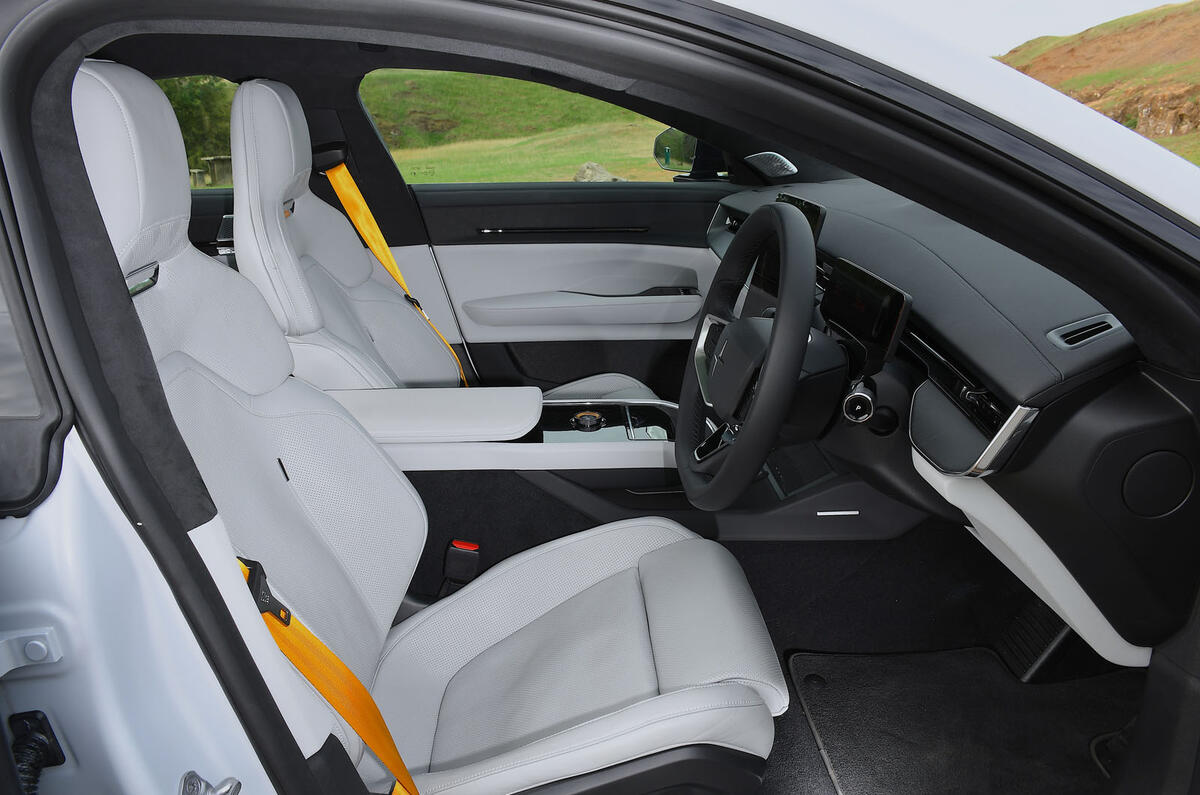
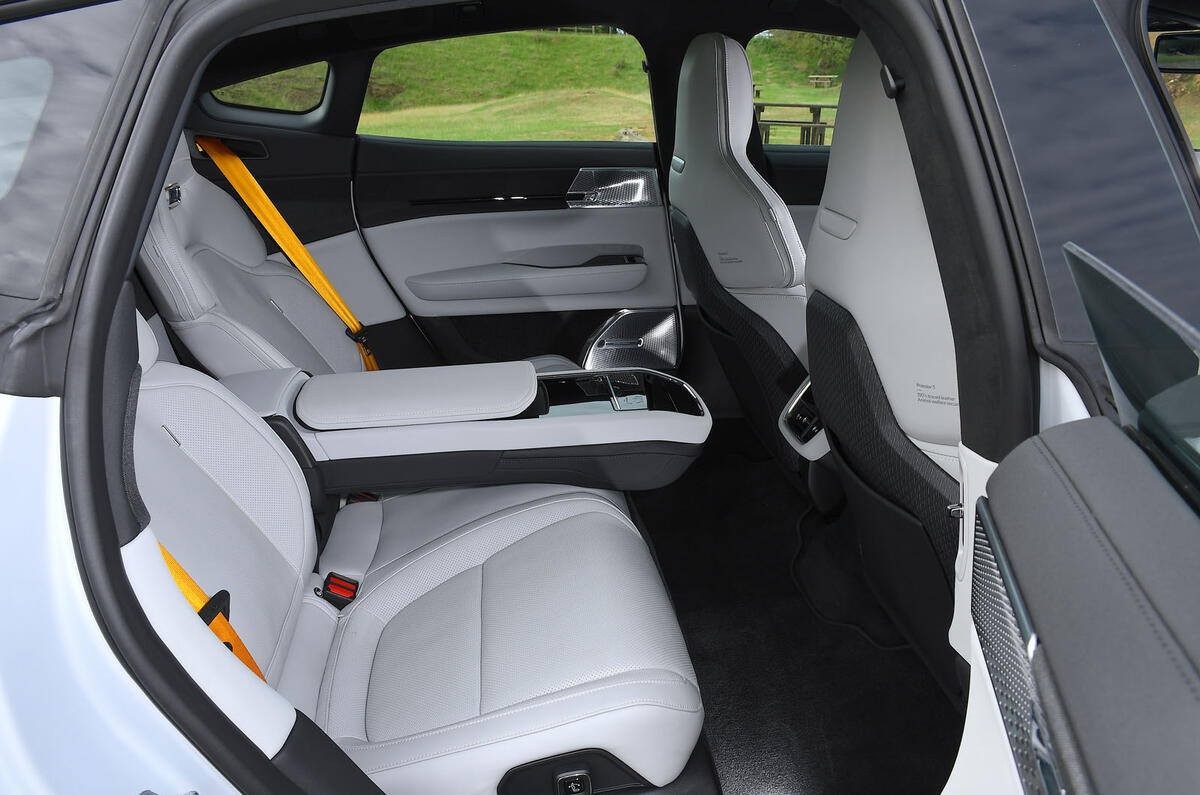
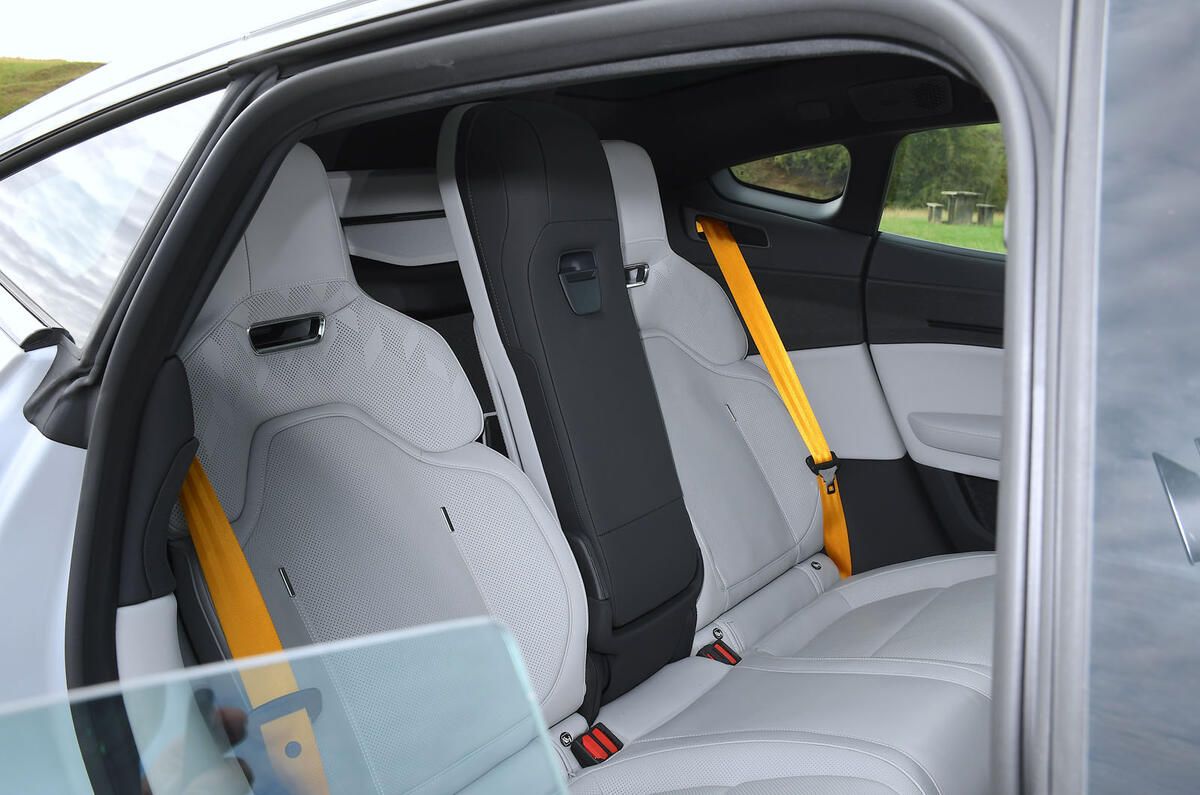
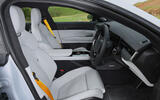
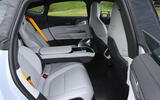
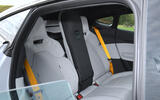
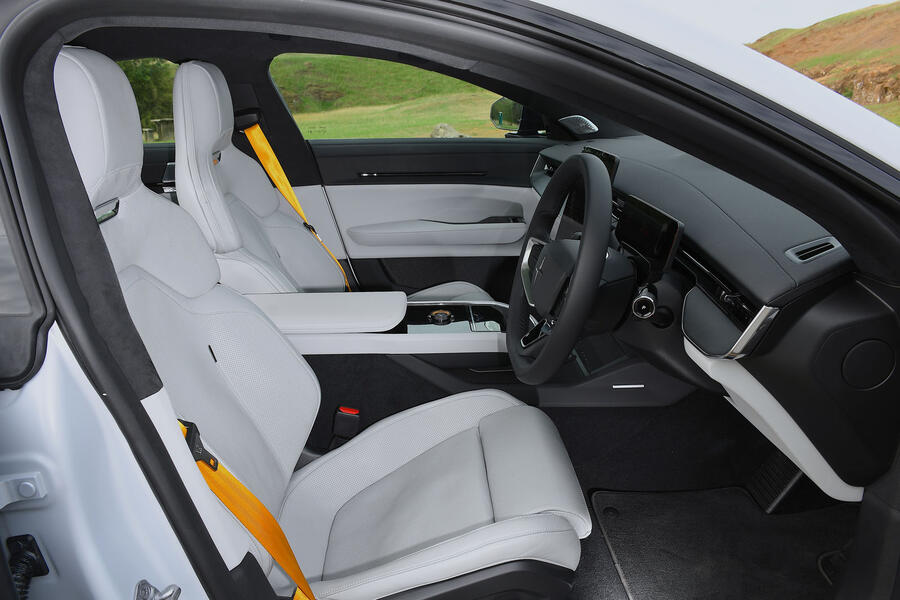
Tug on the motorised door release flap, duck your head under the low-ish cant rail, squeeze yourself past the B-pillar and through the slightly snug door aperture, and drop your bum onto the low cushion: you will find there’s plenty of room in either the front and back, even if you’re a large adult (which you wouldn’t quite say about the Taycan).

While the low beltline and dashboard certainly make it
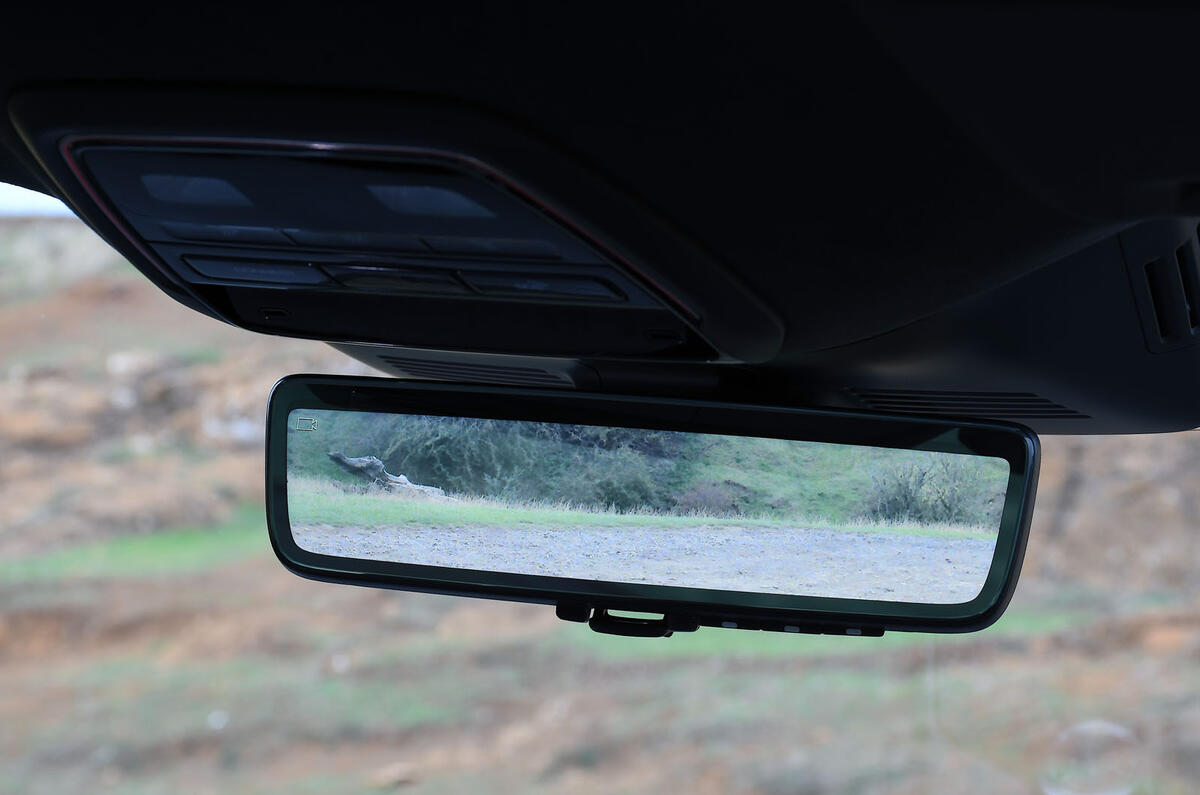
'Rearview mirror' video display can still be converted into an actual mirror, if you like to look at your rear passengers when you're talking to them; there’s just no rear window to look through to the world outside. The camera has a wide field of view but struggles to cope in direct low sunlight (not unlike the human eye).

feel as if you could be sat just a little lower at the wheel, there’s plenty of appealing dynamic purpose about the driving position. Good support and adjustability on offer from the sports front seats, too. 

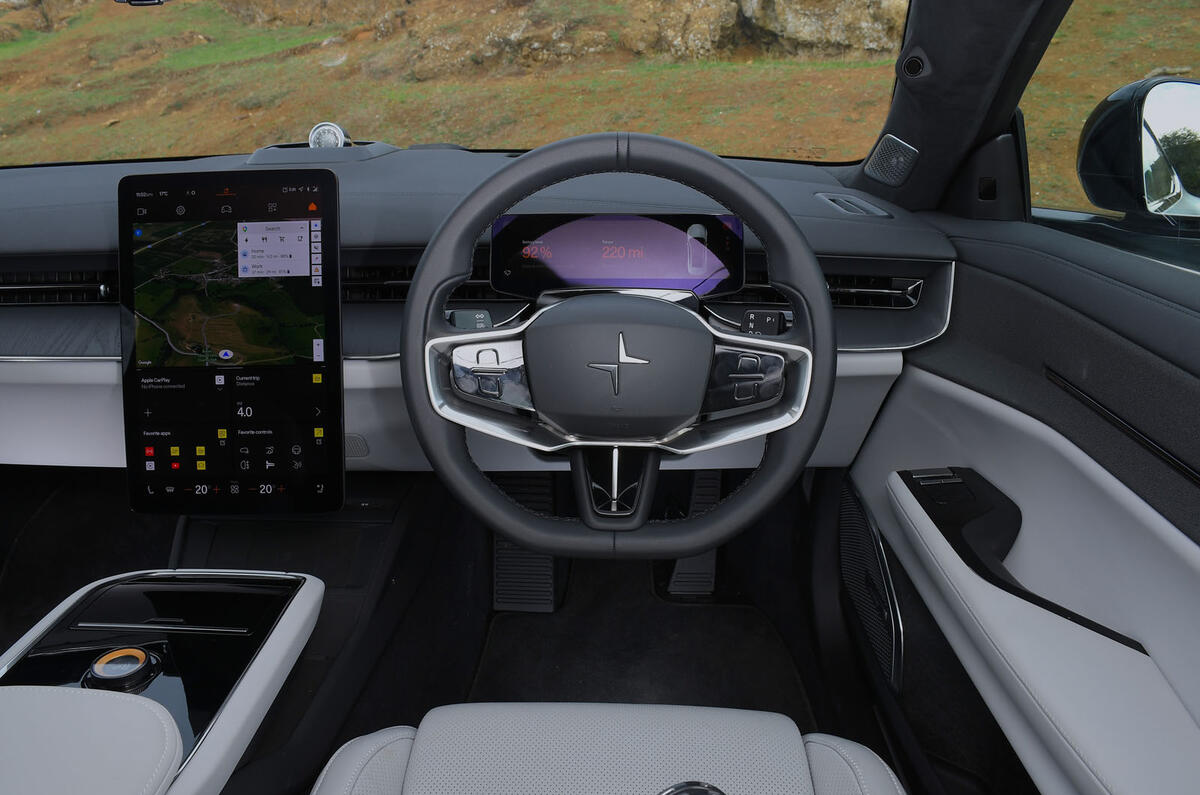
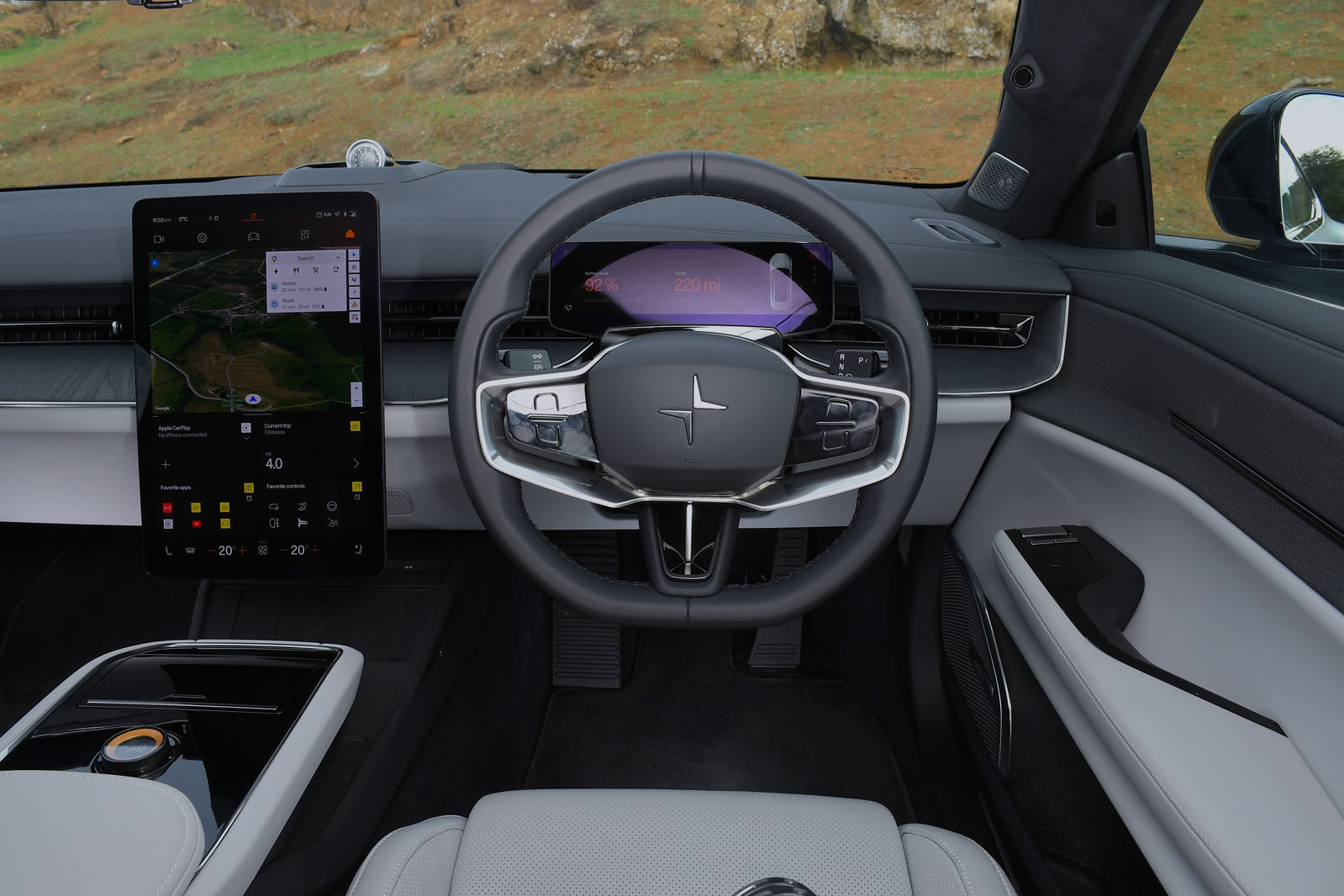
However, fully adjusting them and then putting the steering column just where you want it takes longer than it should, because of Polestar’s well-established preference for fitting only one physical knob or button where two or three would be more useful – or none at all and making you resort to prodding and swiping away at the central infotainment touchscreen, making what should be a quick and easy process unnecessarily fussy. 

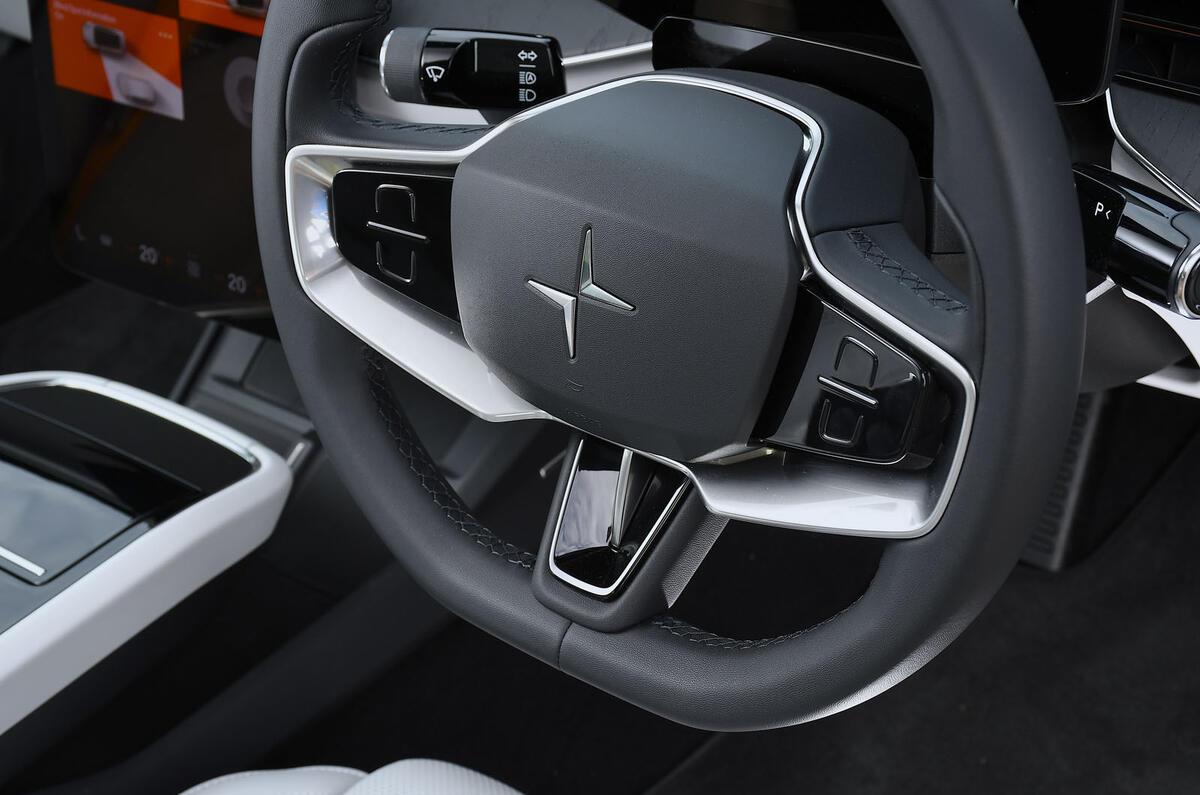
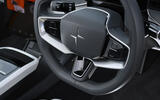
If there is a happy compromise between actual ease of use and the ideological removal of ‘superfluous’ physical controls, Polestar passed it several years ago – and now needs to retrace its steps. Door mirrors, headlights and ADAS should have fixed physical controls that can be found quickly and easily, because these aren’t ‘set and forget’ things. Other secondary controls should be illuminated and clearly marked, so you that don’t have to cover them with a finger (like the ones on the 5’s steering-wheel spokes), then look at a screen elsewhere before you’ve confidently identified the function of what you’re preparing to press.

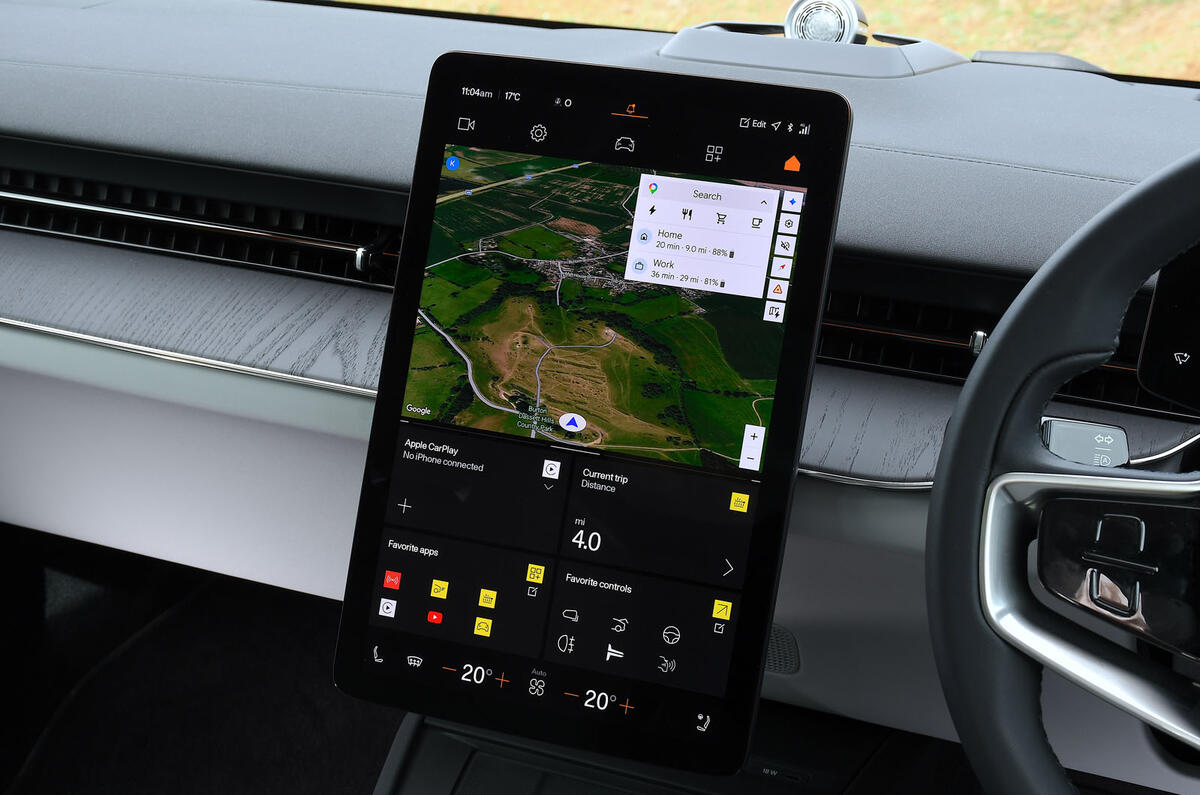
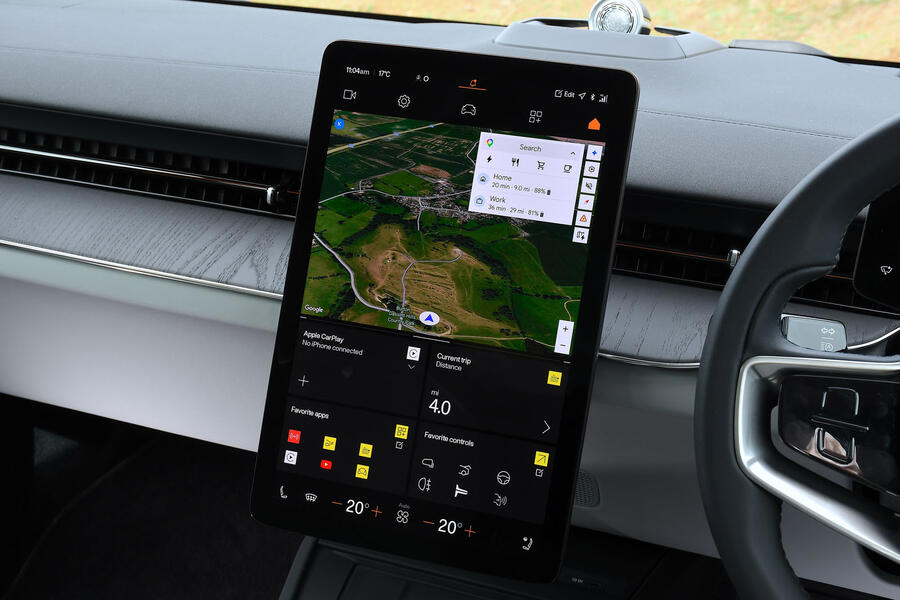
A car’s central infotainment screen should, in our view, also have fewer responsibilities to juggle than the 14.5in, portrait-orientated one here. It should also carry less driver-relevant information, which might otherwise be relayed in a way that draws your attention less far from the road, and generally be more responsive and less distracting (see Multimedia section).

Its particular digital take on usability notwithstanding, the 5’s interior is a very pleasant, inviting and judiciously lavish place. It isn’t flashy or chintzy and avoids traditional luxury material tropes, yet it still puts tactile, expensive-feeling materials – many of them recycled – in just the right places. 

The full-length glass roof will loom close to the scalps of taller passengers in the back (although the seatbacks have electric recline adjustment to mitigate that problem), but it does bathe the cabin in lots of natural light and makes travelling in the back every bit as special as in the front.

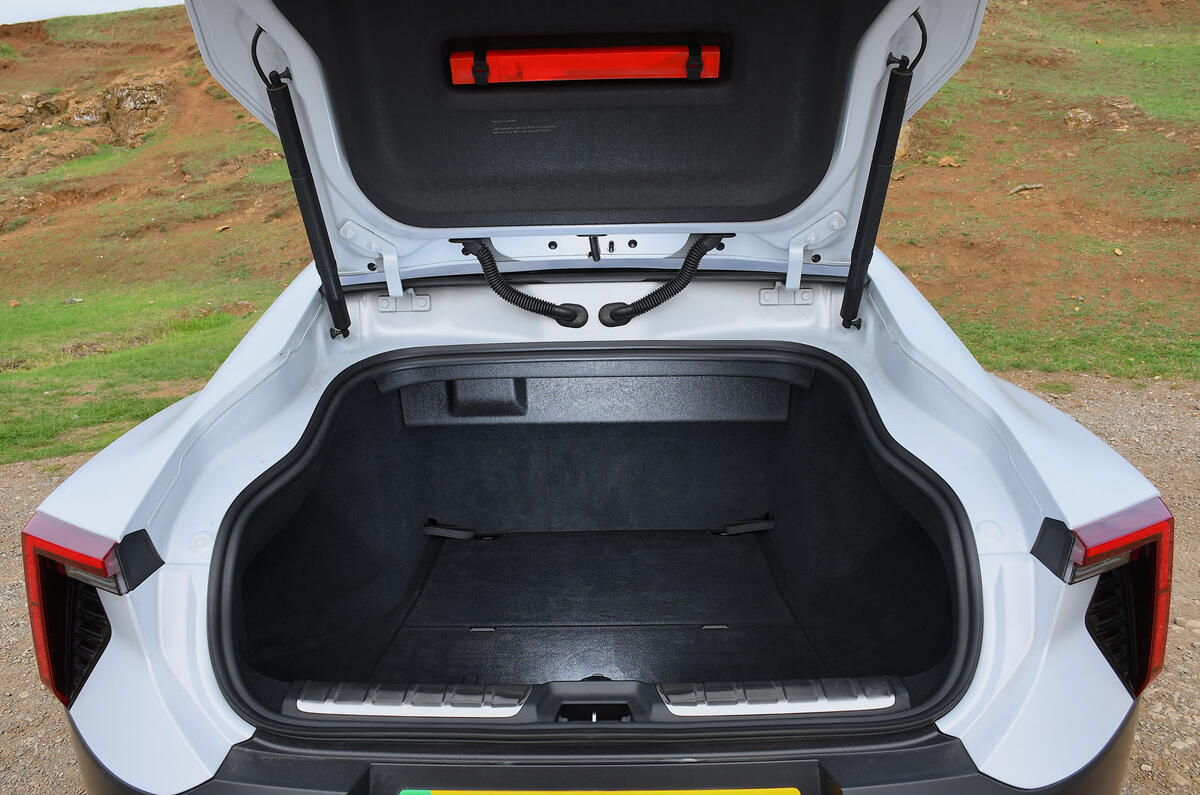
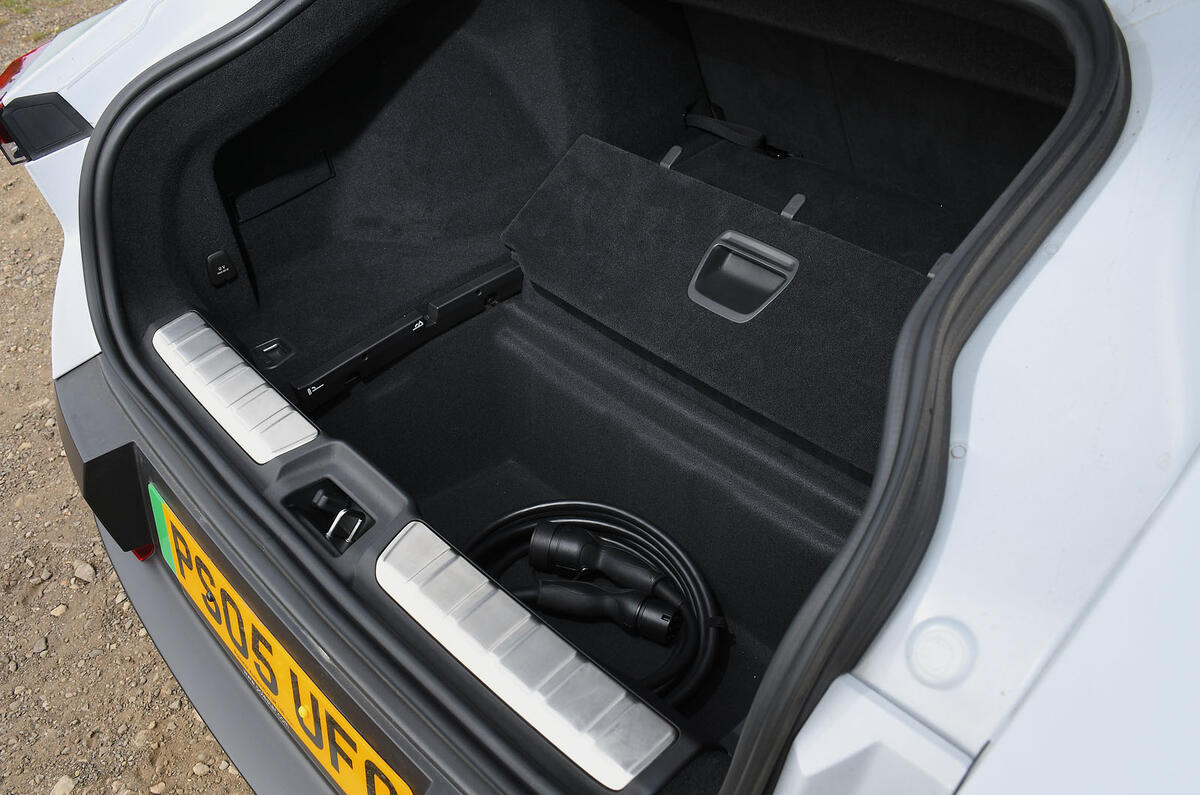
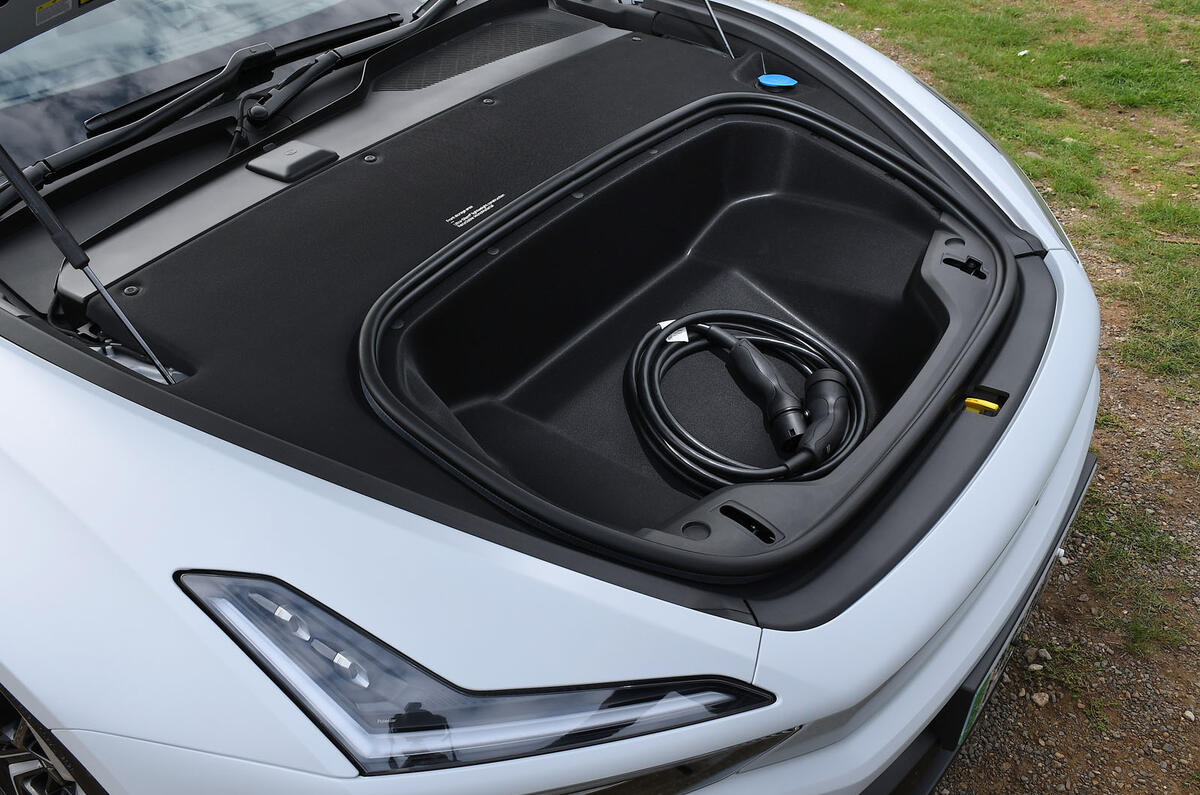
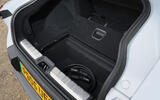
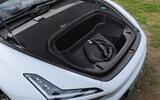
The boot, meanwhile, is a little shallow for a GT of this size but still big enough for plenty of luggage, and it can be expanded via folding the rear seats forward.
Multimedia - 3 stars

The 5’s big, upright infotainment touchscreen is in essence the same as you will find in Polestar’s 3 SUV. The firm has been refining its layout and software for several years now, and you do notice the benefit. 

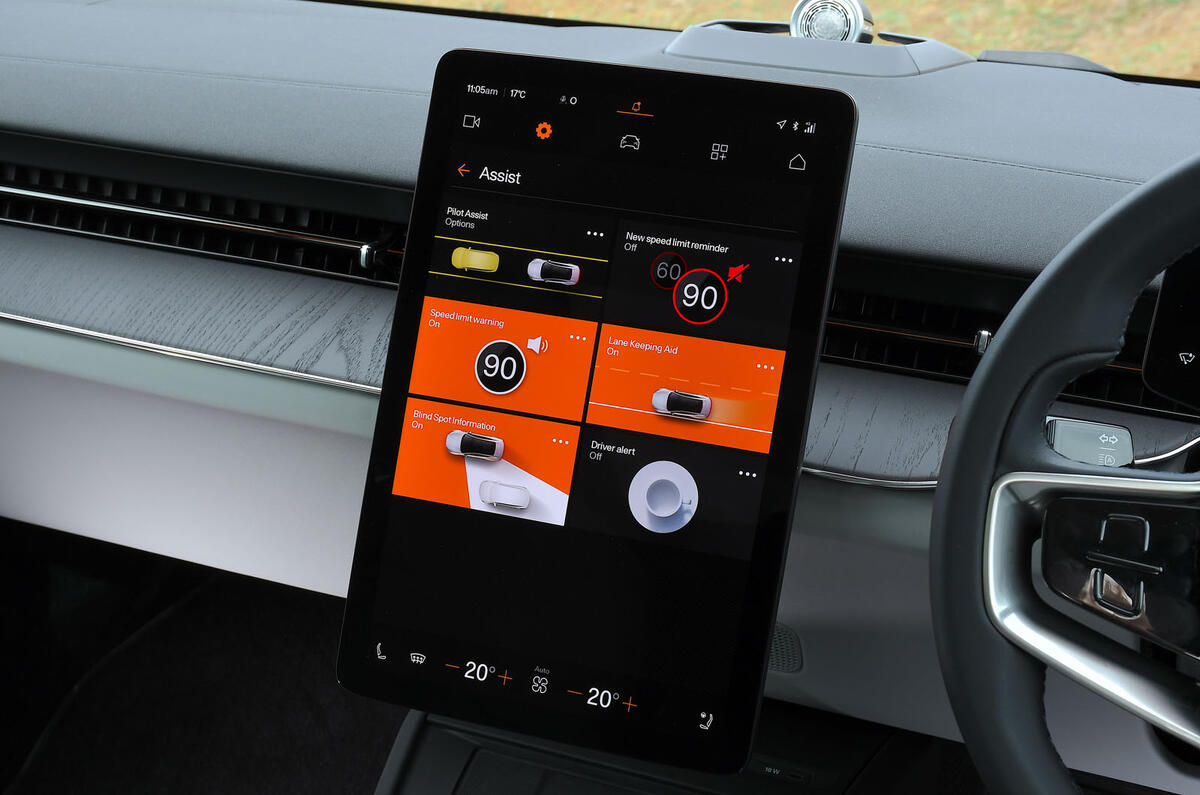
The lower half of the screen, which typically displays controls and trip computer information, is now more configurable, making your route to certain parts of the wider menu system (for headlight control, mirror adjustment or ADAS, for instance) shorter than it might be. It manages better, in other words, with having clearly been given too much to do in the first place. 

Even so, it can be a little unresponsive, seeming too often to need two prods of your fingertip when one ought to do. It also has the unhappy habit of displaying alert messages over the upper menu navigation bar, forcing you to pause while the message clears before you can continue to what you’re looking for.

Mirroring for both Apple and Android smartphones is standard and worked well for our testers. And the 21-speaker premium audio system from Bowers and Wilkins impressed us with both its power and definition.

ENGINES & PERFORMANCE

8
Polestar 5 review 2026 024

A fast GT needs to give attention to matters both quantitative and qualitative here. A peak output of 871bhp proves more than sufficient to satisfy one side of the equation. On the other, however, Polestar’s established philosophy on how a modern EV should operate  - and be operated - leads the character of the 5’s powertrain inexorably in a particular direction.


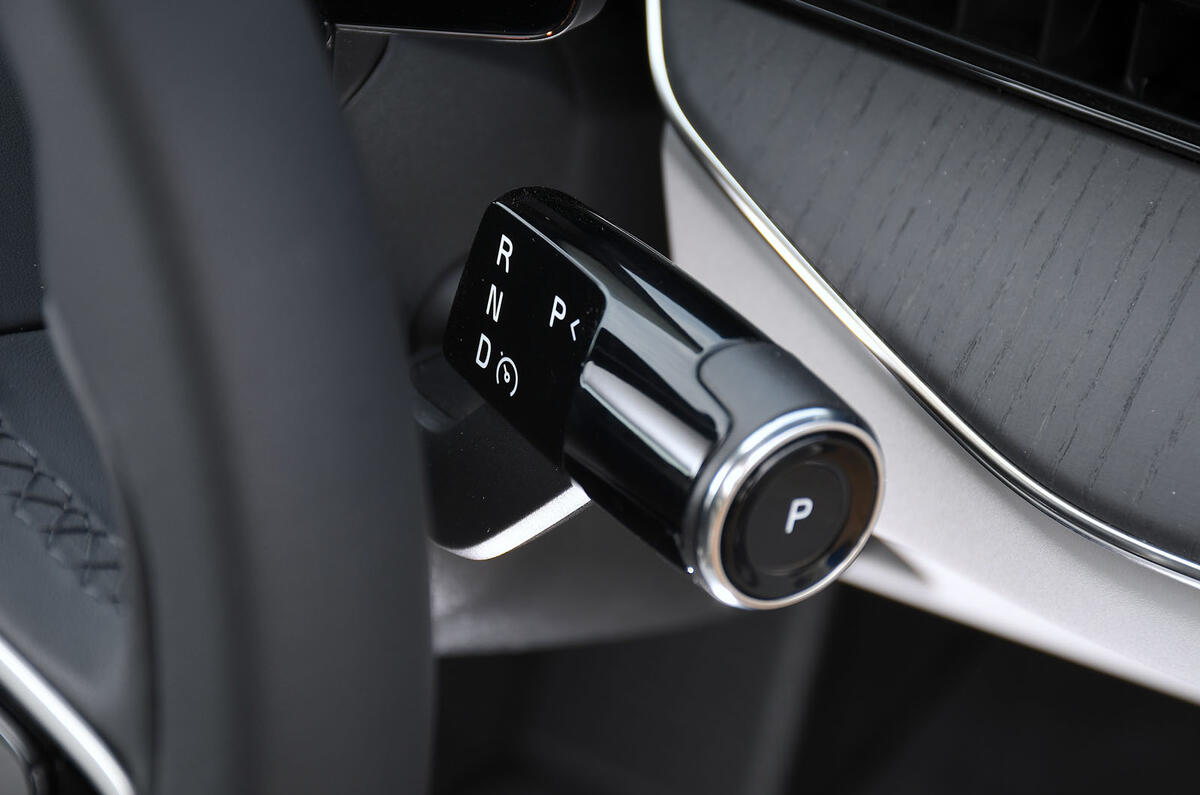
This company’s preference for purity, simplicity and a lack of sensory frippery is evidenced here as much as in any other model. ‘This may be our flagship driver’s car,’ they may very well have thought, ‘but it still doesn’t need a real gearbox, or indeed a fake one, imitation engine noise for dramatic effect, paddles for regenerative braking control or even overarching drive modes’. Instead the 5 just has two well-calibrated pedals; effective traction, stability and electronic torque-vectoring systems; and surprisingly little else.

The lack of texture and punctuation in the 5’s performance is a bigger problem for a fast GT than it has been in any other Polestar to date. This car just needs a way to engage you that isn’t going flat out, of letting you drink in the miles.

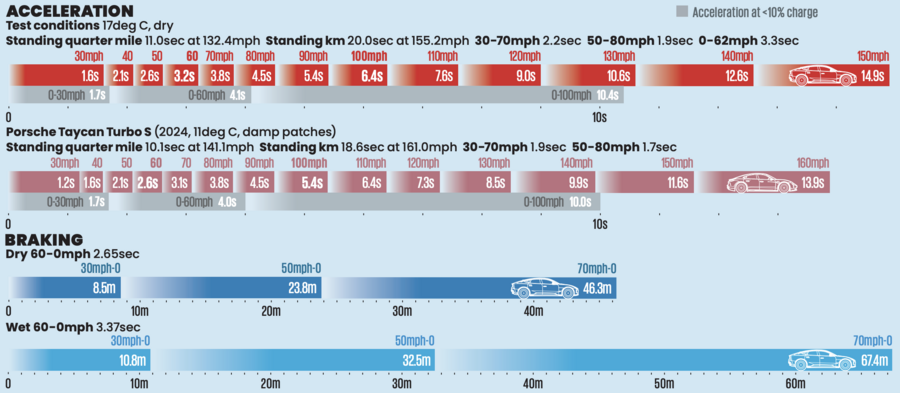
Dial up the Performance’s self-titled powertrain calibration and there’s exactly the horizon-warping outright acceleration you’d expect on offer. Our test car hit 60mph quickly enough (3.2sec) to beat some (Lotus Emeya S, Mercedes-AMG EQS 53) but not all (Maserati Granturismo Folgore, Porsche Taycan Turbo S) of the rivals we’ve tested in recent years. And yet we shouldn’t overlook how someone might have reacted, only a couple of decades ago, to the idea of a 2.5-tonne GT car that could accelerate so quickly.

The outer limits of that muscularity are kept well under control by an accelerator pedal with quite a long travel, however, which never gives you more urgency than you’re expecting. The by-wire brake pedal is surprisingly progressively tuned also. Perhaps too progressive at times, because, while it blends regenerative braking and friction cleverly on the road, it’s a little too long in the travel to inspire ultimate confidence on track. Or otherwise just when you want a lot of stopping power in very short order, which occasionally the car seems curiously unwilling to supply.

Regen can be toggled via buttons on the left-hand steering wheel spoke: not as intuitively as it might have been via paddles, it must be said. So you tend to pick one regen mode and stick with it. Then, without any audible performance accompaniment or any other way to cut and dice or portion up the ocean of torque under your right foot, the car’s performance character is at risk of feeling a little flat and aloof in everyday driving; once you’re used to the outright scope of it, that is.

RIDE & HANDLING

9
Polestar 5 review 2026 025

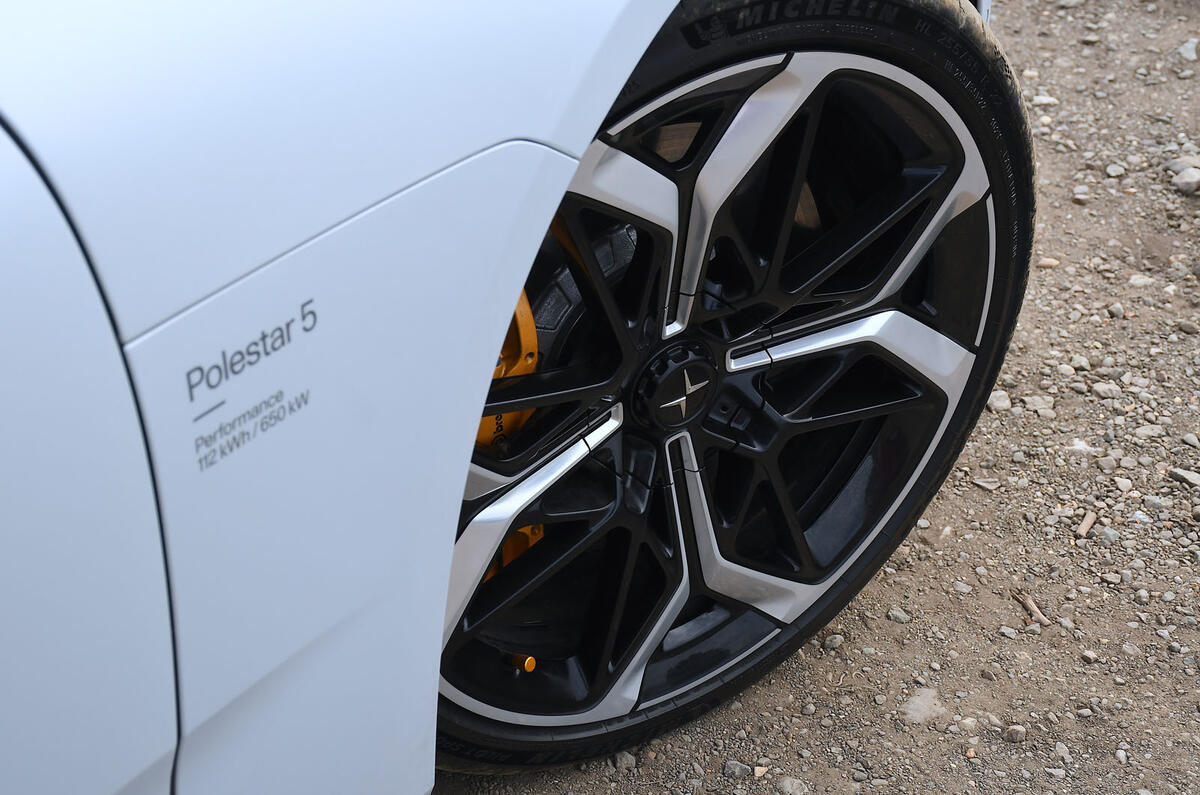
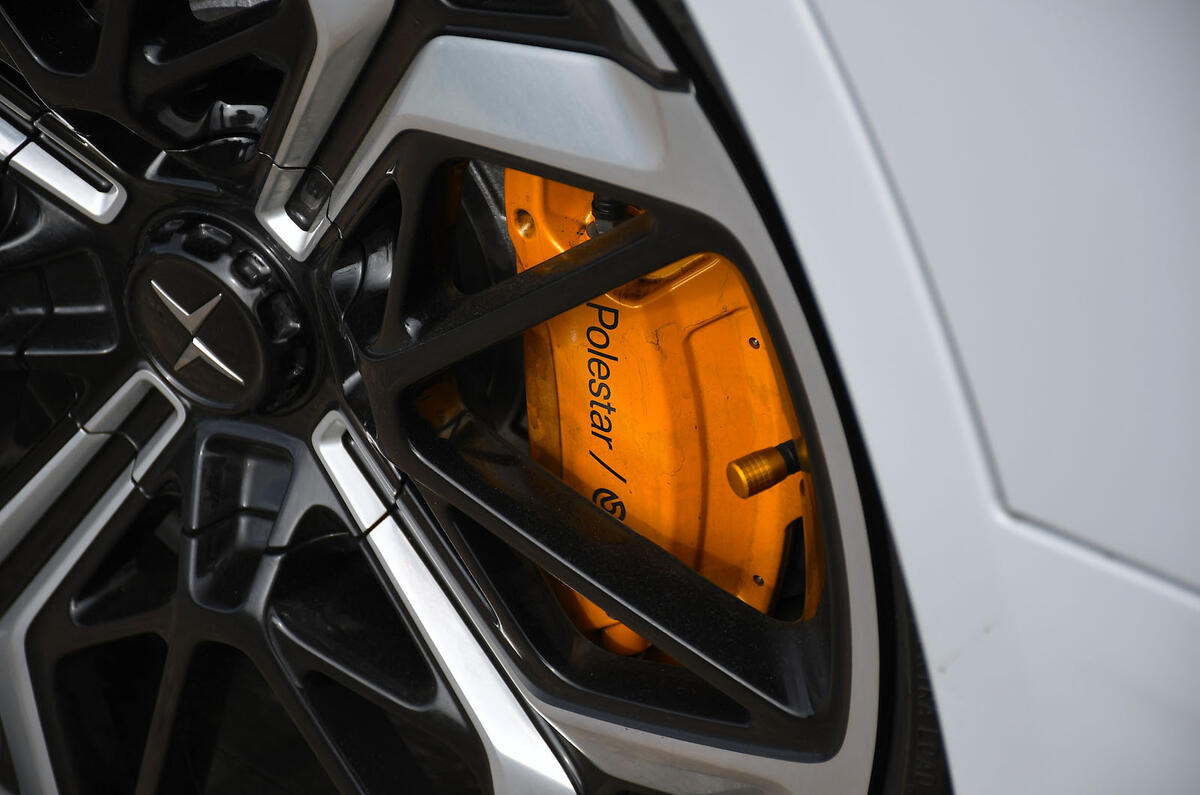
The 5 feels wide on the road – especially so at the rear, when you’re trying to keep those oh-so-vulnerable forged 22in alloy wheels from coming to grief against urban kerbstones. In manoeuvring it, you might just have cause to rue Polestar’s decision to pursue purity and leave rear-wheel steering on the shelf.

You won’t at other times, though, or when it really matters, because there’s an understated sense of agility about the 5’s handling that does come to the fore when you go looking for it.

It doesn’t smack you in the face, like the shopping-trolley-esque four-wheel-steered kind so often can at roundabout pace; and it isn’t delivered all the time, or at the cost of this car’s touring comfort which remains very creditable.

It’s simply there to be discovered, when the opportunity presents itself. Engage the traction control’s ESC Sport mode, tuck the nose keenly into a long, well-sighted corner and pick up the power with some confidence. Suddenly, two-and-a-half tonnes melts away. The 5’s chassis feels light on its feet and begins to pivot underneath you – intuitively enough and just a little, but also about as much as you would want in order to show that this big car is warming to its task and enjoying its exercise.

The adaptive dampers fitted to the Performance version have three settings (Standard, Nimble, Firm), the steering three similarly titled settings (Light, Standard, Firm). Our testers found the middle-sitting options for both the most versatile, although at times the softer, smoother ride of Standard better deals with really uneven country roads.

None of the damping programmes gives the 5 the isolated glide of an air-sprung luxury car – there’s always more connected feel about the ride than that – but most still provide plenty of suppleness when it’s needed, combined with excellent close control of both body roll and pitch.

Track notes - 4 stars

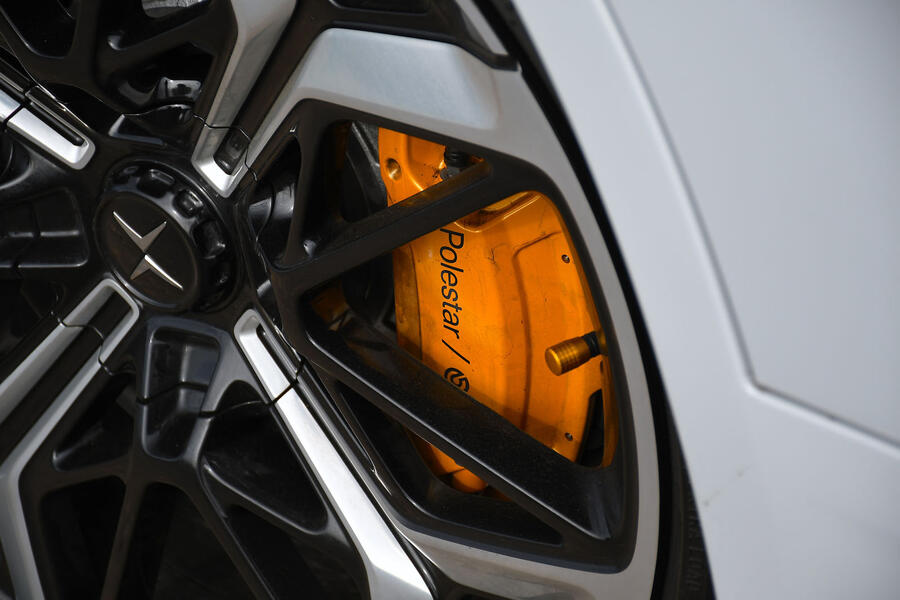
The 5’s iron brakes and bespoke Michelin Pilot Sport tyres coped well with some short but fairly intense scrutiny on circuit. The by-wire brake pedal seems to compensate for the effects of fade, and so made it a little hard to gauge how hard the brakes themselves were working; but they stood up to around 20 minutes of hard use in dry conditions without issue.

The stability control system has only On and ESC Sport settings - the latter evidently not quite being fully off, because it still intervenes to vector torque and limit motor power at fairly large slip angles.

This allows you to tap into and enjoy the surprisingly keen front axle and well-balanced chassis all the same. The 5 takes to a fast line naturally and can be made adjustable in its cornering posture either off or on the power. It prefers, however, to roll into benign, gentle slides on a balanced throttle and then to develop them with power.

The 5 coped well with MIRA’s wet handling circuit, showing security with its electronic systems on and more playfulness with them off, although its wet-surface stopping distances gave us a little cause for concern.

MPG & RUNNING COSTS

8
Polestar 5 review 2026 001

Thanks significantly to the Porsche Taycan, the market for electric four-seat GTs is now better established than many other niches still more closed off to EVs. It’s the market, of course, where the Jaguar Type 01 will land in spring 2027 and in which the Maserati Granturismo Folgore recently had a conspicuous £50,000 price cut.

Here, £120,000 to £140,000 now seems the going rate for a car from a desirable brand and with all the right vital statistics. Polestar has given the 5 a starting price of £89,500, rising to £105,000 for the Performance variant - so it’s certainly priced to sell, albeit in small numbers.

I wondered if the 5’s UK development might have played a role in the positioning of its charging port: on the nearside, conveniently for RHD kerbside access. Then I realised that all Polestars have such charging ports. Britain thanks you, Gothenburg.

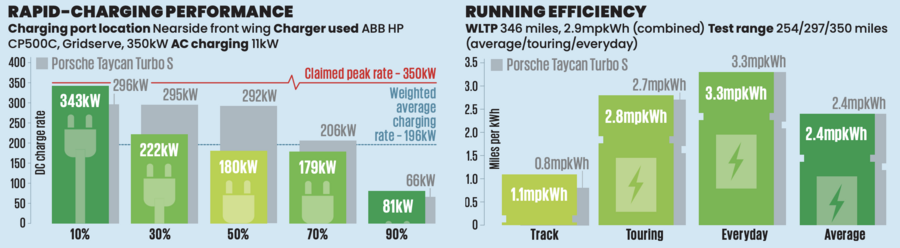
That our Performance test car proved to have a real-world motorway touring range of just under 300 miles disappointed our testers a little, although it was still better than we’ve recorded fairly recently in this car’s rivals from Lotus and Maserati.

For rapid charging performance, meanwhile, the 5 recorded a weighted average test result of 196kW – notably slower than a Porsche Taycan Turbo S (249kW) and significantly slower than a Lotus Emeya S (319kW). 

Of course that leaves the 1500kW charging capabilities of BYD’s new Denza Z9 GT, which have yet to be verified by our testing.

VERDICT

8
Polestar 5 review 2026 029

A year from now, Polestar could look like quite a different car maker. So should we regret that this 5 feels more like the curtain call for the firm’s old generation, rather than the scion of the new?

This is an arresting, brilliantly alternative-looking electric GT, after all, with genuine four-seat usability, a sophisticated and modern cabin, an equally sophisticated chassis and some real speed to unleash from underneath its elegant clothing.

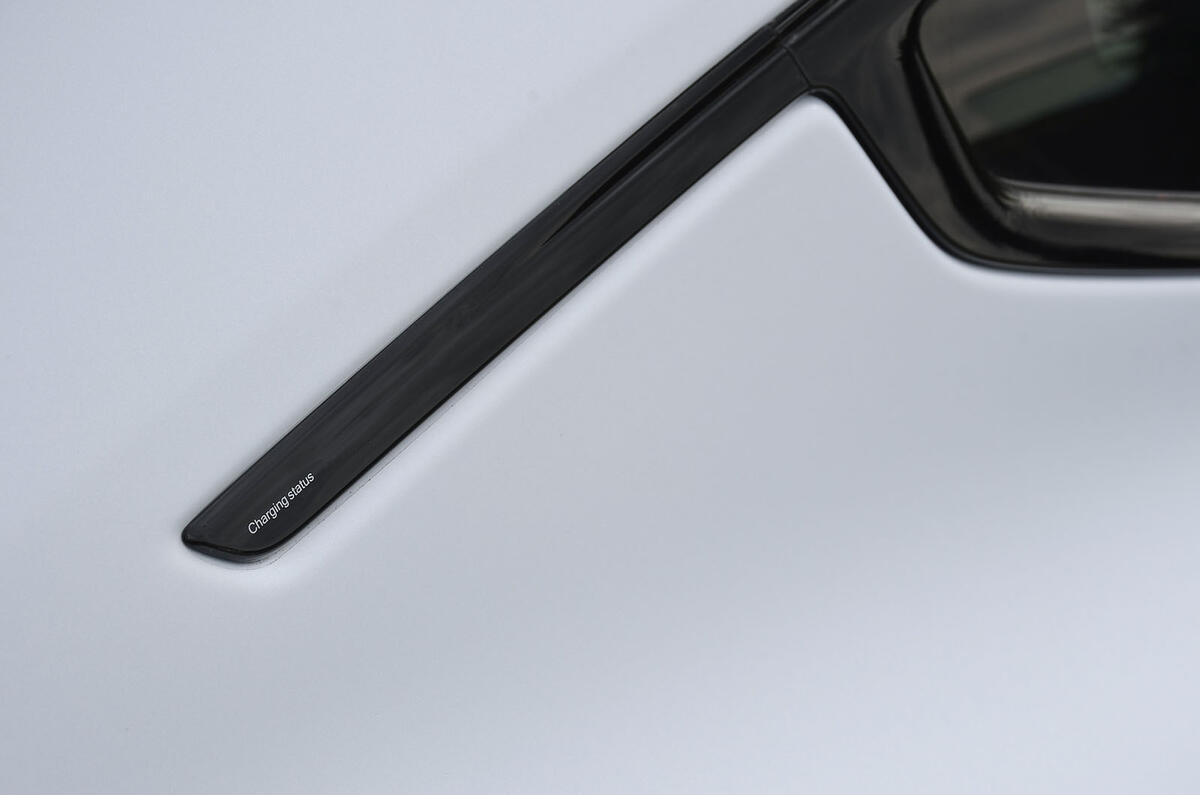
Like the Precept, the 5 has an exterior charge indicator on its C-pillar. The faster the light pulses, the closer to full the battery is. Once it’s constantly lit, you can unplug and depart.

You would expect greater range and charging speed from a technologically progressive flagship. You might also want a richer and more engaging drivetrain and a smarter take on digital cabin tech.

But if you’re ready to embrace this car for what it is, it’s certainly a sensational presence; a moment in time, if nothing else; and a quietly but distinctly compelling drive.

Matt Saunders

Matt Saunders Autocar
Title: Road test editor

As Autocar’s chief car tester and reviewer, it’s Matt’s job to ensure the quality, objectivity, relevance and rigour of the entirety of Autocar’s reviews output, as well contributing a great many detailed road tests, group tests and drive reviews himself.

Matt has been an Autocar staffer since the autumn of 2003, and has been lucky enough to work alongside some of the magazine’s best-known writers and contributors over that time. He served as staff writer, features editor, assistant editor and digital editor, before joining the road test desk in 2011.

Since then he’s driven, measured, lap-timed, figured, and reported on cars as varied as the Bugatti Veyron, Rolls-Royce Phantom, Tesla Roadster, Ariel Hipercar, Tata Nano, McLaren Senna, Renault Twizy and Toyota Mirai. Among his wider personal highlights of the job have been covering Sebastien Loeb’s record-breaking run at Pikes Peak in 2013; doing 190mph on derestricted German autobahn in a Brabus Rocket; and driving McLaren’s legendary ‘XP5’ F1 prototype. His own car is a trusty Mazda CX-5.