American EV start-up stunned on debut with the Air saloon; now it has applied the same principles to a seven-seat SUV

Find Lucid Gravity deals
Other Services
Sell your car
84% get more money with

To say that the Lucid Gravity is extremely spacious might seem trivial, given that it’s a seven-seat SUV.

It’s not trivial, though, because the car industry has produced its fair share of inverse tardises since moving to EVs – big cars that make you wonder where all the space has gone. Take the surprisingly cosy Porsche Taycan, all those rear-driven electric BMWs with no frunk and the Renault 5, which looks and feels like a small car until you park it next to a Clio.

Packaging batteries, motors, inverters and other magic boxes is quite a different game to doing the same with engines, gearboxes and fuel tanks, necessitating a change in mindset for the world’s automotive engineers.

Tailoring a car around a big monolith of a battery is something at which Tesla is better than any of the ‘legacy’ manufacturers, because it has always started from a blank slate with few ICE preconceptions. And it’s no surprise that Lucid is just as adept, given the number of Tesla defectors in its ranks – not least strategic technical advisor and former CEO Peter Rawlinson.

Advertisement

DESIGN & STYLING

Lucid Gravity review 2026 002

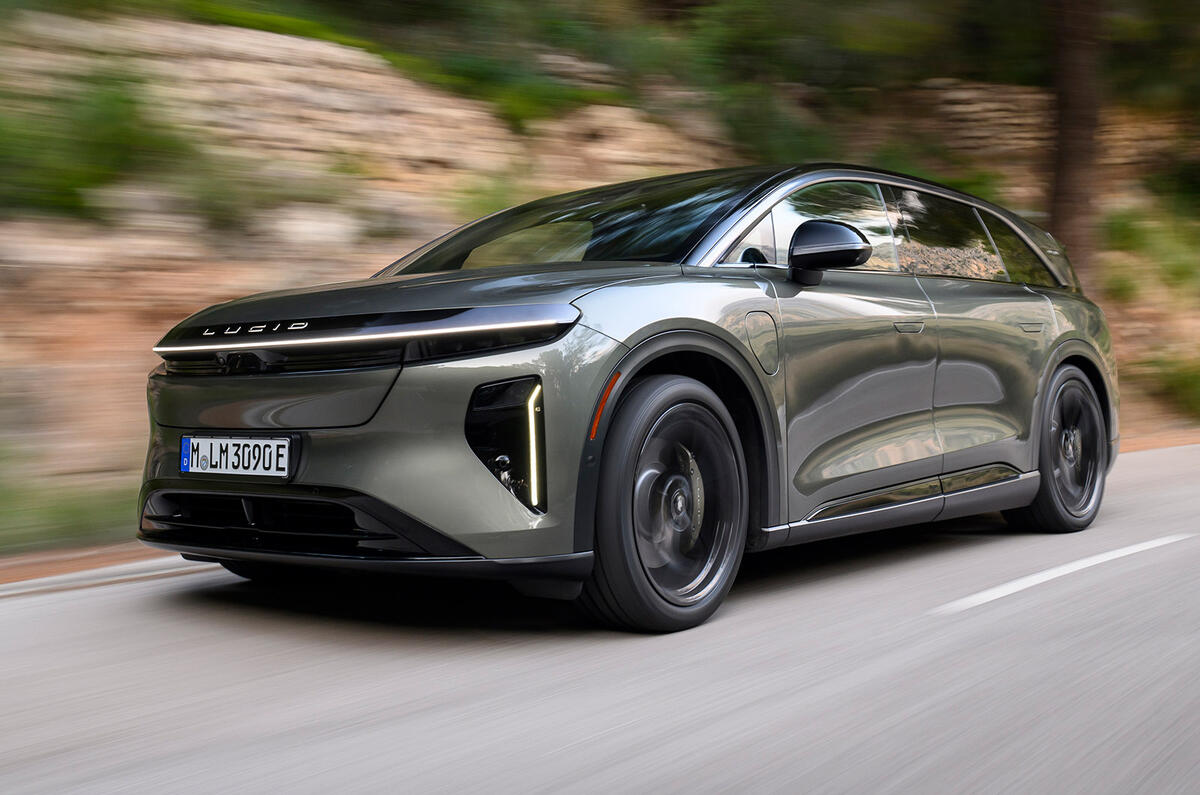
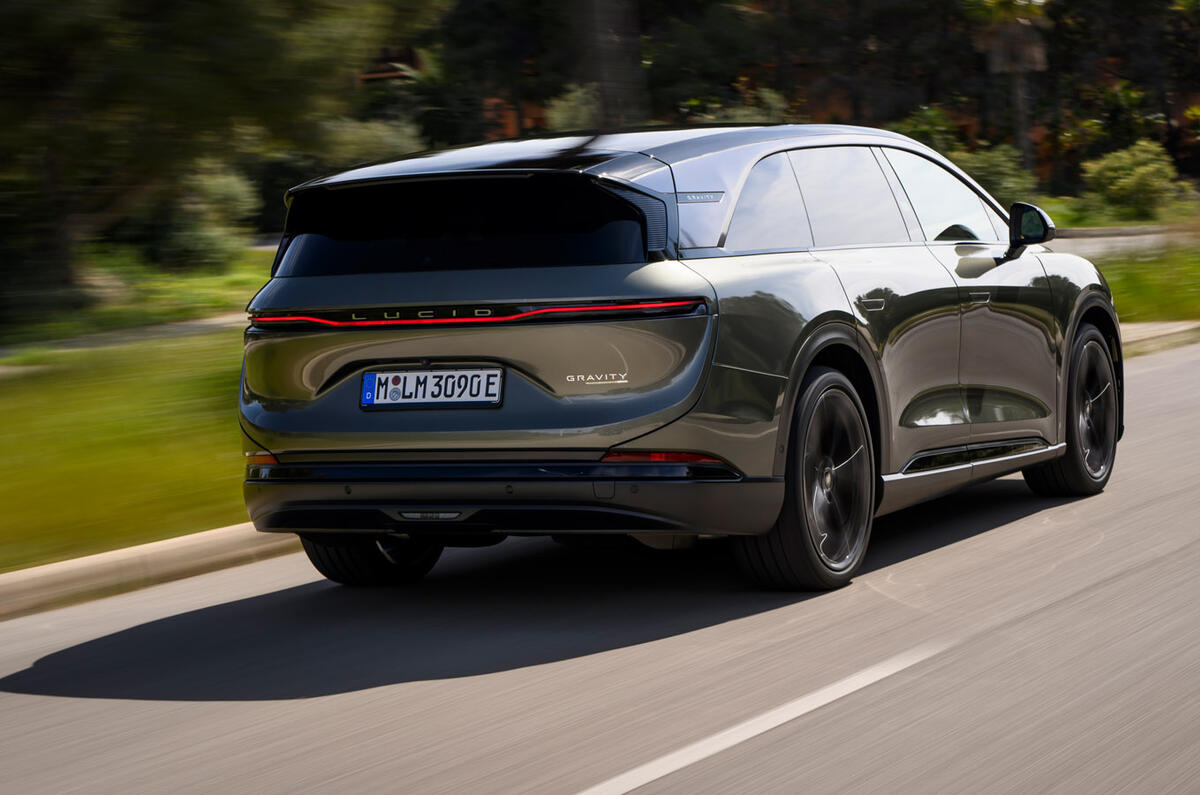
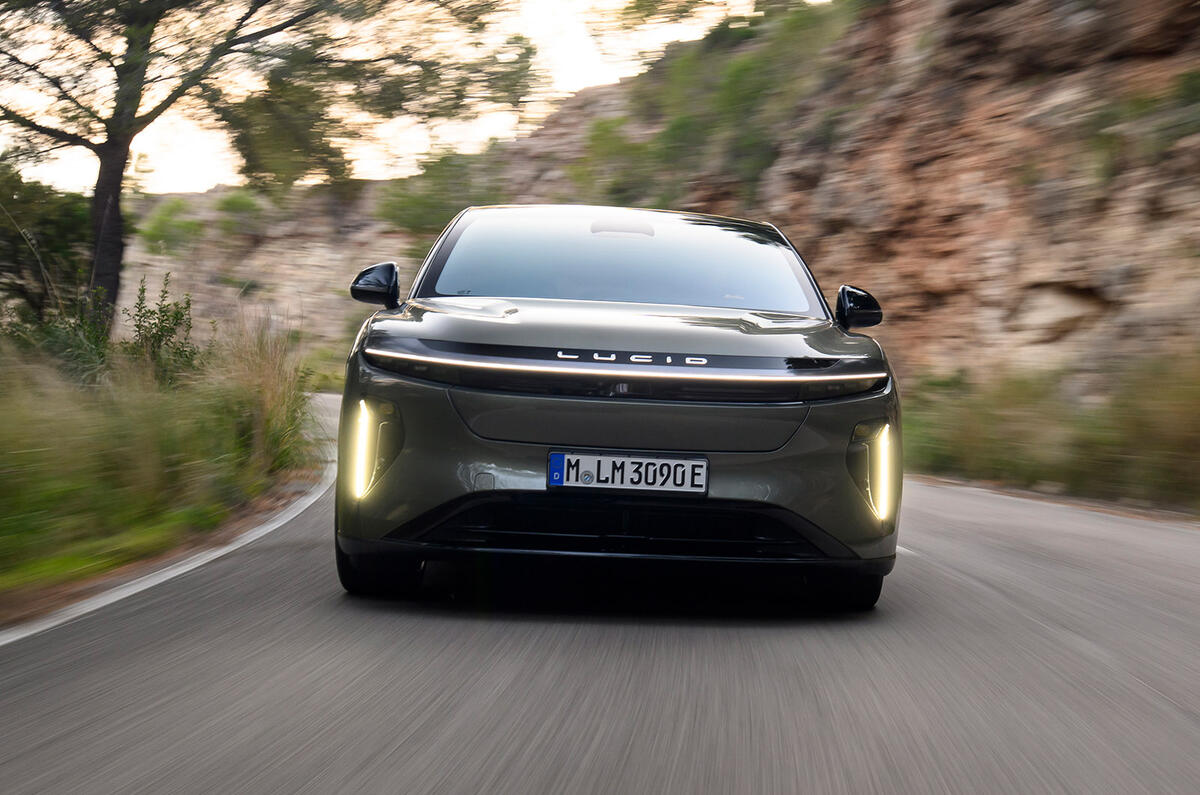
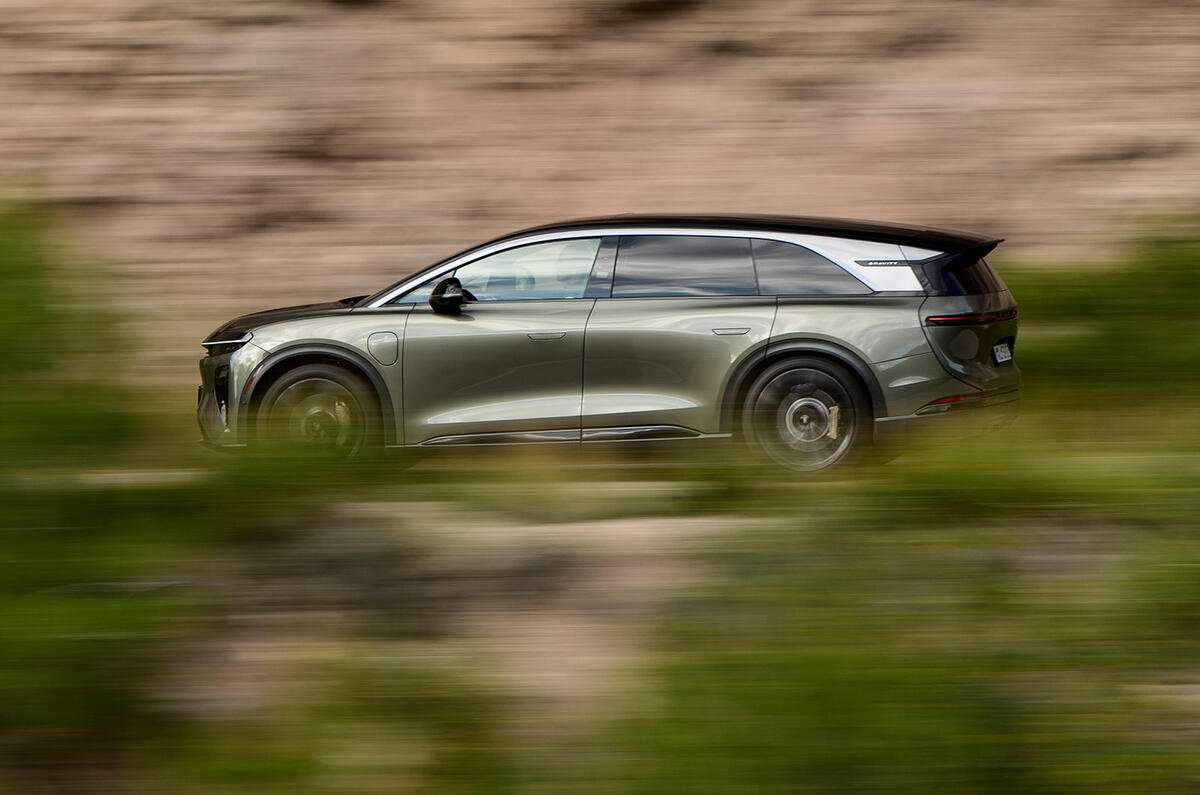
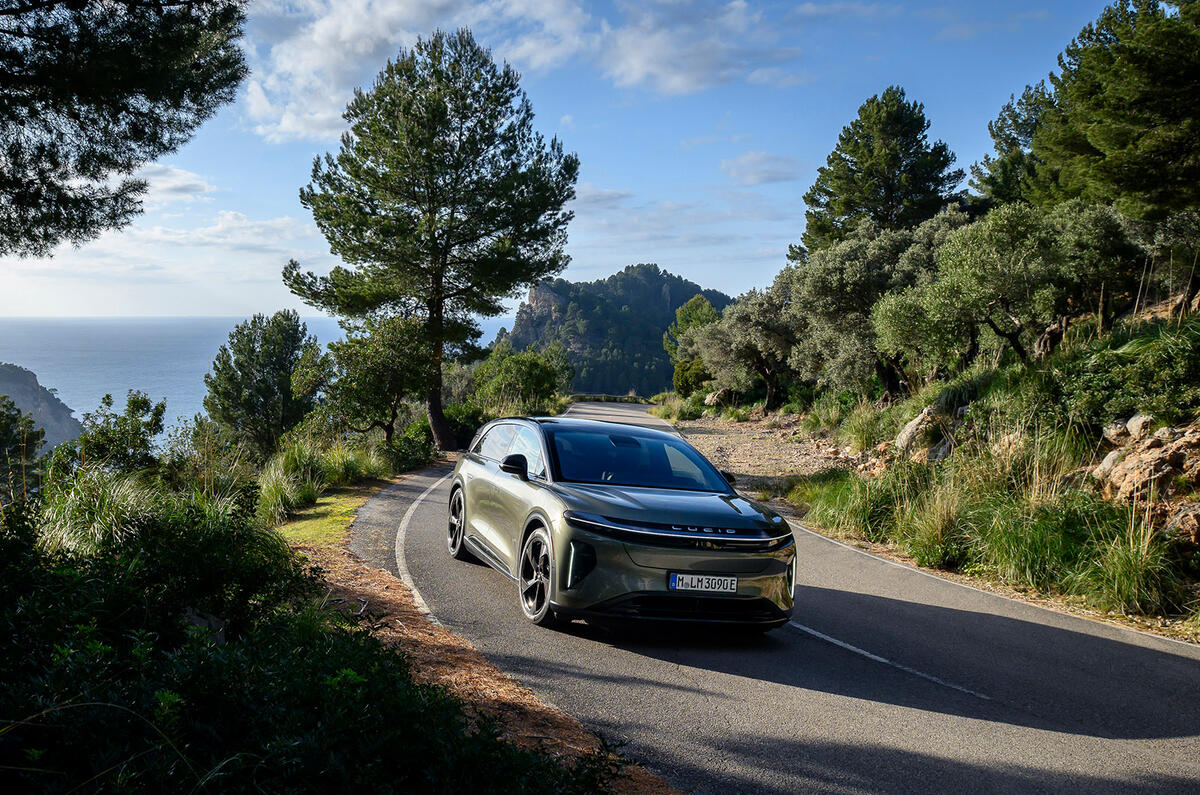
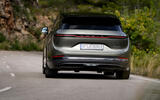
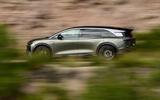
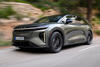
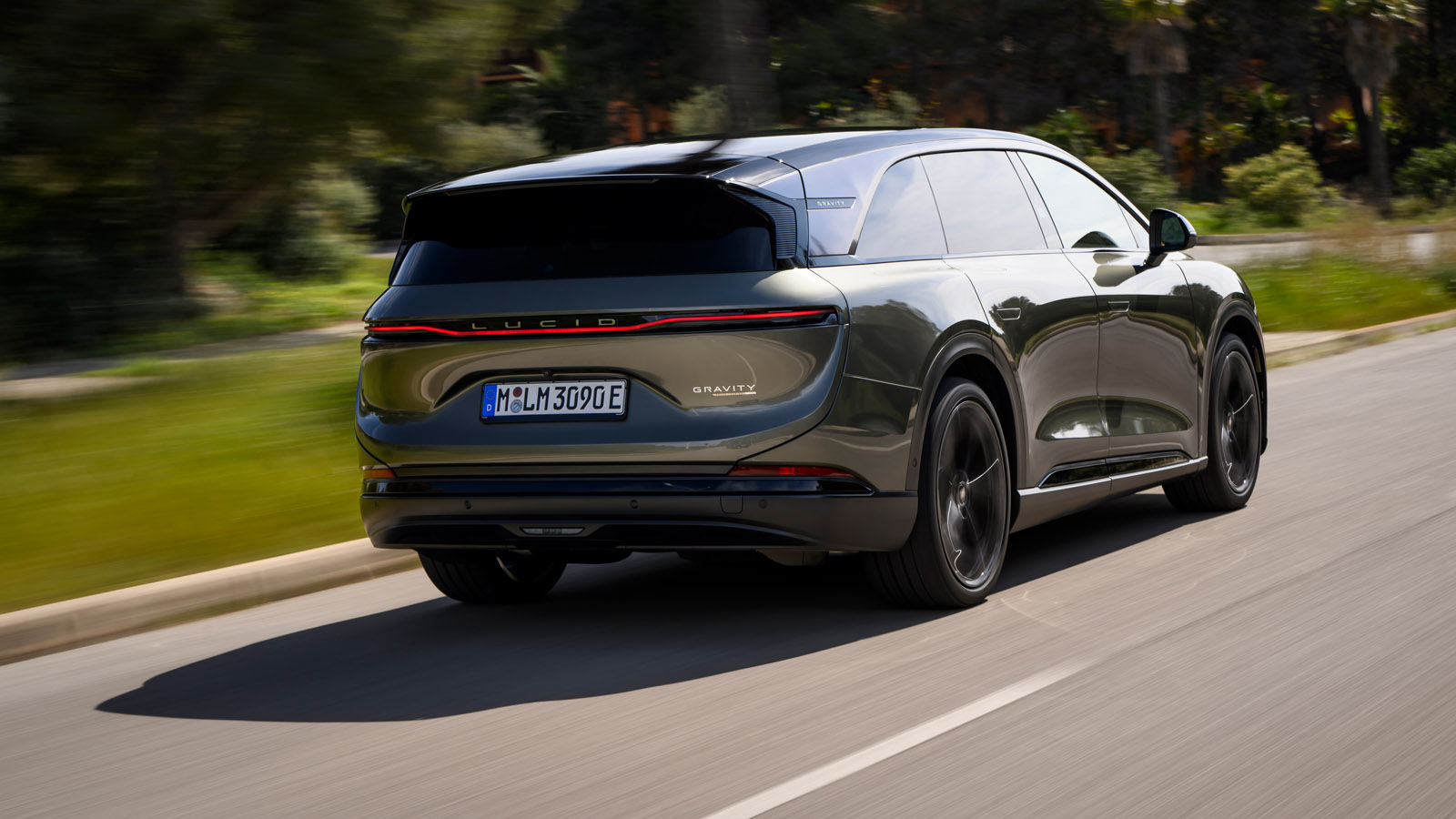
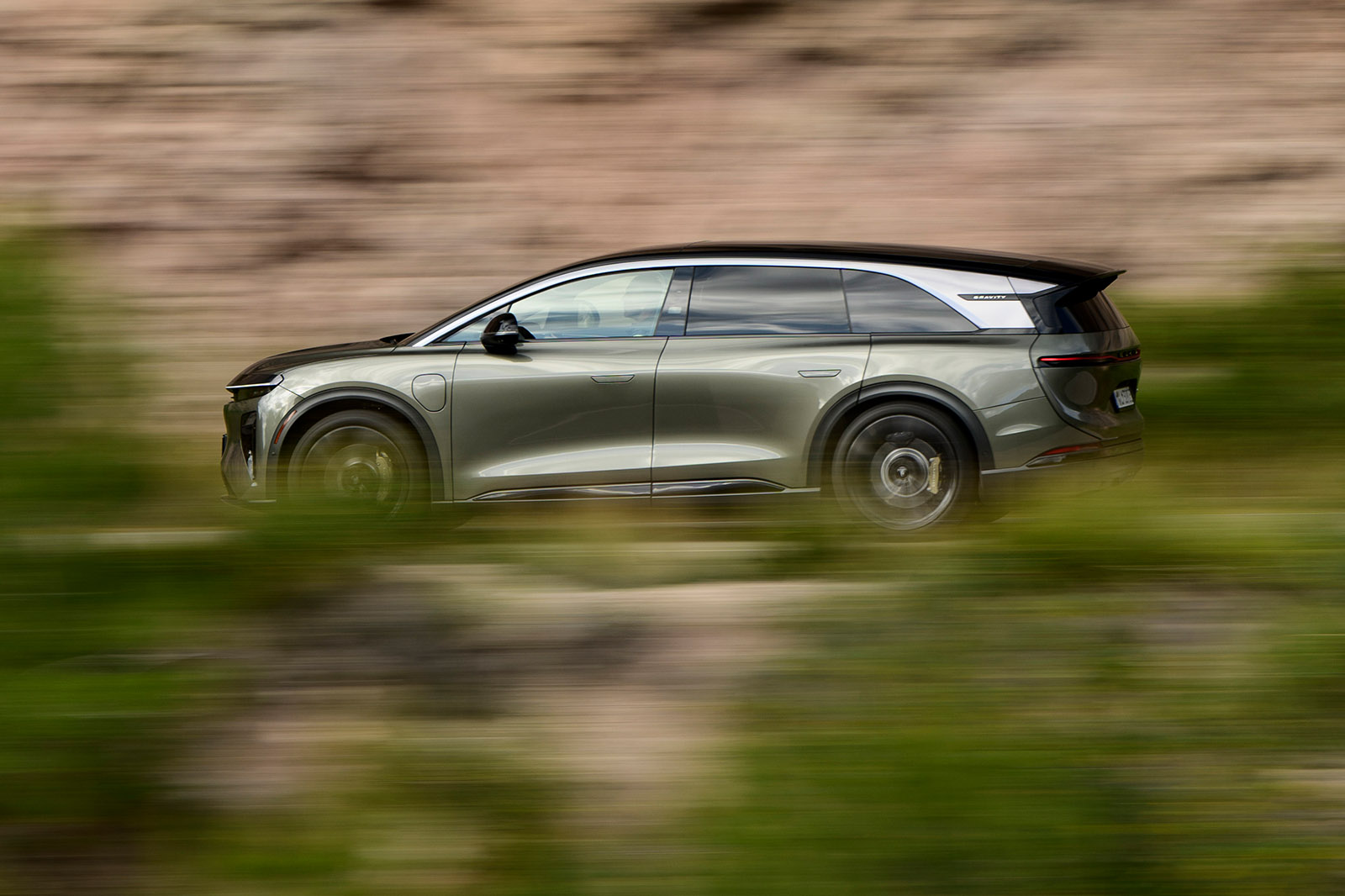
There’s no doubt the Gravity is a bloody massive car. It’s 5m long and 2.2m across the mirrors and it weighs 2.7 tonnes in seven-seat Grand Touring spec. But it’s quite deceptive in its size, being shorter than the other two electric luxo-SUVs on sale, the Mercedes EQS SUV and Volvo EX90, and much lower (1658mm compared with 1718mm for the Mercedes and 1744mm for the Volvo). In profile, it’s almost a stub-nosed estate.

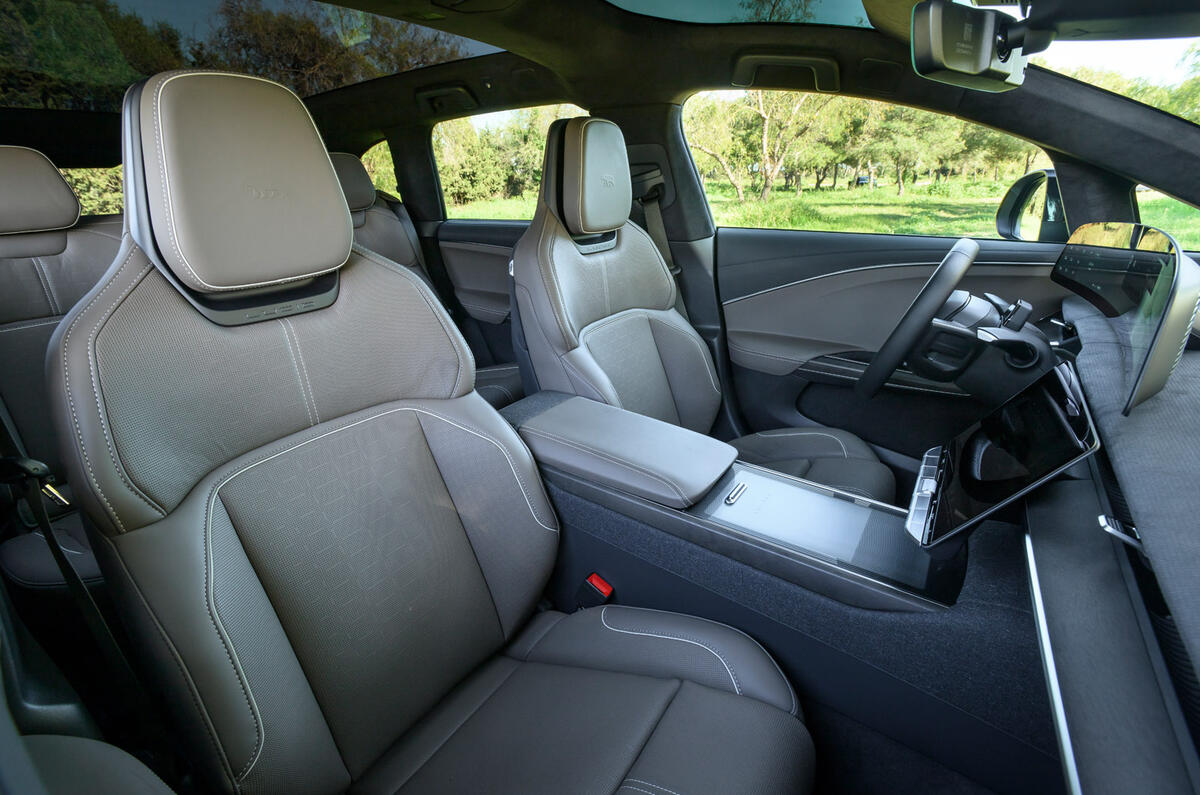
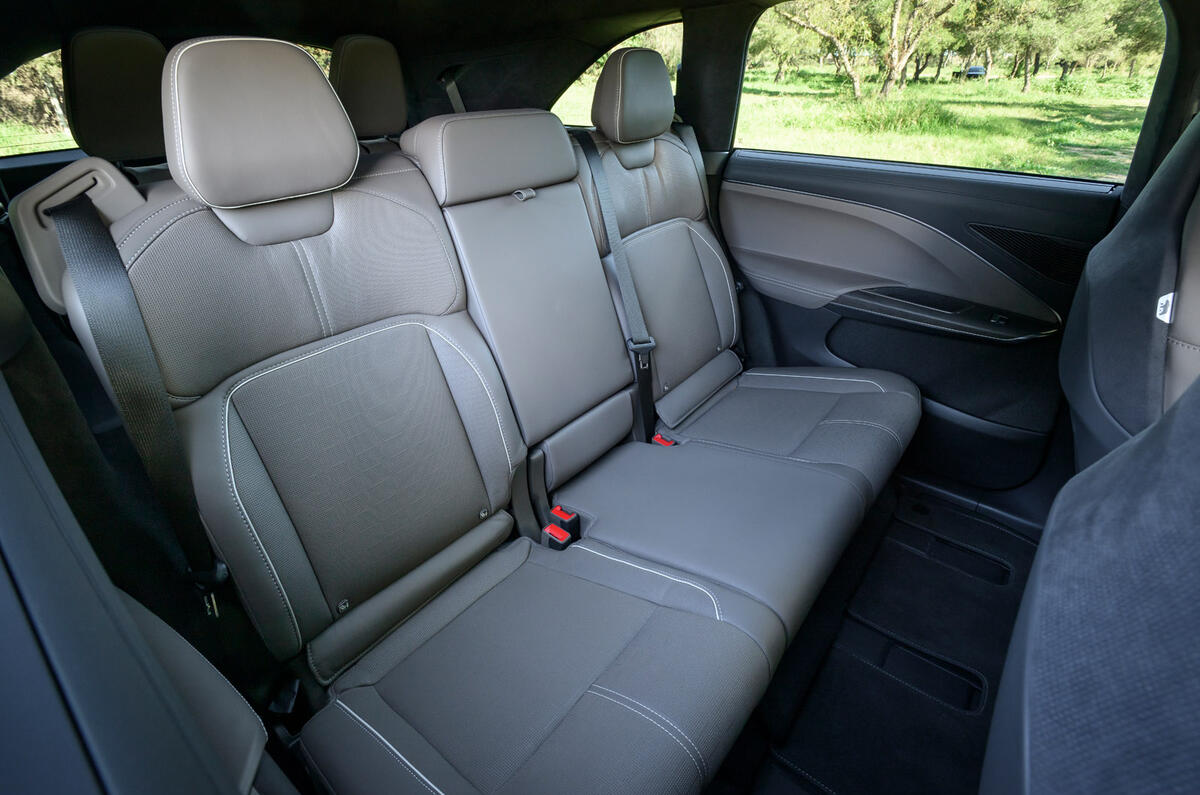
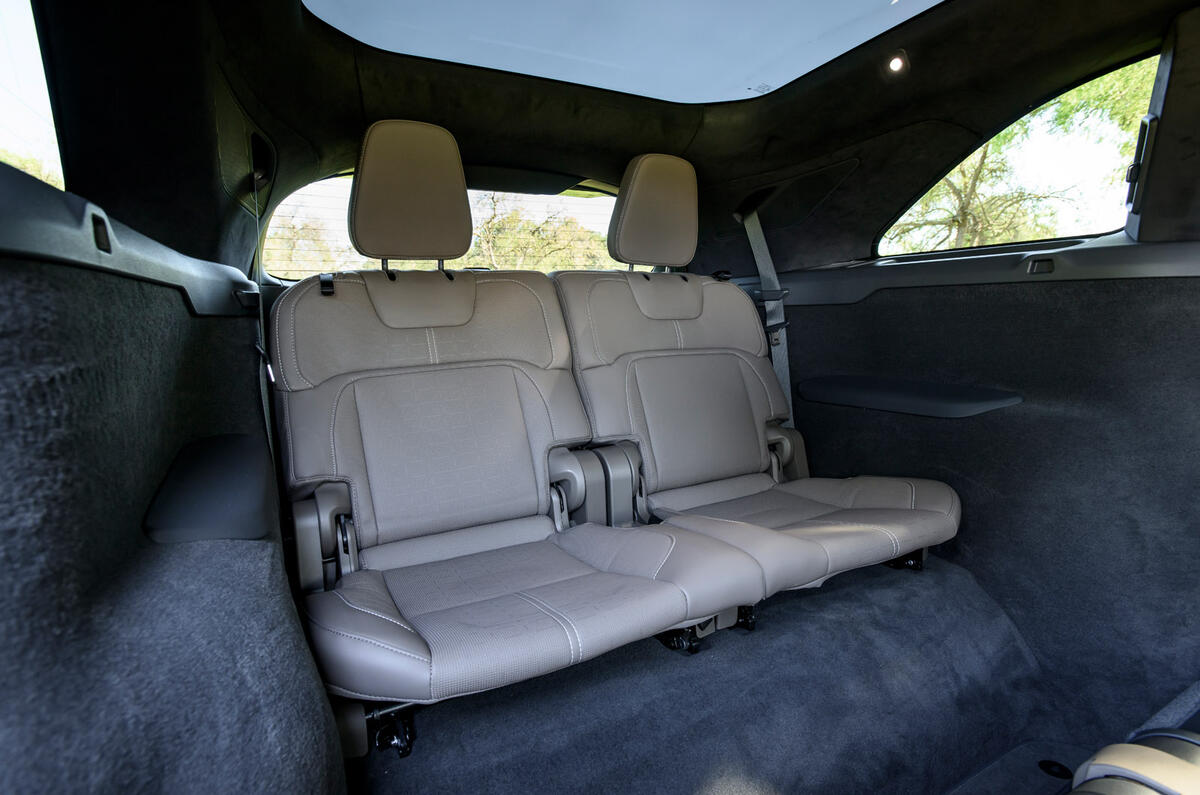
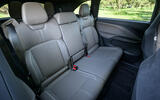
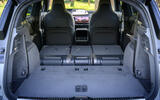
Yet it’s markedly more spacious inside than those two cars. The driving position feels entirely normal – even quite sporting. The second row is ridiculously commodious, with a surprisingly low floor. And after sliding the second row only very slightly forwards, I would be more than happy to sit in the third row for a road trip, despite being 6ft 2in.

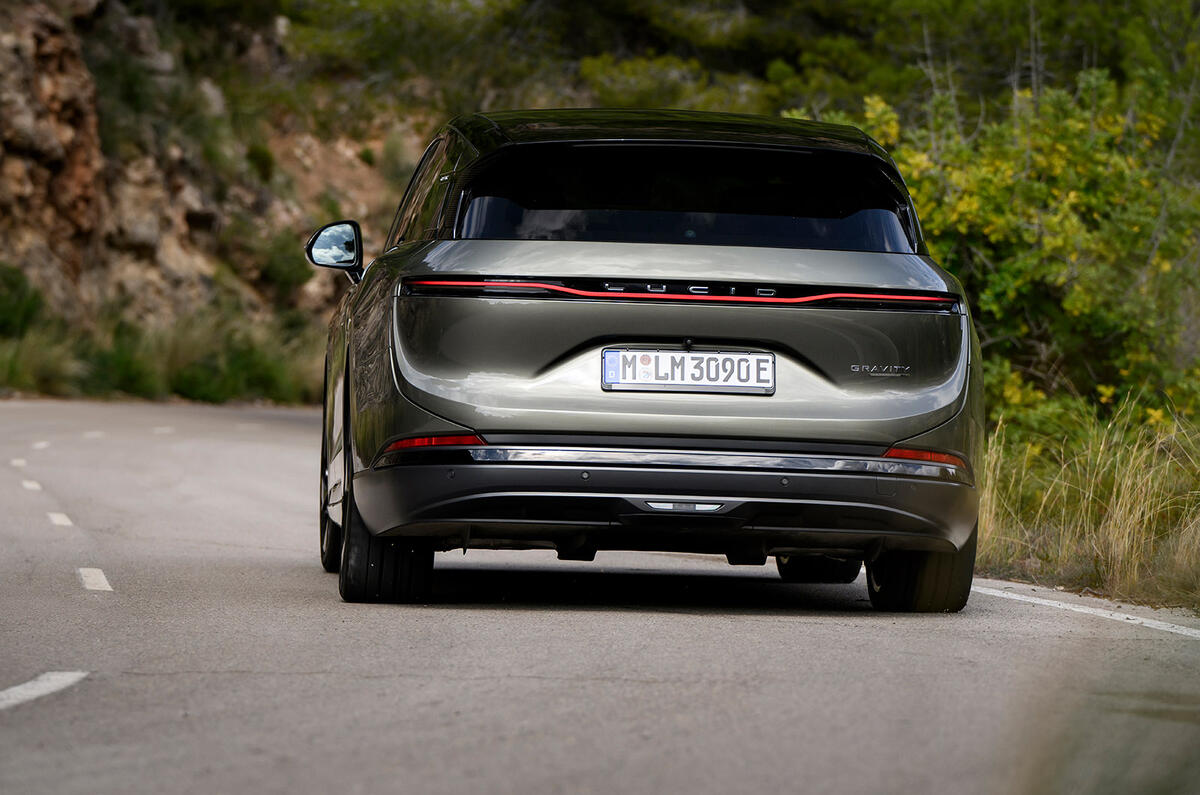
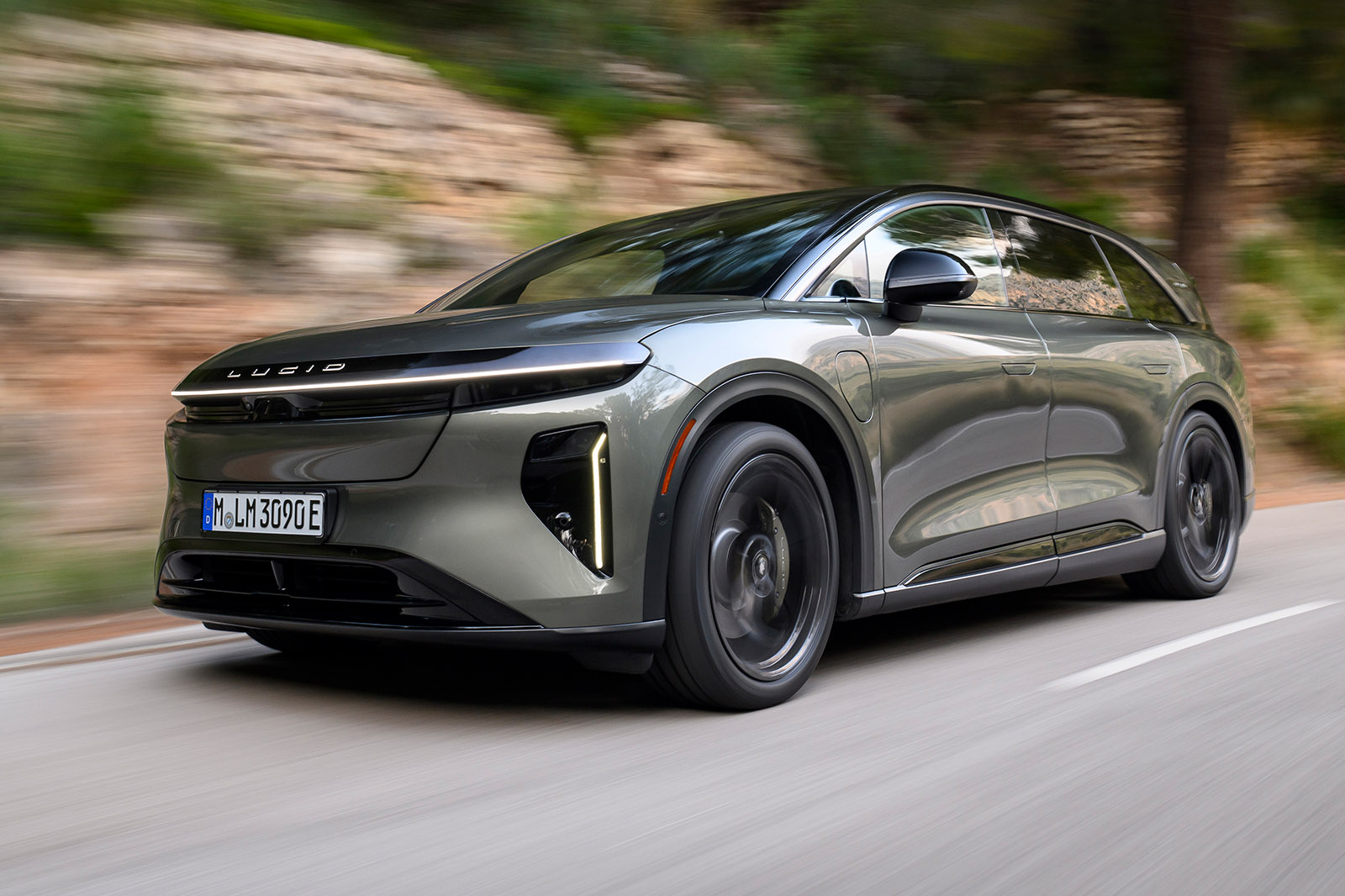
The Gravity is a car that doesn't photograph very well. It's obviously a huge car, but it looks much leaner and lower in the metal than it does in pictures.

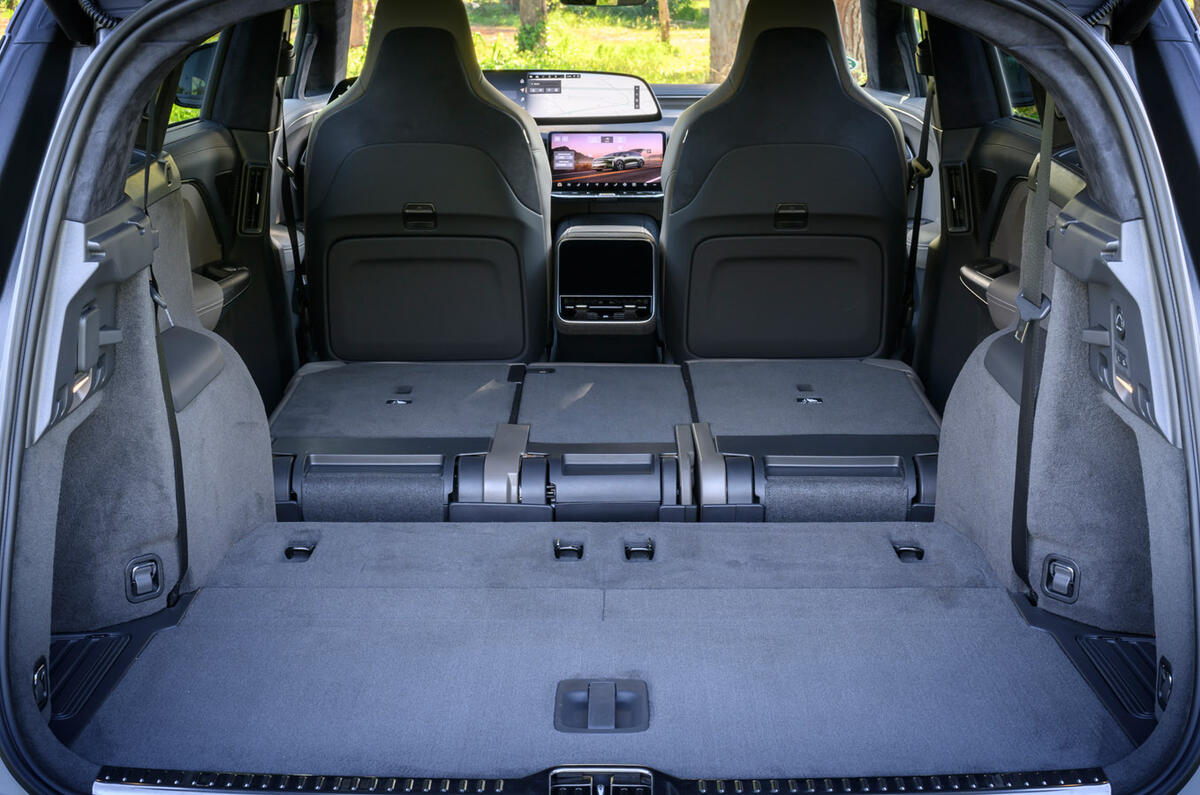
In most seven-seat SUVs, that leaves no space for luggage, but the Gravity has two more tricks up its sleeve.

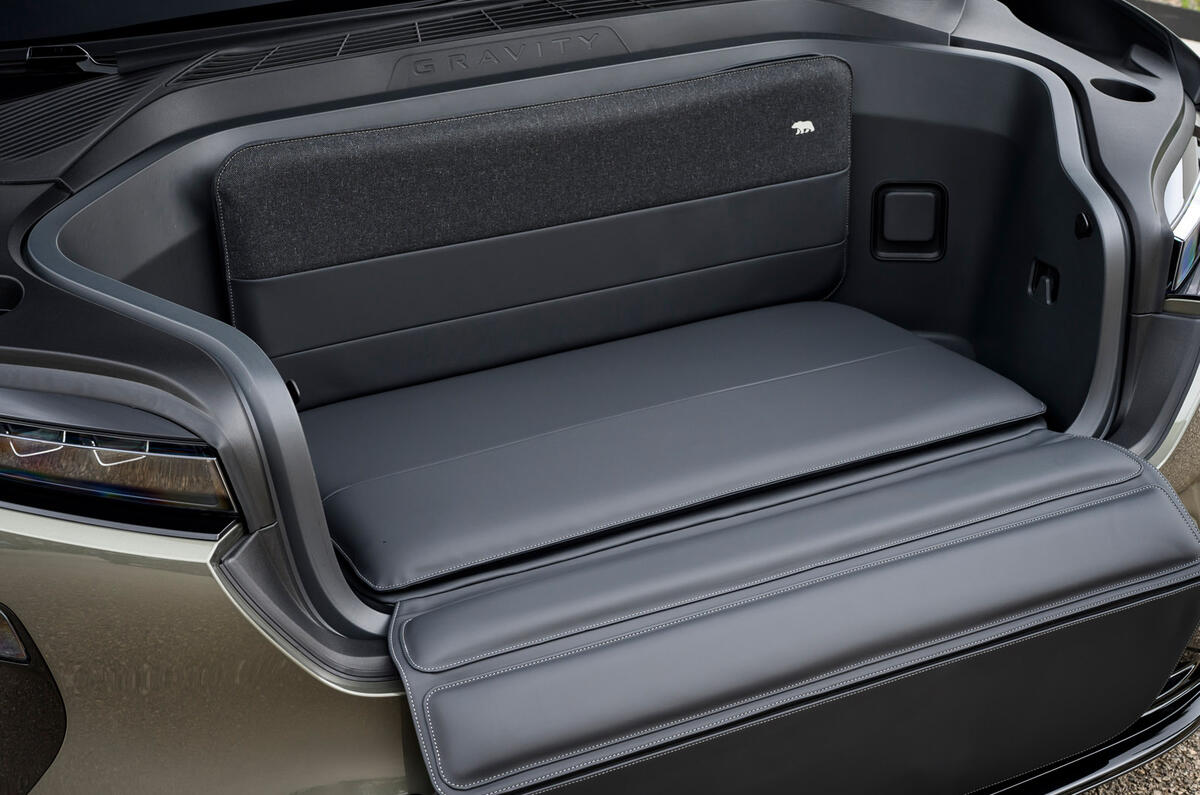
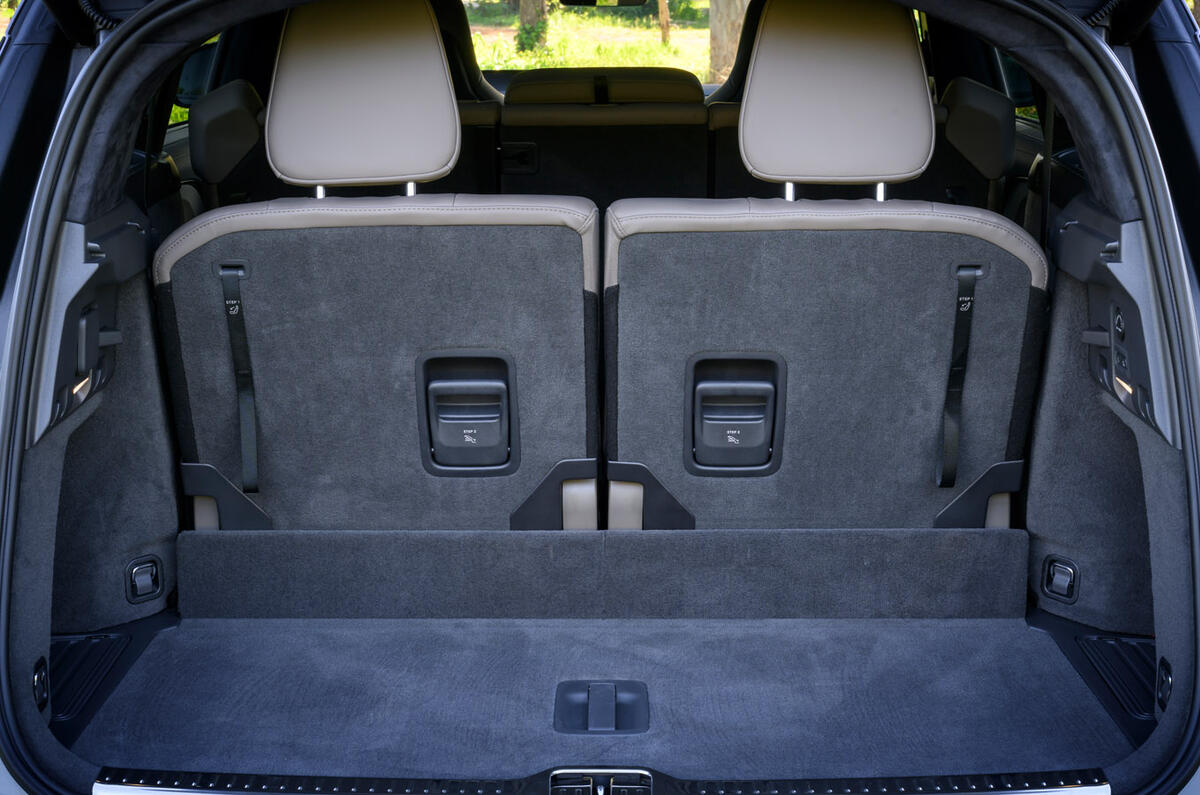
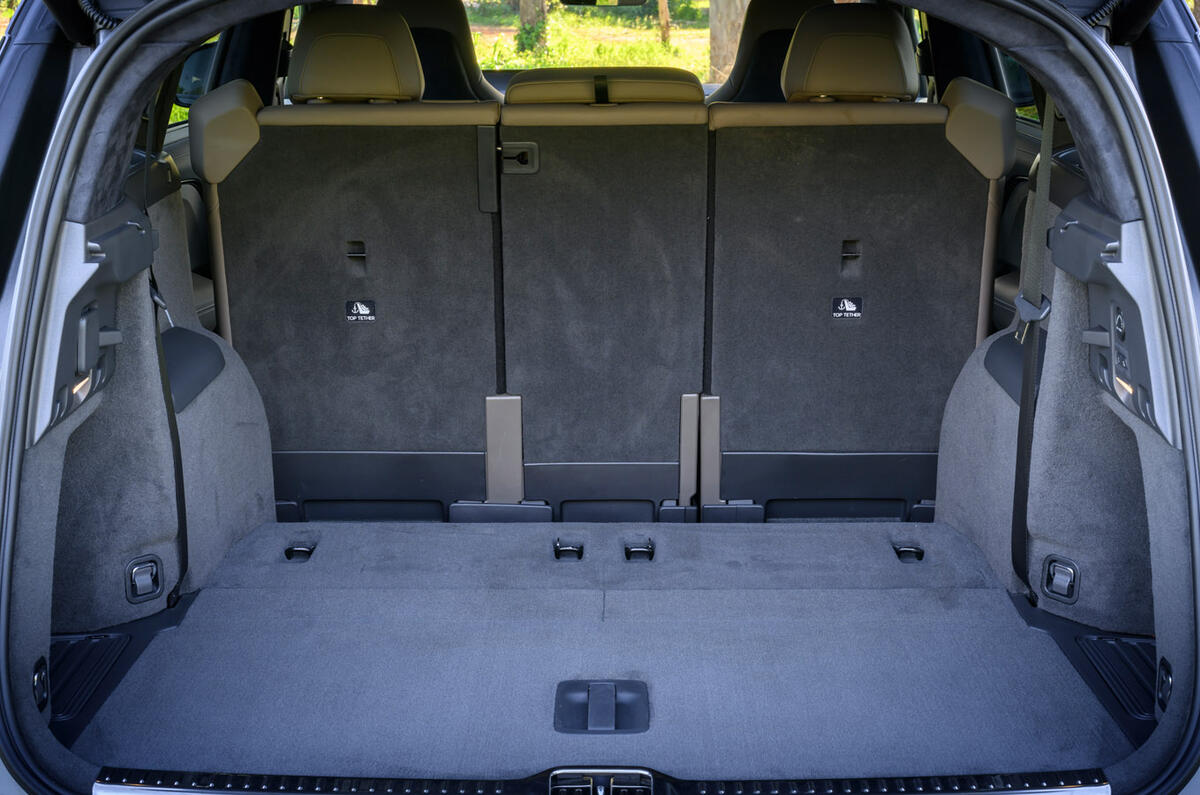
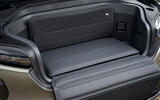
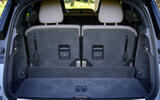
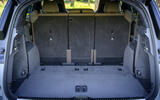
The first is the boot, which has the sort of low load height that recalls Ford Granada and Mercedes W123 estates, except there’s a deep well under the floor. The second is the biggest frunk of any production car. Not only is it 230 litres, it also opens high and wide, so you can use it as a bench – like a reverse Range Rover.

With all that space for passengers, you might expect the Gravity to have a pair of AAs for a battery, but it’s actually a sizeable 89kWh in the Touring and 123kWh in the Grand Touring I’m driving.
That feeds a 292bhp front and 671bhp rear motor for a total of 827bhp. Despite the silly power output, the Gravity is more efficient than its Mercedes and Volvo rivals, so it stretches its battery further: 442 WLTP miles plays 398 for the EQS 580 SUV and 377 for the EX90.

It’s a bit of an engineering marvel, the Gravity, and that’s why we’re driving it. Not because you should buy one, because if you’re in the UK you can’t. Lucid will finally come here next year with the Cosmos, a rival for the BMW iX3 and Volvo EX60, but the Air and Gravity are unlikely to ever be converted to right-hand-drive. The engineers say the platform is suitable for it but it would require a bit of extra development, which just isn’t worth it at the moment. So for now, the Gravity remains a showcase for what Lucid can do.

INTERIOR

Lucid Gravity review 2026 005

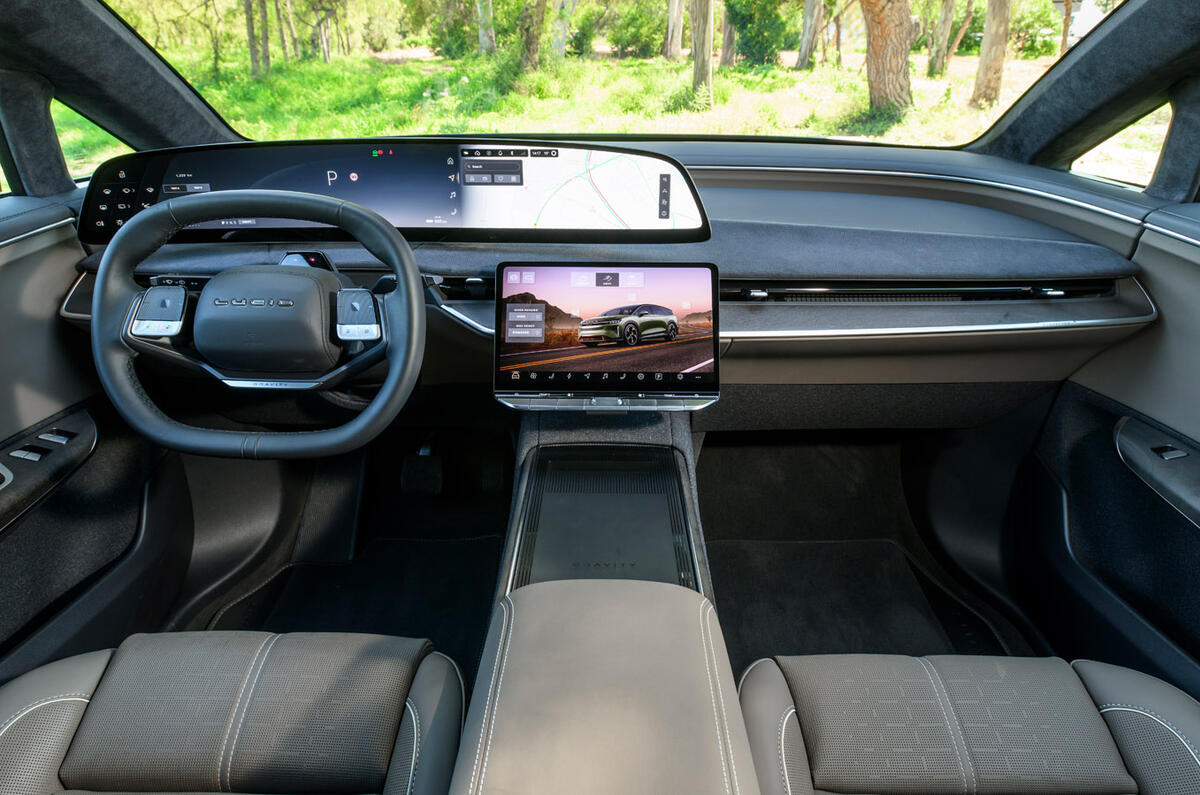
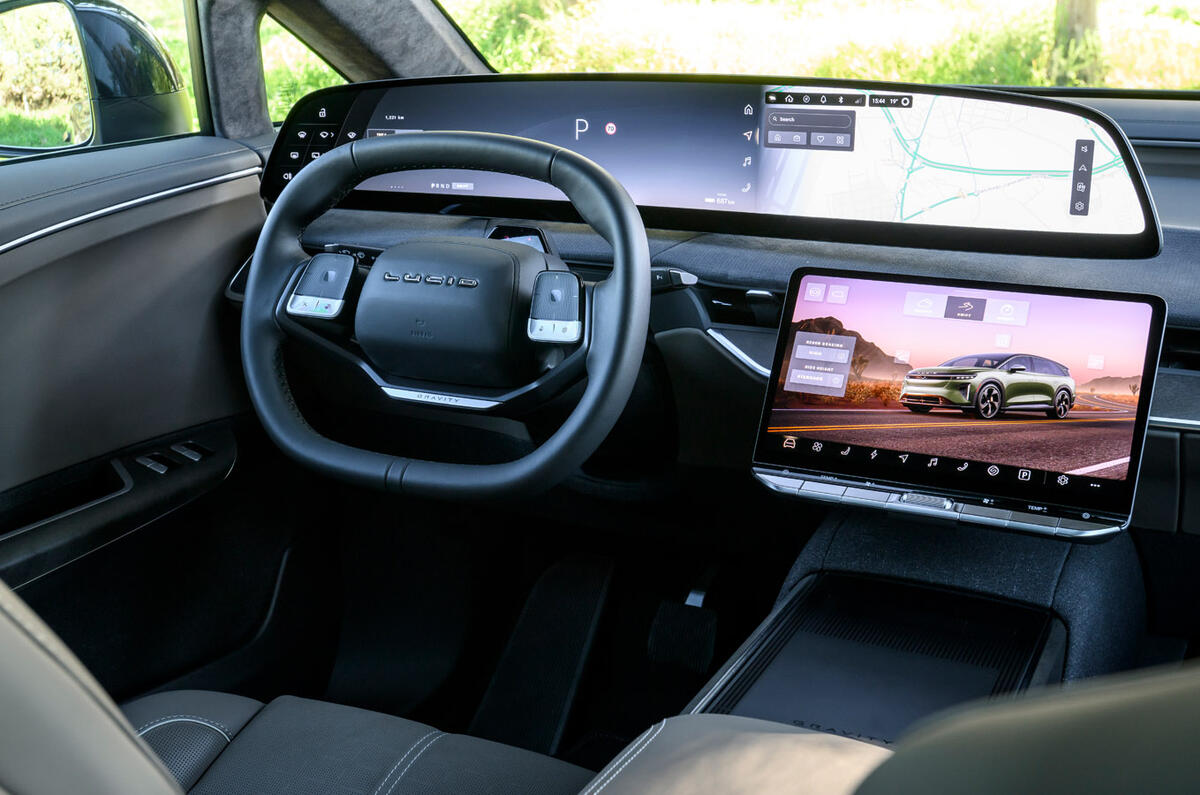
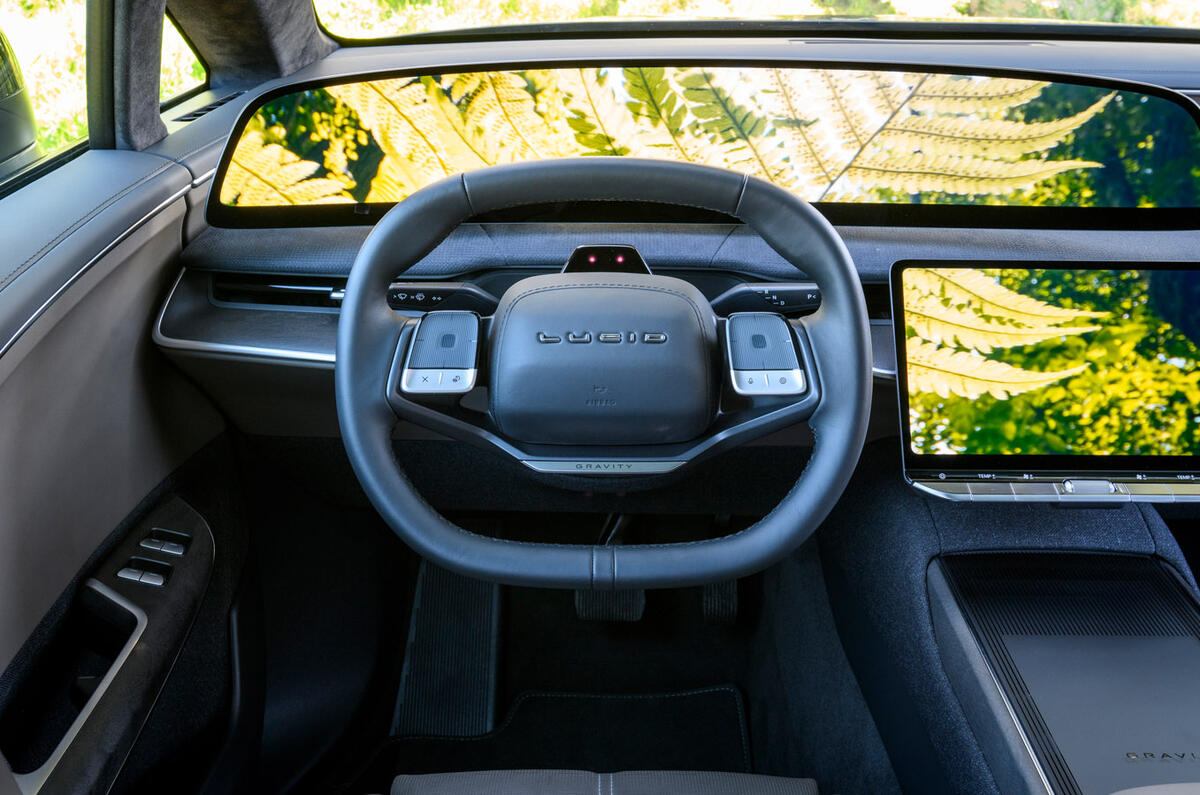
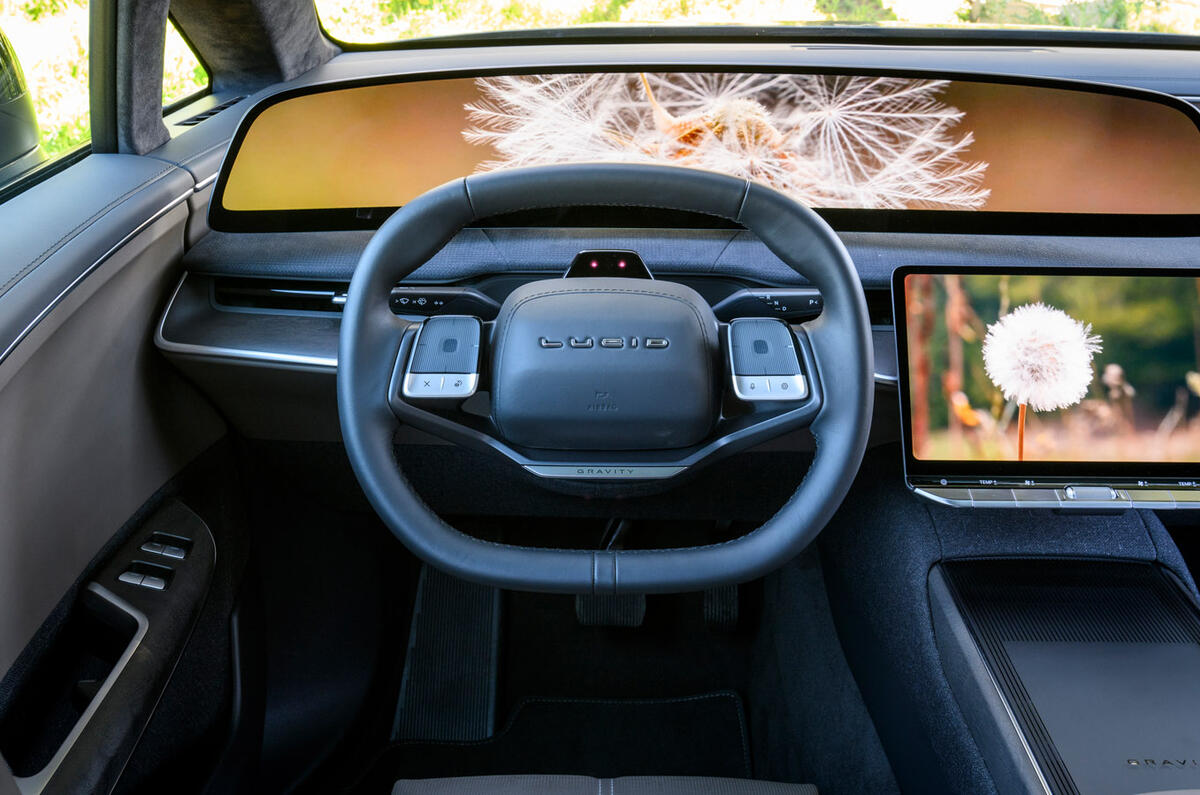
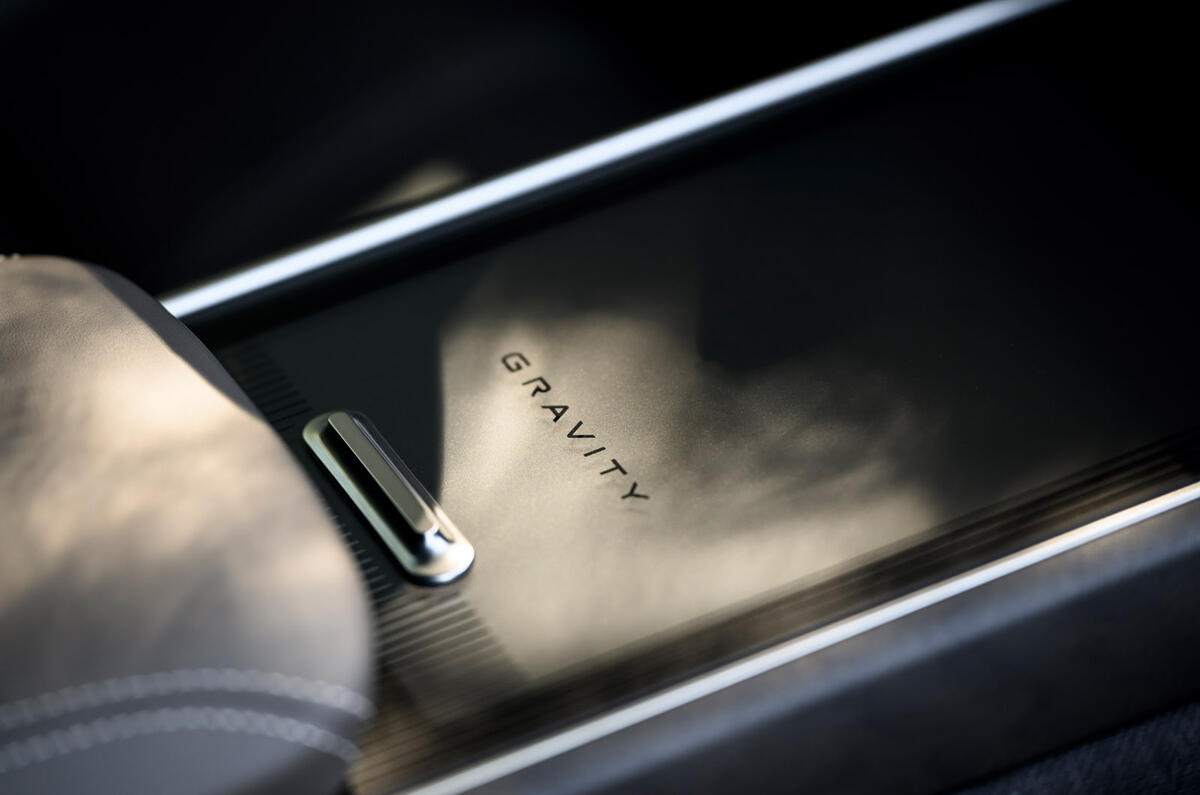
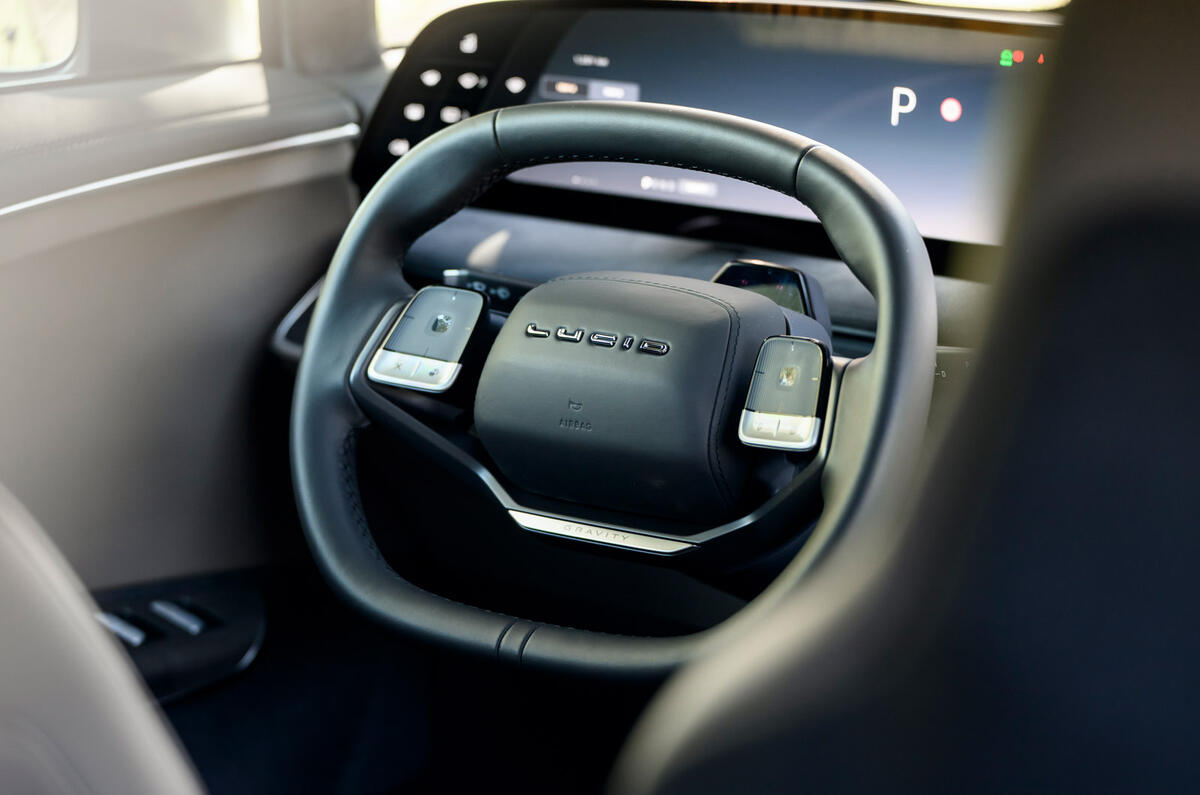
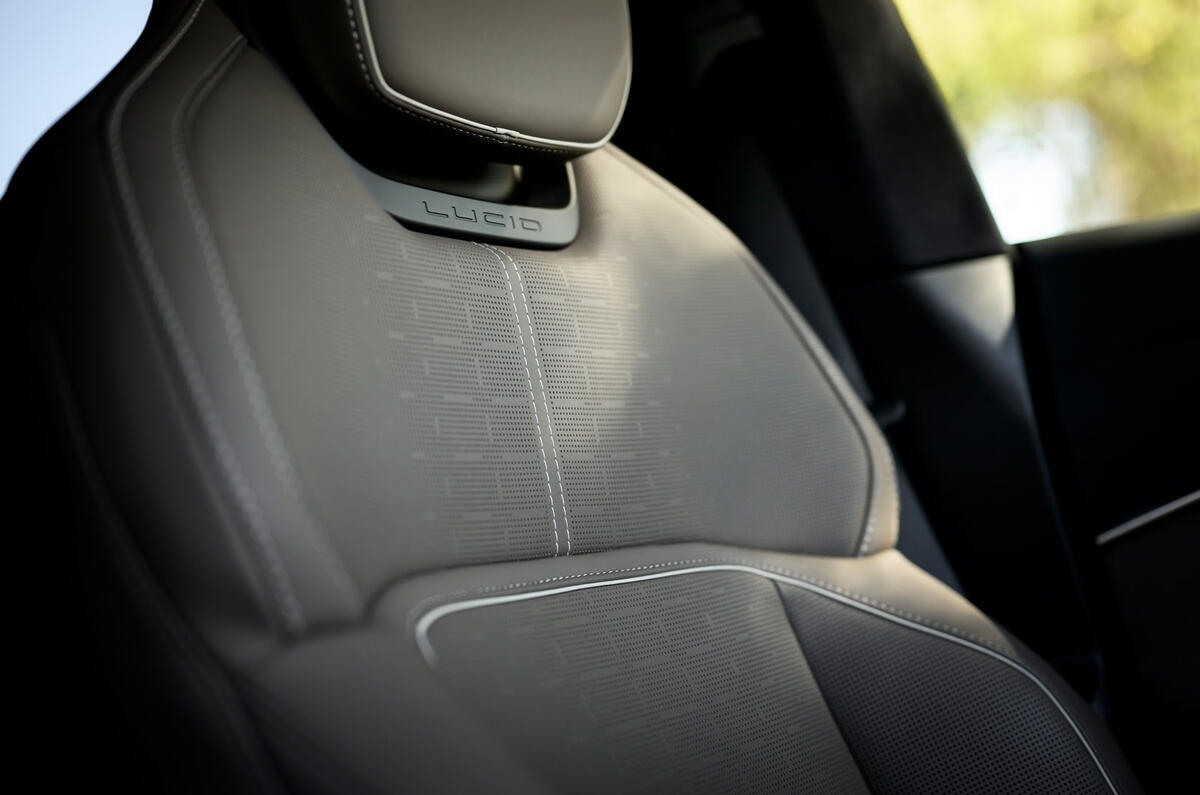
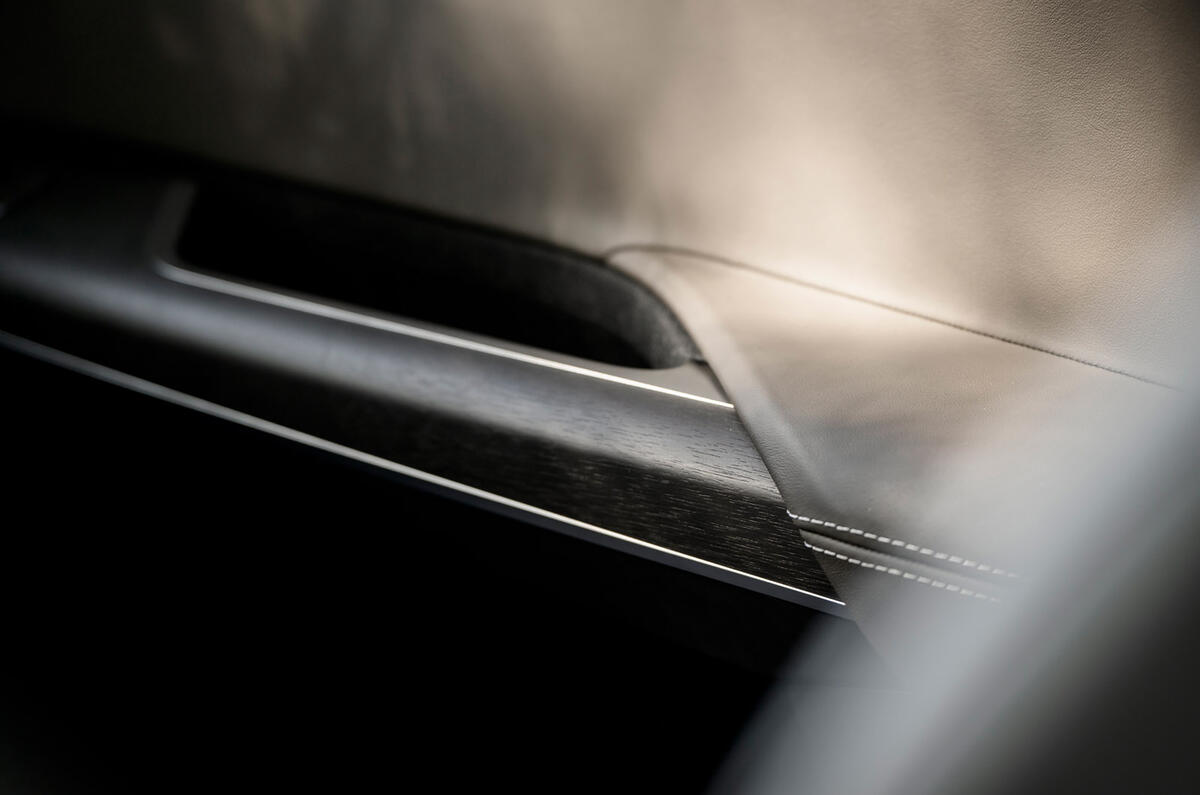
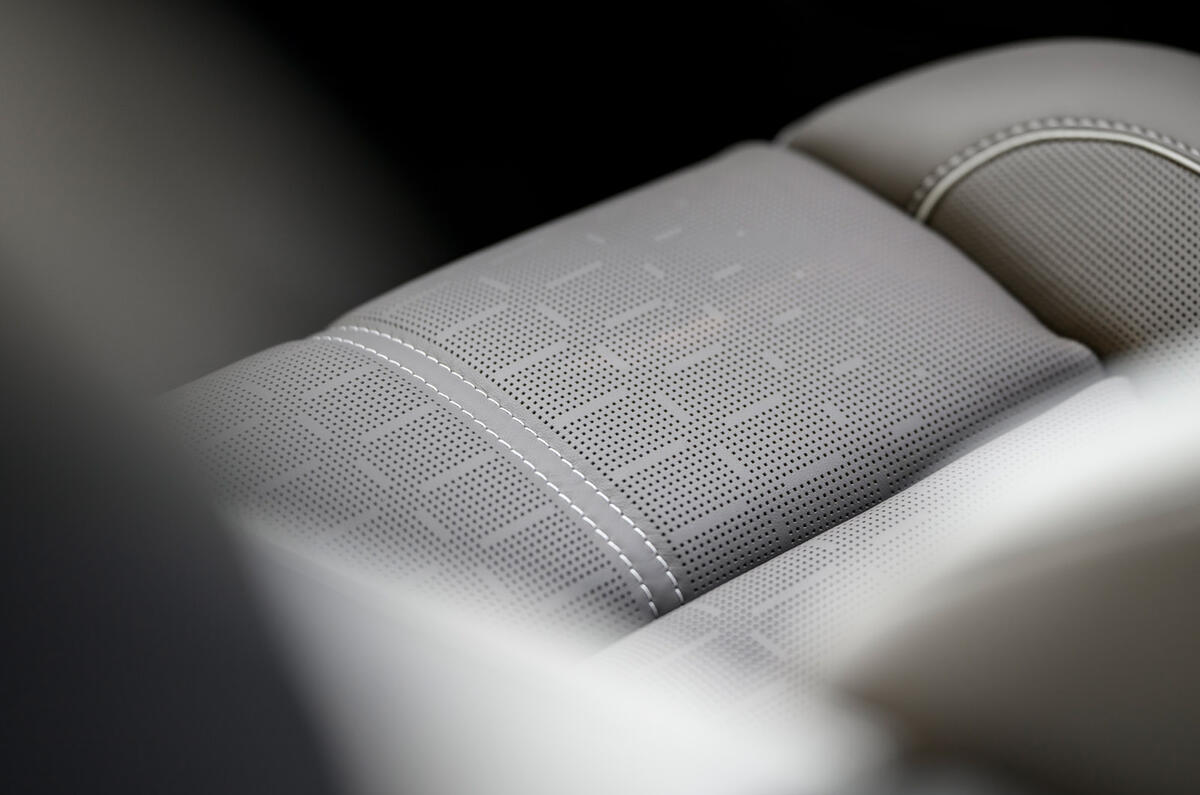
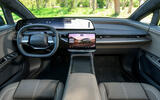
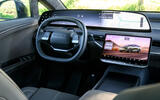
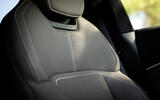
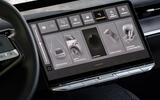
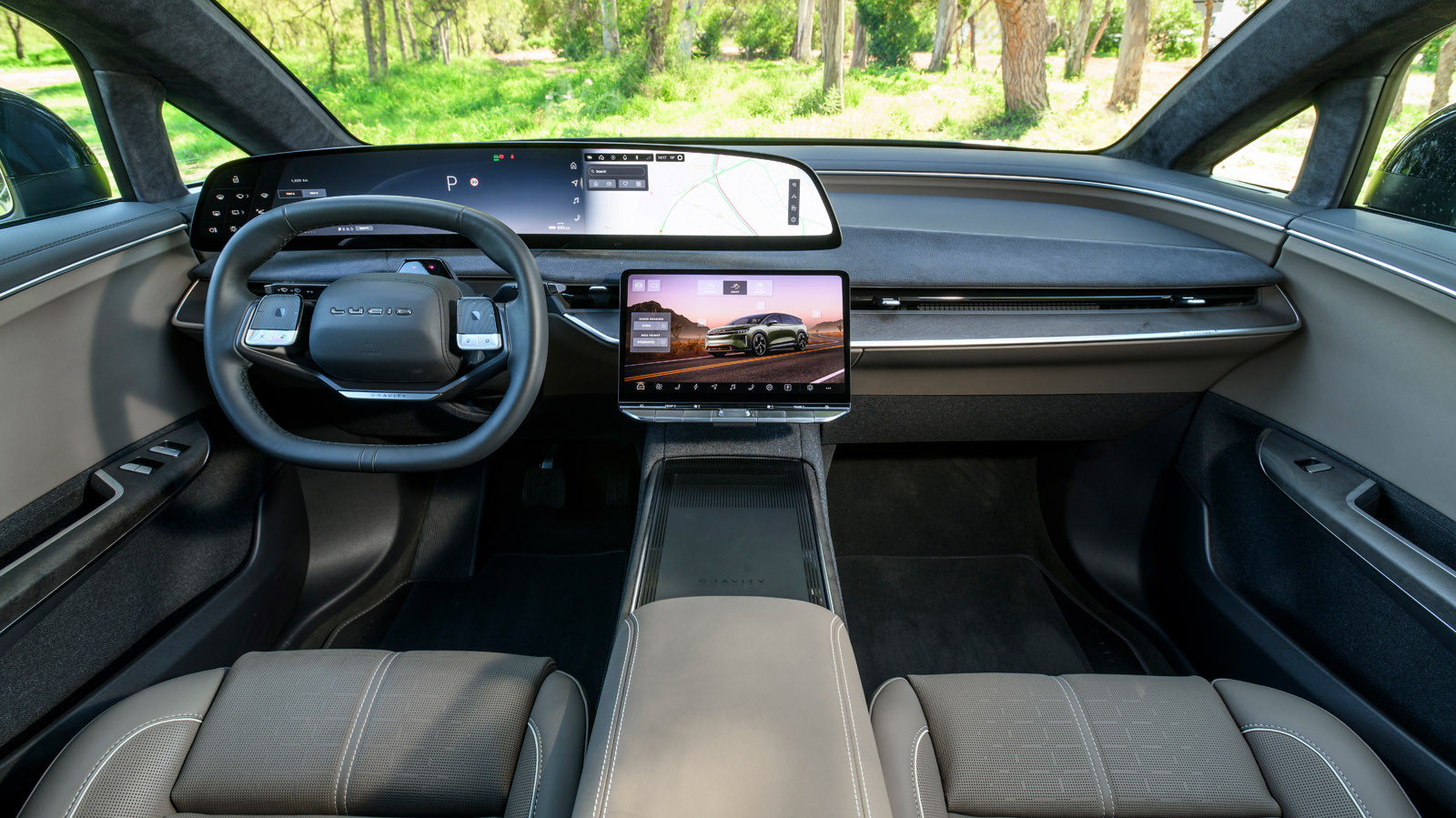
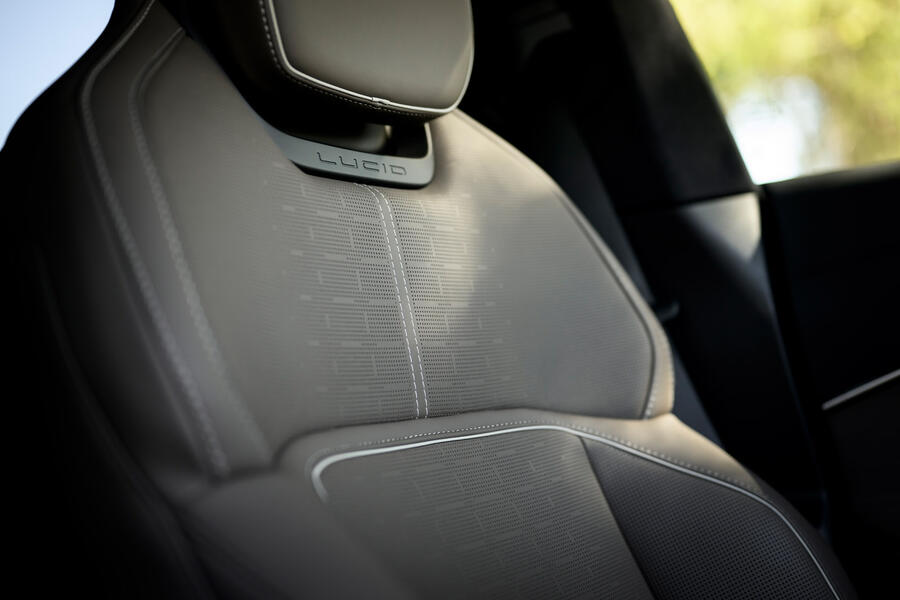
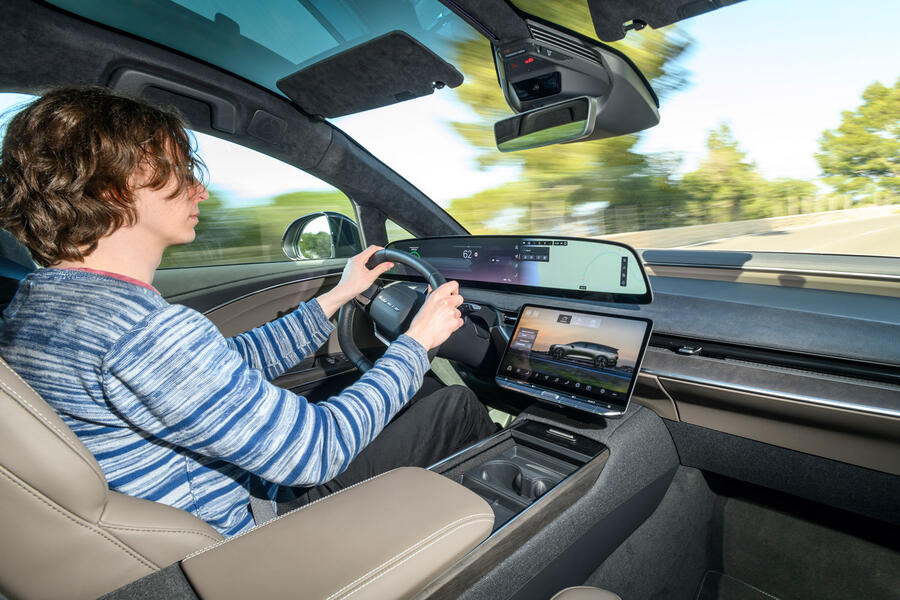
With prices starting at €100,000 (£87,000) in Germany, Lucid is clearly aiming at Mercedes and Volvo rather than Tesla and Hyundai, and that’s clear from the interior, which is resolutely techy, with plenty screens and few buttons, but also has plenty of interesting and upmarket materials. There’s natural wood, fabric on the doors and a glass centre-console lid. It’s neither traditional luxury nor a Tesla clone, which is refreshing.

The fold-out tray tables for the second-row seats are the sturdiest I've ever seen.

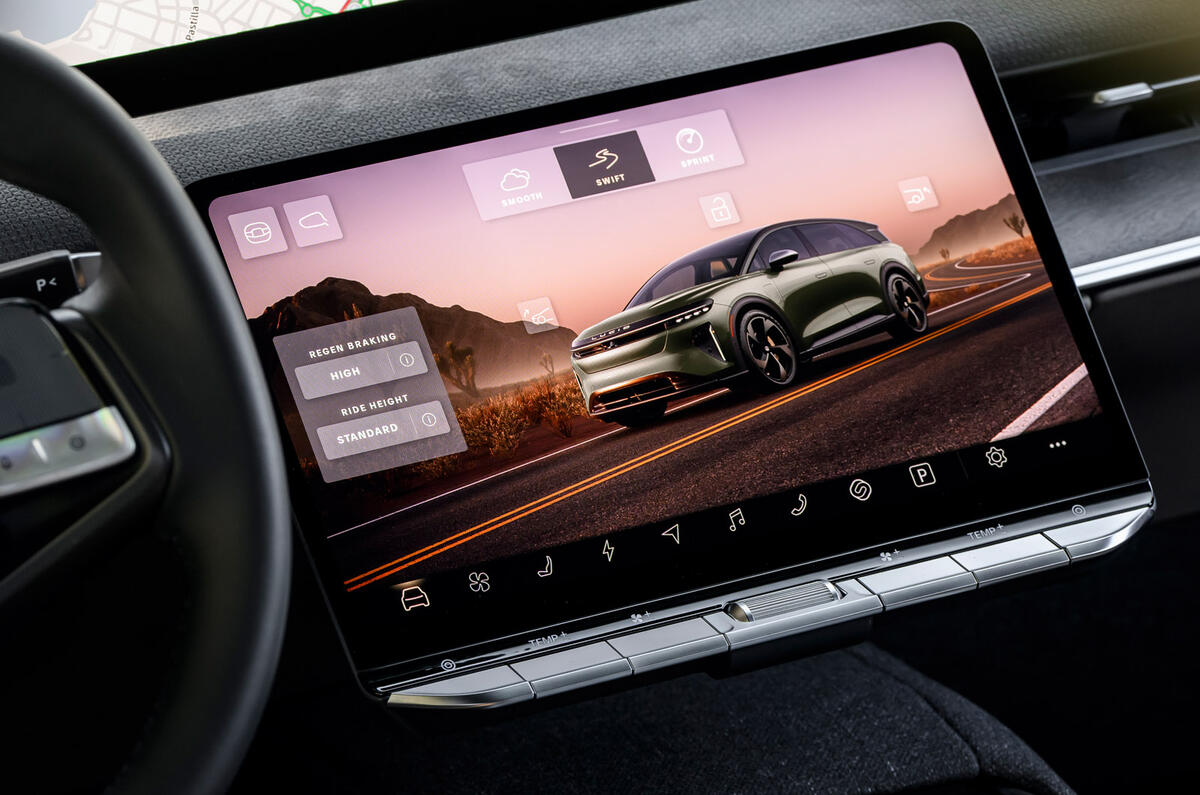
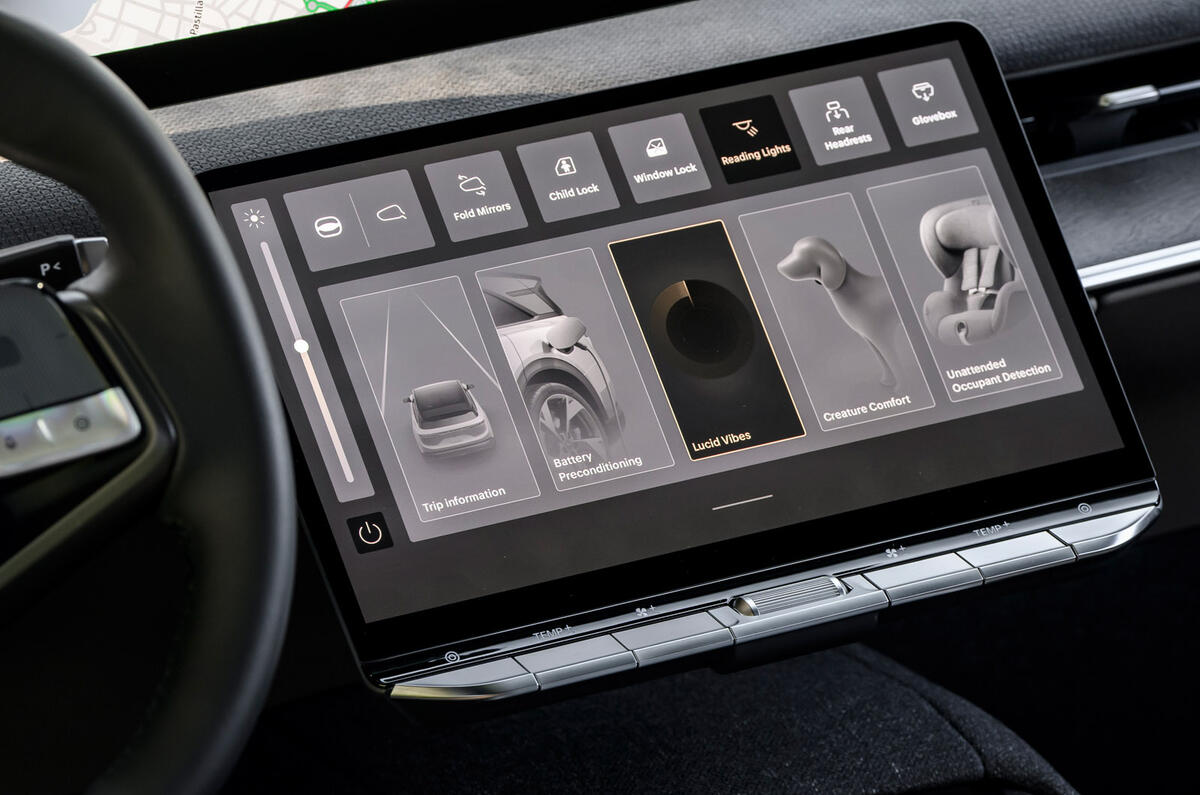
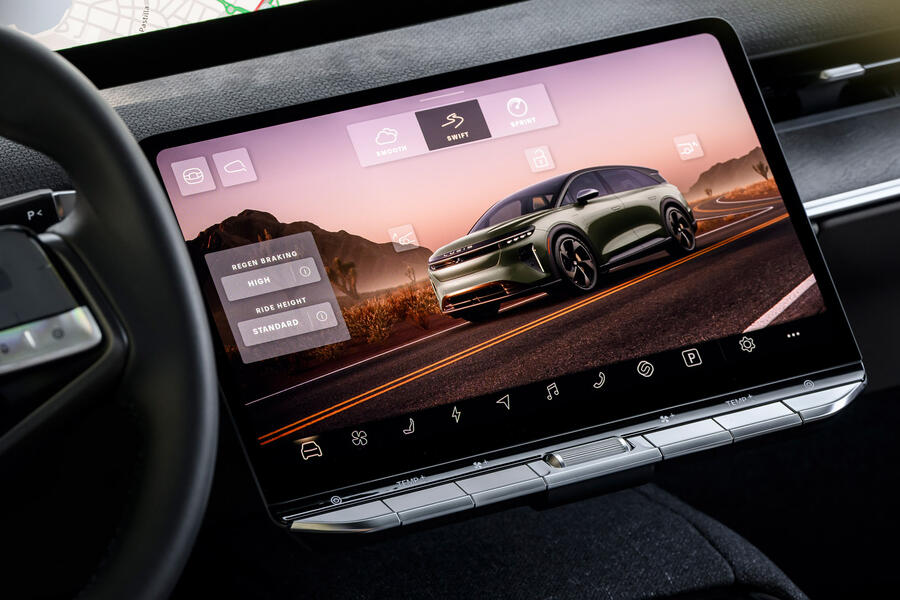
The user interface is a problem, though. It feels like the designers gave themselves more screen space than they knew what to do with, so the menus are a tad confusing and there’s a lot of redundancy. And yet you need to go menu-diving to access essential functions like the heated seats, mirrors and steering wheel adjustment and turning off the ADAS. They say they’re working on a shortcut function, but frankly that should have been priority number one for the European version, particularly since the driver monitoring and lane keeping assistance are rather heavy-handed.

ENGINES & PERFORMANCE

Lucid Gravity review 2026 023

To the driving, and Lucid boldly calls the Gravity a ‘seven-seat supercar’, which sounds about as appealing as ‘vomit comet’. The Gravity manages to be remarkably uncompromised, though. A combined 827bhp makes it ludicrously fast, of course, but all that shove is impressively controllable, thanks to a long-travel accelerator and linear responses.

Instead of piping in fake noise, Lucid has kept some of the natural motor whine. It’s not intrusive, and I like how it adds some honest mechanical interaction.

There are three drive modes: Smooth, Swift and Sprint. The difference in performance is academic on the road, but I would have liked an 'individual' mode to allow you to mix and match the performance, suspension and steering feel.

Not so good is the way the Gravity handles regen. It’s great if you like one-pedal driving, because it does that well, but that’s the only thing it does. The brake pedal acts only on the friction brakes, so while you have the option to turn off the regen, doing so would give you terrible efficiency. The engineers say the brake-blending systems weren’t good enough when development on the Gravity started, but other manufacturers cracked brake-by-wire years ago.

RIDE & HANDLING

Lucid Gravity review 2026 024

The ride and handling come close to making good on that unrealistic promise of the ‘seven-seat supercar’. All the cars at the launch were fitted with the Dynamic Handling Pack, which adds rear-wheel steering and upgrades the standard single-chamber air springs to three-chamber ones.

The Gravity doesn’t waft like an EQS SUV or Range Rover, feeling more connected, but it’s also more consistent. There’s no hint of float to the body control and potholes and the like are deftly absorbed. On the motorway, the cabin is extremely hushed too.

There are three wheel-and-tyre options, and for all of them, the rears are not only wider than the fronts, but also an inch bigger in diameter. This is apparently purely for styling, rather than handling. Good luck finding a matching set of replacement tyres in 15 years.

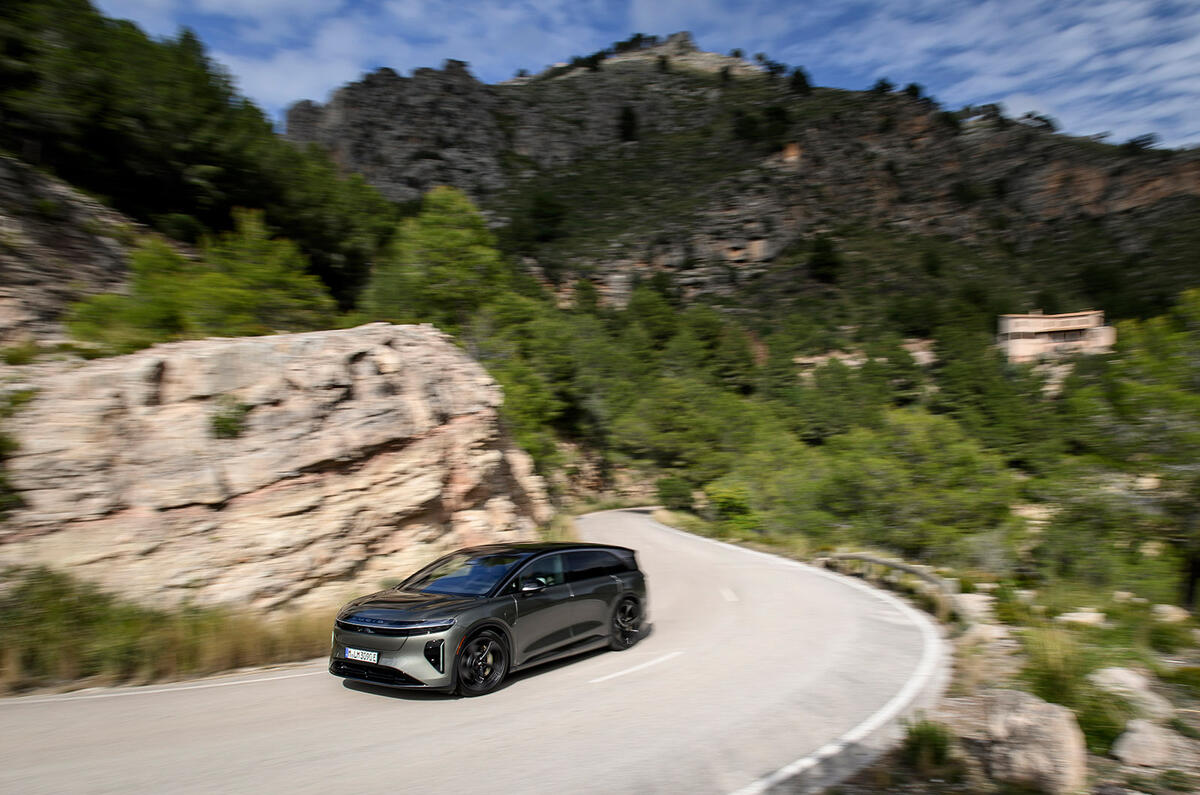
‘Gravity’ is actually an apt name, because there is a sense of weight to this car – except the 2.7 tonnes only serve to suck the car to the ground rather than push it out of line in corners. There’s tonnes of grip, a clear rear-bias to the power, and the quick steering is very faithful, with the effects of the rear-steer blending into the background as they help to shrink this behemoth.

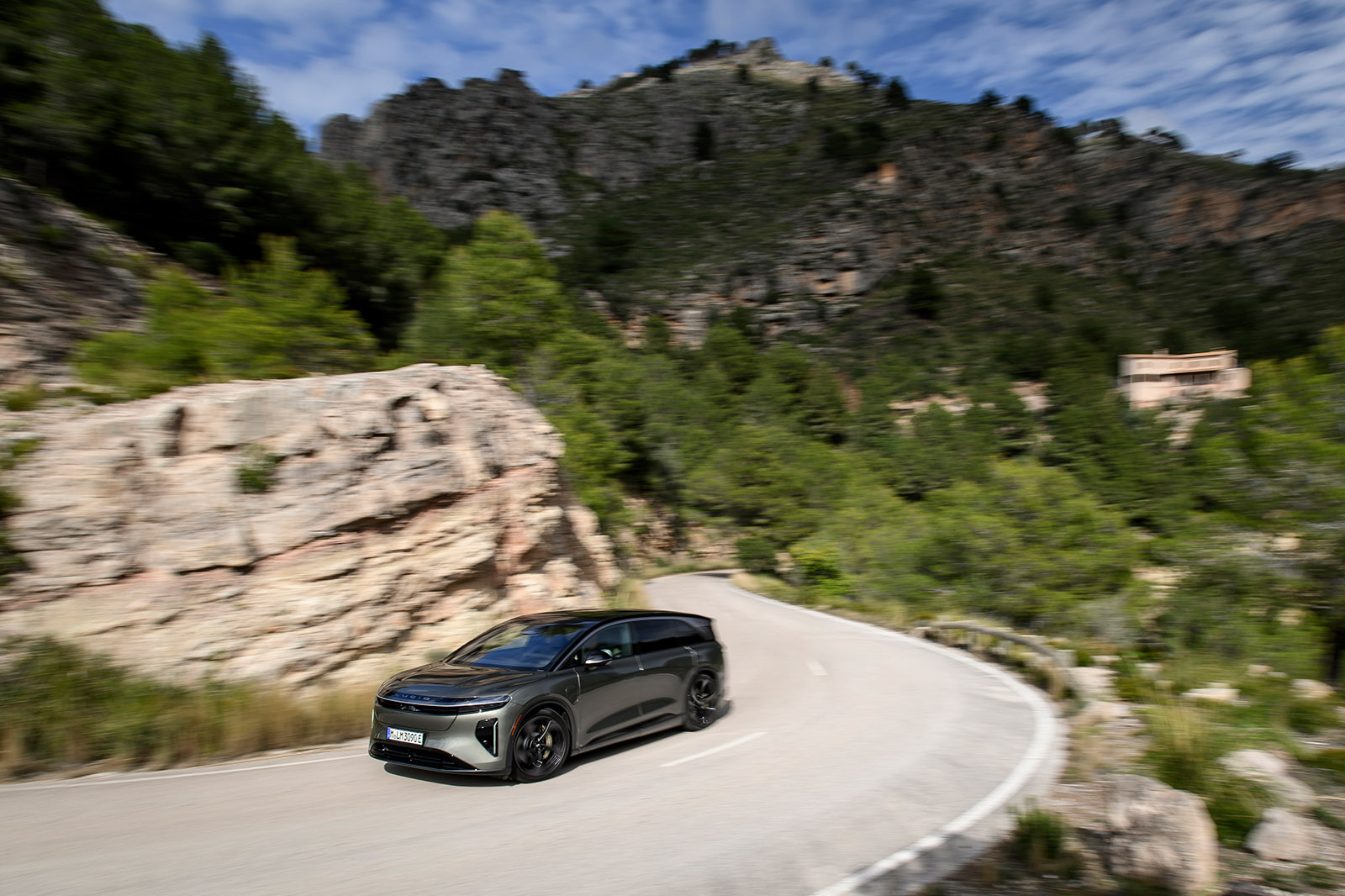
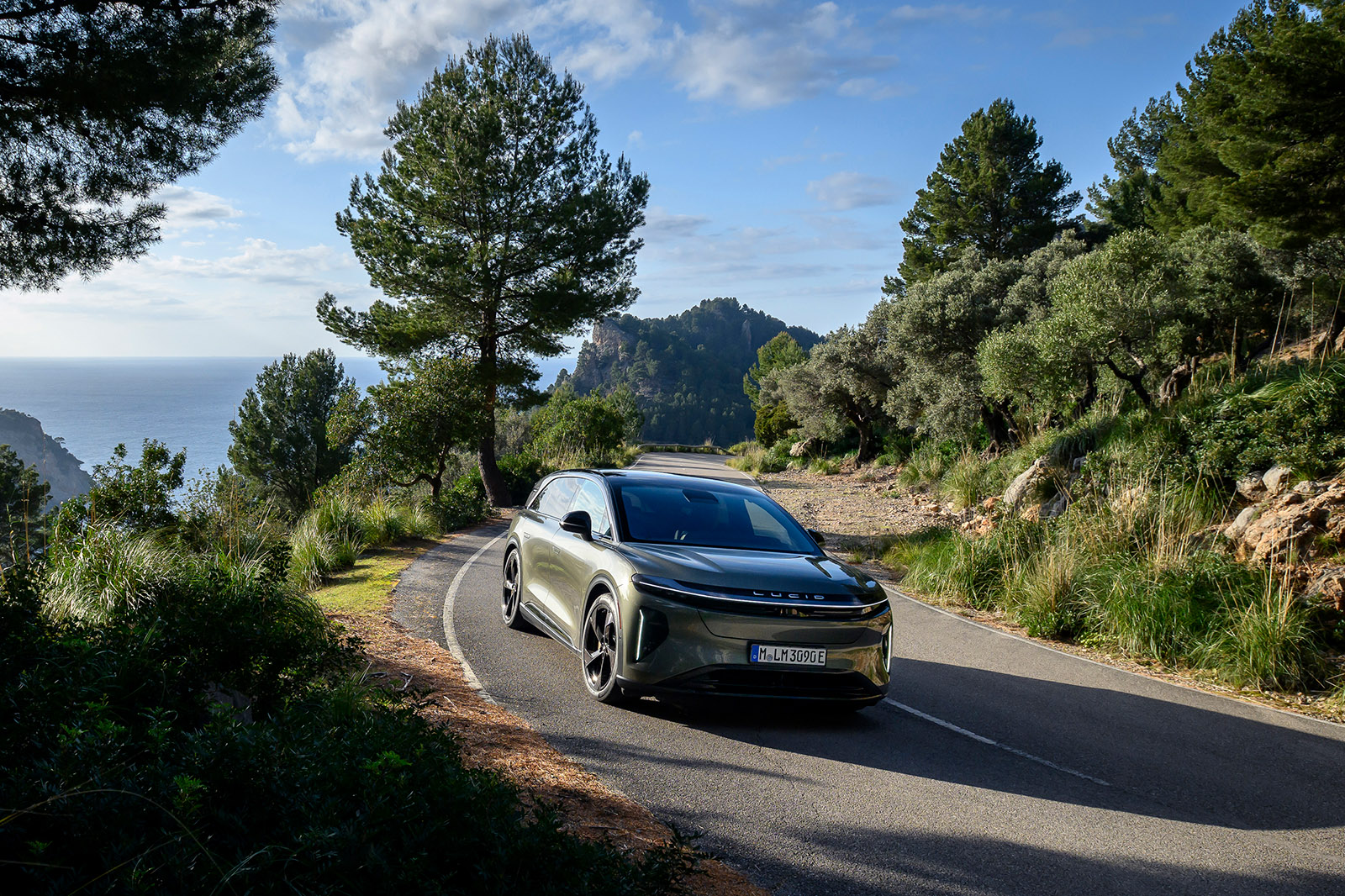
Still, on the narrow mountain roads of Mallorca, I was in awe of what it could do more than I was having fun, because you don't throw around a car this big without a lot of circumspection. Given that the handling comes with no apparent penalty to the ride, though, it’s quite the achievement.

MPG & RUNNING COSTS

Lucid Gravity review 2026 001

When I wasn’t hooning through the hills, I saw around 3.0mpkWh, which would make for an impressive 370 real-world miles, and the Gravity can charge at 400kW – numbers that the EX90 and EQS SUV can only dream of.

On the short stretch of motorway I came across, I found the adaptive cruise control acceptable if not as sophisticated as the best.

The Gravity has been on sale for a few months in the US, and apparently it hasn't been free from software bugs. The infotainment worked fine on my car, but the key only worked half the time and at one point the car locked the key inside, so someone had to use the smartphone app to unlock it.

In Germany, the Gravity starts from €100,000 (£87,000), but the big-battery Grand Touring is €116,900 (£101,000), and that’s before you’ve specced the must-have Dynamic Handling and Comfort packs or nicer wheels and paint.

VERDICT

Lucid Gravity review 2026 026

Big money, and one does wonder how much of a market there is in Europe for a pebble-shaped, luxury electric SUV, no matter how technically impressive. As far as we’re concerned, though, that doesn’t matter so much, because the Gravity probably won’t come to the UK. So long as Lucid can keep the financial wolves at bay, this car is just a preview of what the smaller and more affordable Cosmos will be like. On this evidence, it could be very good indeed.

Illya Verpraet

Illya Verpraet Road Tester Autocar
Title: Road Tester

As a road tester, Illya drives everything from superminis to supercars, and writes reviews and comparison tests, while also managing the magazine’s Drives section. Much of his time is spent wrangling the data logger and wielding the tape measure to gather the data for Autocar’s in-depth instrumented road tests.

He loves cars that are fun and usable on the road – whether piston-powered or electric – or just cars that are very fit for purpose. When not in test cars, he drives an R53-generation Mini Cooper S or a 1990 BMW 325i Touring.