From £62,4947

Is this spiritual successor to the original Land Rover Defender a vanity project or the real deal?

When Land Rover retired the original Defender, petrochemicals billionaire and Defender buff Sir Jim Ratcliffe offered to buy the design rights and production-line tooling so that the model might live on. JLR refused and the result is this, the Ineos Grenadier.

Now in its fourth year of production, the self-styled spiritual successor to the old Land Rover Defender has been born into a commercial hellscape of wild tariffs, inflation and stiffening regulations. It has also had to weather the recent insolvency of a major supplier, resulting in a fourth-month assembly hiatus at Hambach.

Ineos Automotive COO Hans-Peter Pessler led the development of the Grenadier for its partner, Austrian firm Magna Steyr. Among his jobs in a long career there? Developing the latest, ultra-successful G-Class for Mercedes.

Yet it gamely persists. Ineos Automotive is not out of the woods by any means – it has had to trim headcounts, is chugging cash investment and desperately needs a US manufacturing base – but today it is expanding in key markets and is introducing a handful of updates to the Grenadier for the 2026 model year. These are sensible car maker activities. 

We know the Grenadier is superb off-road, but here it undergoes a full road test to discover what it’s like in the broadest sense. How does it conduct itself day to day? How efficient is its BMW-sourced powerplant? Does it feel something of a pastiche, or is it the real deal for classic Defender lovers? Time to find out.

Advertisement

DESIGN & STYLING

8
Ineos Grenadier 2026 002

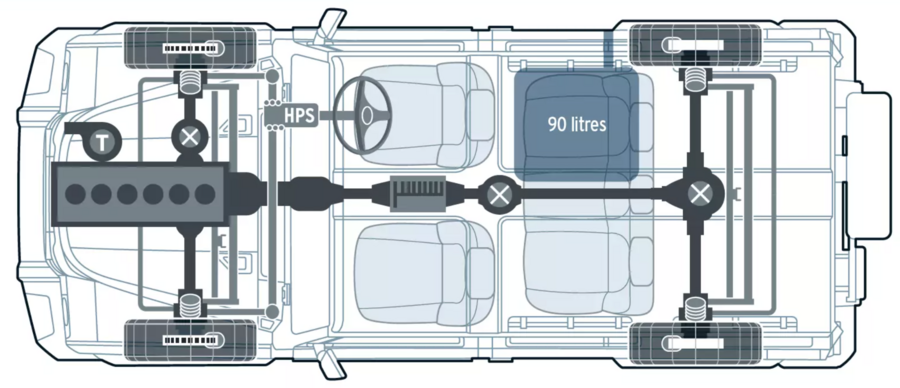
Land Rover’s reincarnated Defender uses an aluminium monocoque chassis but the Grenadier is strictly traditional in its approach, and more closely related to the current Jeep Wrangler. A beefy box-section ladder frame was developed, with longitudinal members some six inches tall. It’s made from steel and supports beam axles supplied by Italian tractor specialist Carraro.

For the suspension, leaf springs and air springs were considered but Eibach steel coils were eventually chosen and are paired with telescopic dampers from ZF and monstrous bump-stops. There is also a sizeable Panhard rod at each end, for reliable lateral location. Inspecting the components of the axles is no hardship because the space between tyre and wheel-arch lining is cavernous. The body sitting on top is made from spot-welded steel, apart from the doors and bonnet, which are aluminium.

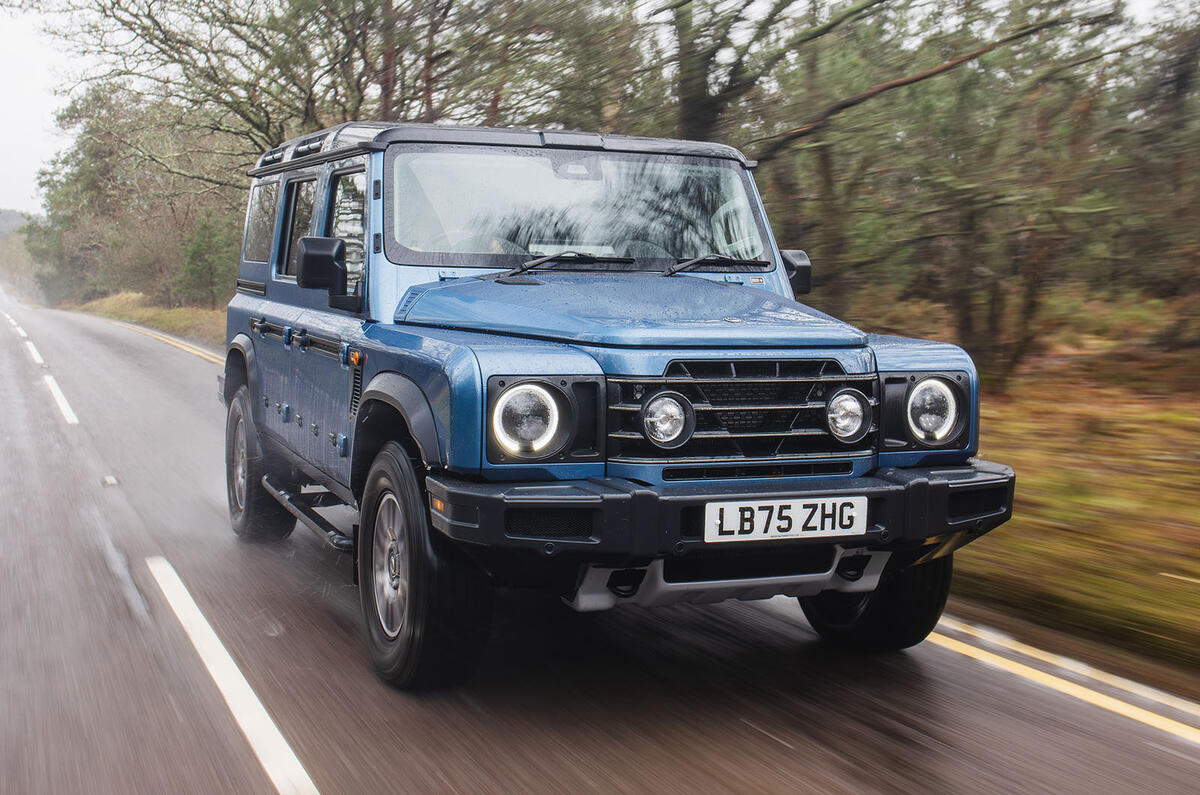
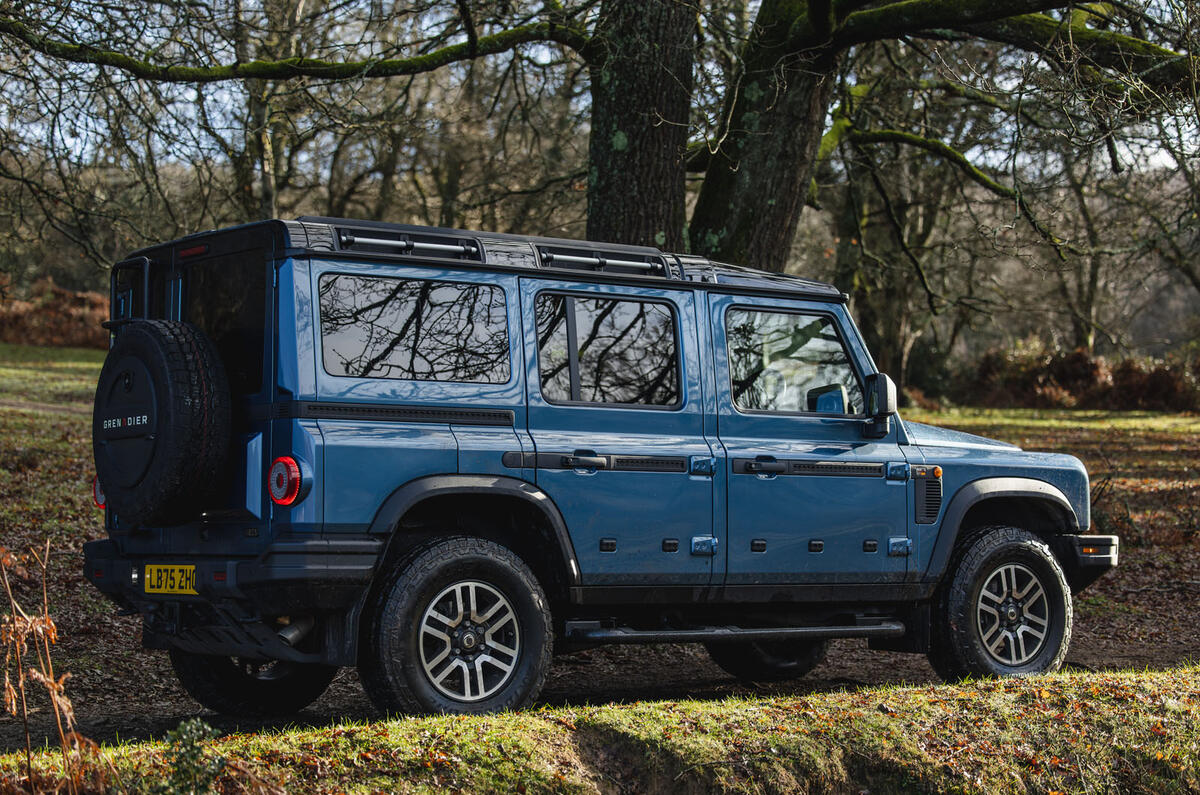
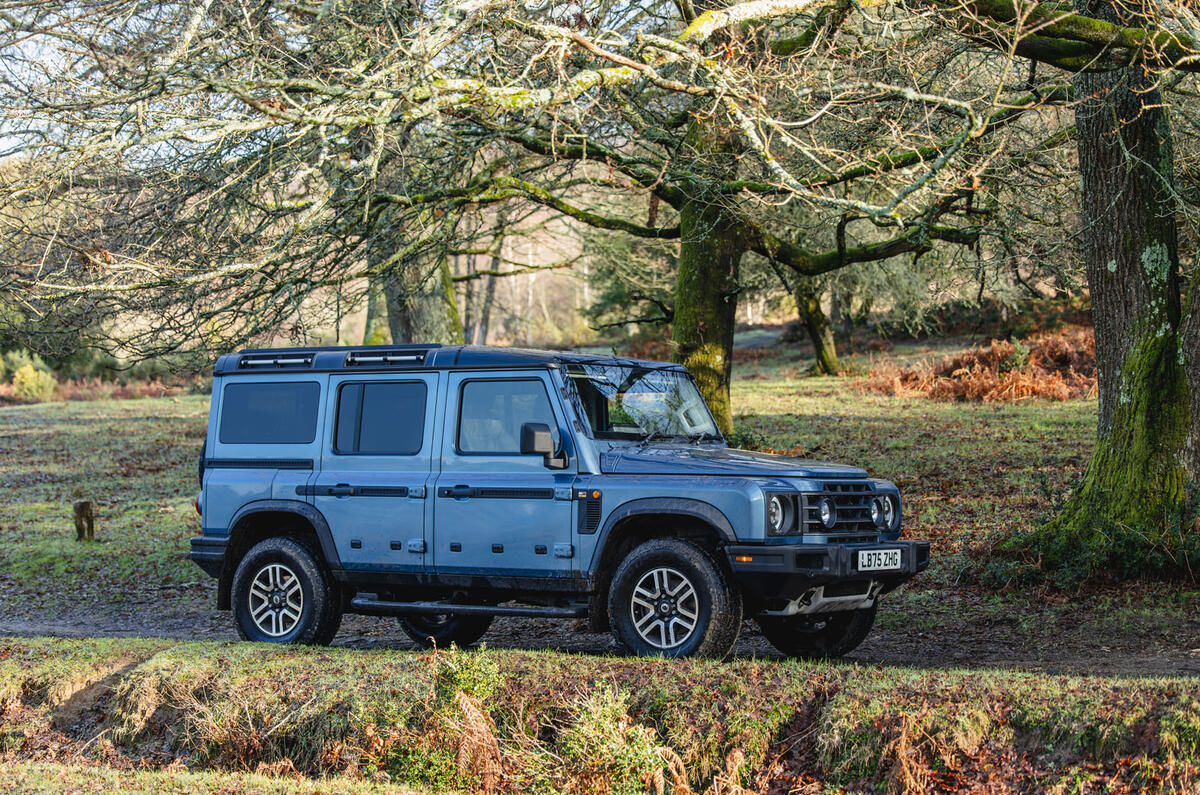
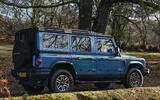
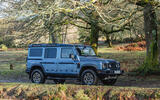
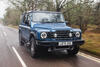
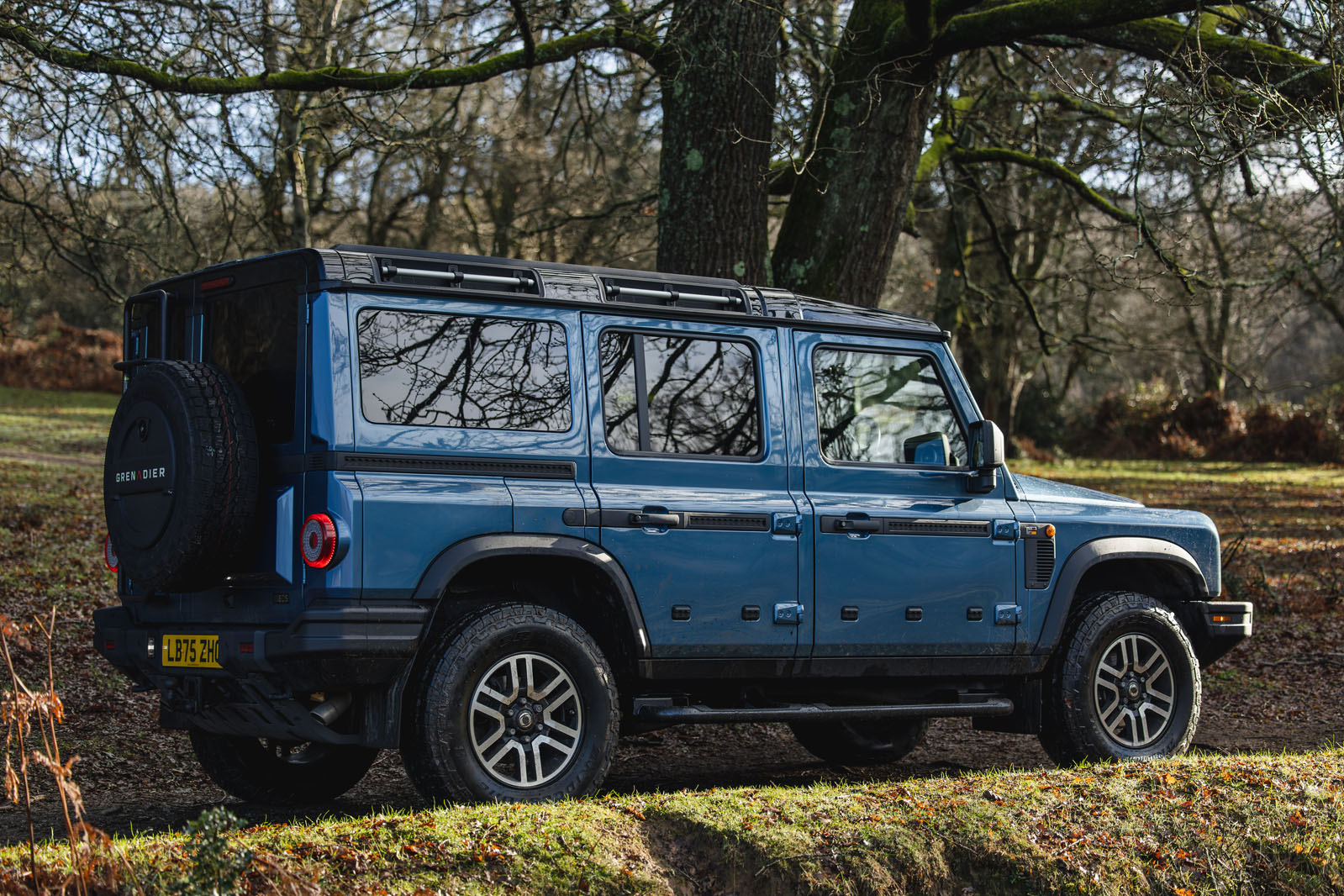
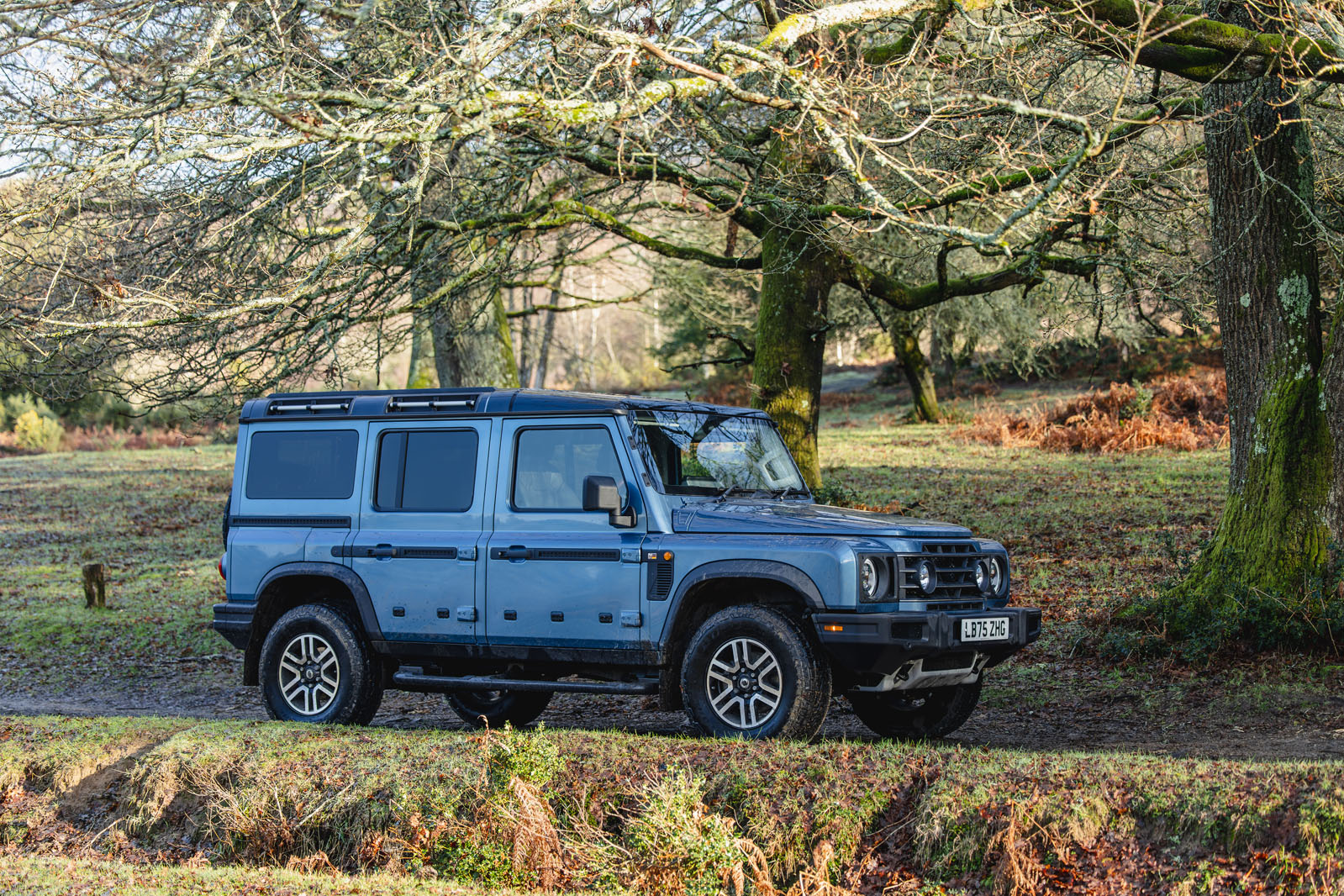
The Grenadier’s silhouette is, of course, pure old-world Defender, but park the two cars nose to tail and inconsistencies surface. The newer car’s bonnet is longer, snoutier and more raked than that of its inspiration.

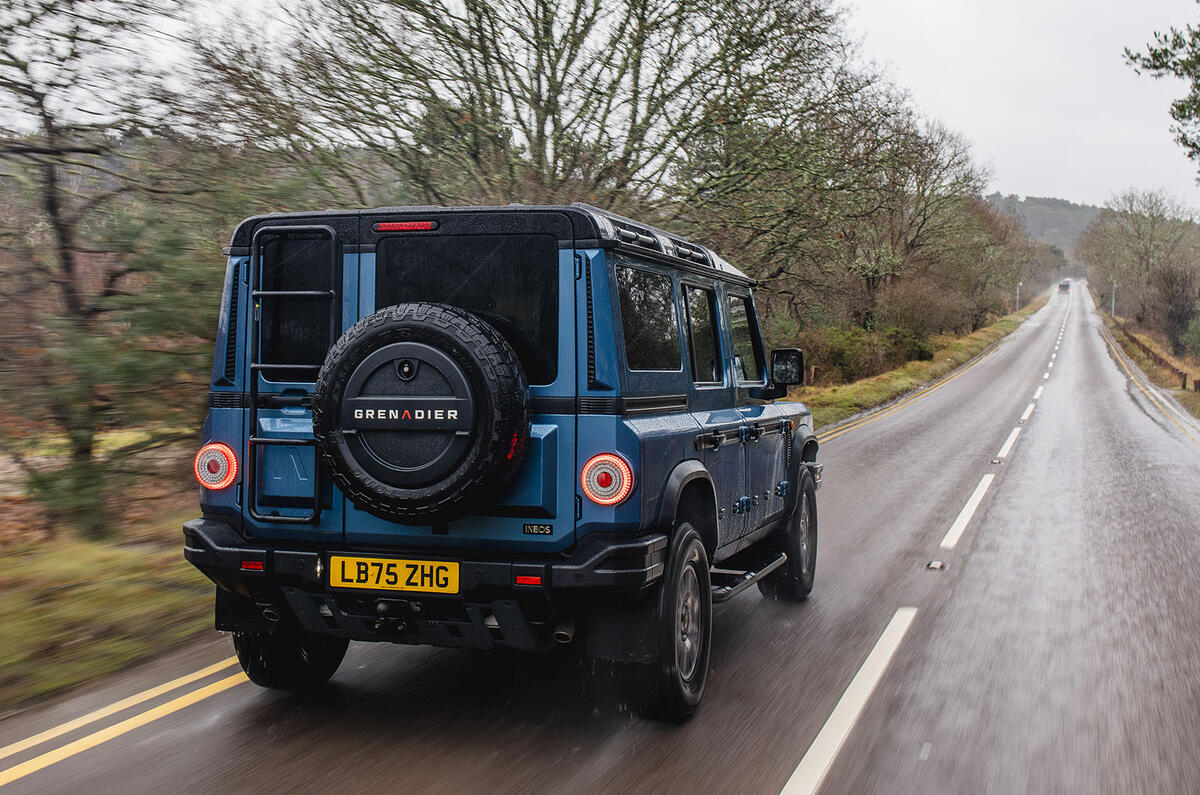
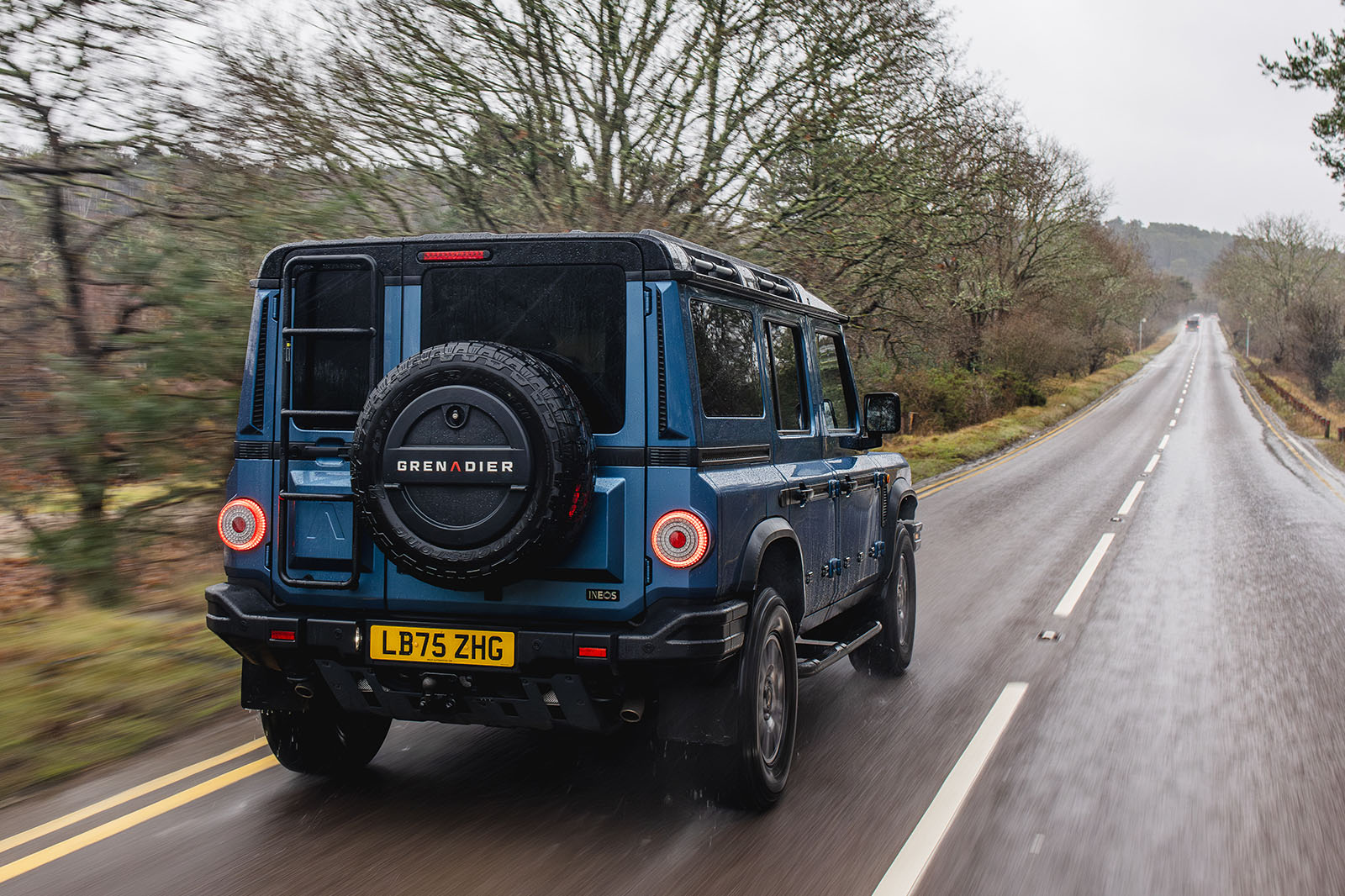
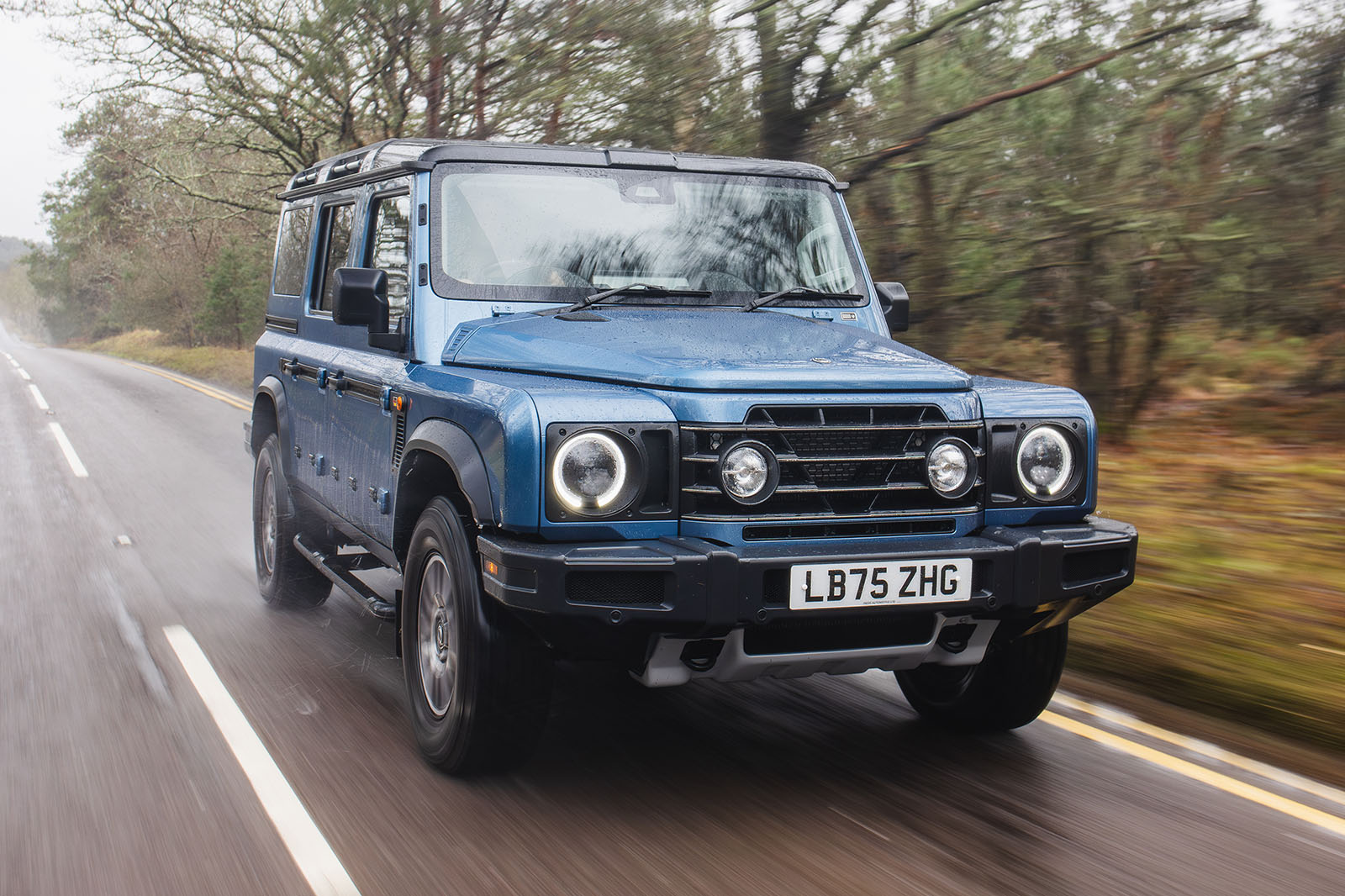
Its rear door apertures are also considerably larger. The Grenadier is the longer car too, its 4895mm (including tailgate-mounted spare) comfortably surpassing the original 110’s 4639mm, although the current Defender 110’s 5018mm trumps both (and its wheelbase is 100mm longer than the Grenadier’s). You will notice this car’s prognathic front bumper. Elegant? No, but it can house a winch with 5.5-tonne capability.

Weighing 2678kg (2682kg as tested), the Grenadier was never likely to propel itself with anything less than six cylinders, which is the sole offering. The car comes with a choice of turbocharged 3.0-litre straight-six engines from BMW – one petrol, one diesel – selected not simply for their effortless torque delivery but also for the fact that they meet emissions standards worldwide.

We have the petrol here, which with 282bhp and 332lb ft is more powerful but less torque rich than the diesel, and returns a claimed 18.9-19.6mpg, versus 26.9mpg for the oil-burner. Neither engine revs beyond 5200rpm. 

Drive flows through an eight-speed automatic transmission from ZF (this ‘8HP51’ unit also serves the current BMW 3 Series and Toyota GR Supra). Downstream sits a two-speed transfer case with centre differential that was bespoke-designed and built for the Grenadier by Tremec.

There’s then an electronically locking differential from Eaton on each axle (manually lockable on the more adventure-leaning Trailmaster specification). With all three differentials locked, the Grenadier distributes drive perfectly equally to all four corners.

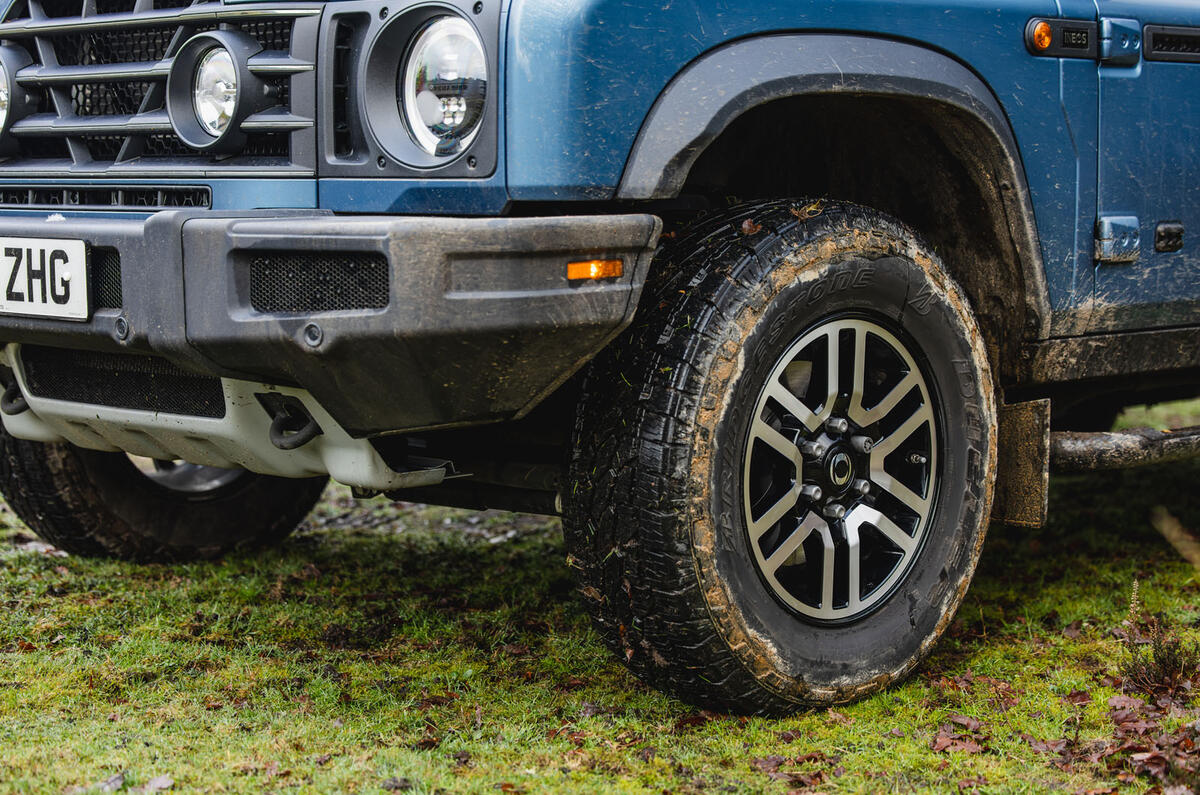
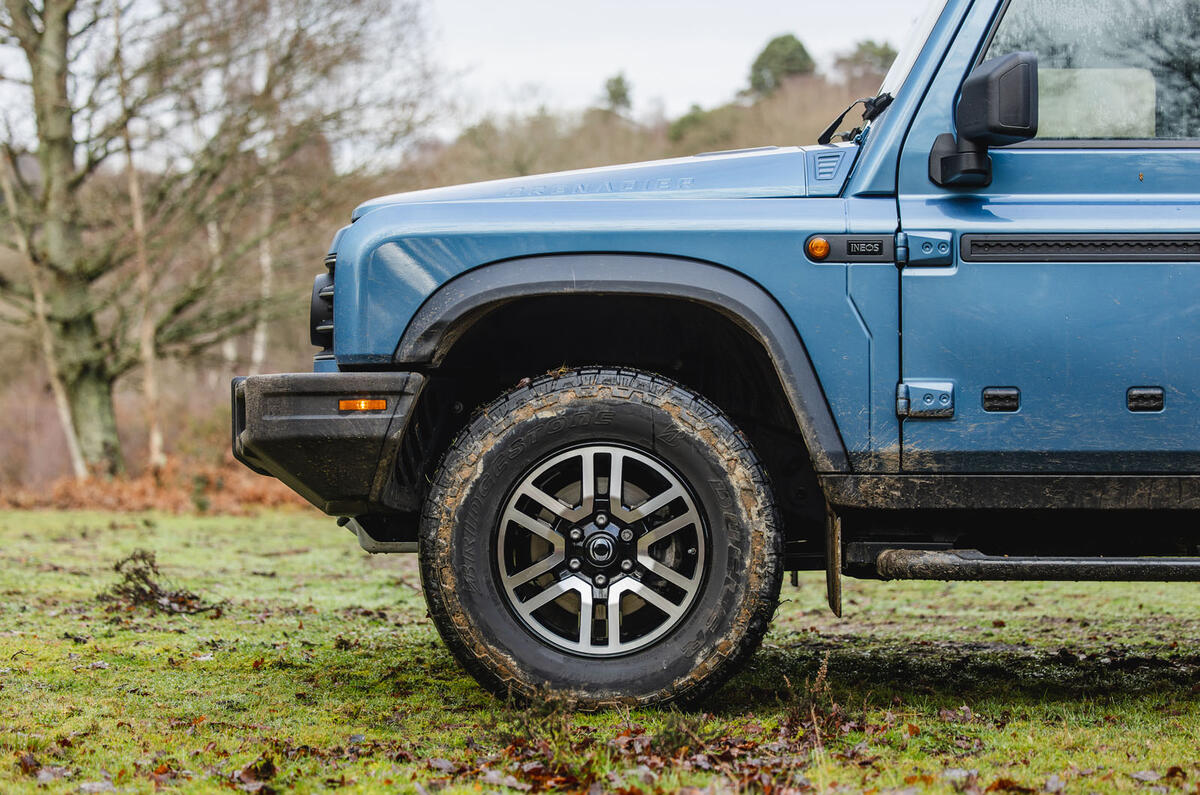
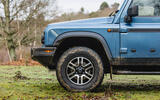
Down on the ground, as standard the Ineos is shod with Bridgestone’s all-terrain Dueler A/T 001 tyres, which are wrapped around 17in steel wheels (18in steelies are optional, as are painted alloys in both sizes). More specialised off-road rubber comes in the form of our car’s BF Goodrich KO2s.

Screenshot 2023 09 28 at 16

Chief among the MY26 updates is a revision to the recirculating-ball steering. The ratio is now variable, being quicker for the first 45deg of travel either side of centre, due to modifications to the grooves of the worm gear. The result is better response and precision on the road but still with no risk of thumb-snapping kickback when you’re traversing ruts and rocks.

The new steering box is also designed to give better self-centering. One of the frustrations with the original Grenadier’s steering was the way lock had to be wound off post-apex with the urgency of bailing water from a sinking skiff. It’s still not perfect but is notably better.

The steering bumpstops are also a little smaller now, to allow for a tighter turning circle.

Elsewhere, improvements have been made to the HVAC system, and the latest Bridgestone Dueler AT 002 all-terrain tyres (with their new tread-pattern and firmer sidewalls) are standard-fit. Equally, you can also now opt for BF Goodrich All-Terrain T/A KO3 tyres, if you plan on really doling out punishment on the trails.

European models now also get a suite of ADAS – sympathetically calibrated, Ineos says, and easy enough to disable on the fly. During a day’s driving, we didn’t find any of the systems particularly irksome.  

INTERIOR

7
Ineos Grenadier 2026 005

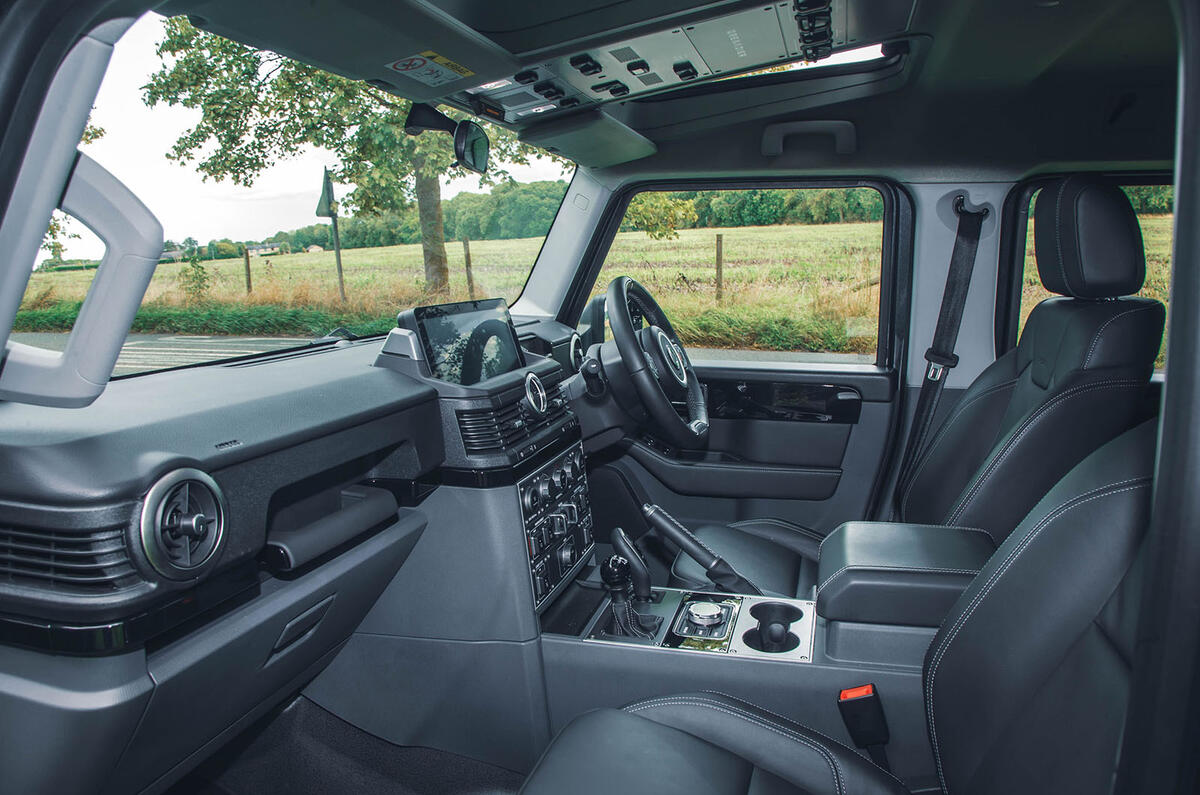
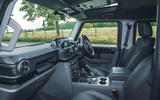
There’s a sense of occasion when you clamber up into the Grenadier’s surprisingly supportive, heated Recaro seats. For one thing, the driving position is magnificently high. In original Defender fashion, your eyeline almost skims the top of the side windows (although, unlike in an old Defender, the sill itself fully invites a resting elbow).

On the motorway, you find yourself peering down into the cabins of other ‘full-size’ SUVs as you overtake. Visibility is panoramic and the sense of space is heightened by the removable safari windows fitted as standard on road-leaning Fieldmaster models, as tested here.

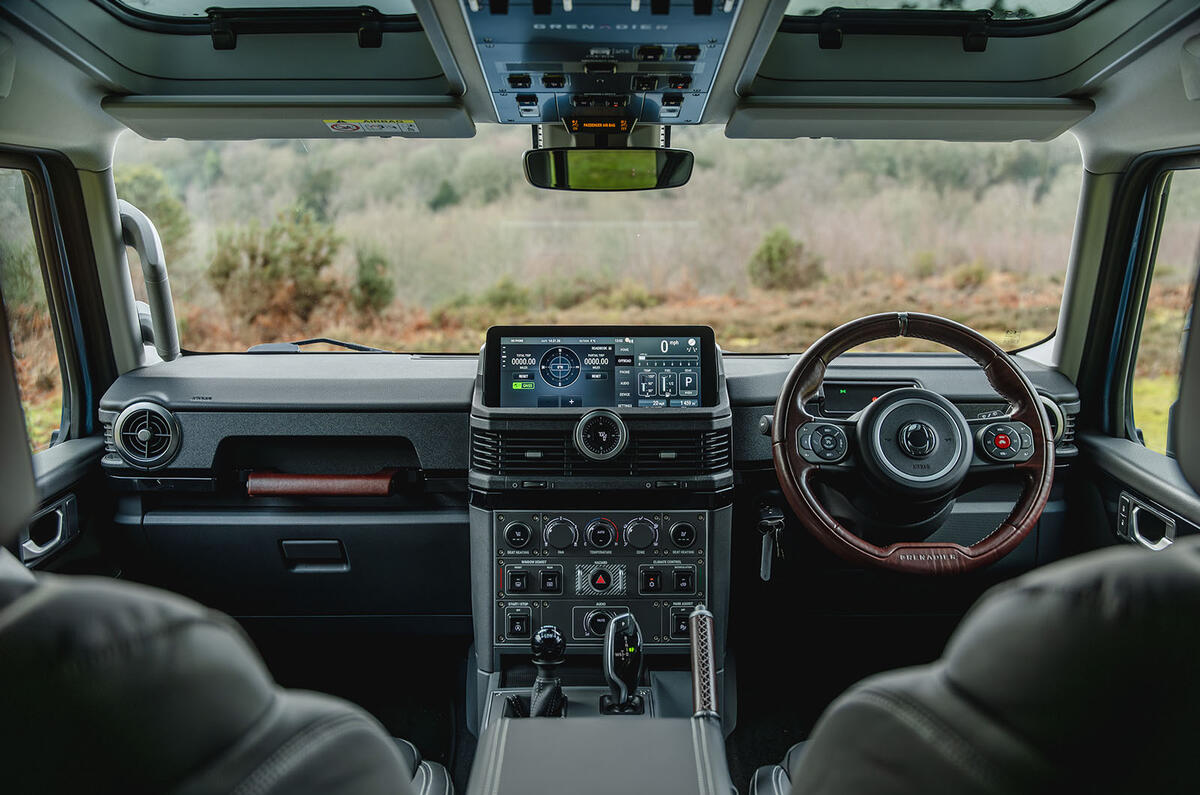
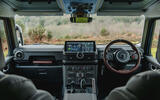
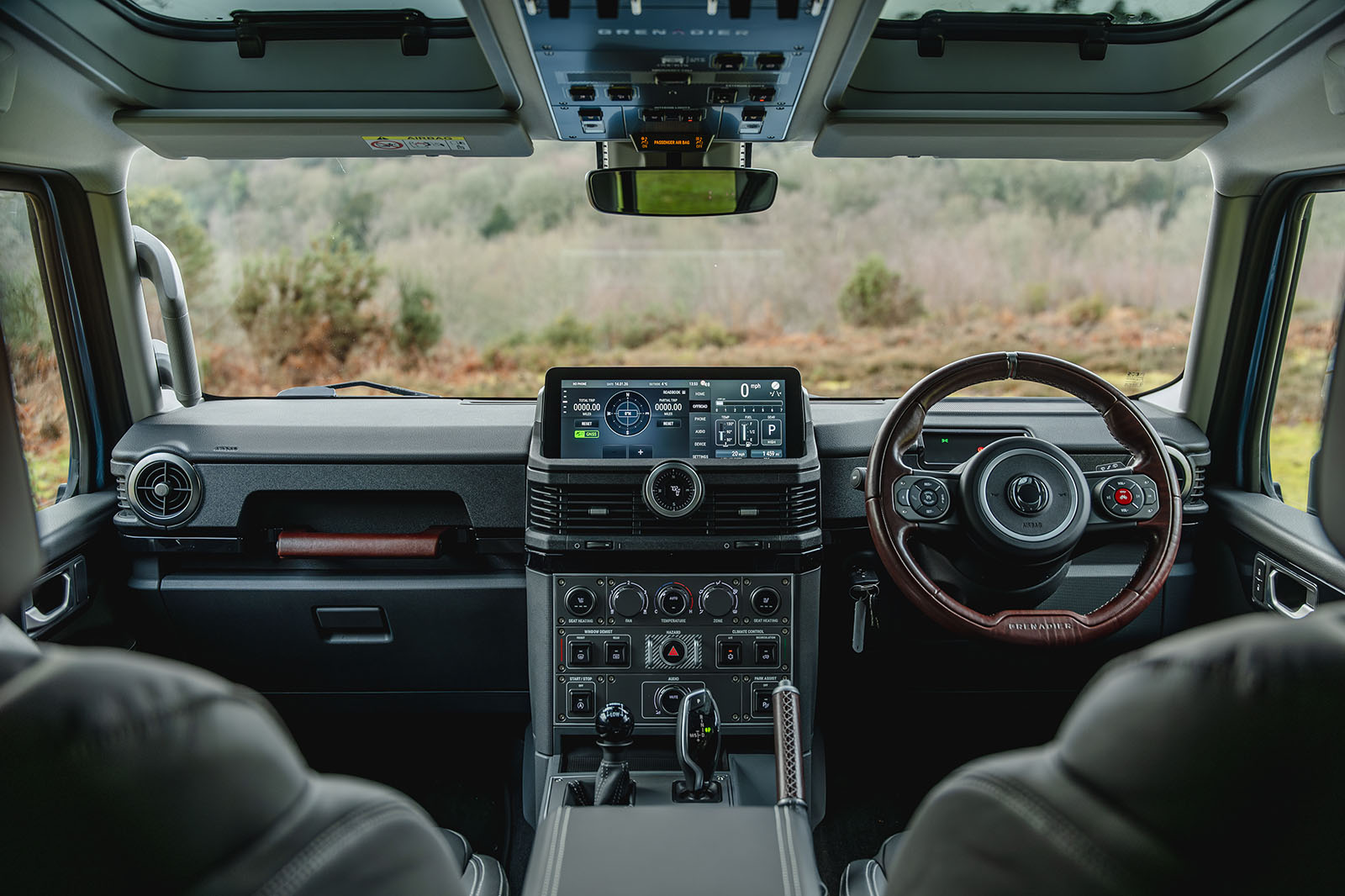
The Grenadier’s designers have chosen to lean into this flight-deck ambience. While an array of climate controls are built into a hardy-looking panel on the centre console, switchgear relating to off-road activities is found on an overhead panel. Here you will also find chunky, pre-wired toggle switches for any auxiliary accessories fitted either inside (additional USB points, for example) or out (such as a 40in light bar).

All the switchgear is supersized for use with gloves, and while the BMW-sourced central display can be touch-controlled, there’s also a large rotary control on the transmission tunnel.

Perceived quality is some way off what you find inside the new Defender, but some of that is by design and the Grenadier doesn’t feel conspicuously cheap.

All surfaces are splash-proof, and our test car’s heavy-duty flooring can be hosed out then removed to let water out through drain holes. Carpet is an option and leather can be used for steering wheel, handbrake lever and seats, softening the functional ambience. And while some will find the military-esque graphics performative, others will love them. 

Oddment storage is lacking. The door pockets are shallow and the transmission tunnel is mostly devoid of useful recesses. Matters improve elsewhere. The cubby under the driver’s seat holds a tool kit, but there’s a similar space under the passenger seat. The rear bench folds up to reveal a dry-storage compartment.

The doors of the split tailgate open wide to reveal fully 1152 litres of seats-up capacity, although flat-topped wheel-arch moulds would make the space more useful.

The second row of seats split 60/40 to swell that capacity to an enormous 2035 litres, although they don’t fold entirely flat.

The plastic floor of the boot curves up at its leading edge to confine water, or as one owner will attest, sheep guts. 

Multimedia system
Ineos grenadier review 2023 26 screen

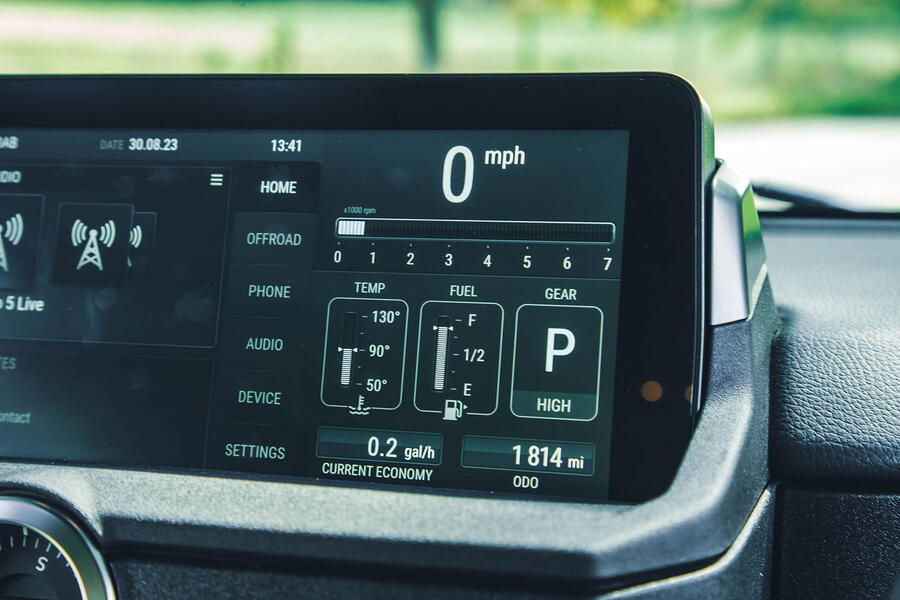
The Grenadier’s infotainment system is from BMW and uses a 12.3in touchscreen. The dash directly ahead of the driver is deliberately barren, save for a small display that shows various warning lights. It means the central display is used to show fuel level, gear, engine temperature and speed and road speed, as well as all the usual multimedia functions.

It does so reasonably well, but looking left to see vital information never feels that intuitive, and a large rev counter would be better. Graphics and latency are fine for this kind of application, even though they would feel a bit out of place in, say, any BMW of similar price to the Grenadier.

Finding the off-road menu is a one-touch affair. There are readouts for driveline temperature, altitude and electrical draw, plus a satellite-based ‘Pathfinder’ programme that allows you to create and share off-grid routes with other Grenadiers.

Apple CarPlay (via Bluetooth) and Android Auto (wired) are standard. The car also has two 12V sockets (one in the armrest compartment, another in the boot) and both USB-A and USB-C ports.

Note also that, for 2026, the Grenadier has a suite of ADAS, although it's sensibly integrated and certain elements can be switched off easily.

We didn't find the systems irritating in normal use and there's a ceiling-mounted off-road button that kills the bongs and allows you to drive without a seatbelt on, as is often necessary if you're craning for views while bouldering. 

ENGINES & PERFORMANCE

7
Ineos Grenadier 2026 006

For reasons we will come to, you're unlikely to deploy the Grenadier’s full firepower often. However, do so and it’s unexpectedly brisk. Top speed is 99mph but our petrol test car took just 8.0sec to stomp its way to 60mph, in much the style of Joe Marler 10 metres out. The 30-70mph dash in kickdown takes a more leisurely 8.1sec but a mid-ranking Range Rover isn’t much quicker. 

This powertrain isn’t lacking in character, either. Likeably gruff on start-up, BMW’s straight six is well mannered when unprovoked but has a rich blare when extended (although admittedly the diesel does flirt with seeming a bit agricultural).

It would be mostly unrecognisable to anybody who knows it only from the BMW M340i: its various resonances are less isolated to the engine bay and its throttle response is comprehensively blunted by the weight of the Grenadier. However, a long throttle and a breathy roar that doesn’t always tally with your rate of forward motion are acceptable for this type of vehicle.

ZF’s gearbox is also as sophisticated as ever, giving intuitive low-speed control one moment and rapidly kicking down two cogs another.

Under heavy braking, the Grenadier pitches dramatically and during an emergency stop can squirm uncomfortably but it never actually requires steering correction. It would surely have felt more planted wearing Bridgestone’s Dueler tyres than the BF Goodrich rubber of our test car.

In the context of normal passenger cars, the 59.5m taken to stop from 70mph in dry conditions is worryingly long. However, for a genuine off-roader, it isn’t bad. In similar conditions, the new-gen Mercedes G350d we tested in 2019 could only manage 52.2m, and that was on more moderate all-season Pirellis. In normal driving the Grenadier’s brake feel is numb but perfectly effective and reasonably easy to modulate.

Off-road notes

Ineos's commitment to honouring the legacy of the original Defender is such that it has even chosen to equip the Grenadier with technological solutions that have long since been phased out of the mass market as rivals pursue improved refinement and practicality.

Most obvious among these is the steering, which eschews the now-commonplace rack and pinion set-up for a recirculating-ball mechanism, which effectively comprises a large worm screw running through a shaft, with bearings in the threads to reduce slop in its responses and reduce wear by mitigating friction. 

The justification for equipping the Grenadier with such a conspicuously archaic arrangement is that it stops the wheel whipping around and breaking your thumbs if you hit a rock or rut off-road, meaning you needn't keep them on the rim of the wheel at all times, as is convention.

No doubt regular mud-pluggers will appreciate the more relaxed driving style this affords, but the resulting sense of disconnection between the helm and the front axle is almost as disconcerting in itself as the prospect of snapping a digit. 

Low-speed off-roading calls for a measured, precise approach that is contingent on knowing which way the wheels are pointing at all times and precisely where on the ground they have fallen.

What the Grenadier's steering offers in durability and dependability, it concedes in feedback and predictability, to the point that the driver – counter-intuitively, given the Grenadier's analogue remit – becomes almost entirely dependent on the steering angle readout on the central screen. 

So too do you lose any sense of elasticity: rather than returning to centre out of a turn, the steering wheel basically stays where you put it, meaning you have to make constant adjustments to stay on track which becomes a more tiresome exploit the longer you spend off the Tarmac. 

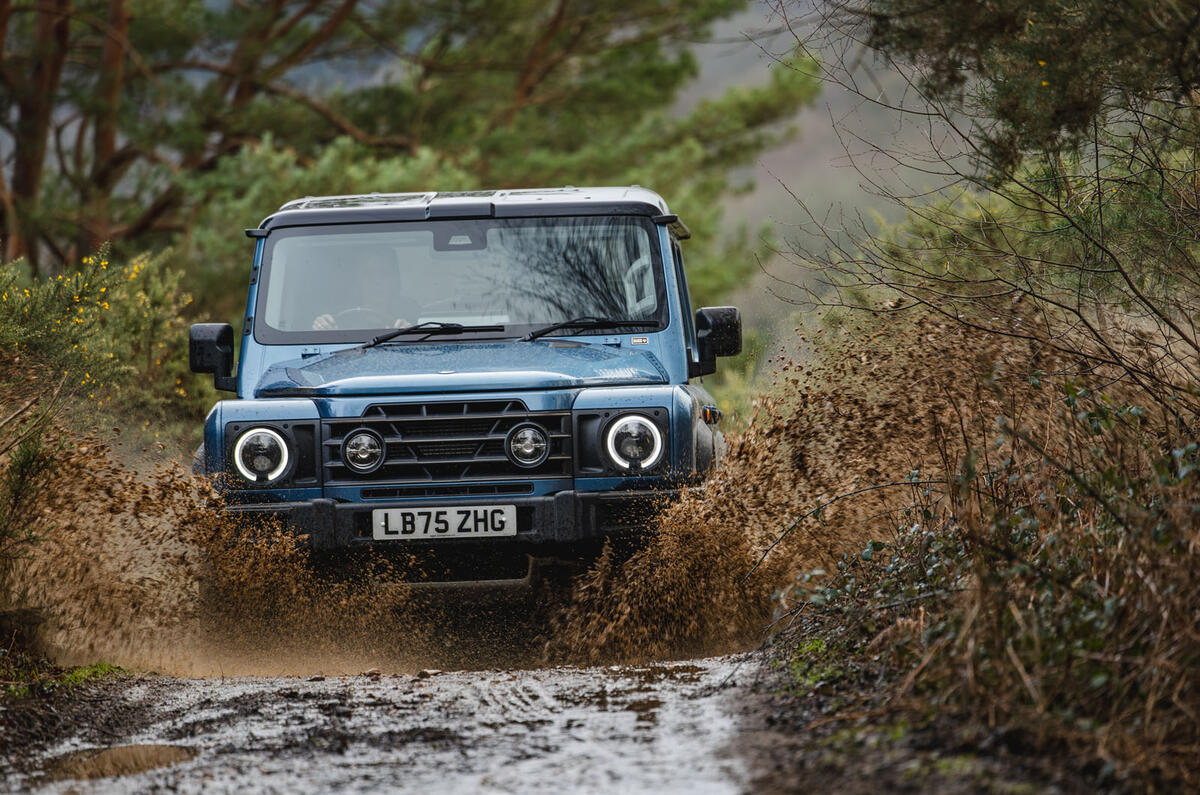
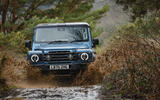
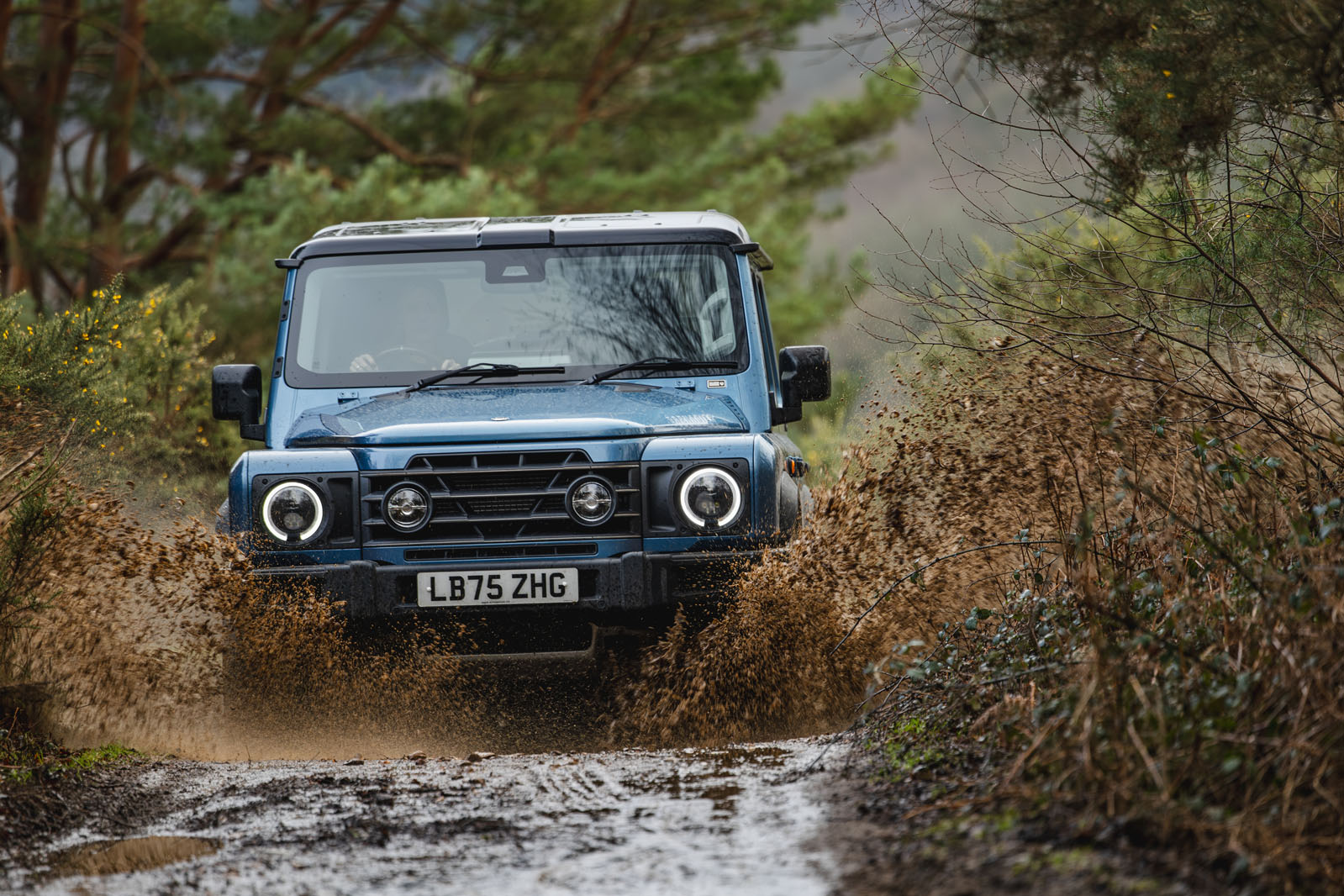
But with that said, the Grenadier indisputably stands proud as one of the most capable 4x4s on the market. Its ability to wade at up to 800mm meant we could ford murky streams that would have entirely swallowed a sports car, the impressive articulation (around 9in at the front and 12in at the rear) kept the body flat over some truly fearsome undulations, and its ultra-short overhangs and 26.2deg breakover angle meant there was no risk of grounding out on the steepest and sharpest peaks.

Still, the Grenadier can’t quite match the new Defender. Air springs give that car 290mm of clearance (versus 264mm for the Ineos) and 900mm of wading depth (versus 800mm). A little better dexterity, too, and the Grenadier's old-school chassis simply can't match the Land Rover for refinement and comfort: any more than a cautious crawl over rough surfaces will have its occupants bouncing around the cabin. 

Screenshot 2023 09 28 at 16

RIDE & HANDLING

7
Ineos Grenadier 2026 010

The Grenadier is made on a thoroughly modern, robotised production line, but it still has a throwback persona in many ways. This is most recognisable in the steering, which is by recirculating ball (for off-road resilience and to protect the driver’s wrists) and is low-geared even by class standards. 

The Grenadier’s thick-rimmed, two-spoke steering wheel and the linkages it controls define much of the car’s on-road character and this set-up isn’t the easiest to rub along with, even if MY26 updates to the off-centre motion have improved speed, self-centring and precision. Weighting remains somewhat inconsistent and sheer amount of arm twirling needed through tighter bends mean anybody at the helm can never truly relax. 

It almost goes without saying that hustling the Grenadier isn’t for the faint of heart. Ineos clearly feels the same, which is why the car’s conservative stability-control system cuts in early and abruptly during on-road driving. 

Slow the pace and the Grenadier is more agreeable, if still not able to dispel a certain agricultural-ness. Multiple corrections of course through the same corner are no longer required, thanks to those updates to the steering box, but if there is one aspect in which the current Defender really puts the Grenadier to the sword, it’s remains directional consistency.

Comfort & Isolation

The Grenadier rides well. Its motorway gait is particularly impressive, and because this is an environment in which you need to interact less with the steering, progress feels most car-like while cruising.

With its breeze-block frontal area, wind noise is of course notable at 70mph, and the 73dBA reading the Grenadier logged is 3dBA greater than that of the diesel Wrangler we tested in 2019. Interesting, 73dBA is also an exact match for our last recording from the original Defender.

Should the newer, more expensive Grenadier do better? Perhaps. And it probably would do on its Dueler tyres. In any case, in subjective terms no testers found cabin noise to be an issue. You can easily listen to the radio or hold conversation. That superb visibility also has a relaxing effect.

On country roads, there isn’t much that troubles this chassis. Head-toss and outright bouncing are reasonably well quelled and the car’s long, progressive springs neatly cushion ridges and bumps.

If anything irks, it’s the pedal box of right-hand-drive cars. The footrest is oversized, because the exhaust runs beneath it. This means the pedals are far offset to the right, which along with the upright driving position and perfectly central steering wheel mean you have to contort yourself ever so slightly. 

MPG & RUNNING COSTS

6
Ineos Grenadier 2026 001

With the arrival of MY26 updates, you would expect prices to have risen in line with the rest of the market. What you wouldn’t expect is for Ineos to hold the line. But the Station Wagon still starts at £62,495, with the ready-configured, generously equipped Trailmaster and Fieldmaster versions remaining at £69,995.

While options like a contrast roof or fixed tow-ball can still add considerable cost, the Grenadier undercuts a similarly specced Defender or the latest Toyota Land Cruiser.

In terms of other hard-nosed and equally capable competition, the G-Class remains in its own atmospheric price bracket, starting beyond £140,000, while the Wrangler is now available only from stock in the UK.

Ineos’s ownership model remains pragmatic. The goal remains for all owners to be within 30 miles or so of an accredited workshop, and the brand actively encourages a "right to repair." Online manuals exist to help owners work on the cars themselves, although how this DIY ethos tallies with the five-year/60,000-mile warranty is unclear.

As for efficiency, don’t expect miracles: with a 90-litre tank and an average of 17.9mpg, your real-world range for the petrol model sits around 350 miles. Expect a little more from the diesel.

LONG-TERM REPORTS

We ran a Grenadier and covered more than 8000 miles. This is what we learned.

Click here to read the full report.

How's the fuel economy compared to the official figure?

Actually pretty good, but then the official figure is only in the high-teens. We managed low-20s consistently, almost regardless of how or where we drove it.

What are the seats like on a long drive?

You might remember that Ineos paused Grenadier production when famous seat-maker Recaro went under. Recaro may have not been selling enough seats, but it makes very good ones. For a utility wagon the Grenadier stayed very comfortable over long distances.

How intuitive is the infotainment?

By most modern standards it's very good. Basically it pairs with your phone easily, there is a touchable screen but also a separate dial, and there are loads of buttons. Like hundreds.

What's the dealership service like?

We didn't need to have the car serviced but there's a very enthusiastic - and vocal - set of owners. They say there aren't enough dealers or service centres, so your nearest may be quite a drive away. But that, while there are minor niggles, actual vehicle integrity is very good. A digital workshop manual has recently become available online.

What was durability like?

It seemed superb. 'Our' Grenadier arrived with several thousand miles on it and departed with around 20,000 - not that many manufacturers would leave us with a car showing that many miles. No new squeaks or rattles, no slackness. This feels built tough.

VERDICT

7
Ineos Grenadier 2026 009

Is now the time to take the plunge on a Grenadier? If you like what Ineos is trying to do here in terms of concept, then yes, perhaps it is. The pricing looks kinder than it has previously and the driving experience is undoubtedly less tiring. The thing now goes where you point it more dependably.

It goes without saying that a slick modern Defender still remains more amenable in daily use and a Toyota Hilux will do 90% of the dogsbody work around a farm. But there remains a transparency and rough glamour to the Grenadier that appeals. That much of the design-engineering was undertaken by veteran consultancy Magna only underscores Ineos’s intention to do things properly, and a deal to use excellent BMW powertrains has given the Grenadier one of its more easily appreciable strengths.

A lighter construction would also have been desirable, as would a driving position able to combine loftiness with real long-distance comfort. Storage could be better too. But despite certain shortcomings, many will love this car for its undoubted ruggedness and adaptability. Broader appeal will remain elusive, but in many respects, that's the point.

Richard Lane

Richard Lane
Title: Deputy road test editor

Richard is Autocar's deputy road test editor. He previously worked at Evo magazine. His role involves travelling far and wide to be among the first to drive new cars. That or heading up to Nuneaton, to fix telemetry gear to test cars at MIRA proving ground and see how faithfully they meet their makers' claims. 

He's also a feature-writer for the magazine, a columnist, and can be often found on Autocar's YouTube channel. 

Highlights at Autocar include a class win while driving a Bowler Defender in the British Cross Country Championship, riding shotgun with a flat-out Walter Röhrl, and setting the magazine's fastest road-test lap-time to date at the wheel of a Ferrari 296 GTB. Nursing a stricken Jeep up 2950ft to the top of a deserted Grossglockner Pass is also in the mix.