Currently reading: The wild British supercar that beat the BMW M5 – then vanished

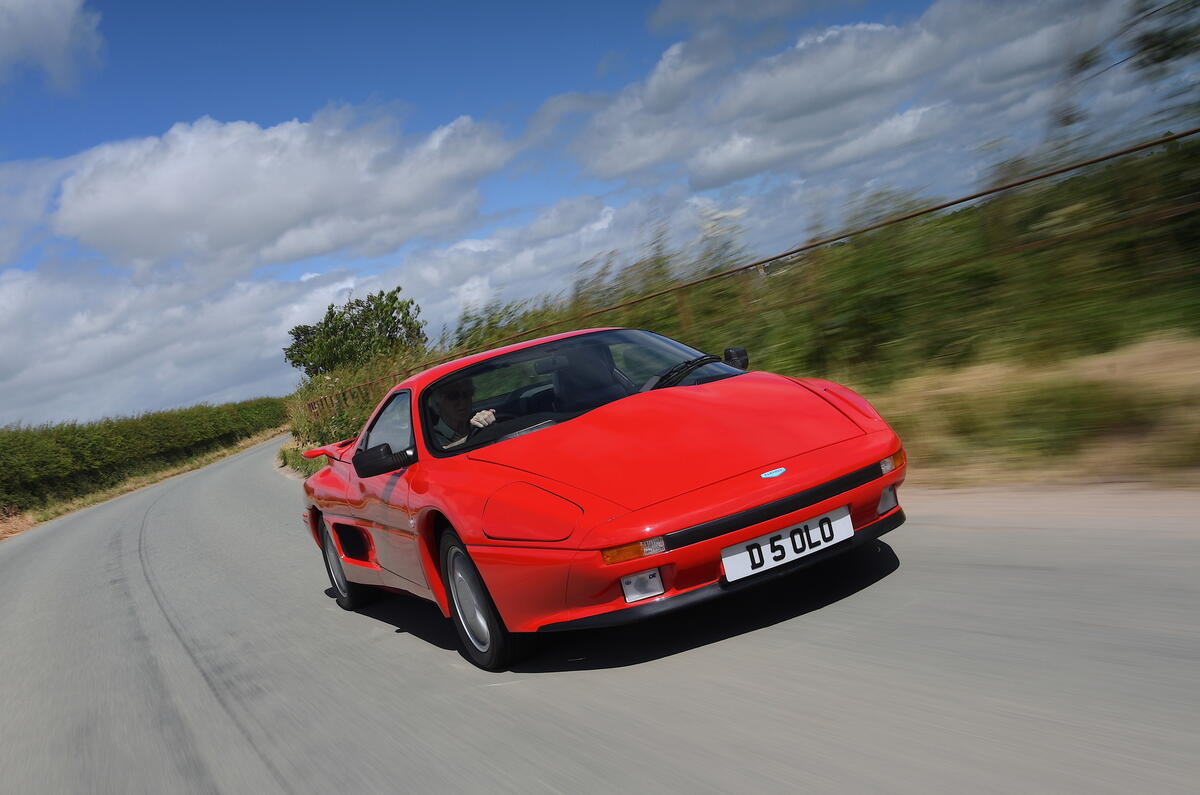
The mid-engined, four-wheel-drive Panther Solo of 1989 was one of the best supercars never to succeed

During the 1980s and 1990s, the British car industry was littered with ambitious sports car start-ups ready to take on the establishment. 

Light on cash but brimming with confidence, these one-person-in-a-shed operations often disappeared as quickly as they had sprung into life. Panther, however, was different. 

Originally based in Devon, the firm was started by Robert Jankel in 1972 and became well-known for models such as the quirky Lima and Kallista, which evoked the classic sports cars of the 1930s.

Using humble Vauxhall and Ford mechanicals, these four-wheeled pastiches attracted a loyal following and even the odd famous owner, among them Elton John and Oliver Reed.

However, by 1983, Panther had been bought by ambitious young South Korean businessman Young-chull Kim, and there were plans to build something a little more contemporary. 

Featuring a mid-mounted 1.6-litre Ford CVH engine and sleek, targa-topped bodywork, the original Solo was devised as a rival to machines such as the Fiat X1/9. But before it got past the prototype stage, Kim saw the then new Toyota MR2 would do the same job for less, so decided to push the Solo upmarket.

What resulted was one of the best supercars never to succeed. Styled by the Royal College of Art’s Ken Greenley with assistance from March Engineering’s wind tunnel, it was packed with engineering innovation. 

For starters, the Ford engine had been upgraded to the 204bhp turbocharged 2.0-litre from the Sierra RS Cosworth, while there was now a bespoke Ferguson four-wheel-drive transmission, making the Solo the only mid-engined all-paw production car in the world at the time.

Then there was the body itself, which featured a pioneering construction of steel spaceframe chassis bonded to an aluminium-honeycomb and impregnated-composite passenger cell that resulted in an incredibly rigid structure. 

Then there were novel features, such as revolving headlamps and a 2+2 seating layout. Factor in chassis tuning input from Ford Special Vehicle Engineering supremo Rod Mansfield and the Solo had all the raw ingredients to succeed.

It certainly had the chassis chops to impress. With its stiff structure, grippy four-wheel drive, quick steering and all-independent suspension, the Solo was a delight to drive. Despite relatively modest rubber (195-section at the front, 205 at the rear), the Panther combined sky-high grip with a rare balance and adjustability. 

Back to top

In Autocar's Britain’s Best Driver’s Car contest of 1990 it finished fourth out of 10, ahead of fine-handling high-watermarks such the E34 BMW M5, M100 Lotus Elan and Peugeot 309 GTi.

And our praise didn’t end there. In our road test later that year, we declared: “Forget the narrow tyres, the Solo will outgrip any [Porsche 911] Carrera 4 or [Lotus] Esprit Turbo without raising a sweat. The steering, with an ideal 2.9 turns across the locks, is in such telepathic communication with the road it could make the 911 engineers wonder where they went wrong. You can make it wriggle its hips, or you can powerslide out of right-handers on full left lock and full power. The point is, it's the driver who decides which, not the Solo.”

Of course, you’re expecting a big ‘but’ here, and you're right. While the Cosworth engine did the numbers (0-60mph in 6.8sec and 144mph all out), it was limp and laggy low down, and it sounded agricultural at idle and set fit to explode when extended. 

For a car that aimed to stir the soul and lift emotions, the Pinto-derived four-pot’s cement-mixer backbeat was suboptimal. More so when you consider the Solo was priced as a serious supercar.

Ah yes, the money. At a whisker under £40,000 in 1990, the Solo was £3000 more than Esprit SE and £10,000 more than a Renault GTA V6 Turbo. The blue-chip Carrera 4 was £52,000.

Back to top

Moreover, even those punters who had been willing to fork out the readies weren’t willing to wait. From debut to finished product, the Solo had taken an agonising six years. 

Worse still, cashflow problems meant the Solo still wasn’t really ready when production started. Teething problems meant early customer cars were essentially mobile test beds, so in the end fewer than 25 cars were completed before Korean parent company Ssangyong (which had purchased Panther from Kim in 1987) pulled the plug. That not only put an end to the Solo but killed off Panther too.

That wasn’t quite the end of the Solo, however. Shortly before the car was axed, Panther engineers had experimented with both a twin-turbocharged version of the 2.0-litre engine and a blown Rover 3.9-litre V8 - the latter presumably offering a far more suitable soundtrack. 

There was one more twitch of the corpse in 1995, when Ssangyong displayed a 3.3-litre V6-powered Solo 3 at that year’s Seoul motor show. 

But that was ultimately it for the Solo, a brilliantly single-minded machine from a group of talented engineers determined to take on the establishment.

With a bit more time, money and development, it could have been a contender.

Join our WhatsApp community and be the first to read about the latest news and reviews wowing the car world. Our community is the best, easiest and most direct place to tap into the minds of Autocar, and if you join you’ll also be treated to unique WhatsApp content. You can leave at any time after joining - check our full privacy policy here.

James Disdale

James Disdale
Title: Special correspondent

James is a special correspondent for Autocar, which means he turns his hand to pretty much anything, including delivering first drive verdicts, gathering together group tests, formulating features and keeping Autocar.co.uk topped-up with the latest news and reviews. He also co-hosts the odd podcast and occasional video with Autocar’s esteemed Editor-at-large, Matt Prior.

For more than a decade and a half James has been writing about cars, in which time he has driven pretty much everything from humble hatchbacks to the highest of high performance machines. Having started his automotive career on, ahem, another weekly automotive magazine, he rose through the ranks and spent many years running that title’s road test desk. This was followed by a stint doing the same job for monthly title, evo, before starting a freelance career in 2019. The less said about his wilderness, post-university years selling mobile phones and insurance, the better.

Join the debate

Comments
1
Add a comment…
Einarbb 3 May 2026

No better performance than a Sierra cosworth or Esctort cosworth -- yet both were thousands cheaper, meaning - you bought either car and forgot the nice looking but deeply flawed Panther.