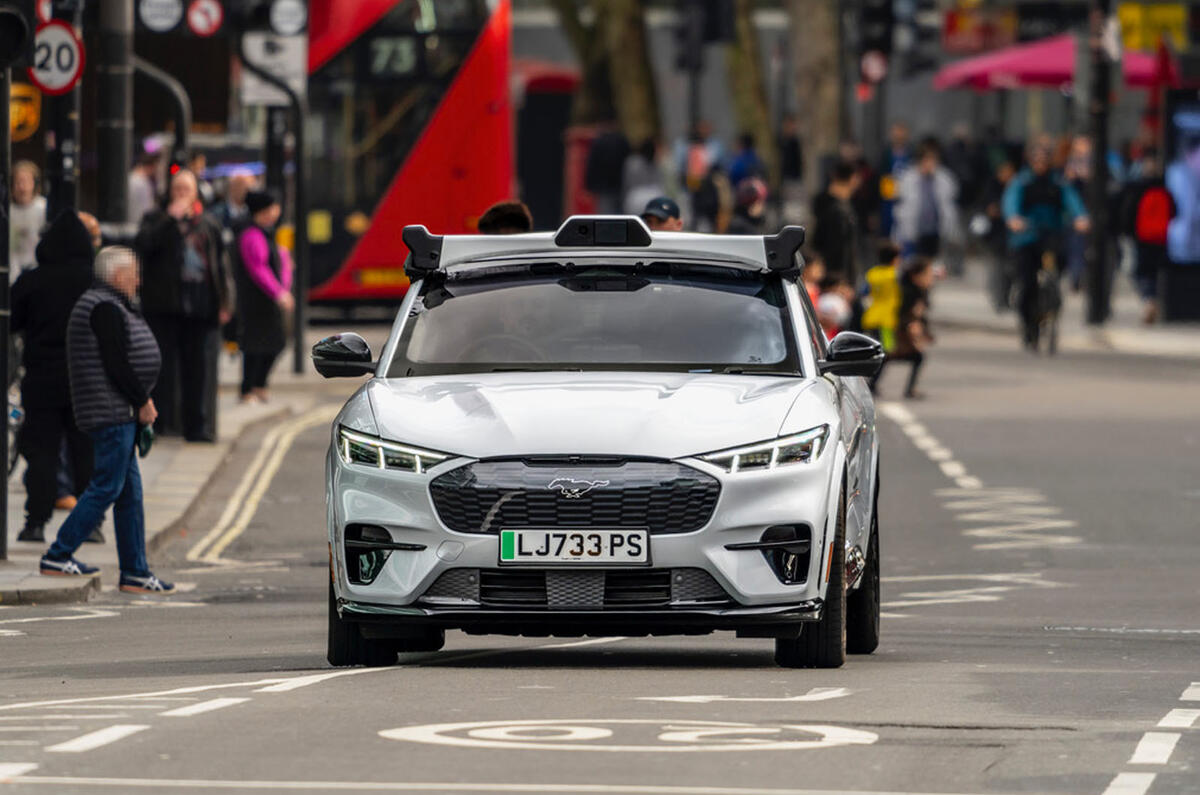

The Wayve Ford Mustang Mach-E has been cruising successfully hands-free through north London traffic for about 40 minutes and now faces a tough test: an unprotected right turn into a busy street. A parked black cab spoils the view on the left while the usual broad spectrum of London vehicular traffic dashes on by, not giving an inch. But the Ford behaves remarkably humanly, creeping out until it spots a gap and then nips into the flow without drama.
The demonstration is a powerful case-maker for what UK firm Wayve calls AV 2.0, where artificial intelligence (AI) makes decisions rather than the car following a pre-programmed set of rules.
Robotaxi 1.0 in this definition is Google’s Waymo, the pioneering autonomous service successfully operating in five US cities with a claimed 10 million rides under its belt.
Waymo's 2000-strong Jaguar I-Pace fleet is instantly recognisable and has done much to normalise being ferried around without a driver, with Waymo actually overtaking Uber rival Lyft in terms of share of the taxi market in San Francisco.
But the huge bank of sensors that makes those Jaguars so recognisable is also the hurdle to wider acceptance – they cost a lot of money. Waymo hasn’t given any indication of what the bill really is to convert an I-Pace into a robot, but estimates start around $30,000, due to multiple cameras and radar and lidar units.
Wayve still has a sensor rig on its test Fords but claims it has drastically reduced that hardware bill to between $1000 and $2000.
“We’re seeing a paradigm shift here from AV 1.0 to AV 2.0,” Alex Kendall, co-founder and CEO of Wayve, told Autocar.
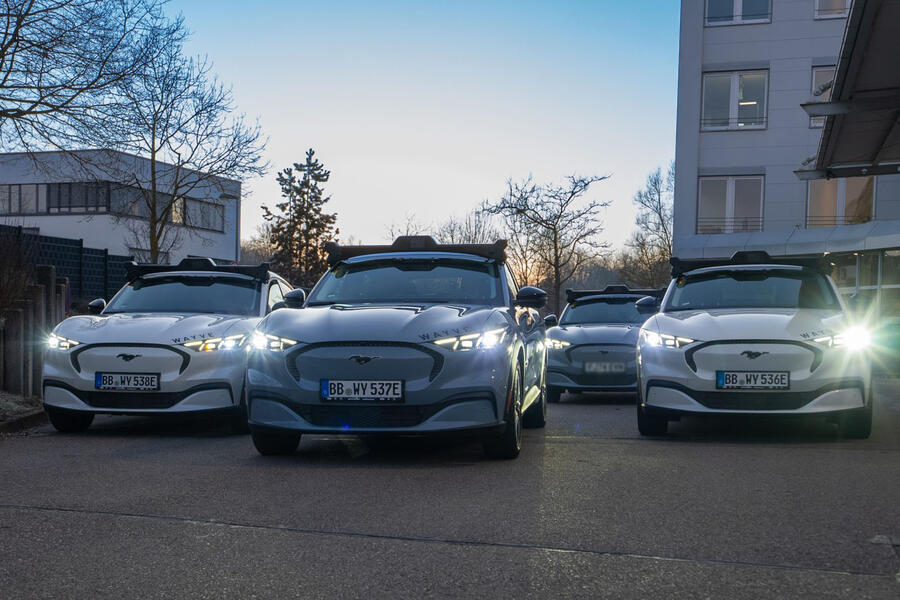
However, Wayve’s next-level approach to hands-free driving is far more than about stripping cost from sensor set.
“A lot of the systems driving in Shanghai or San Francisco do so with a very complex set of rules that takes an army of engineers to hand-code and typically doesn't deal with the complexity of an environment,” Kendall said.
Wayve guides cars using ‘end-to-end’ AI, which makes decisions on the fly based on learned intelligence only. This ‘generalisation’ is better at dealing with the unfamiliar, so Wayve claims.
“You're never going to see everything in your training data,” Kendall said, “so it's all about being able to learn general concepts and be able to apply those concepts to new things.”