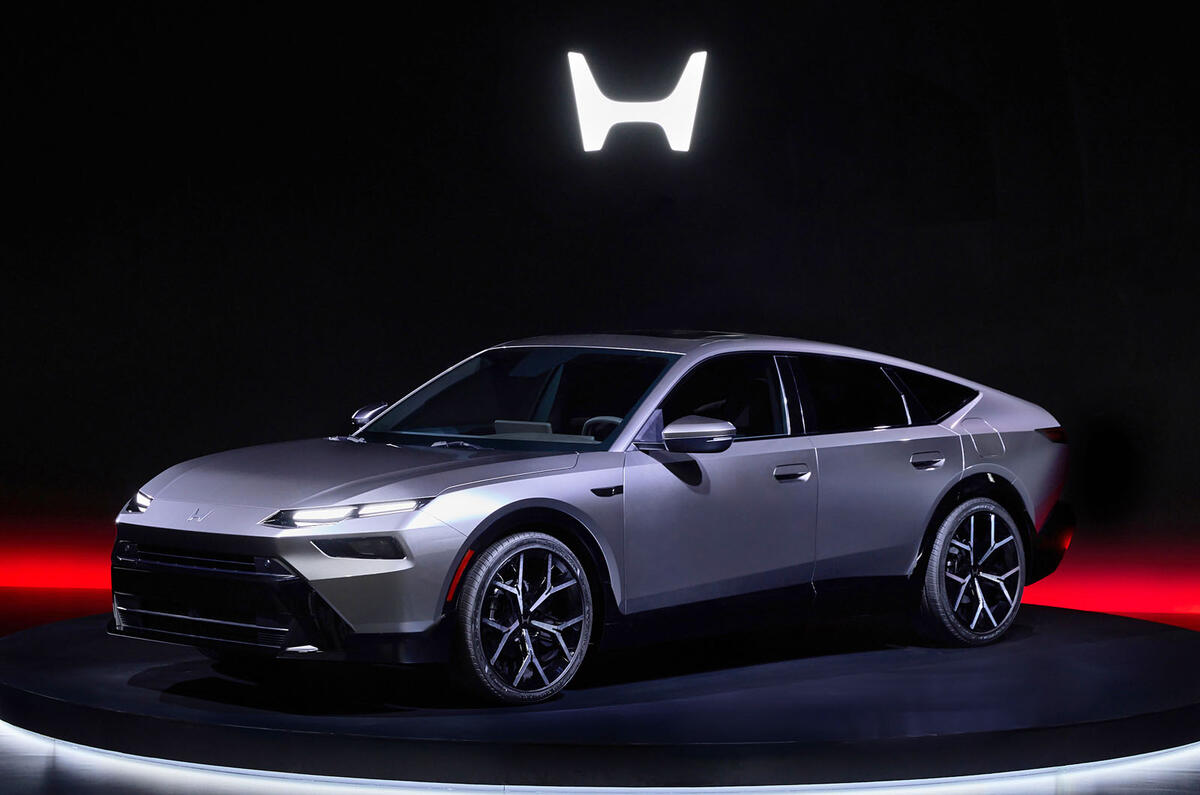

Honda has revealed a striking new concept car that previews a large hybrid fastback due to enter production within two years.
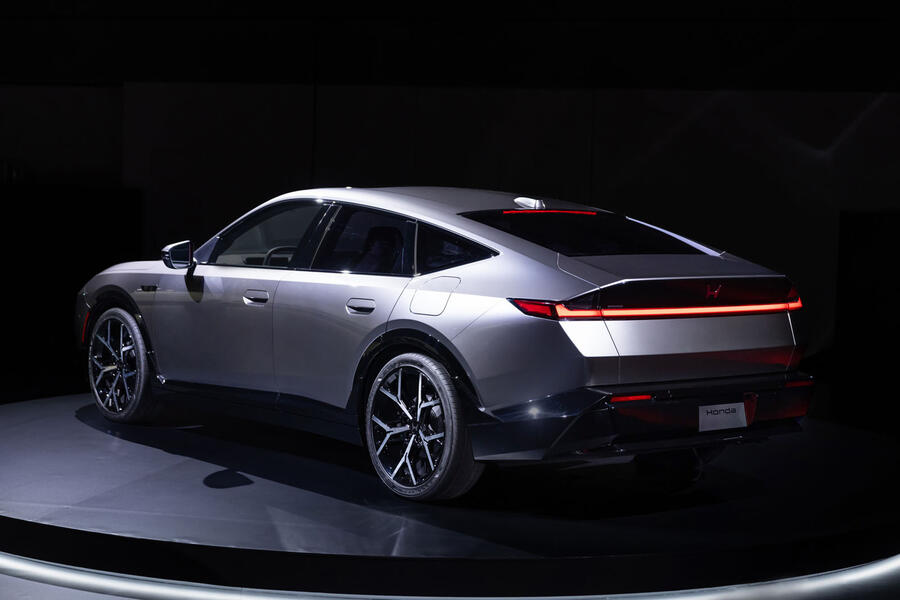
It's known only as the Honda Hybrid Sedan Prototype but shares key cues with the current Accord, including its raked roofline and angular rear-quarter panel.
The Accord is no longer sold in the UK but remains a crucial model for the Japanese brand in the US market.
Given this fact, and that it has been shown alongside a new SUV concept for the US-focused Acura brand, the new concept most likely hints at the next Accord.
Honda said the saloon will use its next-generation hybrid system, previously claimed to be the “world’s most efficient” powertrain of its kind.
It will be 10% more fuel efficient than Honda's current hybrid system yet also 30% cheaper to produce – which will give a vital boost to the firm’s profits.
Honda is refocusing its efforts on hybrids in a bid to reverse a slump that resulted in it recording its first ever annual loss, of ¥423.9 billion (£2.0bn), in 2025-26.
This loss is primarily down to writedowns incurred from Honda pulling out of several electric car development programmes.
It scrapped the radical 0 Series Saloon and 0 Series SUV just months before they were due to enter production in the US and cancelled the Afeela brand it had created with electronics giant Sony.
Speaking in the firm’s fourth-quarter financial results presentation in March, managing executive officer Eiji Fujimura said: “We have estimated the amount [lost in cancelling EV programmes] to be up to ¥2.5 trillion [£11.7bn], considering all risks that are identifiable at this stage.
"This reassessment reflects the fact that the business viability of three EV models has proven to be extremely challenging, which led us to make decisions at an early stage.”
CEO Toshiro Mibe added that Honda scaling back investment in EVs “should not be interpreted as abandoning EVs” and that it was a “very difficult decision”, because a significant sum had already been spent.
“Our focus will be on next-generation [hybrids],” said Mibe. “For mid-sized HEVs we expect meaningful cost reductions, and we believe these models will remain highly competitive.”