Currently reading: F1 2026 for beginners: The radical new rules explained

A new season and a new era of grand prix racing will begin this weekend, and there's a lot to unpack

Formula 1 is back, but not as we know it.

New rules, new cars, a new style of racing... So will the grand prix balloon keep rising on F1's warm gust of ever-increasing popularity, or will it burst with a sudden pop? Among some people, there's a palpable fear that F1 is heading in a self-destructive direction as a new age begins.

Biggest-ever rules change

The biggest F1 regulation shake-up since... the last one? We have heard it all before, surely, given how often F1 likes a rules reset. Perhaps, but this time the changes are genuinely to a level that's unprecedented.

As new Aston Martin team principal Adrian Newey put it: "2026 is probably the first time in the history of F1 that the power unit regulations and chassis regulations have changed at the same time. It's a completely new set of rules."

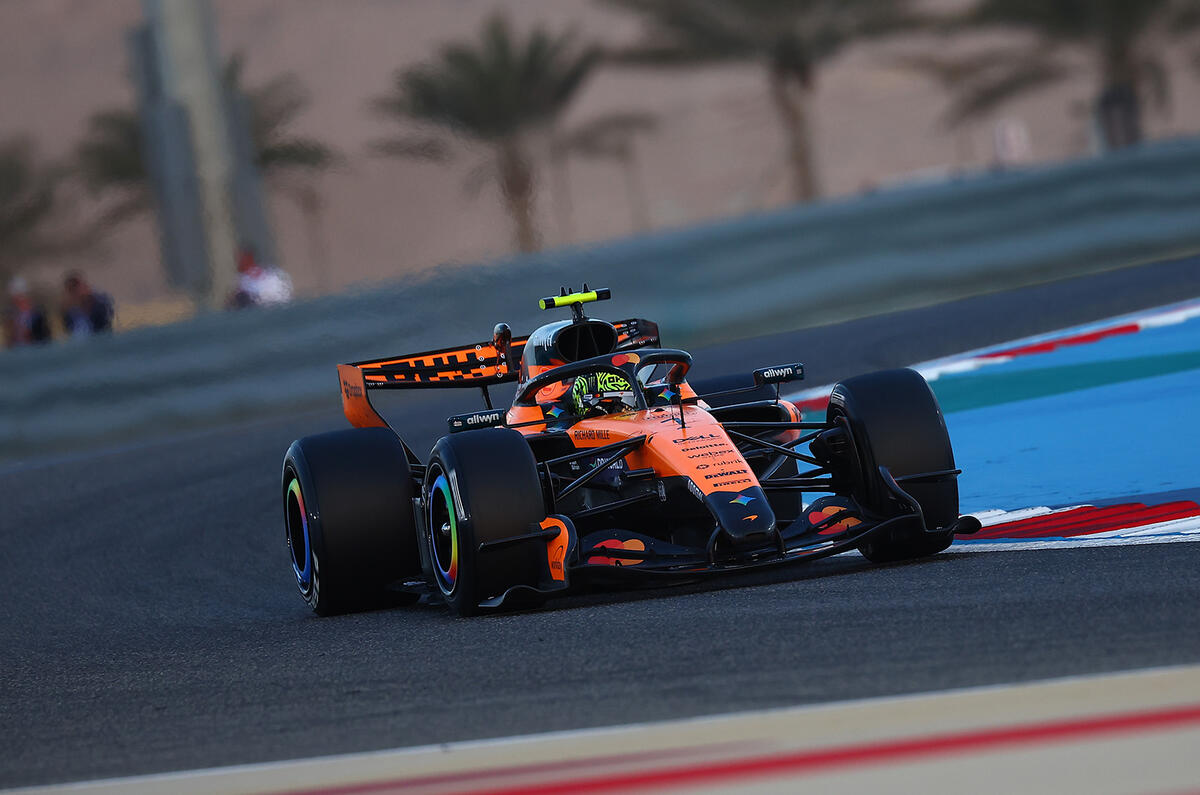
In a nutshell, the new generation is lighter, smaller and nimbler - and in our eyes better proportioned and therefore better looking. Chassis width has been reduced by 100mm, the wheelbase has been contracted by 200mm and the minimum weight is down by 30kg to 768kg.

Pirelli's tyres are also smaller: the fronts are 25mm narrower, the rears are 30mm narrower and the diameter is slightly reduced to aid the reduction in weight and aerodynamic drag. In total, downforce has been cut by up to 30% from 2025 levels and drag cut by nearly half. 'A different breed', then, is no exaggeration.

Road-relevant hybrids

Why rewrite the engine regulations? Basically to pull them further into line with the demands of the wider automotive industry. There's a case to be made that the change has already been justified, given that Audi, Ford (as partner to Red Bull) and General Motors (with Cadillac) have taken the F1 bait at the start of this new era. It's a case of the same but also entirely different.

The combustion engines are still 1.6-litre turbocharged V6s, with energy recovery limited to the rear axle (so no four-wheel drive), but now they run on fully sustainable fuel made from non-edible biomass (so no fossils) and the hybrid element is much more powerful, if also heavier (up from 151kg to 185kg).

Back to top

F1 has dropped the MGU-H (heat) energy regeneration system, basically because it was deemed irrelevant to car manufacturers' needs, but the MGU-K (kinetic) part is so much heftier. From around 160bhp last year, the hybrid element now offers a whopping 470bhp. Combined with 530bhp from the engine, at top whack that gives us the magic 1000bhp.

Overtake buttons, active aero and flat bottoms

The creation of a near-50:50 split of combustion and electric power has also revolutionised how the drivers race. Out goes the old DRS (drag reduction system) flappy rear wing that has been in use since 2011 and in comes fully active aerodynamics on the front as well as rear wings, plus an 'overtake' button.

When a driver follows within one second of another anywhere on the circuit, they can deploy the full 350kW of electric power at any speed below 209mph. That has led to predictions of passing moves on bits of track that were never really a consideration before.

Fully active aero has been mooted for years and now it's here. Get ready for 'straight mode' and 'corner mode' (much easier to understand than the 'X mode' and 'Z mode' jargon that the teams originally used). Front and rear wings will trim out on specified straights then flick back to higher-downforce spec under braking.

While it adds another dimension to the racing, active aero has another purpose. By reducing drag on the straights, it will help alleviate concerns about cars running out of battery energy across a race.

Back to top

Instead of a fuel flow restriction, F1 now runs to an energy flow restriction of 3000MJ per hour. And we can now remove 'porpoising' from our F1 lexicon.

These cars have dropped the ground-effect venturi tunnels of the 2022-25 generation that gave drivers literal headaches in favour of flat bottoms - the type of underfloor that featured on F1 cars from 1983 until 2021. Good news for Lewis Hamilton, surely, given how he rarely felt entirely comfortable with the ungainly full-ground-effect cars.

What do the drivers think?

Reaction has been mixed, to put it lightly. Hamilton has suggested that drivers need a degree to get their heads around energy management in the new era - and so might we to follow what's going on. And, somewhat predictably, Max Verstappen has been damning.

A purist racer, he has compared the new F1 to Formula E as energy management becomes the focus. Expect heightened talk of 'harvesting' and 'deployment' - not very rock 'n' roll.

Then again, reigning world champion Lando Norris has hit back, saying that he likes the new cars, he embraces the change and Verstappen can always retire if he doesn't approve.

In coming up with this new F1, the FIA's chief of single-seater racing, Nikolas Tombazis, suggested a balance must be struck between the sport becoming like "chess" and "the other extreme, where the driving is just a steering wheel, a throttle pedal and a brake pedal".

Back to top

The latter suits Verstappen and has served motor racing pretty well for decades... Does it really have to be this complicated? Apparently so. But no one knows quite what we're in for. We will find out in Albert Park on Sunday.

What else is new?

Two new teams, for a start. Well, Audi has bought and taken over midfield stalwart Sauber, but the other arrival is genuinely new - the first proper start-up since Haas joined the grid 10 years ago.

Like its fellow American entity, Cadillac will use Ferrari engines (it still feels odd to write that) while it develops its own power unit for introduction in 2029. The team is packed with good and experienced F1 people, including the drivers: Valtteri Bottas and Sergio Pérez return as a conservative choice but, with 527 starts and 16 grand prix wins between them, they're an eminently sensible one too.

The F1 calendar remains heavy, at 24 races. The only addition is a street race in Madrid in September (if the new venue is ready) in place of Imola. This will become the Spanish GP, with the newly tagged Barcelona-Catalunya GP hanging onto its June date.

After the influx of six rookies in 2025, just one driver steps up this term. As sophomore Isack Hadjar replaces Yuki Tsunoda as Verstappen's team-mate at Red Bull (keep your fingers crossed for him), Arvid Lindblad becomes Britain's latest F1 racer at the secondary Racing Bulls team. Born in Surrey to a Swedish father and an English mother of Indian heritage, he's only 18. F1 loves a teenage prodigy.

Back to top

The Red Bulls and Racing Bulls have their own independently built powertrains this time, in alliance with Ford, as the Blue Oval seeks a slice of the F1 action for the first time since the Jaguar debacle more than 20 years ago. Early signs from testing in Bahrain appeared decent, in defiance of pessimistic expectations that going it alone with its own powertrain division would prove an ambition too far.

Who looks quick?

Speaking of testing form (yes, yes, it's notoriously unreliable as a true barometer), it was easier to pinpoint who's struggling than who's heading the right way. Newey's first Honda-powered Aston Martin may look striking, but a lack of laps and basic pace in Bahrain (the AMR26 was some 4.5sec off the fastest times in the early sessions) was a cause for concern.

Most are tipping Mercedes and George Russell as the early favourites, but it would be a major shock if Norris and Oscar Piastri aren't in the mix for McLaren, while there have been some promising signs for Hamilton and Charles Leclerc that Ferrari won't be awful.

Potential fly in the ointment

F1 wouldn't be F1 without a technical row to cloud a new era, and this time Mercedes has stoked the hornet's nest over compression ratios: its new V6 complies with the decreed 16:1 ratio during static tests at ambient temperatures but is believed to break that limit while running on track.

Back to top

That's either a great example of clever F1 engineering if you're the Mercedes works team or one of its customers (McLaren, Williams and Alpine) or a blatant cheat if you're powered by Audi, Ford, Honda or Ferrari.

At first, Mercedes team principal Toto Wolff suggested the others should just "get their shit together" and stop moaning, then made a point of talking up the Red Bull-Ford powertrain - much to Verstappen's obvious amusement.

If the other manufacturers, the FIA and Formula 1 Management intervene, Wolff reckons Mercedes could be "screwed". Either way, it's likely to be an exasperating talking point as the teams touch down in Australia.

When F1 has changed its rules...

Regulation resets usually shake up the F1 form book, but not always.

1983 A late change to outlaw increasingly lethal ground-effect aero forced most teams to hack their chassis into B-spec compromises, but Brabham's Gordon Murray burnt the midnight oil to create the BT52. Cue BMW's only Fl title.

1989 The return to atmo engines ended the first turbo era, but McLaren-Honda, Ayrton Senna and Alain Prost kept on winning anyway.

1994 Williams was wrong-footed by a ban on driver aids such as ABS, traction control and active suspension. Benetton took full advantage.

1998 Unlike in 1994, Adrian Newey got it right. His first McLaren built to new narrow-track dimensions and on (terrible) grooved tyres afforded Mika Häkkinen the first of two consecutive titles.

Back to top

2009 Downforce-slashing aero changes made for ugly cars and didn't improve the racing much, but the new Brawn team, born from the ashes of Honda's bombshell withdrawal, didn't care. Jenson Button won six of the first seven races.

2014 Fl went fully hybrid. Mercedes nailed its new powertrain, Ferrari and Renault didn't, resulting In record-breaking Silver Arrows domination.

2017 The first time since 1966 that a rule change was designed to speed up the cars. Wider-track Fl looked better and Mercedes kept winning.

2022 It was Mercedes' turn to drop the ball this time as full ground-effect aero returned. Adrian Newey gifted Max Verstappen a potent Red Bull-Honda as FI came full circle. 

Join our WhatsApp community and be the first to read about the latest news and reviews wowing the car world. Our community is the best, easiest and most direct place to tap into the minds of Autocar, and if you join you’ll also be treated to unique WhatsApp content. You can leave at any time after joining - check our full privacy policy here.

Add a comment…