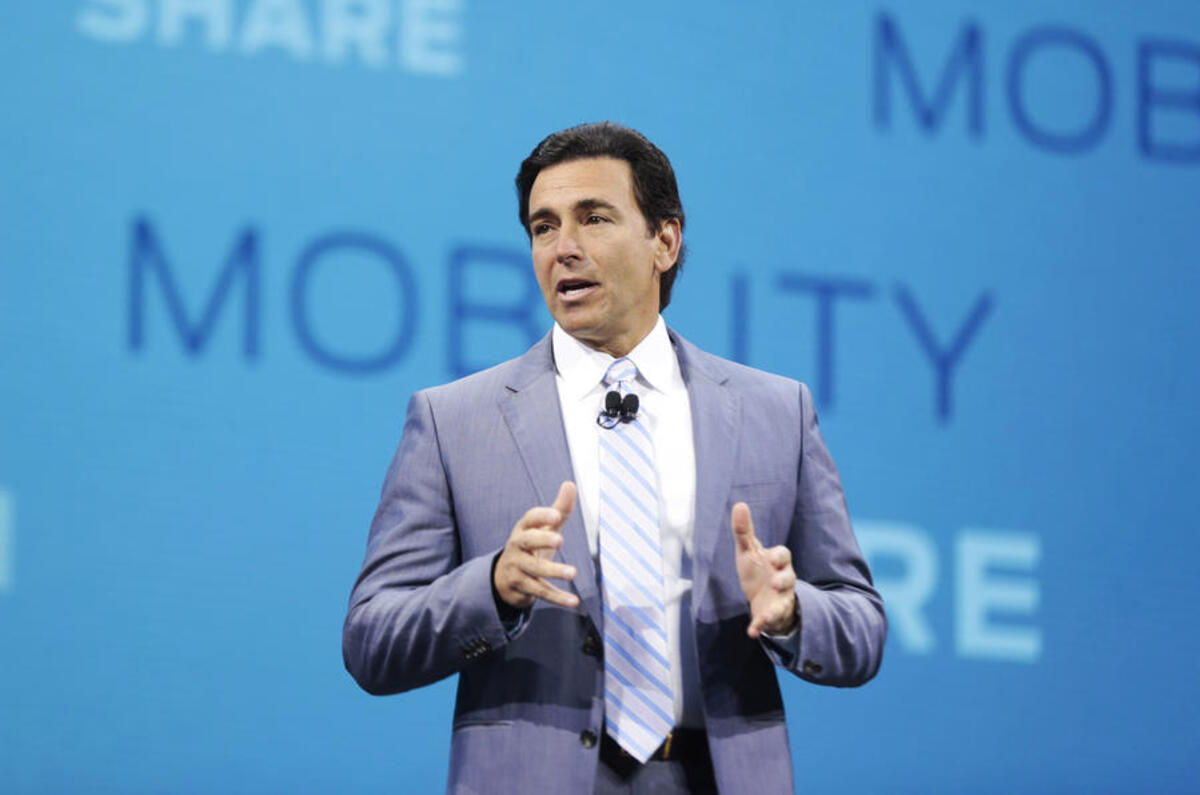

Ford is overhauling its management and product planning to accelerate the arrival of new models – such as a Nissan Qashqai rival – and self-driving technology after the surprise departure of CEO Mark Fields.
Jim Hackett, Fields’ replacement, joined the Ford management board four years ago. He is said to be refocusing the top management ‘Business Plan Review’ (BPR) meeting towards future product and strategy rather than weekly problem solving.
Together with a senior management overhaul and a clearer focus on communicating technology developments, Hackett will try to arrest Ford’s 40% share price decline, which prompted the end of Fields’ three-year reign as CEO, despite Ford forecasting profits this year of $9 billion (£6.95bn).
“You have to look at the share price as the main driving force in this decision,” a source told Autocar. Fields is also said to have, in the eyes of the board, lost focus on the current business while attempting to turn Ford into a ‘mobility services’ company.
Why Ford's ex-CEO Fields wasn’t the man for the job
The Hackett-led shakeup will put Ford of Europe president Jim Farley in charge of all selling activities as the new head of global markets. The president of Ford’s operations in the Americas, Joe Hinrichs, will take control of product development and manufacturing. Raj Nair will move from chief engineer to become president of Ford North America and Hau ThaiTang, who was chief engineer on the 2005 Ford Mustang, will lead global product development and purchasing. Ford of Europe COO Steven Armstrong will take over Farley’s former position.
Hackett’s move to overhaul its top management BPR meeting will change the focus of one of the major advances in the Fields/Alan Mulally era, which has been credited with pulling Ford’s departmental silos into a common direction.
Significantly, it will free Ford’s top managers to concentrate on introducing self-driving technology, electrification and new revenue streams from mobility services alongside new model launches.
Day-to-day operations, it is understood, will be handled by a secondary organisational set-up.
There are no plans for Ford to follow General Motors and sell off its European arm because the division is now a valuable asset. After years in the doldrums, it has been making profits since 2015. It also engineers powertrains, platforms and models that are sold globally. “Selling Ford of Europe is not going to happen,” a source told Autocar.
Ford’s product planning process will be freed to better identify global trends, like the emergence of the B-segment SUV and C-segment crossover.
Under Fields and his predecessor, Mulally, Ford’s product planning was organised under the ‘One Ford’ banner to deliver individual models engineered to multiple global standards.
Hackett said: “What One Ford doesn’t do as well is deal with a lot of complex strategies, with many elements.”
Mainstream models such as the Fiesta and Focus thrived under the One Ford regime. Both are brilliant to drive and the Fiesta is consistently the UK’s best-seller and recently outsold the Volkswagen Golf as Europe’s number one. One Ford has also delivered compelling performance models such as the Focus RS, Ford Mustang and Ford GT.