Currently reading: Citroen mulls sub-£15k EV to replace C1 city car

New 'E-car' rules would pave way for Citroën's return to the A-segment - but it's not a 2CV

Citroën could replace the C1 with a new sub-£15k urban EV if EU law makers sign off the new ‘E-car’ category for small cars - with the spirit, but not the look, of the 2CV.

The E-car category is a proposed framework to ease the financial pressures on small, affordable cars by loosening some of the restrictions they must adhere to - under consideration by the EU Commission in response to complaints from car makers about the unviability of building true entry-level models.

The move is viewed as a crucial step towards a renaissance for cheap, small cars in Europe - a class which has shrunk dramatically in recent years as car makers exited this most unprofitable of segments.

Citroën CEO Xavier Chardon is the latest European car company boss to welcome the potential new rules, and says their introduction would be likely to pave the way for a return to the A-segment for the French brand.

However, Chardon downplayed the notion that this new-era people's car would be conceived explicitly as a reborn 2CV, as had been earlier suggested.

Speaking to Autocar at the unveiling of Citroën’s radical new ELO concept – a vision of a 4.1-metre, six-seat family MPV – Chardon said that producing this sort of affordable model remains a possibility for the company, and could be signed off pending the specifics of the new category.

Citroen ELO

Asked whether the ELO concept envisions a potential E-car model, Chardon said: “E-car is opening a different door - for this car, you may not need to have an E-car answer.

“For us, E-car is more important to define a car that would come below the C3 - a car that is more accessible, because this car [the ELO concept] is quite compact, but you can see that with what you have internally - with the modularity, the flexibility, - it will never be an entry version of the future line-up.”

Advertisement

Read our review

Car review

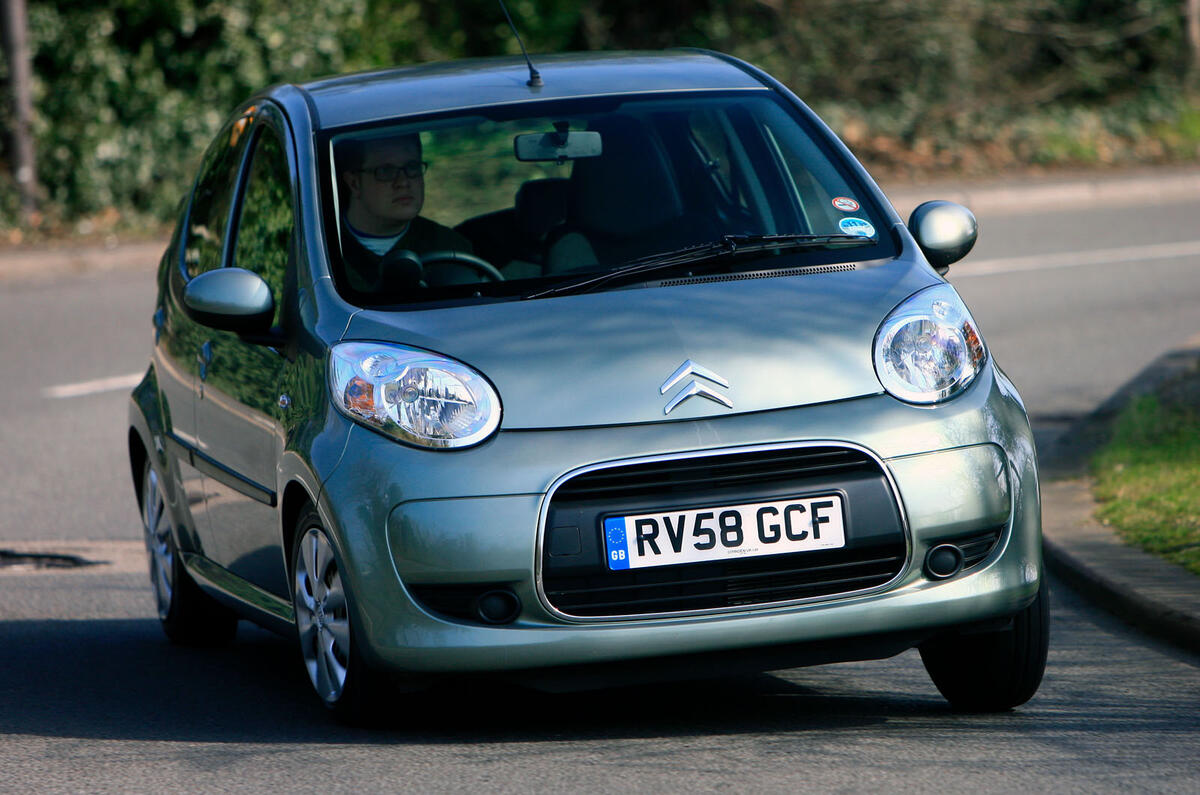
The Citroën C1 is the cheapest of the C1-107-Aygo triplets. The city car is cute, but noisy and basic

Back to top

“We are legitimate as the Citroen brand to enter this segment, providing that the European Union is giving some space in terms of future regulations - we don't know yet. Why are we legitimate? Because this is part of our DNA, and you don't have to go back so far in history.”

Chardon referenced the historical success of previous ‘A-segment’ Citroën models, a lineage that dates right back to the 2CV and includes highly popular superminis like the Saxo and more recently the C1.

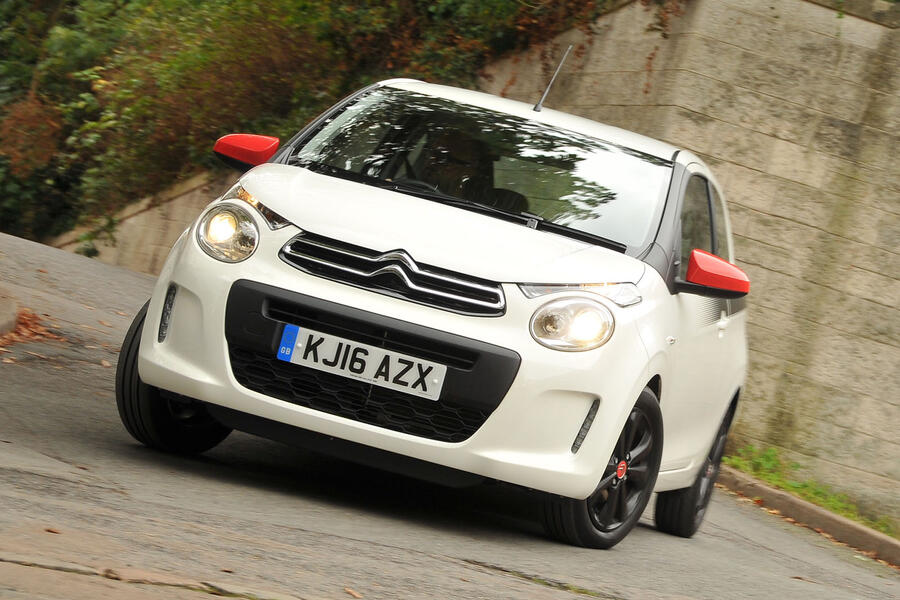
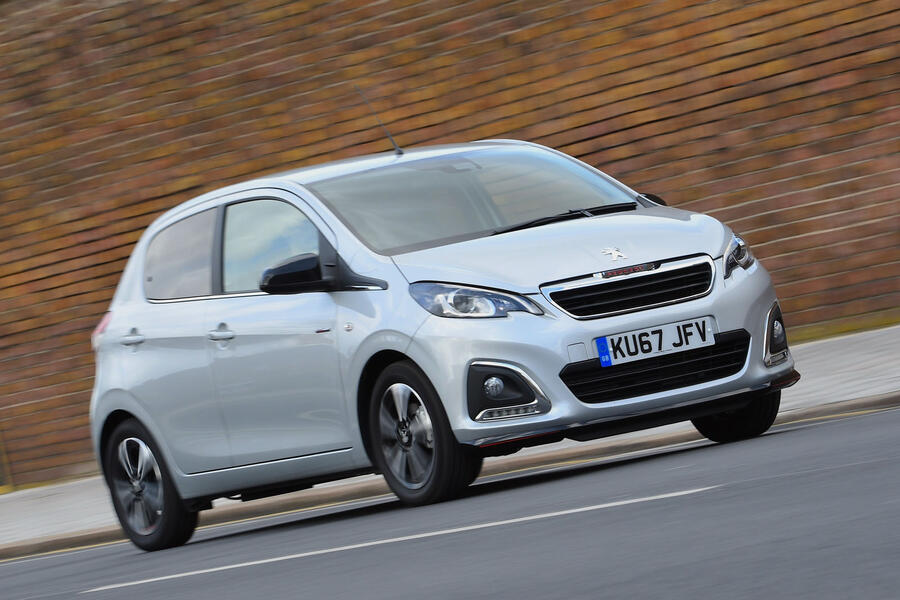
The C1 was taken off sale in 2020, at the same time as the closely related Peugeot 108, amid a mass exodus of mainstream car makers from the A-segment, with increasing legislation and production costs conspiring to strangle already razor-thin margins.

2016 Citroen C1

Since then, the C3 has been Citroën’s smallest full-sized car, but at 4015mm long and 1577mm tall is substantially larger than the C1 - and Chardon says the E-car rules could provide the framework to fill that gap in Citroën’s line-up again.

“The C1 was quite a successful car. It was 3.4 metres, so quite compact, but up to five seats. Of course, it was not the car that you would use from to commute from London to Nice, but it was a car that you could take outside of the city.

“You had five doors, you had an engine where you could go on highways (not as the primary use but giving the flexibility) and we believe that this is important that we find again this logic at a price point that is - at least in Europe- below €15,000.”

Back to top

He said the E-car rules are “not the only way” such a model could be brought to fruition”, but added: “It's the most likely way to find an equation that makes this project affordable for customers - and also economically viable for us.”

Chardon's comments come shortly after his counterpart at sibling brand Peugeot, Alain Favey, told Autocar that his firm, too, was mulling the prospect of a new entry-level EV supermini in the vein of the 108.

Just as the C1 and 108 were twinned in their first two generations, so too would their successors be likely to be heavily related, but neither Favey nor Chardon gave any hint as to how advanced the projects are.

Peugeot 108

Other brands including Dacia and BYD have also indicated they could launch new entry models in Europe in a more hospitable regulatory environment.

Crucially, any new classification for small cars in Europe would need to ease the sort of safety and technical regulation that has priced such models almost out of existence, because manufacturers need to be able to sell them at a profit - which means they must cost less to build, Chardon said.

“And for this you need to change a couple of parameters, especially if you want this car to be fully electrified - having a car at €15,000 electrified without any subsidies is not a walk in the park. And if every time the European Union is asking us for more regulations, this is not supporting us in moving in this direction.”

Back to top

Chardon’s comments clarify Citroën’s position on a spiritual successor to its best-known car, which he said would inspire the conception of any future entry model, but not necessarily the look - contrary to recent suggestions that the iconic 1950s ‘people’s car’ could be revived in the same manner as the Fiat 500 and Renault 5.

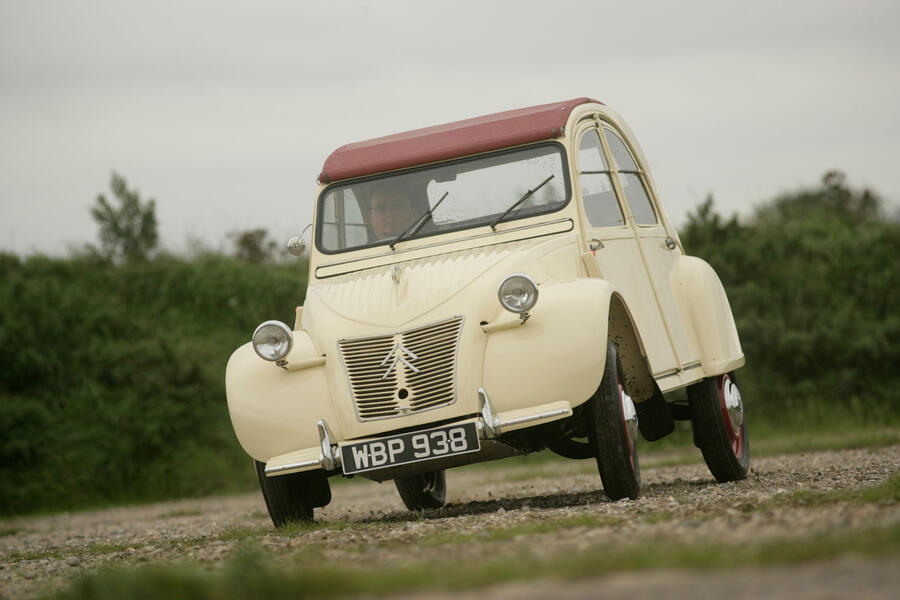
Asked if the E-car project and mooted ‘reborn’ 2CV were one and the same, Chardon explained: “I wouldn't call it the 2CV project, but I would call it more ‘the E-car’. The 2CV is, for me, an inspiring model. What is interesting is to understand why the 2CV – which was stopped many, many years ago – is still an iconic car, and what you can learn from it.

Citroen 2CV

“Originally, it was from the time where Citroën was owned by Michelin. It was a very interesting brief: Michelin had said ‘we need to sell more tires, so we need to put more cars on the on the street’. This was the brief before World War Two, and then after World War Two, it became: ‘we need to offer a car that offers individual mobility to the masses in a period where price was absolutely important.”

Chardon noted parallels between consumer demands of the mid-20th century – which ultimately birthed a whole generation of people’s cars including the VW Beetle, Mini, Fiat 500, Morris Minor and Citroën’s own 2CV – and today’s market environment.

Back to top

While the well-known remit of the 2CV – to be able to transport four farmers, a sack of potatoes and a basket of eggs across a field, at a price affordable on minimum wage – may no longer be a core requirement for a cheap car, the need for more affordable mobility is clear, he suggested, and the principles of the 2CV remain highly relevant.

“I'm sure that if you translate this brief into a future E-car, it might not be the same as the 2CV, but you have to translate it into 2025, 2026 or the coming years, and this is why the 2CV is a good inspiration.

“But I would say not the shape or the design. Retro design is a solution - you have also plenty of examples of retro design that were successful, but also retro designs that were not successful, so you need a purpose to make a future icon.

“So that's why I wouldn't call it the 2CV project, but the E-car can be inspired by what the 2CV brought in the past, definitely.”

Join our WhatsApp community and be the first to read about the latest news and reviews wowing the car world. Our community is the best, easiest and most direct place to tap into the minds of Autocar, and if you join you’ll also be treated to unique WhatsApp content. You can leave at any time after joining - check our full privacy policy here.

Felix Page

Felix Page
Title: Deputy editor

Felix is Autocar's deputy editor, responsible for leading the brand's agenda-shaping coverage across all facets of the global automotive industry - both in print and online.

He has interviewed the most powerful and widely respected people in motoring, covered the reveals and launches of today's most important cars, and broken some of the biggest automotive stories of the last few years. 

Add a comment…